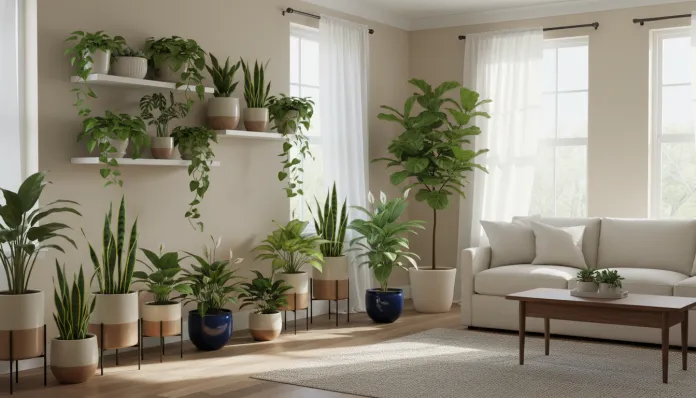
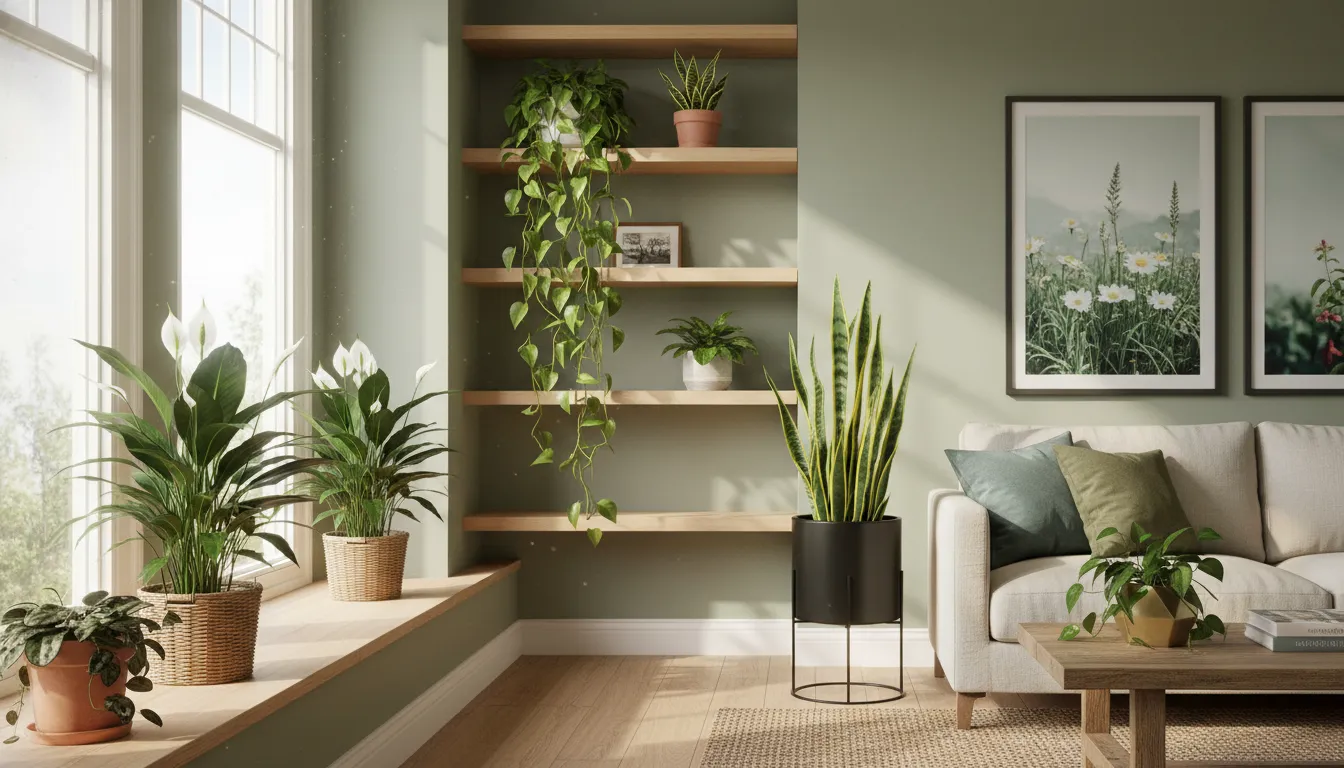
Who hasn’t succumbed to the charm of a well-placed plant in a corner of the living room, only to watch it wither weeks later? The good news is that this scenario doesn’t have to repeat itself. There’s an entire universe of plant species that not only survive indoors with low light and irregular watering but actually thrive in such conditions — making them perfect allies for apartments, offices, and homes with busy routines.
Interest in indoor plants has grown consistently in recent years, driven by the popularization of the concept of home well-being and studies linking contact with nature to stress reduction and improved mood. More than decoration, keeping plants indoors has become a habit with a real impact on many people’s quality of life.
But choosing the right species makes all the difference. Poor selection is the main reason why plants die prematurely. That’s why this guide brings together the most resilient and suitable options for indoor environments, along with practical tips to keep them healthy without needing to become a professional gardener.
Why Do Some Plants Thrive Indoors?
Not every plant is made for direct sunlight and the outdoors. Many species originate from tropical understories — meaning they naturally grow in the shade of larger trees, in humid environments with filtered light. When placed indoors, these plants find conditions similar to their natural habitat.
Furthermore, indoor environments offer temperature stability that plants sensitive to extreme cold or heat love. On the flip side, the dry air from air conditioning and low light are real challenges. The solution lies in choosing species that have already developed mechanisms to cope with this.
The Best Plants for Indoor Spaces
Snake Plant (Sansevieria trifasciata)
Also known as mother-in-law’s tongue in Brazil, this is probably the most resilient indoor plant that exists. It withstands low light, missed waterings, and even poorly ventilated environments. Its upright, variegated leaves add an elegant touch to any space.
Watering: every 15 to 30 days, depending on the time of year
Light: tolerates anything from low light to abundant indirect light
Tip: its biggest enemy is overwatering. It’s better to err on the side of dryness
Pothos (Epipremnum aureum)
Very popular in offices and apartments, pothos is a climbing plant with green (or variegated, depending on the cultivar) leaves that grows with impressive ease. It can be grown in pots, on supports, or even in water containers.
Watering: when the substrate feels dry to the touch
Light: adapts well to artificial light and partial shade
Tip: the more light it receives, the more variegated the leaves become
Zamioculcas (Zamioculcas zamiifolia)
Zamioculcas is known among plant enthusiasts as the “immortal plant” — and the nickname is not an exaggeration. It stores water in its roots (rhizomes), making it extremely drought-tolerant. It’s one of the few plants that thrive in rooms with small or south-facing windows.
Watering: every 3 to 4 weeks
Light: tolerates very dark locations
Warning: its leaves are toxic if ingested, so be cautious in homes with children or pets
Swiss Cheese Plant (Monstera deliciosa)
Who hasn’t seen a monstera in recent years? The large, split leaves of this plant have become a symbol of interior decoration. It’s relatively easy to care for and grows well in environments with indirect light.
Watering: when the top 3 cm of the substrate are dry
Light: bright indirect light is ideal; avoid direct sunlight through the window
Tip: clean the leaves with a damp cloth every 15 days to prevent dust buildup and improve photosynthesis
Cacti and Succulents
For those who tend to forget to water, cacti and succulents are almost foolproof. They store water in stems and leaves, require very little irrigation, and only ask for one thing in return: light. They are ideal for sunny windows and sills.
Watering: every 2 to 4 weeks in summer; almost none in winter
Light: direct sunlight or very bright indirect light
Tip: always use well-draining substrates, mixed with coarse sand or perlite
Peace Lily (Spathiphyllum wallisii)
Besides being beautiful, the peace lily is reputed to be one of the best air purifiers among houseplants. It blooms in low-light environments and clearly indicates when it needs water: the leaves become slightly wilted.
Watering: when the leaves start to droop slightly
Light: tolerates shade but blooms better with indirect light
Warning: also toxic to pets
Aloe Vera (Aloe vera)
Aloe vera combines beauty and utility. Its inner gel is widely used for skin hydration and relief from minor burns — and it grows well in small pots indoors, as long as it has access to light.
Watering: every 2 to 3 weeks
Light: bright indirect light or moderate direct sunlight
Tip: never let water accumulate in the saucer; waterlogged roots are the end of aloe
How to Create the Ideal Environment for Indoor Plants
Having the right plant is half the battle. The other half is in the basic care of the environment:
Assess the available light before choosing the species. Measure how many hours of natural light the window receives per day and whether it is direct or filtered.
Choose the right pot — always with drainage holes at the bottom. Pots without water outlets accumulate moisture and rot roots.
Use the right substrate for each type of plant. Succulents need sandier soil; tropicals prefer substrates richer in organic matter.
Take care of the air humidity. Air conditioning dries out the environment and harms tropical plants. Spraying water on the leaves or placing a container of water near the plants helps to compensate.
Don’t move the plant around constantly. Each change in light requires an adaptation period.
Fertilize in moderation. During the growth period (spring and summer), a diluted liquid fertilizer every 30 days is usually sufficient for most indoor species.
Common Mistakes That Kill Indoor Plants
Many people lose plants for simple and avoidable reasons. Here are the main ones:
Overwatering: is the number one cause of death for potted plants. Most indoor species prefer slightly dry soil to moist
Too little light: even shade-tolerant plants need some light. Completely dark environments don’t work
Pot too large: a pot much larger than necessary retains moisture longer and promotes root rot
Ignoring pests: mealybugs, mites, and aphids are common in indoor plants. Regularly inspect the leaves and act quickly at the first sign
Not respecting seasonality: in winter, most plants grow more slowly and need less water and fertilizer
A Choice for Every Type of Person
Profile
Recommended Plant
Always forgets to water
Zamioculcas, snake plant, cacti
Wants flowers indoors
Peace lily, African violet
Likes large plants
Swiss cheese plant, ficus
Has little space
Succulents, aloe vera, pothos in a small pot
Has pets
Pothos (with caution), areca palm
Plants and Well-being: What We Know
Research in environmental psychology and ergonomics has been investigating, over the last few decades, the relationship between plants in indoor environments and people’s well-being. Overall, findings indicate positive associations between the presence of natural elements in offices and homes and factors such as concentration, mood, and perception of the environment’s quality.
Studies conducted by universities around the world suggest that the simple act of caring for a plant can have a calming effect for some people. It is worth remembering, however, that these effects vary from individual to individual, and any issues related to mental or physical health should be accompanied by a qualified professional.
What is certain is that having a greener, more lively, and visually pleasant environment is a benefit that anyone can have, regardless of the size of the apartment or gardening experience. If you want to delve deeper into the subject, check out this specially prepared guide for beginners: Easy Indoor Plants for Beginners: A Simple Guide to Start.
Conclusion
Caring for plants indoors doesn’t require special talent or full-time dedication. It mainly requires the right choice — and a minimum of attention to the signs each species gives. From the extremely resilient snake plant to the lush Swiss cheese plant, there is a plant for every type of space, routine, and experience.
The secret is to start with simple species, learn from mistakes (and they will happen), and evolve as confidence grows. Over time, what began as an attempt to decorate a corner of the room can turn into a genuine habit of connecting with nature — even within four walls.
Para fornecer as melhores experiências, usamos tecnologias como cookies para armazenar e/ou acessar informações do dispositivo. O consentimento para essas tecnologias nos permitirá processar dados como comportamento de navegação ou IDs exclusivos neste site. Não consentir ou retirar o consentimento pode afetar negativamente certos recursos e funções.
Funcional
Always active
O armazenamento ou acesso técnico é estritamente necessário para a finalidade legítima de permitir a utilização de um serviço específico explicitamente solicitado pelo assinante ou utilizador, ou com a finalidade exclusiva de efetuar a transmissão de uma comunicação através de uma rede de comunicações eletrónicas.
Preferências
O armazenamento ou acesso técnico é necessário para o propósito legítimo de armazenar preferências que não são solicitadas pelo assinante ou usuário.
Estatísticas
O armazenamento ou acesso técnico que é usado exclusivamente para fins estatísticos.O armazenamento técnico ou acesso que é usado exclusivamente para fins estatísticos anônimos. Sem uma intimação, conformidade voluntária por parte de seu provedor de serviços de Internet ou registros adicionais de terceiros, as informações armazenadas ou recuperadas apenas para esse fim geralmente não podem ser usadas para identificá-lo.
Marketing
O armazenamento ou acesso técnico é necessário para criar perfis de usuário para enviar publicidade ou para rastrear o usuário em um site ou em vários sites para fins de marketing semelhantes.