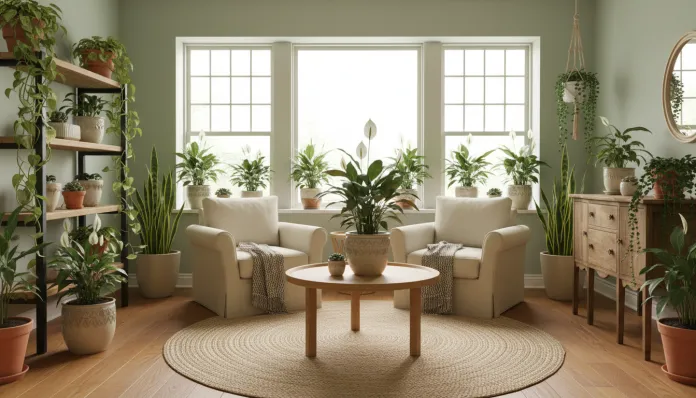
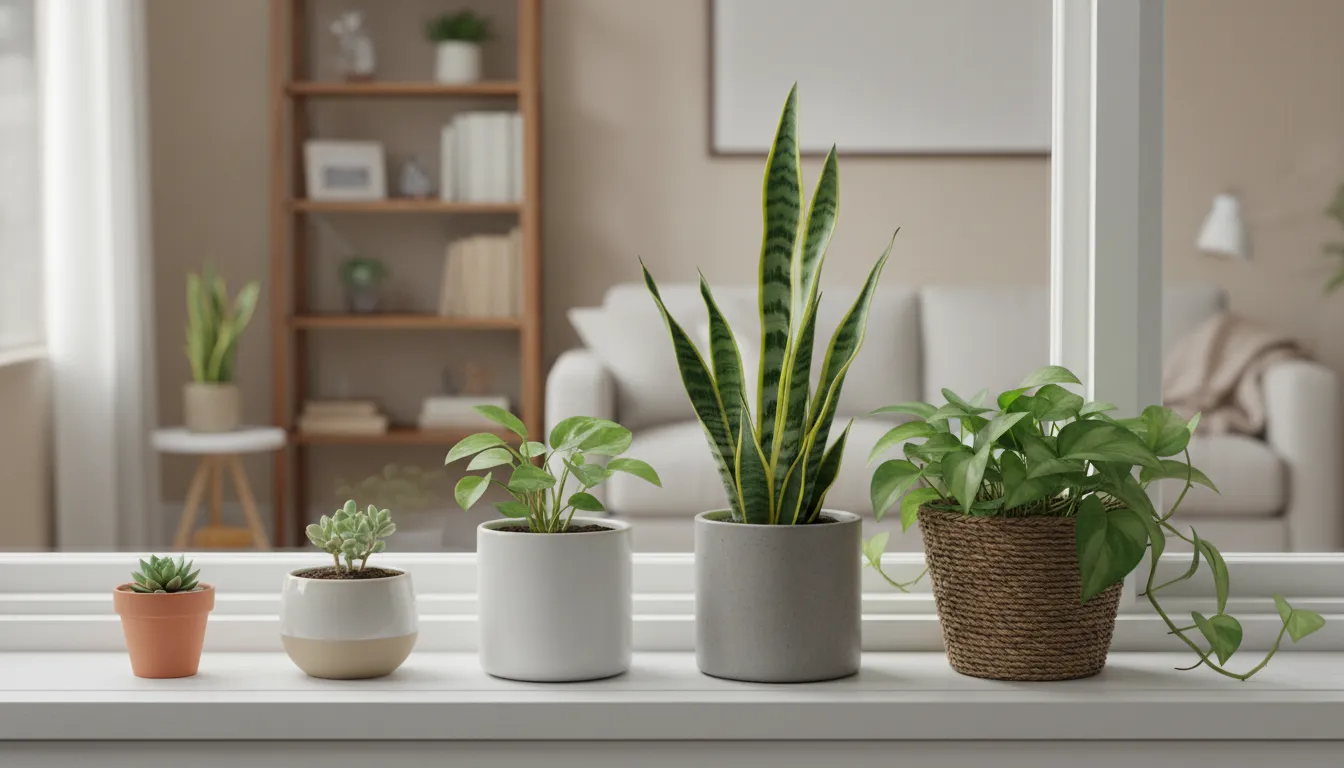
Having a plant at home seems simple — and it is. But who hasn’t bought a succulent full of enthusiasm only to watch it slowly wither on the living room window sill without understanding why? The good news is that growing plants indoors doesn’t require a botany degree, a professional greenhouse, or a strict care routine. With a bit of knowledge and the right choice of species, anyone can transform their apartment or house into a green and lively corner.
The interest in indoor plants has grown consistently in recent years, especially among city dwellers looking to reconnect with nature even in small spaces. Besides aesthetics, there are documented benefits for well-being: the presence of plants can contribute to a sense of calm and even improve air quality in enclosed spaces — although the real impact on air purification depends on various factors, such as the number of plants and room size. But that’s not all: caring for a living being creates routine, purpose, and a satisfaction that’s hard to explain to those who haven’t experienced it yet.
If you’re just starting, the most common question is: where to begin? This guide answers exactly that — from the most resilient species to watering, light, and soil tips, everything explained practically and without complication.
Why Some Plants Are Easier Than Others
Not every plant is made for apartment life. Species that need a lot of direct sunlight, very specific soils, or constant humidity tend to be challenging for beginners. The most recommended indoor plants for beginners are those that tolerate varied conditions: low light, forgotten watering, and air-conditioned environments.
The secret lies in understanding the concept of margin of error: the wider the range of conditions a plant tolerates, the easier it is to keep it alive. A species that survives with both weekly and biweekly watering, for example, already has a huge advantage over another that needs constant soil moisture.
Another important point is the plant’s natural habitat. Many popular indoor species naturally come from regions with dense forests and diffuse light — making them perfectly adapted to indoor environments, where lighting is rarely as intense as outdoors.
The Best Plants for Beginners
Below are some of the most recommended species for those taking their first steps in indoor plant cultivation. All are easily found in florists and markets throughout Brazil.
Pothos (Epipremnum aureum)
Perhaps the most resilient plant on the list. Pothos tolerates low light, irregular watering, and even poorly ventilated environments. Its green leaves with yellow spots grow in a climbing form, perfect for shelves or hanging pots. Water every 7 to 10 days when the soil is dry on the surface.
Snake Plant (Sansevieria trifasciata)
Also known as “mother-in-law’s tongue,” it is famous for surviving almost anything. It requires very sparse watering — in some cases, only once a month during cooler periods. It withstands indirect light and even dimness. It’s a great option for bedrooms and hallways.
Zamioculcas (Zamioculcas zamiifolia)
With dark and shiny leaves, the zamioculcas is elegant and extremely resilient. It stores water in its roots, making it highly tolerant of forgotten watering. Avoid overwatering — this is the main mistake with this species.
Swiss Cheese Plant (Monstera deliciosa)
One of the symbols of interior decoration in recent years. The cut leaves are unmistakable. It prefers indirect light and moderate watering when the soil is partially dry. It grows well in large pots and can reach considerable heights indoors.
Succulents and Cacti
For those with plenty of natural light available — a window facing north or east, for example — succulents and cacti are an excellent choice. They require spaced watering and direct sunlight but are practically foolproof if light conditions are met.
Understanding Light, Watering, and Soil: The Basic Triangle
All plant care revolves around three fundamental pillars: light, watering, and substrate (the mix used in the pot). Understanding how each works solves most problems.
Light
Direct light: sunlight directly hitting the plant. Good for cacti, succulents, and some herbs.
Bright indirect light: a bright environment without direct sunlight. Ideal for monsteras, pothos, and zamioculcas.
Low light: rooms with little window or far from them. Tolerated by snake plants and some ferns.
A common mistake is placing “shade” plants in windows with strong sun — the leaves burn. The opposite also happens: species that need light in dark places grow weak and with small leaves.
Watering
The most important rule is simple: water when the soil needs it, not by a fixed schedule. The most reliable way to check is to stick your finger about two centimeters into the substrate. If it’s dry, it’s time to water. If it’s still moist, wait longer.
Excess water is the main cause of death for indoor plants. It rots the roots in a process called root rot, which often has no solution.
Substrate
Each plant has a preference, but for most indoor species, a mix of:
Vegetal soil or universal substrate
Perlite or coarse sand (to improve drainage)
Humus or organic compost (optional, for nutrition)
Avoid using pure garden soil in pots: it compacts over time and harms the roots.
Pots and Drainage: A Detail That Makes All the Difference
One of the most common mistakes among beginners is ignoring the drainage holes at the bottom of the pot. Without them, water accumulates at the base and rots the roots, even if watering is done correctly. Always prefer pots with holes and place a saucer underneath to collect the excess.
If you’ve fallen in love with a pot without a hole, a solution is to use it as a cachepot — that is, place the pot with a hole inside the decorative one, without the plant having direct contact with the accumulated water.
As for the size of the pot, the general rule is: not too large. An excessively large pot retains too much moisture relative to the volume of roots, favoring rot. Prefer pots just slightly larger than the current root ball of the plant.
Fertilization: When and How to Nourish Your Plants
Plants in pots don’t have access to the nutrients of natural soil, so they need periodic fertilization to grow well. But this doesn’t have to be complicated:
Frequency: for most indoor species, fertilizing once a month during the growing period (spring and summer) is sufficient.
Type of fertilizer: liquid fertilizers are the easiest to use and dose. Slow-release solids are also practical and stay in the substrate for months.
Avoid in winter: during the colder period, plants grow less and need less nutrition. Over-fertilizing at this time can harm them.
Always read the instructions on the fertilizer packaging and, in case of doubt, use half the recommended dose — excess fertilizer can burn the roots.
Every week: check the soil of plants that need more frequent watering. Remove dry or yellowed leaves.
Every 15 days: clean the leaves with a damp cloth to remove dust — this improves light absorption.
Every month: fertilize during the growing period; check if roots are coming out through the pot holes (a sign it’s time to repot in a larger pot).
Every season: review the position of the plants as the sun’s intensity changes throughout the year.
Conclusion: Start Small and Grow with Your Plants
Starting with indoor plants is one of the most accessible and rewarding changes you can make at home. You don’t need to invest much, have plenty of space, or have excess free time. The secret is to choose the right species for your actual conditions — of light, routine, space — and learn the basic fundamentals of watering and soil.
Start with one or two resilient plants, like pothos or snake plant. Observe how they react to the environment, learn from mistakes (and everyone makes some), and gradually expand your collection as your confidence grows. The world of indoor plants is vast and full of possibilities — but the best way to enter it is with small steps, curiosity, and, most importantly, patience.
After all, plants grow at their own pace. And there’s something very valuable in learning to respect that rhythm.
Para fornecer as melhores experiências, usamos tecnologias como cookies para armazenar e/ou acessar informações do dispositivo. O consentimento para essas tecnologias nos permitirá processar dados como comportamento de navegação ou IDs exclusivos neste site. Não consentir ou retirar o consentimento pode afetar negativamente certos recursos e funções.
Funcional
Always active
O armazenamento ou acesso técnico é estritamente necessário para a finalidade legítima de permitir a utilização de um serviço específico explicitamente solicitado pelo assinante ou utilizador, ou com a finalidade exclusiva de efetuar a transmissão de uma comunicação através de uma rede de comunicações eletrónicas.
Preferências
O armazenamento ou acesso técnico é necessário para o propósito legítimo de armazenar preferências que não são solicitadas pelo assinante ou usuário.
Estatísticas
O armazenamento ou acesso técnico que é usado exclusivamente para fins estatísticos.O armazenamento técnico ou acesso que é usado exclusivamente para fins estatísticos anônimos. Sem uma intimação, conformidade voluntária por parte de seu provedor de serviços de Internet ou registros adicionais de terceiros, as informações armazenadas ou recuperadas apenas para esse fim geralmente não podem ser usadas para identificá-lo.
Marketing
O armazenamento ou acesso técnico é necessário para criar perfis de usuário para enviar publicidade ou para rastrear o usuário em um site ou em vários sites para fins de marketing semelhantes.