
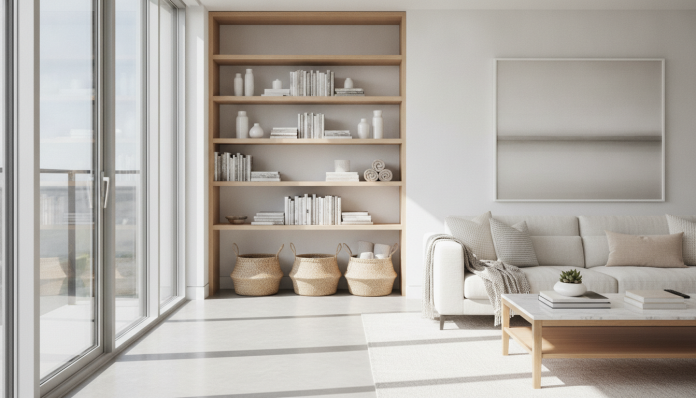
Keeping your home in order is a challenge that practically everyone faces — whether you live alone in a small apartment or share space with a large family. The hectic daily routine, work responsibilities, and personal commitments often cause home cleaning and organization to be put off. And that “later” keeps accumulating until chaos literally knocks on your door.
The good news is that maintaining a clean and organized environment doesn’t require free hours or a generous budget. With simple strategies, divided into small daily actions, it’s possible to transform your relationship with the space where you live. Behavioral and home organization studies have long shown that organized environments positively impact mood, productivity, and even sleep quality — making this topic much broader than simply “tidying up the house”.
In this article, we’ve gathered practical tips, proven methods, and simple guidance for those who want to take a real step-by-step approach to a lighter and more functional home routine. No matter the size of your property or how many people live in it: there’s something useful here for you.
Why home organization matters more than it seems
When we talk about an organized home, we’re not just talking about aesthetics. The physical environment we live in directly influences our mental state. A disorganized space tends to increase the feeling of cognitive overload — the brain constantly processes visual stimuli, and clutter acts as permanent “noise”.
Furthermore, a clean and organized home facilitates daily routines: finding objects easily, cooking without needing to clean first, receiving visitors without stress. All of this contributes to a calmer and more efficient life.
Home organization is also directly linked to safety. Clear floors reduce the risk of falls, organized cabinets prevent the accumulation of expired products, and airy and clean environments contribute to the respiratory health of the entire family.
The method of small daily actions
One of the biggest mistakes people make when trying to keep their home organized is waiting for a “general cleaning day”. When that day comes — usually on the weekend — the task has already become so big that it’s exhausting just to look at. The most efficient alternative is to distribute tasks throughout the week.
How to set up a functional weekly routine
- Define fixed and quick daily tasks: washing dishes, sweeping the kitchen, making the bed, and organizing surfaces (tables, countertops) before bed. Each of these actions takes a maximum of 5 to 10 minutes.
- Distribute larger tasks by day of the week: for example, Monday for bathrooms, Wednesday for vacuuming and mopping, Friday for more thorough kitchen cleaning.
- Reserve a fixed time each week for a “lightning round” of general organization — where each item out of place is returned to its proper location.
- Include all household members: dividing responsibilities is not only fair — it’s essential for the system to work. Even children can have age-appropriate tasks.
- Write it down or use a simple app to record your routine. Seeing what’s already been done is motivating.
The key here is consistency, not perfection. A “reasonably” organized home every day is much healthier than a spotless home once a month.
Organization: a place for everything
The most basic — and most powerful — principle of home organization is this: every object needs to have a fixed place. When this is defined, putting things away is easy and finding them is automatic.
Practical tips for organizing rooms
- Use boxes, baskets, and dividers: they create “addresses” within drawers and cabinets. Wicker or plastic baskets are functional and affordable.
- Label everything stored in a closed space: this is especially important for pantries, office cabinets, and utility shelves.
- Verticalize storage: wall shelves take advantage of vertical space and free up the floor — essential in small properties.
- Avoid excessive decorative surfaces: the more exposed objects, the harder it is to clean and the more “full” the environment looks.
- Store items close to where they’re used: pots near the stove, documents near the work desk, towels near the shower. It seems obvious, but many people ignore this principle.
Efficient cleaning: how to clean more in less time
Cleaning efficiently is a skill. With the right sequence and appropriate products, the time spent decreases significantly.
The correct order for cleaning
The correct sequence for cleaning a room is always: from top to bottom and from inside to outside.
- Dust off shelves and high areas.
- Clean mirrors, windows, and surfaces.
- Organize drawers and cabinets, if necessary.
- Clean the floor last — this way the dirt that fell during previous steps is already on the floor and will be removed.
In bathrooms, it’s ideal to apply cleaning products (such as descaler in the toilet and cleaner on faucets) and let them work while you clean the rest of the environment — saving time and scrubbing effort.
Products: less is more
Many people accumulate dozens of cleaning products at home, but in practice, few are truly necessary:
- All-purpose cleaner: solves most surfaces.
- Degreaser: essential in the kitchen.
- Descaler or sanitizer: for bathrooms.
- Glass cleaner: for mirrors and windows.
- Diluted bleach: an efficient and cheap disinfectant.
White vinegar diluted in water is a natural and economical alternative for cleaning surfaces, windows, and even eliminating odors — although it doesn’t replace disinfectants in cases where deep sanitization is necessary.
Pantry and kitchen: where organization matters most
The kitchen is the room that accumulates the most dirt and disorder on a daily basis. It’s also where organization has the most immediate impact on routine — after all, cooking in an organized environment is faster, safer, and much more pleasant.
- Organize the pantry by category: grains together, canned goods together, spices together. Use transparent containers for easier viewing.
- Follow the FIFO rule: First In, First Out. Place older products in front and newer ones in the back. This prevents waste and accumulation of expired items.
- Clean the refrigerator weekly: before shopping is the ideal time — the fridge is emptier and you can also check what needs to be replenished.
- Have an easily accessible trash can and empty it frequently. A full trash can is a source of odor and insects.
- Keep the sink always empty: this single habit transforms the feel of your kitchen.
How to deal with accumulation: the art of letting go
One of the biggest obstacles to keeping your home organized is the excess of objects. Over time, furniture, clothes, utensils, and knickknacks accumulate — and each additional item is one more item to clean, store, and find a place for.
The concept of domestic minimalism doesn’t mean living with almost nothing, but rather having only what is useful or cherished. A good way to start is with the so-called category-based sorting:
- Choose one category at a time (clothes, books, kitchen utensils, papers).
- Gather all items from that category in one place.
- For each item, ask yourself: do I use this? Do I need this? Does it bring me something positive?
- What’s “no” goes to donation, sale, or disposal.
- What stays needs to have a defined place.
Donation is always preferable to disposal when the item is still in good condition. There are various institutions and local groups that receive donations of clothing, furniture, and utensils.
Simple habits that make all the difference
Beyond major reorganizations and cleaning days, it’s the small daily habits that sustain an organized home over time. See some that make a big difference:
- Don’t put off what can be done now: if you’re going to put something away, do it immediately — don’t leave it “for now” in the wrong place.
- Remove shoes at the entrance: in addition to keeping the floor cleaner, it’s a proven effective hygiene habit.
- Make your bed right after waking up: start the day with a completed task and keep the bedroom visually tidier.
- Clean while cooking: while the rice is cooking, wash the cutting board you used. This prevents the pile of dishes at the end.
- Have a “displaced items basket”: a temporary location for objects that need to be returned to their place. Once a day, empty the basket.
Conclusion
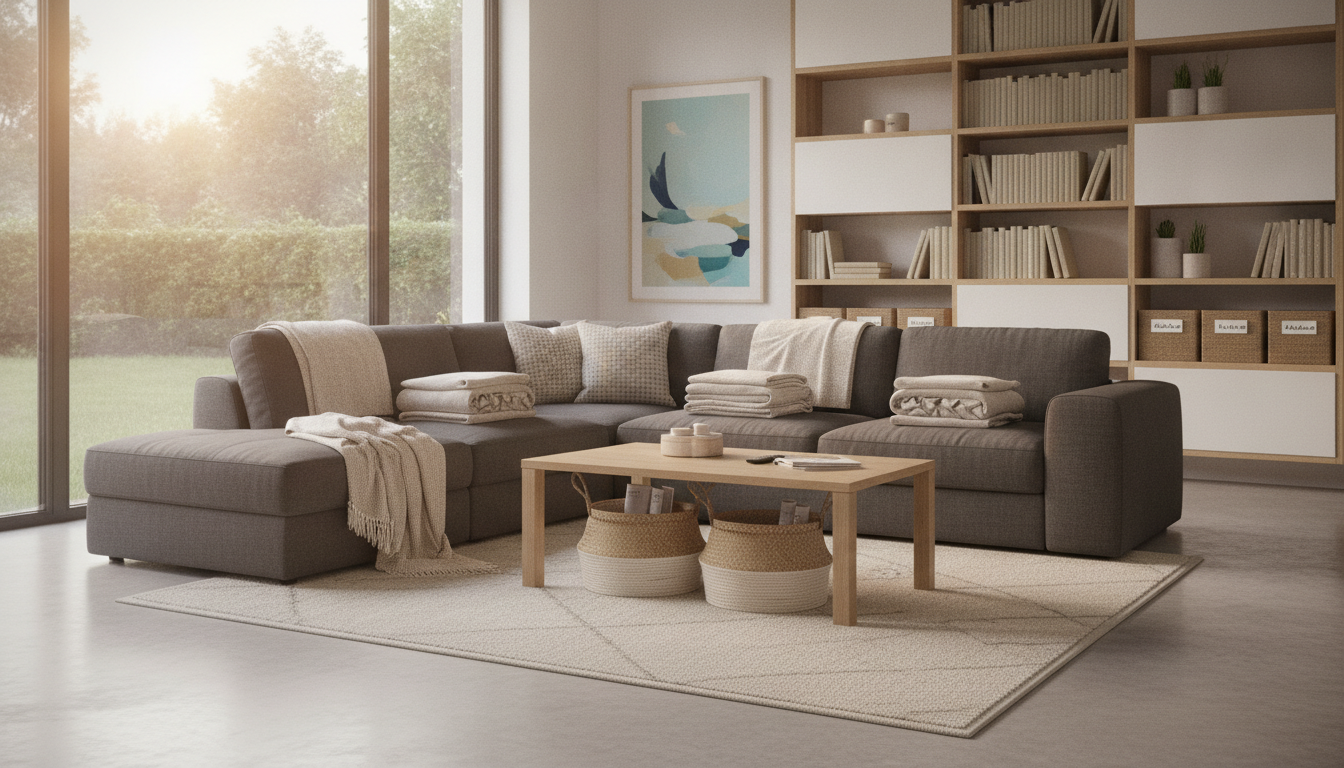
Keeping your home clean and organized in 2026 doesn’t have to be a herculean task — and certainly doesn’t have to dominate your weekends. With a well-distributed routine, a defined place for each object, the habit of cleaning in the right sequence, and periodic detachment from what’s no longer necessary, it’s possible to live in a lighter, more functional, and more pleasant environment.
The secret lies in the consistency of small actions, not in big one-time efforts. An organized home is not a destination to be reached at once — it’s the accumulated result of simple daily choices. And like any habit change, the beginning may seem difficult, but results appear quickly enough to motivate continuity.
If you’re looking to transform other areas of your routine with the same energy, it’s worth checking out our guide on how to start running from scratch — because taking care of the space you live in and taking care of your own body are two sides of the same coin.