
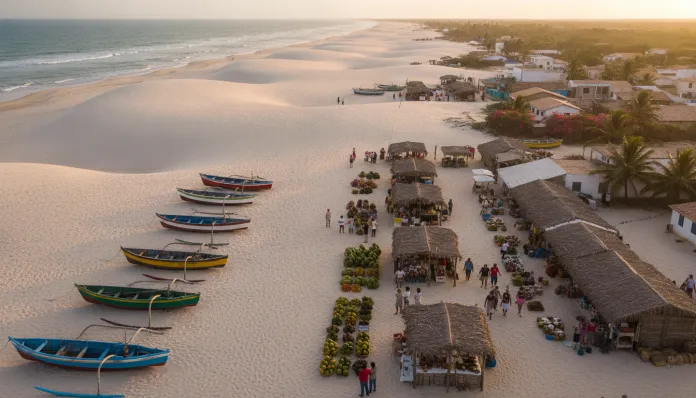
Northeast Brazil has been one of the most sought-after destinations for tourists across the country for decades—and it’s easy to see why. Warm beaches, distinctive cuisine, vibrant culture, and famously hospitable people create an irresistible combination. But there’s a question many ask before booking their tickets: Can you travel through the Northeast without spending a fortune? The answer, most of the time, is yes—as long as you know where and how.
By 2026, with domestic tourism on the rise and an ever-growing range of accommodation and transport options, the Northeast has solidified its position as one of Brazil’s most accessible routes for those looking to enjoy more while spending less. But “affordable” doesn’t mean compromising on quality or memorable experiences. It means, above all, smart planning.
In this article, you’ll find a practical and honest guide on how to plan a trip through the Northeast with conscious spending, which destinations offer the best value for money, when to travel, where to stay, and what shouldn’t be missed—without sacrificing the pleasure of the journey.
Why the Northeast is Naturally Affordable
The Northeast region comprises nine states—Maranhão, Piauí, Ceará, Rio Grande do Norte, Paraíba, Pernambuco, Alagoas, Sergipe, and Bahia—each with its own unique characteristics. What unites most of them, economically speaking for travelers, is a favorable combination of factors.
First, the local cost of living tends to be lower than in the South and Southeast regions of the country, which directly impacts the prices of food, transport, and services. A homemade meal at a popular restaurant in the interior of Ceará or Pernambuco, for example, usually costs significantly less than equivalents in São Paulo or Florianópolis.
Second, the tourist infrastructure has grown significantly in recent decades, especially in destinations like Fortaleza, Natal, Recife, Maceió, and Salvador. This has expanded the availability of hostels, simple inns, and apart-hotels with good price-quality ratios. Third, transportation between cities—whether by intercity bus or domestic flights—has become more competitive with the expansion of low-cost airlines.
Destinations with the Best Value for Money
Not every destination in the Northeast has the same economic profile. Some are more geared toward high-end tourism; others are genuinely affordable. Here’s an overview:
Fortaleza (CE)
The capital of Ceará is one of Brazil’s major tourist hubs and offers a wide range of prices. It’s possible to stay well in the mid-range, enjoy local seafood cuisine at reasonable prices, and use public transport to get around the waterfront. Praia do Futuro, the Dragão do Mar Center, and the Central Market are low-cost or free attractions.
Jericoacoara (CE)
Despite its fame and charm, Jeri has become progressively more expensive. The destination is beautiful but requires a more generous budget—especially for accommodation and food. It’s not the ideal destination for those looking to save money, unless traveling outside peak season.
Natal (RN)
Natal offers good value for money, especially in the neighborhoods of Ponta Negra and the central region. The Genipabu dunes are one of the most iconic attractions and can be accessed with tours at varying prices. The city has solid infrastructure and affordable food.
Maceió (AL)
Maceió is often pointed out as one of the best value-for-money destinations in the Northeast. The natural pools of Pajuçara, the beaches of Ponta Verde and Jatiúca, and the Craft Market combine beauty and affordable prices. The local cuisine, with fresh seafood, is one of the highlights.
Chapada Diamantina (BA)
For those who prefer nature and adventure over the sea, Chapada Diamantina, in the interior of Bahia, is an economic revelation. The base town, Lençóis, has simple and cozy inns, free or low-cost trails, and an independent traveler atmosphere that favors those who want to spend little.
When to Travel Makes All the Difference
Choosing the right time is one of the most impactful factors on your budget in any itinerary. In the Northeast, this is especially relevant.
- High season: July, December, and January are the busiest periods and, consequently, have higher prices for tickets and accommodation. Carnival also raises costs, especially in Salvador and Recife.
- Low season: From March to June (outside Carnival) and from August to November, prices drop significantly. Many destinations offer the same beauty at a much lower cost.
- Climate: The Northeast has climatic peculiarities. The rainy season varies by state—in the coastal areas, rains tend to be more intense in the first half of the year. This doesn’t mean the trip becomes unfeasible, but it’s worth researching the specific climate of each destination before planning.
The practical tip: travel in the pre or post-season (May-June or September-October) to get the best combination of affordable prices and favorable weather in most coastal destinations.
How to Save on Accommodation
Accommodation is usually one of the biggest expenses of any trip. In the Northeast, options are varied:
- Hostels and simple inns: abundant in almost all tourist destinations, especially those frequented by backpackers, like Maceió, Lençóis, and Fortaleza. The price-quality ratio is usually good.
- Seasonal rentals: property rental platforms allow you to rent apartments or houses, which can be very economical for groups or families.
- Avoid beachfront: accommodations two or three blocks from the beach tend to be significantly cheaper, with little practical difference in beach access.
- Advance bookings: even in the low season, booking in advance guarantees better prices and more choice options.
Dining: Where the Northeast Shines
Northeastern cuisine is a cultural heritage and, for the budget traveler, one of the region’s greatest advantages. The so-called “PF” (prato feito) or “quentinhas” in popular restaurants offer complete meals—rice, beans, protein, salad, and sides—at prices that are usually much lower than those in the major cities of the South and Southeast.
Some practical tips for eating well without spending much:
- Prefer public markets and street fairs—besides being cheap, they are rich cultural experiences. The São Joaquim Market in Salvador and the Boa Esperança Market in São Luís are classic examples.
- Try street food: tapioca, sugarcane juice, acarajé, skewers, and cocadas are part of the gastronomic itinerary and cost little.
- In beachfront restaurants, lunch is usually cheaper than dinner, even in the most well-known establishments.
- Coconut water directly from the coconut is plentiful, cheap, and refreshing—a natural luxury that the Northeast offers affordably.
Transport Within the Region: How to Get Around
To cover longer distances between states, air travel is often the most practical option—and, with planning, can be economical. The main northeastern cities have well-served airports, and flight promotions to destinations like Fortaleza, Recife, and Salvador regularly appear on search platforms.
For those with more time and less haste, interstate buses are a much cheaper alternative and allow you to see landscapes that planes don’t show. Transport companies cover routes between major destinations with reasonable comfort, especially in semi-sleeper and sleeper classes.
Within cities, public transport (buses and, in some capitals, metro) is the most economical option. Ride-hailing apps are also available in the capitals and work well for night trips or to places with difficult access.
To explore more distant beaches and destinations outside urban centers, hiring shared van or buggy tours—very common in the Northeast—tends to be more economical than renting a car, especially for solo travelers or pairs.
How Much Does It Cost, After All? A General Reference
It’s difficult to give precise numbers because prices vary greatly depending on the season, destination, travel style, and personal choices. But, generally and qualitatively, it’s possible to say that:
- A traveler with an economic profile (hostel or simple inn, meals in popular restaurants, public transport, and free or low-cost tours) can live well in destinations like Maceió or Natal with a very modest daily budget compared to other regions of Brazil.
- A traveler with an intermediate profile (mid-range hotel, some more elaborate restaurants, paid tours) can have a quality experience at a cost that still tends to be lower than equivalent destinations in the South or Southeast.
- Destinations like Jericoacoara, Trancoso (BA), or Fernando de Noronha (PE) completely deviate from this economic profile and require different financial planning.
Conclusion: Yes, It’s Worth It—with Planning

An affordable travel itinerary through the Northeast is not only feasible: it is, for many travelers, one of the best experiences Brazil can offer. The combination of breathtaking natural beauty, rich culture, unique cuisine, and a more accessible cost of living creates a real window of opportunity for those who want to travel well without breaking the bank.
The key is to choose destinations with a profile suitable for your budget, travel outside the high season whenever possible, prioritize local cuisine and public transport, and make reservations in advance. Chapada Diamantina, Maceió, Natal, and Fortaleza are excellent starting points for this style of travel.
If you’re still planning other aspects of your life besides travel—like organizing your routine better to create space for adventures like this—it’s worth checking out tips on practical home organization that can help free up time and energy for what really matters.
The Northeast awaits you. And your wallet will thank you.
- Try street food: tapioca, sugarcane juice, acarajé, skewers, and cocadas are part of the gastronomic itinerary and cost little.
- Seasonal rentals: property rental platforms allow you to rent apartments or houses, which can be very economical for groups or families.
- Low season: From March to June (outside Carnival) and from August to November, prices drop significantly. Many destinations offer the same beauty at a much lower cost.