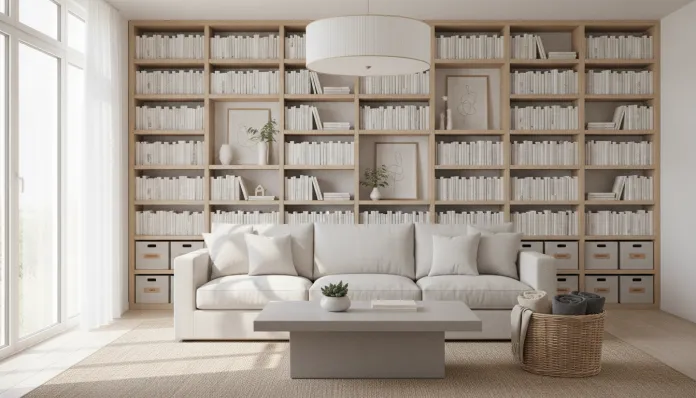
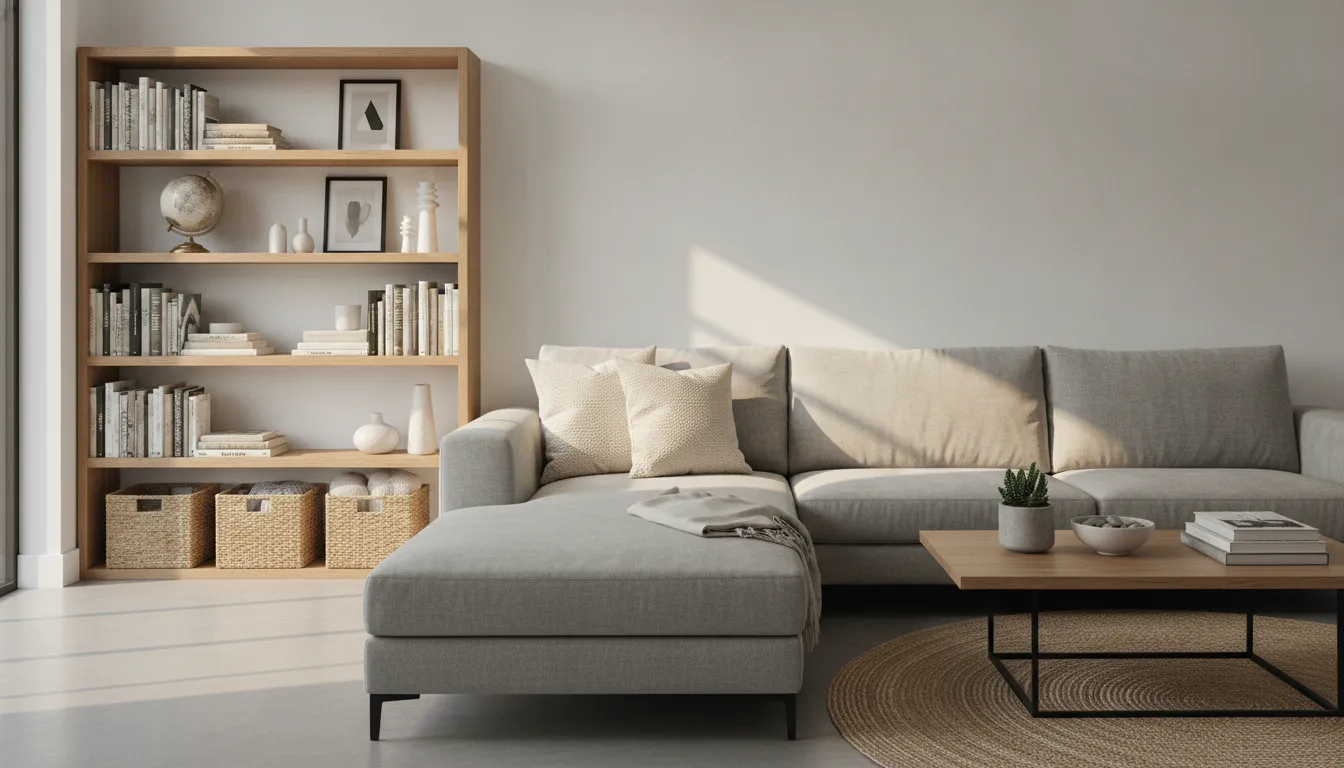
Who hasn’t felt lost amidst piles of clothes, overflowing drawers, and that paralyzing feeling of “where to start?” knows how much disorganization can weigh — not just physically, but mentally too. The good news is that organizing your home doesn’t have to be a weekend-long project or require a special talent that some seem to have while others don’t. With the right strategies, you can transform your living space with much less effort than you might think.
The secret lies in changing your approach: instead of trying to tackle everything at once, effective organization works in small, sustainable layers. Behavioral and interior design experts have long agreed on the same conclusion — organized environments reduce stress, boost productivity, and even improve sleep. It’s no exaggeration: what surrounds the body directly influences the state of the mind.
In this practical guide, you’ll find tested methods, accessible tips, and a logical sequence to organize every corner of your home without turning your life upside down. Let’s start at the beginning.
Why Disorganization Happens (and It’s Not Your Fault)
Before jumping into action, it’s worth understanding the mechanism behind clutter. Chronic disorganization is rarely laziness — it’s mostly the result of inadequate systems. When an item doesn’t have a fixed place to reside, it inevitably ends up on any available surface.
Another important factor is passive accumulation: items enter the house all the time — purchases, gifts, freebies, packaging — but rarely leave at the same rate. Over time, the volume simply exceeds the capacity of available spaces.
Understanding this is liberating because it shifts the focus: the problem isn’t you, it’s the system (or lack thereof). And systems can be created, adjusted, and maintained by anyone.
The Zone Method: Divide and Conquer
One of the most effective approaches to organizing without feeling overwhelmed is working by zones, rather than tackling an entire room at once. The logic is simple: each zone is a smaller, manageable section of space.
How to Define Your Zones
Choose a room to start with — preferably the one that bothers you most daily.
Mentally (or with paper) divide that room into smaller areas: the kitchen drawer, the hallway closet, the bedroom desk.
Dedicate 20 to 30-minute blocks to each zone, on different days if necessary.
Only move on to the next zone once the current one is complete.
This technique avoids the common “earthquake effect” — when you start organizing and leave everything worse because you tried to do it all at once.
The Principle of “A Place for Everything”
This is the foundation of any long-term organization system: every item in the house needs a fixed address. When you finish using something, it goes back to the same place, always.
It seems obvious, but most homes don’t function this way. The phone charger is on the table today, on the sofa tomorrow, then in the bathroom outlet. The result is that you never know where it is — and it never really has a place to stay.
How to Apply It Practically
When organizing a zone, ask for each item: “Where does it make the most sense to store this, considering where I use it?”
Frequently used items should be in easily accessible places (eye-level shelves, front drawers).
Rarely used items go to more distant spaces (high shelves, top boxes).
Items you don’t use and don’t need: leave the house.
This last point is where many people get stuck. Next, we’ll talk about that.
Letting Go Without Drama: What Stays and What Goes
The process of discarding is emotionally the most challenging part of home organization. Objects carry memories, guilt (“it was too expensive to throw away”), expectations (“I’ll use it someday”), and even identity. All of this is real and valid — but can be tackled with a more objective approach.
A very effective question when evaluating each item is: “If I were to buy this item today, would I buy it?” If the answer is no, it’s a strong sign that it doesn’t deserve space in your home.
Possible Destinations for What Goes
Donation: clothes in good condition, kitchen utensils, books, toys. Many organizations and collectives collect them for free.
Sale: second-hand selling platforms allow you to turn unused items into extra cash.
Recycling: electronics, papers, plastics, and metals have specific collection points in many cities.
Proper Disposal: damaged or unusable items go to common trash or selective collection, depending on the material.
Letting go doesn’t mean losing memories — it means consciously choosing what deserves space in your life now.
Tools and Products That Really Help
You don’t need to spend much to organize well. But some items make a real difference in creating functional systems.
Items with Great Cost-Benefit
Organizer boxes and baskets: visually unify shelves and group similar items. They can be cardboard, plastic, or fabric.
Drawer dividers: essential for kitchens and bathrooms, where small items tend to mix.
Labels: identifying the contents of boxes and shelves eliminates the constant question of “where is this?”.
Adhesive hooks: attach without drilling the wall and are great for optimizing doors and cabinet sides.
Vacuum bags: compress bedding, blankets, and winter clothes, freeing up significant space in closets.
The most common mistake is buying organizers before discarding. The result is that you end up organizing things you don’t need, filling boxes with unnecessary items. Always discard first, organize later, buy what’s missing last.
Maintenance Routines: How Not to Return to Square One
Organizing is an achievement; maintaining it is the real challenge. And here’s an important truth: organized homes don’t stay that way by magic — they stay organized through small daily habits.
The two-minute rule: if a task takes less than two minutes (putting away a shoe, folding a piece of clothing, washing a glass), do it now.
Nightly reset: before bed, spend five minutes returning everything to its place. Waking up to a minimally organized home changes the day’s mood.
One in, one out: whenever a new item enters the house, a similar one leaves. Bought a new blouse? An old one goes for donation.
Monthly discard day: reserve one day a month to review a zone of the house and see if unnecessary items have accumulated.
These habits are small individually, but together over time, they create an environment that practically maintains itself.
Digital Organization: The Chaos You Don’t See but Feel
In 2026, an organized home isn’t just physical. Digital chaos — unnamed files, accumulated downloads, forgotten apps, unread emails — generates silent stress that many people don’t even associate with disorganization.
First Steps for Digital Organization
Create a clear folder structure on your computer and phone (by category or year).
Delete apps you haven’t used in over three months.
Disable unnecessary notifications — each interrupted alert is preserved mental energy.
Regularly back up important photos and documents to the cloud or an external hard drive.
Unsubscribe from marketing emails you never open.
Digital organization follows the same principles as physical: a place for everything, regular discarding, and constant maintenance.
Conclusion
Organizing your home with less effort and more results is, above all, a matter of strategy. It’s not about having a lot of free time or being naturally tidy — it’s about creating systems that work for your lifestyle, letting go of what no longer serves you, and maintaining small habits that prevent regression into chaos.
Start small. Choose a drawer, a shelf, a corner. Apply the principle of “a place for everything.” Discard before buying any organizer. And gradually, expand this logic to the rest of the house.
The result isn’t just a more beautiful environment — it’s a lighter mind, a less stressful routine, and a more conscious relationship with the objects you choose to keep around you. This has a value that goes far beyond aesthetics.
Para fornecer as melhores experiências, usamos tecnologias como cookies para armazenar e/ou acessar informações do dispositivo. O consentimento para essas tecnologias nos permitirá processar dados como comportamento de navegação ou IDs exclusivos neste site. Não consentir ou retirar o consentimento pode afetar negativamente certos recursos e funções.
Funcional
Always active
O armazenamento ou acesso técnico é estritamente necessário para a finalidade legítima de permitir a utilização de um serviço específico explicitamente solicitado pelo assinante ou utilizador, ou com a finalidade exclusiva de efetuar a transmissão de uma comunicação através de uma rede de comunicações eletrónicas.
Preferências
O armazenamento ou acesso técnico é necessário para o propósito legítimo de armazenar preferências que não são solicitadas pelo assinante ou usuário.
Estatísticas
O armazenamento ou acesso técnico que é usado exclusivamente para fins estatísticos.O armazenamento técnico ou acesso que é usado exclusivamente para fins estatísticos anônimos. Sem uma intimação, conformidade voluntária por parte de seu provedor de serviços de Internet ou registros adicionais de terceiros, as informações armazenadas ou recuperadas apenas para esse fim geralmente não podem ser usadas para identificá-lo.
Marketing
O armazenamento ou acesso técnico é necessário para criar perfis de usuário para enviar publicidade ou para rastrear o usuário em um site ou em vários sites para fins de marketing semelhantes.