
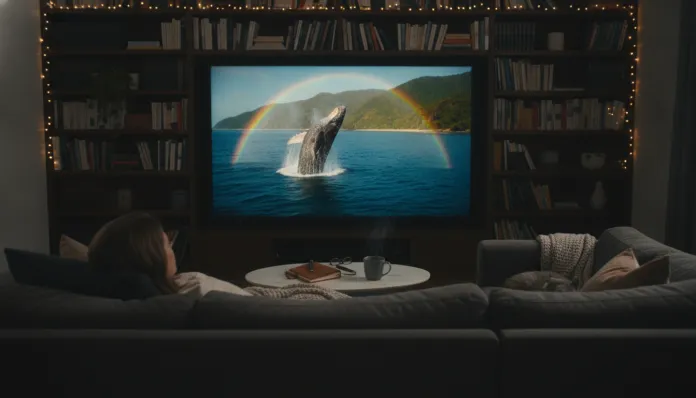
Why Documentaries Are One of the Most Powerful Ways to Learn
Imagine learning about the history of the universe, the behind-the-scenes of a war, or the workings of the human brain without leaving your couch — and feeling completely entertained while doing so. This is exactly what the best documentaries do: they transform dense knowledge into visual and emotional experiences that stay with you for years.
In recent years, platforms like Netflix, HBO Max, Apple TV+, Disney+, and YouTube have heavily invested in producing high-quality documentaries. The result is an enormous library, but also a challenge: with so much available, how do you choose what is truly worth your time? The answer lies in selecting those titles that combine engaging storytelling with solid factual content — the so-called “essential” documentaries that educate without feeling like a lecture.
This article gathers some of the most relevant productions by area of knowledge, with practical recommendations for those who truly want to learn while watching. Whether you’re curious about science, history, human behavior, or technology, there’s something in this list to expand your worldview.
Science and Nature: The World Beyond What You See
Few formats work as well for science as documentaries. High-resolution images, expert narration, and careful editing make complex phenomena visually understandable.
Reference Titles
- “Cosmos: A Spacetime Odyssey” (2014) — Presented by astrophysicist Neil deGrasse Tyson, this National Geographic and Fox series is an update of Carl Sagan’s classic. In 13 episodes, it explores the origin of the universe, the evolution of stars, and humanity’s place in the cosmos. It is considered one of the best examples of scientific dissemination ever produced for television.
- “Our Planet” (2019) — A Netflix production narrated by David Attenborough, featuring global wildlife footage filmed over four years. The unique aspect is that each episode contextualizes what was filmed within ongoing climate changes, connecting natural beauty with real environmental data.
- “The Human Body” (BBC, 1998) — Older but still impressive for its scientific accuracy. It shows the internal workings of the human body with pioneering imaging resources of the time. It’s great for those who want to understand biology without opening a textbook.
History and Society: The Past That Explains the Present
Understanding the present becomes much easier when you know the past. Well-produced historical documentaries go beyond dates and names — they contextualize events, present different perspectives, and reconstruct scenarios with rich detail.
Reference Titles
- “World War II in Color” (2009, Netflix) — One of the most accessible ways to understand World War II. Colorized images from historical archives give a more human dimension to the conflict, while the narration presents the facts chronologically and clearly.
- “13th” (2016, Netflix) — Directed by Ava DuVernay, this documentary analyzes the American prison system and its relation to the history of slavery in the United States. It was nominated for an Oscar and is widely used in social sciences and law courses in universities around the world.
- “The Last Dance” (2020, Netflix/ESPN) — Technically about basketball, but in practice, it’s an in-depth dive into 1990s American culture, the psychology of high performance, and the inner workings of an elite sports organization. Using the journey of Michael Jordan and the Chicago Bulls, the documentary teaches a lot about leadership, pressure, and teamwork.
Technology and Innovation: Understanding the Digital World
Technology advances at a rapid pace, and it’s often hard to keep up with what’s happening — and more importantly, why. Documentaries in this area help put innovations in historical and social perspective.
Reference Titles
- “The Social Dilemma” (2020, Netflix) — Brings together former employees of companies like Google, Facebook, and Twitter to discuss the effects of digital platform design on human behavior. It’s one of the most-watched documentaries of recent years and sparked relevant debates about mental health, algorithms, and social media addiction.
- “AlphaGo” (2017) — Available for free on YouTube. Documents the historic match where a DeepMind artificial intelligence system defeated the world champion of Go, a game considered much more complex than chess. It’s an excellent entry point to understand what machine learning is in practice — and what its implications are. To delve deeper into how technology affects daily life, it’s worth reading about how facial recognition technology identifies your face.
- “General Magic” (2018) — Tells the story of a 1990s technology company that never took off, but whose founders helped create the iPhone, Android, and other products that shaped the 21st century. It’s a fascinating lesson on innovation, failure, and learning.
Human Behavior and Psychology: Understanding People (and Yourself)
Some of the most impactful documentaries are those that force us to look inward — or understand why others act the way they do.
Reference Titles
- “Icarus” (2017, Netflix) — Starts as a personal experiment on doping in amateur sports and ends up revealing one of the biggest systematic doping scandals in Olympic history. It won the Oscar for Best Documentary in 2018. It teaches about ethics, temptation, and the consequences of individual choices in larger systems.
- “The Mind, Explained” (2019, Netflix) — A short series (episodes of about 20 minutes) that covers memory, anxiety, meditation, psychedelics, and dreams based on real scientific research. Accessible without being superficial.
- “Free Solo” (2018, National Geographic) — Documents climber Alex Honnold’s ascent of El Capitan in Yosemite without any safety equipment. Beyond the spectacular physical aspect, the film delves deep into the psychology of someone living on the extreme edge — and poses serious questions about fear, obsession, and motivation.
Economics and Business: How Money and Power Work
Understanding how the economy works — and how big companies and financial systems operate — is a form of citizenship. These documentaries make dry topics surprisingly engaging.
Reference Titles
- “Inside Job” (2010) — Winner of the Oscar for Best Documentary, it analyzes the causes of the 2008 global financial crisis. Interviews with economists, regulators, and bankers create a detailed picture of how the deregulation of the American financial sector led to a global catastrophe. Still extremely relevant for understanding the current banking system.
- “Abstract: The Art of Design” (2017, Netflix) — A series that follows designers from different fields — from footwear to architecture — and explores how design shapes products, cities, and experiences. It’s also a lesson on applied creativity and the creative process.
- “Jiro Dreams of Sushi” (2011) — Portrays Jiro Ono, a Japanese chef over 80 years old considered the world’s greatest sushi expert, whose restaurant has three Michelin stars. It’s a documentary about excellence, discipline, and dedication to work — themes that apply to any area of life. Those interested in the habits of high-performing people may also like to read about the habits that differentiate successful people in daily life.
How to Best Enjoy a Documentary
Watching a documentary passively is completely valid. But if the goal is to truly learn, a few simple practices make a difference:
- Take notes of questions while watching. If something sparks curiosity, write it down. This creates a natural research roadmap for later.
- Check the sources presented. Good documentaries cite experts and real data. Find out more about who was interviewed and their field of expertise.
- Watch with someone and discuss. Documentaries on complex topics gain another dimension when discussed. Different perspectives enrich understanding.
- Use subtitles in the original language when possible. Documentaries in English, for example, with English subtitles, improve language comprehension at the same time.
- Don’t treat the documentary as absolute truth. Every documentary has a point of view. Identifying the director’s perspective is part of critical learning.
- Research what was left out. Many topics are presented in a summarized form due to time constraints. Use the documentary as a starting point, not an end.
A Quick List by Platform
To make searching easier, here is a practical guide to where to find titles mentioned in this article:
- Netflix: Our Planet, The Social Dilemma, The Mind Explained, Icarus, 13th, The Last Dance, Inside Job, Abstract
- YouTube (free): AlphaGo, Cosmos (episodes available on official channels)
- National Geographic / Disney+: Free Solo, Cosmos: A Spacetime Odyssey
- Rental platforms (like Prime Video or Apple TV+): Jiro Dreams of Sushi, General Magic, World War II in Color
Conclusion: The Screen Can Be a Classroom
Documentaries do not replace books, courses, or lived experiences — but they are one of the most democratic and accessible ways to engage with ideas that would otherwise require years of specialized study. A good documentary can ignite a curiosity that lasts decades.
In 2026, with easier access than ever to quality productions, the challenge is no longer finding content — it’s choosing wisely and watching with intention. The titles gathered in this article were selected precisely for this combination: engaging storytelling and verifiable content that teaches without feeling obligatory.
Choose a title, prepare your favorite spot on the couch, and let the screen be, for an hour or two, a window into something you don’t yet know — but are about to discover.
- YouTube (free): AlphaGo, Cosmos (episodes available on official channels)
- Check the sources presented. Good documentaries cite experts and real data. Find out more about who was interviewed and their field of expertise.
- Take notes of questions while watching. If something sparks curiosity, write it down. This creates a natural research roadmap for later.
- “Jiro Dreams of Sushi” (2011) — Portrays Jiro Ono, a Japanese chef over 80 years old considered the world’s greatest sushi expert, whose restaurant has three Michelin stars. It’s a documentary about excellence, discipline, and dedication to work — themes that apply to any area of life. Those interested in the habits of high-performing people may also like to read about the habits that differentiate successful people in daily life.
- “Abstract: The Art of Design” (2017, Netflix) — A series that follows designers from different fields — from footwear to architecture — and explores how design shapes products, cities, and experiences. It’s also a lesson on applied creativity and the creative process.
- “Inside Job” (2010) — Winner of the Oscar for Best Documentary, it analyzes the causes of the 2008 global financial crisis. Interviews with economists, regulators, and bankers create a detailed picture of how the deregulation of the American financial sector led to a global catastrophe. Still extremely relevant for understanding the current banking system.
- “Free Solo” (2018, National Geographic) — Documents climber Alex Honnold’s ascent of El Capitan in Yosemite without any safety equipment. Beyond the spectacular physical aspect, the film delves deep into the psychology of someone living on the extreme edge — and poses serious questions about fear, obsession, and motivation.
- “The Mind, Explained” (2019, Netflix) — A short series (episodes of about 20 minutes) that covers memory, anxiety, meditation, psychedelics, and dreams based on real scientific research. Accessible without being superficial.
- “Icarus” (2017, Netflix) — Starts as a personal experiment on doping in amateur sports and ends up revealing one of the biggest systematic doping scandals in Olympic history. It won the Oscar for Best Documentary in 2018. It teaches about ethics, temptation, and the consequences of individual choices in larger systems.
- “General Magic” (2018) — Tells the story of a 1990s technology company that never took off, but whose founders helped create the iPhone, Android, and other products that shaped the 21st century. It’s a fascinating lesson on innovation, failure, and learning.
- “AlphaGo” (2017) — Available for free on YouTube. Documents the historic match where a DeepMind artificial intelligence system defeated the world champion of Go, a game considered much more complex than chess. It’s an excellent entry point to understand what machine learning is in practice — and what its implications are. To delve deeper into how technology affects daily life, it’s worth reading about how facial recognition technology identifies your face.
- “The Social Dilemma” (2020, Netflix) — Brings together former employees of companies like Google, Facebook, and Twitter to discuss the effects of digital platform design on human behavior. It’s one of the most-watched documentaries of recent years and sparked relevant debates about mental health, algorithms, and social media addiction.
- “The Last Dance” (2020, Netflix/ESPN) — Technically about basketball, but in practice, it’s an in-depth dive into 1990s American culture, the psychology of high performance, and the inner workings of an elite sports organization. Using the journey of Michael Jordan and the Chicago Bulls, the documentary teaches a lot about leadership, pressure, and teamwork.
- “13th” (2016, Netflix) — Directed by Ava DuVernay, this documentary analyzes the American prison system and its relation to the history of slavery in the United States. It was nominated for an Oscar and is widely used in social sciences and law courses in universities around the world.
- “World War II in Color” (2009, Netflix) — One of the most accessible ways to understand World War II. Colorized images from historical archives give a more human dimension to the conflict, while the narration presents the facts chronologically and clearly.
- “The Human Body” (BBC, 1998) — Older but still impressive for its scientific accuracy. It shows the internal workings of the human body with pioneering imaging resources of the time. It’s great for those who want to understand biology without opening a textbook.
- “Our Planet” (2019) — A Netflix production narrated by David Attenborough, featuring global wildlife footage filmed over four years. The unique aspect is that each episode contextualizes what was filmed within ongoing climate changes, connecting natural beauty with real environmental data.


