
The World Cup in Surprising Facts You Probably Didn’t Know
Few events in human history can halt the world like the FIFA World Cup. Every four years, billions of people worldwide drop everything to follow matches that sometimes last only ninety minutes but leave lifelong marks. It’s a tournament that combines individual talent, collective strength, psychological pressure, and a huge dose of chance — all of which together create stories that withstand the test of time.
But behind the famous goals and unforgettable finals lies a layer of curiosities, records, and episodes that most fans have never heard of. The world’s most famous football competition has a much richer, stranger, and more fascinating history than the scores suggest. Since its inception in the 1930s, up to the most recent tournaments, the World Cup has accumulated facts that surprise even the most experienced fans.
This article gathers some of these surprising facts, organized for those who want to know the World Cup beyond the obvious — and understand why this tournament is by far the greatest sporting spectacle on the planet.
The Beginning: 1930 and the Tournament That Almost Didn’t Happen
The first World Cup was held in 1930, in Uruguay. The choice of the country wasn’t arbitrary: the Uruguayans were Olympic football champions in 1924 and 1928, and the country was celebrating the centenary of its constitution. It seemed like the perfect stage. But the tournament almost didn’t come to fruition.
Several European countries refused to participate, claiming that the ship journey to South America was too long — about three weeks of crossing. In the end, only four European teams made the trip: France, Belgium, Yugoslavia, and Romania. The other 9 teams came from the Americas.
The tournament featured 13 teams in total, and Uruguay emerged as champions by beating Argentina 4-2 in the final, held at the Centenario Stadium in Montevideo. Ironically, Argentina and Uruguay reached the semifinals without having faced each other before — and the final turned out to be the most-watched football game in history up to that point.
Records That Defy Imagination
The World Cup is fertile ground for records. Some are well-known; others cause genuine astonishment when revealed.
- Highest score in history: The biggest victory recorded in a World Cup was Hungary 10 x 1 El Salvador, in 1982, in Spain.
- Most goals in a single edition: The 1954 World Cup in Switzerland produced an average of 5.38 goals per game — the highest ever. In total, there were 140 goals in 26 matches.
- Top scorer in history: German Miroslav Klose is the top scorer in World Cup history, with 16 goals scored over four tournaments (1998 to 2014).
- Fastest goal: Turkish Hakan Şükür scored the fastest goal in World Cup history, just 11 seconds into the match against South Korea in the third-place playoff in 2002.
- Most titles: Brazil is the country with the most wins, with five titles — in 1958, 1962, 1970, 1994, and 2002. It is also the only team to have participated in every edition of the tournament without exception.
Bizarre Stories the World Cup Holds
The Game That Never Ended
In 1994, during the quarter-finals held in the United States, Bulgaria and Germany experienced a dramatic game. But an even stranger episode occurred years earlier: in the 1938 World Cup, the match between Italy and France had to be replayed after a draw, something that today would be resolved by penalties. The tiebreak system has evolved greatly over the decades — penalty shootouts were only officially adopted as a resource in the tournament starting from 1978.
The Host Country Without a Qualified Team
In 2010, South Africa became the first African nation to host a World Cup — and it was a historic milestone. But few remember that South Africa is also the only host country to be eliminated in the group stage, without winning any matches in that edition.
The Goalkeeper Who Scored a Penalty
In the 1966 World Cup in England, Colombian goalkeeper Antonio Carbajal had already been the first player to play in five consecutive World Cups (from 1950 to 1966). But stories of goalkeepers scoring goals in World Cup matches exist in later editions over the decades — something that remains an extreme rarity.
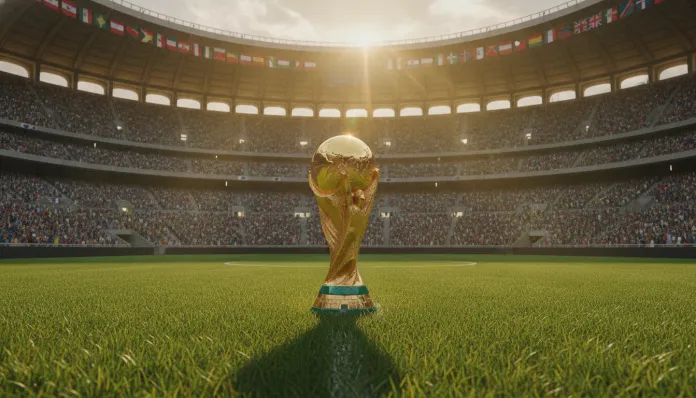
The Jules Rimet Trophy and the Case of the Stolen Cup
The original World Cup trophy had a name: Jules Rimet Trophy, in honor of the FIFA president who conceived the tournament. And it has a story worthy of a crime movie.
In 1966, a few months before the start of the World Cup in England, the trophy was stolen during an exhibition in London. The whole world was in shock. Four days later, the trophy was found wrapped in newspaper, under a bush in Norwood, south London, by a dog named Pickles. The animal became an instant celebrity.
But the story doesn’t end there. In 1983, the trophy was stolen again, this time in Brazil — where it had been permanently awarded to the country after its third win in 1970. The trophy was never found again. It is believed to have been melted down by thieves for the gold. Therefore, the trophy used in competitions today is a different replica, created in 1974 and known simply as the FIFA World Cup Trophy.
Countries and Their Relationships with the Tournament
Teams with Curious Histories
- Germany (between the Western and unified eras) is the team with the most finals played — reaching the final decision on eight occasions throughout history.
- Hungary, in the 1950s, was considered the best team in the world and the absolute favorite in the 1954 World Cup. They lost the final to West Germany 3-2, in a result still known today as “The Miracle of Bern”.
- North Korea participated in the 1966 World Cup and surprised everyone by eliminating Italy in the group stage — a result still remembered as one of the biggest upsets in the tournament’s history.
The Most Watched World Cup in Recent History
The 2022 World Cup in Qatar was the first held in an Arab country and the first played in November and December, deviating from the traditional June and July schedule. The tournament will be expanded to 48 teams starting from the 2026 edition, co-hosted by the United States, Canada, and Mexico — marking yet another unprecedented chapter in this nearly hundred-year-old history.
Trivia Worth Its Weight in Gold
For sports trivia enthusiasts, the World Cup is an inexhaustible mine. Here are some additional facts that rarely appear in conventional summaries:
- Brazil played the 1950 final without there being an official final match — the last round of the final round-robin, between Brazil and Uruguay, ended up deciding the title, but wasn’t technically a “grand final”. Uruguay won 2-1, in a match known as the Maracanazo.
- Pelé is the only player to win three World Cups (1958, 1962, and 1970), although in 1962 he was injured early on and participated little.
- The referee of the 1966 final, Gottfried Dienst, remains controversial for validating England’s goal that hit the post and stayed on the line — or inside, depending on who you ask.
- The 1942 and 1946 World Cups were canceled due to the Second World War, creating a 12-year gap between the 1938 and 1950 editions.
Conclusion: A History Still Being Written
The World Cup is much more than a football tournament. It is a living archive of human history — with its improbable glories, collective dramas, unexpected heroes, and records that defy logic. Each edition adds a new chapter to a narrative that began in 1930 and that, in 2026, gains another memorable page with the most extensive tournament in history, held simultaneously in three countries.
What makes the World Cup so fascinating is precisely this combination: the grandeur of the spectacle with the humanity of the details. A dog that found the stolen trophy. A goal in eleven seconds. A tournament that almost didn’t happen. These facts don’t diminish the competition — on the contrary, they make it even richer and more surprising.
If you want to better understand how Brazil and its culture connect with global-scale events, it’s worth exploring Brazilian popular festivals: where the origins come from — because football, like festivals, is a genuine expression of national identity, full of history and collective meaning.