
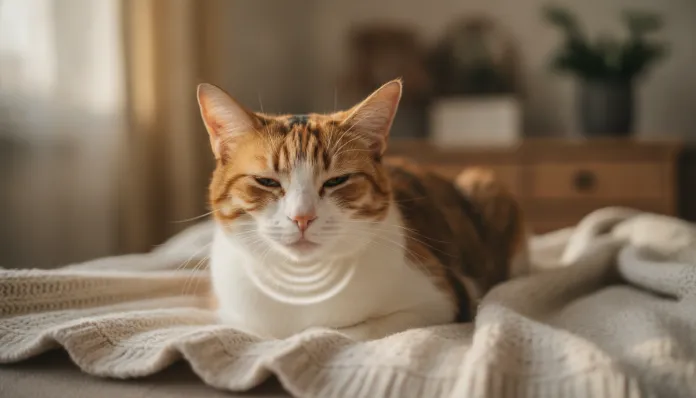
There is a sound that any cat owner knows well: that soft, rhythmic hum that starts almost out of nowhere, usually when the feline is comfortable on your lap or being petted. A cat’s purr is one of the most recognizable animal manifestations in the world, and also one of the most fascinating. But what exactly happens inside a cat’s body to produce this sound? Why do they do it — and is it always because they are happy?
The answer involves anatomy, neurology, animal behavior, and even a bit of scientific mystery. Despite cats living with humans for thousands of years, purring still holds secrets that researchers continue to investigate. What is already known is surprising enough to change the way you look at your cat the next time it starts “revving” on your lap.
In this article, we’ll explore the mechanics behind purring, the reasons cats resort to it in different situations — not always pleasant ones — and what science has discovered about the possible effects of this sound on the animal itself and even on humans around them.
How Purring is Physically Produced
For decades, scientists debated the exact origin of purring. Today, the most accepted explanation involves the larynx (the voice box) and the muscles that control it. Unlike meowing, which is produced similarly to the human voice, purring results from a specific and continuous mechanism.
The process works like this: the cat receives signals from the central nervous system that cause the laryngeal muscles to contract and relax at high frequency — between 25 and 150 times per second. This rapid movement dilates and restricts the glottis (the opening between the vocal cords) during inhalation and exhalation. The result is that continuous vibration we hear as purring, both when the cat inhales and exhales — hence the uninterrupted sound, different from other vocalizations.
This ability is relatively rare among felines. Most big cats, like lions and tigers, cannot purr continuously as domestic cats do. Instead, they roar. Roaring felines have a structure in the hyoid bone (a small bone in the throat) that is partially cartilaginous and flexible, allowing them to roar. Felines that purr, including domestic cats, pumas, and cheetahs, have this bone more rigid and ossified. It’s an evolutionary trade-off: you either roar or purr.
The Reasons Behind Purring — It’s More Than Just Happiness
The most common interpretation is simple: a purring cat is a happy cat. And in many cases, this is true. Cats purr when being petted, when they are comfortable, when nursing, or nursing kittens. But the reality is much more complex.
Animal behavior researchers have identified that cats also purr in situations of stress, pain, fear, and even in moments leading up to death. Cats in veterinary clinics, clearly anxious, often purr. Cats in labor purr. Sick or injured cats purr.
This has led scientists to propose that purring may function as a self-regulation mechanism — a way for the animal to calm itself and possibly stimulate its body’s healing. The theory is not just speculative: it finds support in research on the vibration frequencies involved.
The Vibration Healing Hypothesis
One of the most intriguing theories about purring is that it may have therapeutic properties — for the cat itself. The frequency of domestic cat purring generally ranges between 25 and 50 Hz, with some reaching up to 150 Hz. Interestingly, studies in medicine and physiotherapy have shown that vibrations in this frequency range can stimulate bone formation, accelerate tissue healing, and reduce inflammation.
This would explain a phenomenon long observed by veterinarians: cats tend to recover from fractures and musculoskeletal injuries faster than dogs of similar size. The English expression “a cat always lands on its feet” has roots not only in the animal’s agility but possibly in this regenerative capability.
Although studies have not yet established a definitive causal relationship — that is, it is not 100% proven that purring causes faster healing — the correlation between frequencies and known biological effects is robust enough to continue being investigated. It is an active area of research in veterinary medicine and bioacoustics.
Kittens, Mothers, and Purring as Language
Purring starts early. Kitten cats can purr at just a few days old, even before opening their eyes. For them, purring has a clear communicative function: it is a way to signal to the mother that they are well and to maintain contact during nursing. Since the mother is busy nursing, she cannot meow — meowing would require pausing breathing in a way that would hinder sucking. Purring, being continuous, solves this problem.
The mother, in turn, purrs back. This “dialogue” of purrs creates a bond of communication that precedes any more complex vocalization. It is, in a sense, the first language a cat learns.
Over time, domestic cats develop variations of purring specifically aimed at interacting with humans. Researchers at the University of Sussex in the UK described a specific type called “solicitation purring”. This purr embeds an additional high-pitched frequency, similar to a human baby’s cry, making it more urgent and hard to ignore. Owners describe this sound as more “insistent” — and it usually appears when the cat wants food. It is a fascinating example of how domestic felines have adapted their behavior over millennia of cohabiting with humans.
What Humans Feel When Hearing Purring
It’s not your imagination: being near a purring cat does indeed feel relaxing. There is research suggesting that purring can reduce stress and blood pressure in humans, and is associated with a reduced risk of cardiovascular diseases in people who live with cats. A frequently cited study in this area, conducted in the United States, suggested that cat owners have a lower risk of death from heart attack compared to people without pets — although it’s always important to remember that correlation does not imply causation, and lifestyle factors also play a role in this equation.
In any case, the human body’s response to vibrations in the purring frequency range can have real physiological effects, including the release of hormones associated with relaxation. To deepen your interest in how animals surprise science with their capabilities, check out the article Why the Most Amazing Animals Surprise Science.
> Important: The health information presented here is general and informative. Any issues related to human health or your animal’s well-being should be evaluated by a qualified professional — doctor or veterinarian.
Not All Felines Purr the Same
There is significant variation between individuals. Some cats purr almost all the time; others are notoriously silent. More reserved cats or those who have experienced trauma may rarely purr, even when they seem comfortable. More sociable and extroverted cats tend to purr more frequently and in more situations.
Breeds also make a difference. Some breeds known for being vocally active, like the Siamese, tend to meow a lot and purr more moderately. Breeds like the Ragdoll and the Maine Coon are often cited by owners as big purrers.
Below is a practical summary of what purring can indicate:
- Soft and rhythmic purring during petting: generally indicates contentment and relaxation
- Purring while eating or waiting for food: comfort and anticipation
- Purring in tense situations (vet visits, loud noises): self-calming mechanism
- Purring in sick or injured cats: possible self-regulation and relief function; deserves veterinary attention
- Purring with embedded high frequency: likely a request for something, often food
- Purring of kittens during nursing: communication with the mother and signaling of well-being
Conclusion
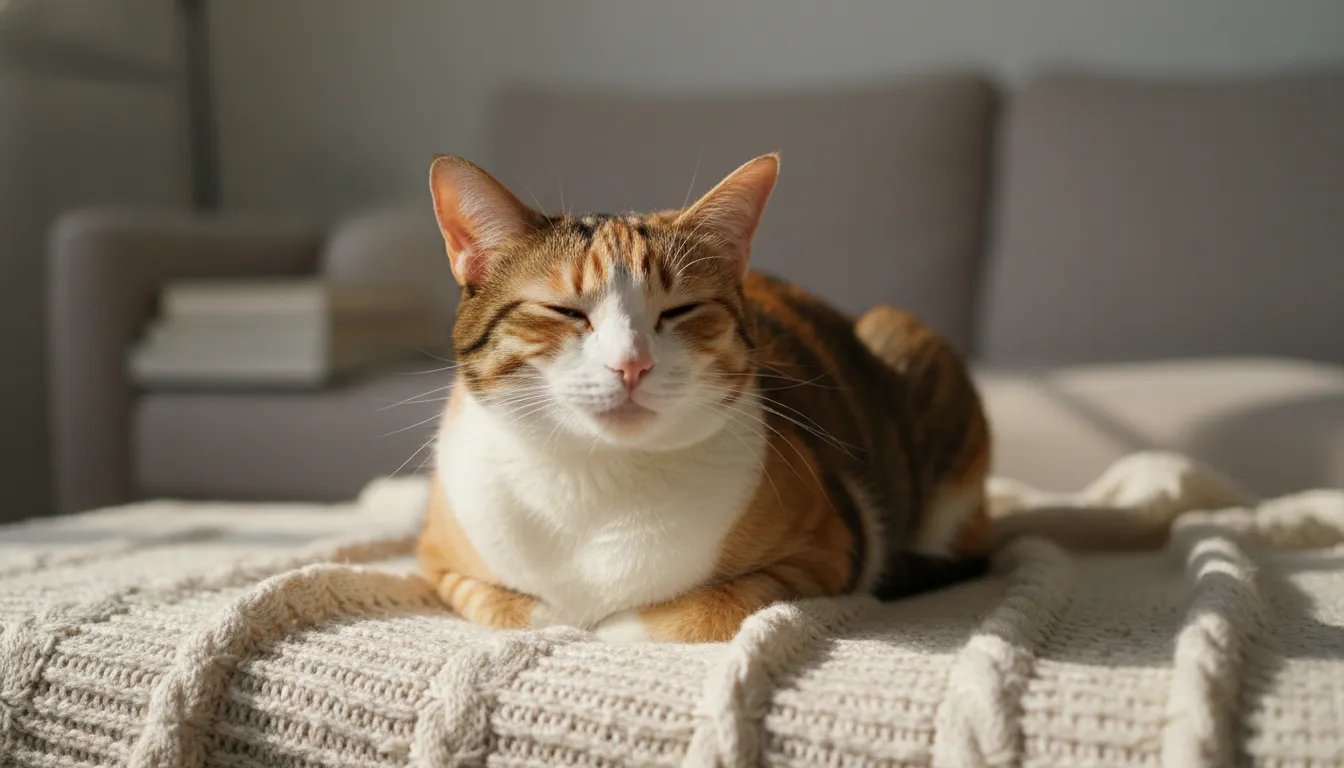
A cat’s purr is much more than a sign of happiness — it is a multifunctional tool shaped by millions of years of evolution and, in recent millennia, refined by living with humans. It serves to communicate, to calm, possibly to heal, and, unintentionally, also to make us feel better.
Science has already uncovered the basic mechanisms behind this sound, but there is still much to learn about its therapeutic effects and the nuances of what each purring variation means. What is certain is that this seemingly simple hum carries layers of biological and communicative complexity that make cats even more fascinating than they already appear.
Next time your feline settles on your lap and starts purring, you will be listening to the result of sophisticated evolutionary engineering — and participating in a communication ritual that has existed long before any human word.
- Purring while eating or waiting for food: comfort and anticipation