
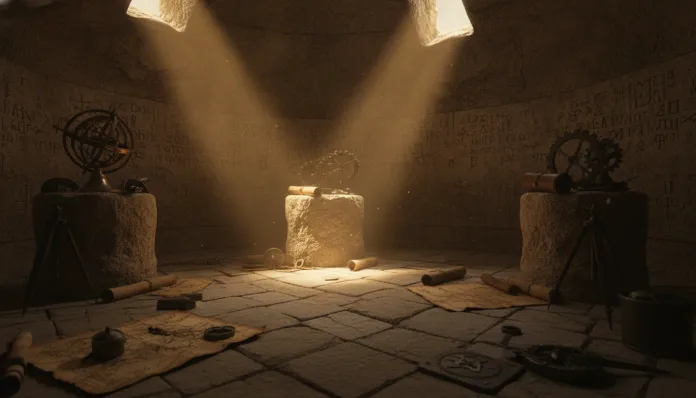
Embark on a Journey Through Generational Enigmas
Since humanity began documenting its own history, it has also accumulated unanswered questions. Civilizations that vanished from the map, unsolved crimes, and structures that defy the logic of their time—these mysteries span centuries, continuing to provoke curiosity, debate, and investigation. Even in 2026, with all available technology, there are still blank pages in human history that experts simply cannot fill.
What makes these enigmas so fascinating is not just the absence of answers, but the magnitude of the questions they pose. Why did an entire civilization disappear? Who built that structure and how? What really happened that night? These are questions that touch on something profound: our need to understand the past to comprehend who we are. And when the past refuses to speak, the fascination only grows.
This article explores some of the greatest mysteries in human history—those that have resisted generations of researchers, archaeologists, historians, and forensic scientists. There are no definitive answers here. What exists is an invitation to reflect on the limits of human knowledge.
The Disappearance of the Classic Maya Civilization
Between the 8th and 10th centuries AD, something extraordinary happened on the Yucatán Peninsula in present-day Mexico, and in areas that now correspond to Guatemala, Belize, and Honduras: Maya cities housing hundreds of thousands of people were progressively abandoned. Temples, palaces, and canal systems were left behind, swallowed by the jungle.
The Maya civilization did not completely disappear—the Maya people still exist today, with significant populations in Mexico and Central America. But the collapse of the so-called Classic Period (around 250 to 900 AD) still puzzles researchers. Why were those great southern cities abandoned?
The most accepted theories involve a combination of factors:
- Severe and prolonged drought, indicated by studies of lake sediments and speleothems (cave formations)
- Internal wars between rival city-states
- Deforestation and soil depletion, resulting from centuries of intensive agriculture
- Collapse of trade networks and political instability
The problem is that no single theory explains everything. Some cities were abandoned decades before or after others, suggesting that the collapse was not a single event but a complex and uneven process. The surviving Maya written records are few and partially deciphered, leaving huge gaps in understanding.
Stonehenge: Monument, Calendar, or Cemetery?
In Wiltshire, England, stand stones weighing between 2 and 25 tons, arranged in concentric circles with precision that still impresses modern engineers. Stonehenge was built in phases over approximately 1,500 years, with the earliest structures dating from around 3,000 BC.
The question “what is it for?” remains without a definitive answer. The hypotheses vary:
- An astronomical observatory, given that the alignment of the stones with the sunrise at the summer solstice is too precise to be coincidental
- A site for religious rituals or healing ceremonies, supported by the discovery of human remains with signs of disease nearby
- A cemetery for a prehistoric elite, as research conducted between 2000 and 2010 revealed human cremations at the site
- A seasonal meeting point for dispersed communities
What deepens the mystery is the logistical question: some of the smaller stones, called bluestones, were transported from Preseli Hills in Wales, over 200 kilometers away. With the technology available at the time—no wheels, no metals—how was this transport accomplished? Modern experiments have demonstrated that it is possible to move these stones with logs, sleds, and a lot of human labor, but no definitive proof has been found about the exact method used.
The Voynich Manuscript: A Language No One Has Deciphered
In 1912, Polish bookseller Wilfrid Voynich acquired an illustrated manuscript written in a completely unknown language. The document, known as the Voynich Manuscript, probably dates from the 15th century, based on radiocarbon analyses conducted in 2009 by the University of Arizona, which pointed to the period between 1404 and 1438.
The manuscript has about 240 pages and includes illustrations of plants that do not correspond to any known species, female figures in structures resembling baths or pools, astrological diagrams, and circular maps. The text accompanying the images follows linguistic patterns—it has letter distribution and word frequency consistent with a real language—but no cryptographer, linguist, or historian has successfully deciphered its content.
Throughout the 20th and early 21st centuries, dozens of scholars claimed to have found the key to the code. None of these theories withstood academic scrutiny. Hypotheses range from an invented artificial language, a sophisticated code, to the possibility of it being a deliberate hoax created to impress medieval collectors. To this day, the manuscript is kept at Yale University’s Beinecke Library in the United States, defying any translation attempts.
The Case of Jack the Ripper: The 19th Century’s Unidentified Killer
Between August and November 1888, at least five women were murdered in the Whitechapel district of London with brutality that shocked Victorian society. The killer became known as Jack the Ripper—a nickname derived from letters sent to the police and the press, whose authenticity is still debated.
The original investigation was conducted by the London Metropolitan Police with extremely limited resources and forensic methods for the time. No suspect was formally indicted. Since then, historians, amateur and professional criminologists have identified dozens of suspects over the years, including doctors, barbers, nobles, and even members of the British royal family—all without conclusive evidence.
The case presents unique challenges:
- Virtually nonexistent physical evidence after more than 130 years
- Incomplete police documentation, with some files missing
- Contradictory testimonies collected at the time
- Proliferation of sensationalist theories that hinder serious analysis
In 2014, a British researcher named Russell Edwards claimed to have identified the killer through DNA analysis on a shawl supposedly found at one of the crime scenes. The conclusion was widely questioned by the scientific community due to methodological issues. The case remains officially unsolved.
Atlantis: Myth, Metaphor, or Memory?
Every child has heard of Atlantis—an advanced island civilization said to have been swallowed by the ocean. The origin of the story is surprisingly precise: the Greek philosopher Plato described it in two dialogues, Timaeus and Critias, written around 360 BC. According to him, the story was passed on to the Athenian legislator Solon by Egyptian priests.
The central problem is determining whether Plato was describing a real event or creating a philosophical allegory to discuss the dangers of pride and ambition. Most historians and archaeologists believe Atlantis is a philosophical fiction, created by Plato for didactic purposes. There is no archaeological evidence of an advanced civilization in the Atlantic that was destroyed on the scale described.
However, some researchers propose that Plato may have been inspired by real events, such as:
- The eruption of the Thera volcano (now Santorini) around 1600 BC, which destroyed the Minoan civilization in the Mediterranean
- The flooding of the Black Sea, which some geologists believe occurred between 7,000 and 5,000 BC
- Collective memories of coastal floods at the end of the last ice age
None of these theories exactly matches Plato’s description in terms of location, scale, or period. The debate continues, mixing serious archaeology with popular speculation.
The Fate of the Templars and Their Alleged Treasure
The Order of the Knights Templar was one of the most powerful military and religious organizations of the Middle Ages. Founded in Jerusalem around 1119, it accumulated wealth, properties, and political influence for nearly two centuries. In 1307, King Philip IV of France, in collusion with Pope Clement V, ordered the mass arrest of the order’s members in France. In 1312, the Pope officially dissolved the Templars.
What happened to the order’s alleged treasure? On the night of October 13 to 14, 1307, shortly before the arrests, a fleet of Templar ships reportedly departed from the port of La Rochelle, France. Where did they go? What did they carry? No one knows for sure.
Over the centuries, theories have emerged about the fate of the Templar riches:
- They were taken to Scotland, where the order found protection
- They are hidden in tunnels beneath the Temple Mount in Jerusalem
- They were transported to the New World before Columbus—a theory without any solid historical basis
What is factual is that papal investigations at the time found much less wealth than expected. The whereabouts of large portions of the Templar assets remain, indeed, unknown to this day.
Why Do Mysteries Resist Time?
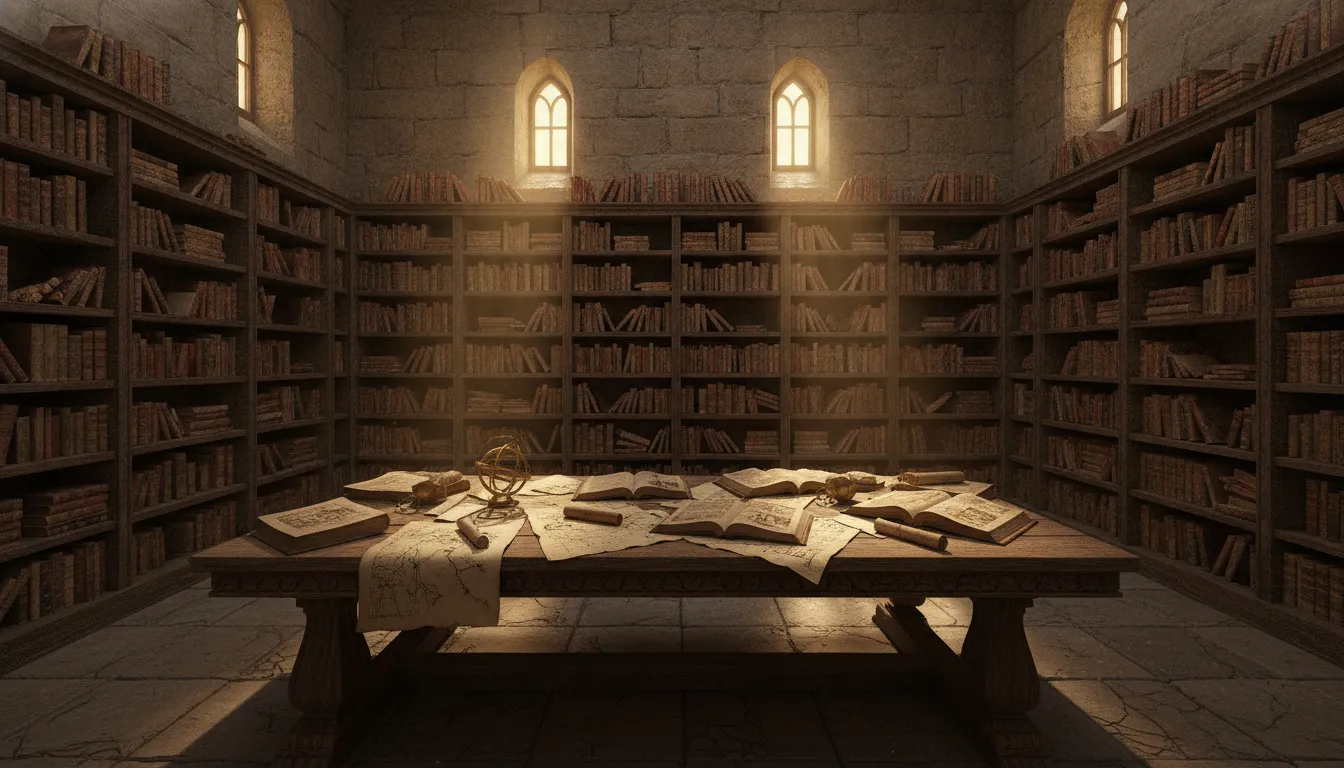
Given all the technology available in 2026—DNA sequencing, satellite imaging, artificial intelligence applied to the analysis of ancient texts—it may seem surprising that so many historical enigmas persist. The explanation is simple: time destroys evidence. Papyri decay, stones erode, memories distort over generations before being recorded.
Moreover, many of these mysteries involve periods or cultures that had no writing systems, or whose records were deliberately destroyed. The history that has reached us is always fragmented—a puzzle with missing pieces that can have many equally plausible solutions.
What these mysteries have in common is the ability to remind us of something fundamental: human knowledge has limits. And it is precisely at these limits that imagination, science, and philosophy meet. Just as football evolved from ancient practices to become a global phenomenon, the search for answers is an intrinsic part of human nature—and each generation revisits these questions with new tools and new perspectives.
The greatest mysteries of history are not failures of science. They are perpetual invitations to curiosity.
- They are hidden in tunnels beneath the Temple Mount in Jerusalem
- The flooding of the Black Sea, which some geologists believe occurred between 7,000 and 5,000 BC
- Incomplete police documentation, with some files missing
- A site for religious rituals or healing ceremonies, supported by the discovery of human remains with signs of disease nearby
- Internal wars between rival city-states