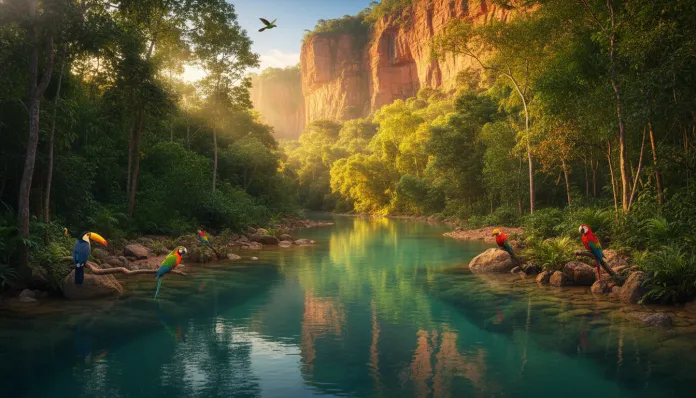
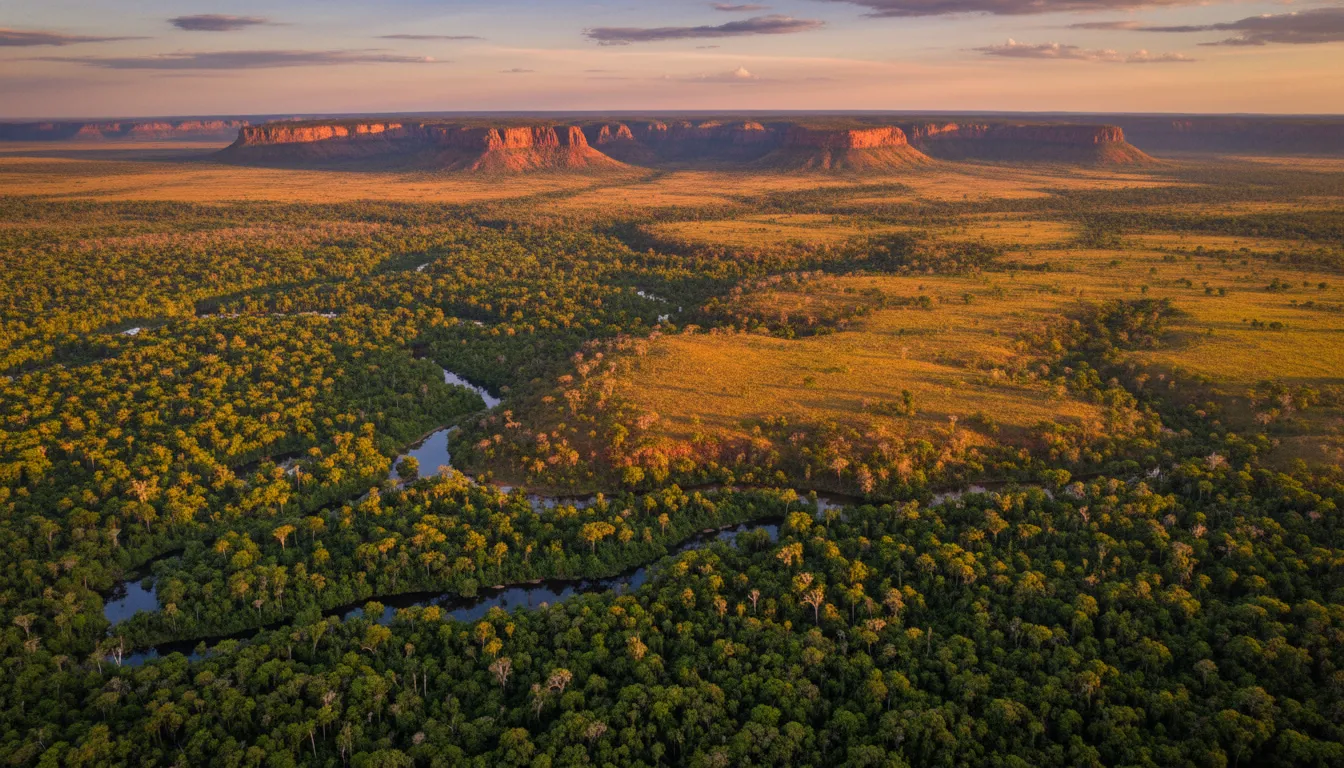
Brazil boasts 8.5 million square kilometers of territory, over 7,400 kilometers of coastline, unique biomes, and a cultural diversity that few countries can rival. Yet, when it comes to domestic travel, most Brazilians visit the same destinations: Rio de Janeiro, Florianópolis, Porto de Galinhas, Bonito, Fernando de Noronha. Beautiful places, no doubt — but they share space with crowds and prices that rise every season.
The good news is that there is a parallel Brazil, equally stunning, that remains off the beaten path promoted by major agencies. These are historical cities with centuries-old architecture, beaches that require a few more hours on the road, plateaus and mountains offering breathtaking trails, and waterfalls that most people have never seen in any photo. In 2026, with the rising demand for more authentic and sustainable travel, these destinations are starting to gain attention — yet they still preserve much of their isolation and original charm.
This guide gathers some of these off-the-beaten-path places, spread across different regions of the country, for those who want to explore Brazil with fresh eyes. It’s not a secret list or inaccessible places — but destinations that deserve much more recognition than they receive.
Ilha do Marajó (PA): The Archipelago Few Know Up Close
Ilha do Marajó, in Pará, is the largest river-sea island in the world, with an area exceeding 40,000 square kilometers — larger than several European countries. Despite this impressive scale and absolutely unique nature, it remains distant from conventional itineraries.
The island is mainly accessed by boat from Belém, with a crossing that lasts between two and three hours depending on the route. There, visitors find buffaloes roaming freely through the streets of Soure (the main city), freshwater beaches mixed with saltwater, mangroves, rare birds, and a cuisine based on local products like Marajó cheese and fresh açaí consumed in ways most Brazilians are unaware of.
What to Do There
Visit the Pesqueiro and Araruna beaches, with clear sand and no crowded bar structures
Observe wildlife in the flooded fields, natural habitat of scarlet ibises, capybaras, and caimans
Explore archaeological sites with Marajoara pottery, one of the most sophisticated pre-Columbian artistic traditions in the Americas
Try grilled filhote fish and crab prepared by local restaurants
The best time to visit is between July and December when the rains decrease and the fields become more accessible.
Pirenópolis (GO): The Colonial City in the Heart of the Cerrado
About 130 kilometers from Brasília, Pirenópolis is one of the best-preserved historical ensembles in the Midwest. Founded in the early 18th century during the gold cycle, the city maintains cobblestone streets, baroque churches, and colonial mansions that coexist with a vibrant cultural scene and a network of quality inns and restaurants.
What makes Pirenópolis special is the combination of historical heritage with Cerrado nature. Nearby, waterfalls like Abade, Corumbá, and Cristais are just a few kilometers from the historic center, accessible by trails of varying difficulty.
The city is listed by IPHAN (National Institute of Historical and Artistic Heritage) and has hosted the Festa do Divino Espírito Santo for decades, one of the oldest and most traditional folk celebrations in Brazil, featuring the famous Cavalhada — a medieval reenactment of battles between Moors and Christians that has taken place annually since the 18th century.
Trancoso (BA) and the Quadrado: Beauty Before It Became Trendy
Trancoso is located in the far south of Bahia, near Porto Seguro, and has already been discovered by more sophisticated tourists — but it still preserves a human scale that sets it apart from mass tourism. The central point of the village is the Quadrado, a grassy square with colorful houses, churches, and restaurants facing cliffs and the sea.
What is still underexplored are the surrounding beaches: Espelho, Curuípe, and Nativos are accessed by dirt roads and offer a completely different experience from the more famous Bahian coast. Less infrastructure, more silence, transparent water, and the feeling of having discovered something before others.
Chapada dos Veadeiros (GO): The Central Plateau That Surprises
Chapada dos Veadeiros is one of Brazil’s most underrated destinations. The Chapada dos Veadeiros National Park, recognized by UNESCO as a Natural World Heritage Site, houses one of the world’s largest concentrations of quartz crystal, explaining the region’s unusual geology, with rock formations, enclosed valleys, and very clear waterfalls.
The municipalities of Alto Paraíso de Goiás and São Jorge are the main bases for those visiting the park. Trails range from short walks to multi-day routes. The Vale da Lua, with its stones sculpted by the São Miguel River over millennia, is one of the most unique landscapes in all of inland Brazil.
Practical Tips for Visiting Chapada dos Veadeiros
Plan ahead: access to many park trails requires prior scheduling through the ICMBio (Chico Mendes Institute for Biodiversity Conservation) system
Bring sun protection and plenty of water: the sun on the central plateau is intense, especially between May and September when rains are rare
Hire local guides: besides contributing to the regional economy, certified guides know details of the fauna and flora that greatly enrich the experience
Respect park rules: camping within the protected area is not allowed, nor is collecting plants or animals
Consider staying at least three nights: the region has much more to offer than a quick visit allows exploring
Lençóis (BA): The Gateway to Chapada Diamantina
While Chapada Diamantina as a destination is already somewhat recognized, the city of Lençóis itself deserves special attention as both a starting point and a destination. Listed as a historical heritage site, Lençóis was a diamond mining center in the 19th century and still retains colorful mansions along the Lençóis River.
The historic center is compact and pleasant for walking. Local shops sell semi-precious stones mined in the region, and there is a network of inns and restaurants catering to different budgets. From Lençóis, you can access attractions like the Gruta do Lapão (the largest sandstone cave in South America), Cachoeira do Sossego, Morro do Pai Inácio, and Poço do Diabo.
São Félix do Xingu (PA): For the Most Adventurous Travelers
São Félix do Xingu is a city in southwestern Pará bordering the Xingu River and serves as a base for expeditions to remote regions of the Amazon. It’s not a destination for everyone — logistics are complex, infrastructure is limited, and access may require stretches by boat or small aircraft.
But for those who want to experience the real Amazon, far from the formatted circuits of Manaus or Belém, the region offers contact with riverside communities, virtually untouched primary forests, and biodiversity among the highest on the planet. The Xingu River and its tributaries are home to fish and turtle species found in few other parts of the world.
Practical Itinerary: How to Plan an Off-the-Beaten-Path Trip
For those convinced they want to explore less-visited Brazil, some steps help organize a safer and more satisfying trip:
Research the seasonality of each destination: each region has more and less suitable times. Heavy rains can close trails and hinder access in many regions of the North and Midwest
Check local infrastructure before departing: not all destinations have ATMs, reliable internet connections, or fuel supply at nearby stations
Prefer local operators and guides: community-based tourism is growing in Brazil and represents a fairer way to distribute the income generated by tourism
Book in advance during high season: even less famous destinations may have limited accommodation capacity
Bring appropriate equipment: in destinations like Marajó or São Félix do Xingu, items like quality repellent, portable water filter, and quick-drying clothes make a real difference
Conclusion: The Brazil Yet to Be Discovered
Exploring Brazil off the beaten path is not just about escaping mass tourism — it is also a way to contribute to local economies that depend on the conscious visitor, to preserve destinations that still maintain their natural and cultural balance, and to have experiences that no standardized itinerary can offer.
From Marajó to Chapada dos Veadeiros, from Trancoso to Lençóis, the country holds surprises for those willing to go a little beyond the most publicized postcards. In 2026, with more research tools, transportation, and accommodation accessible than ever before, it has never been more feasible to plan this type of adventure with safety and comfort.
The obvious Brazil will continue to be wonderful. But the Brazil that few know can be unforgettable.
Para fornecer as melhores experiências, usamos tecnologias como cookies para armazenar e/ou acessar informações do dispositivo. O consentimento para essas tecnologias nos permitirá processar dados como comportamento de navegação ou IDs exclusivos neste site. Não consentir ou retirar o consentimento pode afetar negativamente certos recursos e funções.
Funcional
Always active
O armazenamento ou acesso técnico é estritamente necessário para a finalidade legítima de permitir a utilização de um serviço específico explicitamente solicitado pelo assinante ou utilizador, ou com a finalidade exclusiva de efetuar a transmissão de uma comunicação através de uma rede de comunicações eletrónicas.
Preferências
O armazenamento ou acesso técnico é necessário para o propósito legítimo de armazenar preferências que não são solicitadas pelo assinante ou usuário.
Estatísticas
O armazenamento ou acesso técnico que é usado exclusivamente para fins estatísticos.O armazenamento técnico ou acesso que é usado exclusivamente para fins estatísticos anônimos. Sem uma intimação, conformidade voluntária por parte de seu provedor de serviços de Internet ou registros adicionais de terceiros, as informações armazenadas ou recuperadas apenas para esse fim geralmente não podem ser usadas para identificá-lo.
Marketing
O armazenamento ou acesso técnico é necessário para criar perfis de usuário para enviar publicidade ou para rastrear o usuário em um site ou em vários sites para fins de marketing semelhantes.