
You are driving down an unfamiliar road when suddenly, a strange sensation overwhelms you: the absolute certainty that you have lived this moment before. The same path, the same light, the same thought. But that’s impossible — you’ve never been there. This disconcerting experience has a name and is more common than it seems: it’s called déjà vu, a French expression that literally means “already seen.”
It is estimated that between 60% and 70% of people have experienced déjà vu at least once in their lives, with greater frequency among young adults. Despite being so widespread, the phenomenon remained for a long time in the realm of mysticism and popular speculation — associated with memories of past lives, time travel, or supernatural powers. However, neuroscience has been consistently advancing in trying to unravel what really happens inside the brain during those brief and disturbing seconds.
What makes déjà vu so fascinating from a scientific perspective is precisely its paradoxical nature: the person knows they haven’t lived that before, but feels with full force that they have. It is a direct conflict between memory and perception — and understanding this conflict reveals much about how the human brain processes time, space, and identity itself.
What is déjà vu, after all?
The term was coined by French researcher Émile Boirac at the end of the 19th century, but the experience itself is as old as humanity. Technically, déjà vu is defined as the sensation of intense familiarity with a situation that is objectively new. The person recognizes that they could not have lived that moment before, but the feeling of “having been here before” is powerful and real.
It is important to distinguish déjà vu from other similar phenomena:
- Déjà vécu: the sensation of having “already experienced” a complete episode, including sounds, smells, and emotions
- Déjà entendu: the impression of having heard something before
- Jamais vu: the opposite of déjà vu — the strangeness before something that should be familiar (like looking at a common word and feeling it is strange)
- Presque vu: the sensation of being about to remember something, without being able to — the famous “on the tip of the tongue”
Déjà vu generally lasts only a few seconds. It arises without warning, disappears quickly, and leaves a trail of confusion and curiosity. And because it is so fleeting, studying it scientifically is quite a challenge.
Main Neurological Theories
Over the decades, researchers from different fields have proposed explanations for déjà vu. Today, some hypotheses stand out due to the solidity of the evidence supporting them.
The “Memory Check” Theory Gone Wrong
One of the most accepted explanations today was developed from studies with epilepsy patients. Neuroscientist Chris Moulin from the University Grenoble Alpes in France and other researchers observed that patients with temporal lobe epilepsy frequently reported intense déjà vu before a seizure. This pointed to the medial temporal lobe — a region that includes the hippocampus, crucial for the formation and retrieval of memories — as the center of the phenomenon.
The hypothesis is that déjà vu occurs when there is a brief and involuntary firing of memory circuits, especially in the mechanisms that assess whether an experience is familiar or new. Under normal conditions, the brain constantly compares what it is perceiving now with what it has already stored. When this system “locks up” or sends contradictory signals, the result is the sensation of familiarity without a corresponding memory.
The Dual Perception Hypothesis
Another theory suggests that déjà vu results from a small mismatch in information processing. The brain receives sensory data from multiple pathways simultaneously. If, for some reason, one of these pathways reaches consciousness a fraction of a second before the others, the brain may interpret the second signal as a “memory” of the first — creating the illusion that the scene has been lived before.
Think of a video camera with a slight delay in audio: the image and sound arrive unsynchronized, creating the impression that something is out of place. In the brain, the “delay” would be so small that it would not be perceived consciously, but enough to trigger the memory recognition system.
The Role of the Hippocampus and Rhinal Cortex
Functional neuroimaging studies have helped map the regions involved. The hippocampus is fundamental for episodic memory — which records specific events with time and place context. Meanwhile, the rhinal cortex (which includes the entorhinal and perirhinal cortex) is associated with the sensation of familiarity without explicit memory retrieval.
Researchers believe that, in déjà vu, the rhinal cortex may be activated in isolation — generating familiarity — without the hippocampus being able to “pull” any concrete memory to justify this sensation. The result is the characteristic conflict of the phenomenon: the certainty of having seen before without any real memory to support it.
Who Experiences Déjà Vu More Frequently?
It is no coincidence that déjà vu is more common in young people. Research indicates that the frequency of the phenomenon decreases with age, which may be related to how memory systems function throughout life. Young adults, with more active neural circuits and high capacity for forming new memories, seem more vulnerable to the “synchronization errors” that generate déjà vu.
Other factors associated with higher frequency of déjà vu include:
- Fatigue and sleep deprivation, which alter brain processing
- High levels of stress or anxiety
- Frequent travel, which exposes the brain to many new environments in a short period
- Consumption of certain substances, including some medications affecting the central nervous system
- Temporal lobe epilepsy, where déjà vu can be a symptom of abnormal electrical activity
It’s important to note: occasional déjà vu, experienced by healthy individuals, is considered completely normal and does not indicate any medical condition. However, if the phenomenon occurs very frequently, is accompanied by prolonged confusion, loss of contact with reality, or other neurological symptoms, it is essential to seek specialized medical evaluation. Each case is unique and should be assessed by a healthcare professional.
Déjà Vu and Epilepsy: When the Phenomenon is a Warning Sign
The study of déjà vu in epilepsy patients was crucial for neuroscience to understand the phenomenon. In some types of epilepsy, especially temporal lobe epilepsy, déjà vu can be an aura — a sensation that precedes a seizure.
In these cases, déjà vu is not fleeting like in the general population: it can last longer, be much more intense, and occur repeatedly. Patients describe the sensation as disturbing and overwhelming, very different from the brief and almost pleasant experience most people know.
These extreme cases were, paradoxically, very useful for science: as epilepsy patients undergo detailed brain monitoring, it was possible to record in real-time the electrical activity during a déjà vu episode — something that would be impossible to study in people without neurological conditions, given that the phenomenon is unpredictable and extremely rapid.
How Does Science Study Something So Difficult to Capture?
Studying déjà vu is one of the greatest methodological challenges of cognitive neuroscience. After all, how do you study something that lasts only a few seconds, occurs without warning, and cannot be reliably induced in the laboratory?
A creative approach was developed by British researchers from the University of Leeds and the University of St Andrews, who used hypnosis techniques to induce states similar to déjà vu in healthy volunteers. In experiments, participants were led to “recognize” words they had never seen before, partially replicating the sensation of undue familiarity.
Another strategy uses functional magnetic resonance imaging (fMRI) to observe the brains of epilepsy patients during spontaneously recorded déjà vu episodes, allowing the mapping of activated regions in real-time.
These studies, combined with decades of clinical reports, have built the current understanding — incomplete but growing — that déjà vu is essentially a memory phenomenon, not one of supernatural perception or premonition.
If you are curious about other mysteries that science is unraveling, it’s worth checking out what the universe hides: curious facts about space, which also explores the frontiers of human knowledge.
Myths and Truths About Déjà Vu
Given how much the phenomenon still intrigues people, many alternative explanations circulate — some without scientific basis. It’s worth separating what science says from what is speculation:
| Claim | What Science Says |
|---|---|
| Déjà vu is a memory from a past life | No scientific evidence; explained by known neurological mechanisms |
| It is a sign that you are on the right path | Spiritual interpretation; no neuroscientific basis |
| Indicates high intelligence | No established association between déjà vu and intelligence |
| It is more common in creative people | Anecdotal reports, but no robust scientific confirmation |
| Can be induced voluntarily | Not reliably; research uses indirect methods |
| Occurs more in frequent travelers | Some association, possibly due to exposure to new environments |
Conclusion: A Useful Brain Error
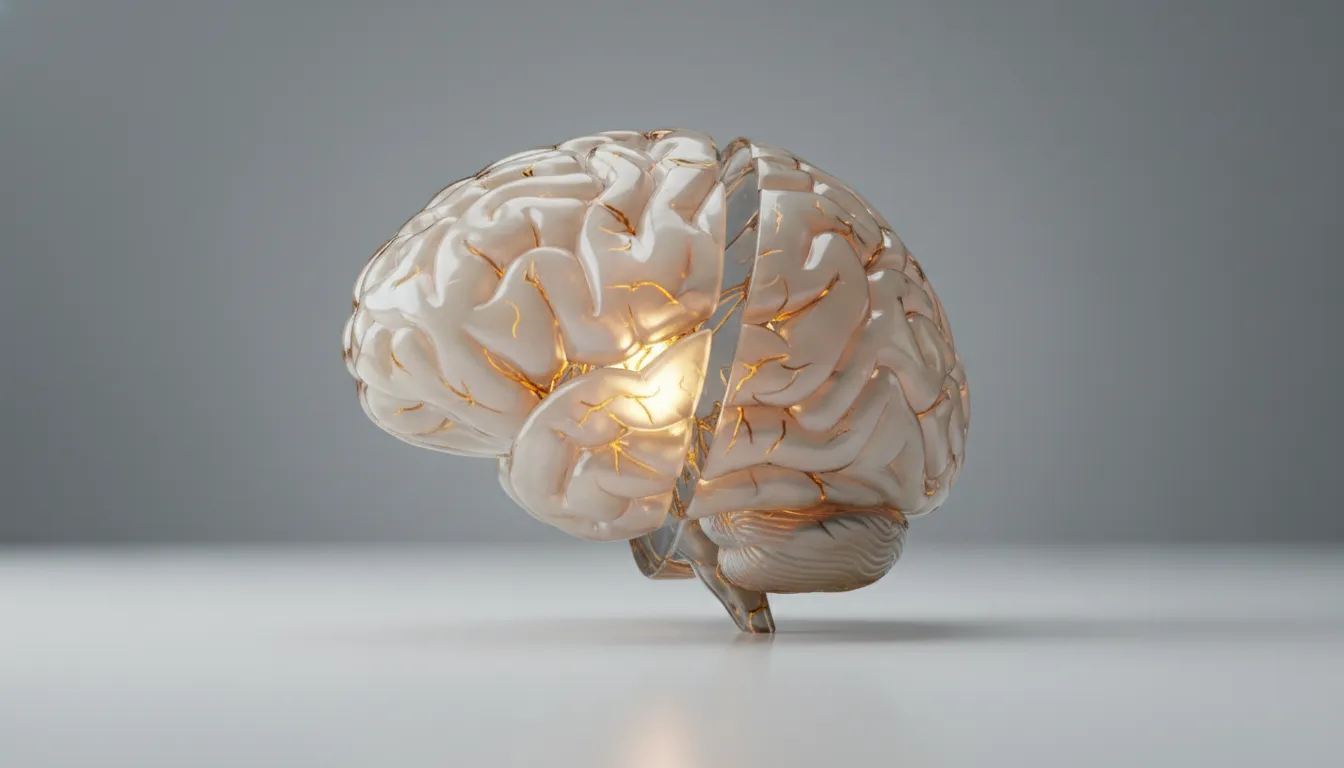
Déjà vu is, in essence, a small glitch in the memory management system of the human brain. A moment when the circuits responsible for saying “this is new” and “this is familiar” send contradictory signals, generating that unsettling sensation of having already lived what is being lived now.
Far from being supernatural, the phenomenon reveals something profound about how the brain works tirelessly to compare the present with the past, build the notion of familiarity, and maintain the continuity of conscious experience. When this system fails for fractions of a second, the result is déjà vu — a rare window into the backstage of mental processing.
Neuroscience has not yet answered all the questions about the phenomenon. But each advance reinforces the idea that the human brain, even in its “errors,” is a machine of extraordinary complexity. And that unsettling feeling of having been here before is, after all, proof that your mind never stops working — even when you least expect it.
This article is informative and educational. Persistent or unusual neurological symptoms should always be evaluated by a doctor or health specialist.


