
Start Your Own Home Garden: Easy Steps for Beginners
Have you ever thought about harvesting your own food without leaving home? This idea might seem distant for those living in apartments or unfamiliar with gardening, but the truth is that cultivating a home garden is within anyone’s reach — whether in a spacious backyard, a compact balcony, or even a sunny windowsill. In recent years, the interest in home food production has grown significantly in Brazil and worldwide, driven by the pursuit of healthier eating, waste reduction, and, of course, the satisfaction of eating something you’ve grown yourself.
Besides the practical benefits, taking care of a garden has an almost therapeutic side. The contact with the soil, the rhythm of the plants, and the responsibility of watering and daily care create a routine that many describe as comforting. And the best part: you don’t need to be an agronomist or have a large green area to start. With organization, simple materials, and a bit of patience, it’s possible to have fresh herbs, leafy greens, and even small vegetables available in your kitchen.
This guide is designed for those starting from scratch. We will go through each step — from planning to the first harvest — in a clear and practical way, without complicating what is essentially simple.
Where to Start: Planning Comes First
Before buying any seeds or pots, the first step is to observe the space you have available. Sunlight is the most determining factor for a garden’s success. Most edible plants need at least four to six hours of direct sunlight per day to grow well.
Ask yourself:
- What space is available? (balcony, window, yard, rooftop)
- How many hours of sunlight does this location receive per day?
- Do I have easy access to water for watering?
- How much time per week can I dedicate to the garden?
These answers will define which plants are viable for your situation. A space with little light, for example, favors herbs like mint and chives, which tolerate partial shade better than tomatoes or peppers. Those with a yard with full sun can venture with a much wider variety of crops.
Choosing the Right Containers
For those without soil on the ground, containers (pots, crates, raised beds) are the main structure of the garden. The good news is that you don’t need to spend much: recycled wooden boxes, five-liter buckets, cut PET bottles, and even old cans work very well, as long as they have holes at the bottom for water drainage.
Some important points when choosing containers:
- Soil volume: the larger the container, the more roots can develop. Tomatoes and peppers need at least 10 to 15 liters of substrate; herbs like basil and parsley do well in three to five-liter pots.
- Material: clay pots are porous and allow the soil to “breathe,” but dry out faster. Plastic pots retain more moisture, which can be an advantage in hot climates.
- Drainage: holes at the bottom are indispensable. Without them, excess water rots the roots — one of the most common mistakes for beginners.
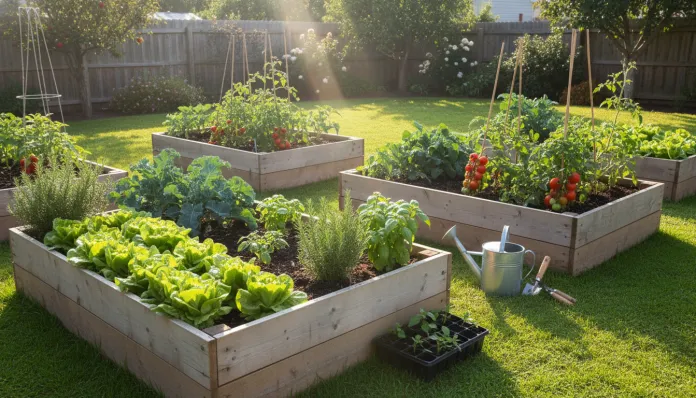
If you have space on the ground, raised beds made with wooden boards are an excellent option. They facilitate soil control, improve drainage, and make maintenance more ergonomic.
The Substrate: The Foundation of Everything
The soil or substrate is where the magic happens. For container and raised bed gardens, a balanced mix that ensures nutrition, aeration, and moisture retention is recommended. A commonly used homemade formula is the combination of:
- 50% vegetable soil or black soil
- 25% organic compost (worm humus, homemade compost, or aged manure)
- 25% aerating material (coarse sand, perlite, or carbonized rice husk)
Avoid using only garden soil taken from the ground, as it tends to compact in pots, hindering air and water passage through the roots. Worm humus is one of the most recommended inputs for home gardens because it is rich in nutrients and improves soil structure without the risk of “burning” the plants — which can happen with chemical fertilizers used in excess.
Which Plants to Choose for Starting
The choice of the first plants should consider ease of cultivation, life cycle, and usefulness in daily life. For beginners, it’s ideal to start with species that grow quickly and have a high tolerance for mistakes.
Herbs and Spices (Great for Beginners)
- Chives — very resilient, grows practically in any condition
- Parsley — 60 to 90-day cycle, enjoys sun and regular watering
- Basil — loves heat; perfect for a sunny balcony
- Mint — grows vigorously; it’s advisable to grow in a separate pot as it tends to invade other beds
- Coriander — prefers milder climates; may bolt (flower prematurely) in intense heat
Leafy Greens (Short Cycle, Quick Harvest)
- Lettuce — one of the easiest; harvest in 45 to 60 days
- Arugula — germinates in less than a week; tolerates partial shade
- Brazilian Spinach (Bertalha) — adapted to tropical climate, very productive
For Those with More Space and Confidence
- Cherry Tomato — easier than conventional tomatoes; productive in large pots
- Bell Pepper and Chili — need heat and direct sun; abundant production
- Cucumber — grows well on trellises; requires vertical space
Step-by-Step: Planting Your First Seedling or Seed
- Choose seeds or seedlings. Seeds are cheaper and offer more varieties; seedlings bought at nurseries are more practical for those who want quick results. For beginners, starting with already formed herb seedlings is a great strategy.
- Prepare the container. Cover the holes at the bottom with pieces of mesh or pebbles to prevent soil from clogging the water outlet. Fill with substrate up to about two centimeters below the rim.
- Planting. For seeds, open small furrows or holes as indicated on the package (each species has an ideal depth). For seedlings, make a central hole, position the seedling carefully not to damage the roots, and gently press the soil around it.
- Water carefully. After planting, water slowly to avoid displacing the seeds. The soil should be moist but not soaked. Press lightly with your finger: if the soil releases water when compressed, it’s too wet.
- Position in the right place. Move the container to the location with the appropriate amount of sunlight for that species.
- Establish a watering routine. Generally, watering should be done early in the morning or late in the afternoon. In summer, small pots may need daily watering; in winter, watering may be necessary on alternate days. Always check soil moisture before watering.
- Monitor growth. In the first weeks, watch for signs of pests (leaves with holes, yellow spots, visible insects) and apply natural solutions like garlic spray or diluted neutral soap, which are effective against aphids and other small insects.
Essential Care to Keep the Garden Healthy
Maintaining a garden goes beyond planting and watering. Some care makes the difference between abundant production and stunted plants:
- Periodic fertilization: plants in pots consume the nutrients from the substrate quickly. Fertilizing with worm humus or organic compost every three or four weeks keeps the soil nourished.
- Thinning: when several seeds germinate in the same space, it’s necessary to remove the excess so that the remaining plants have space to grow.
- Maintenance pruning: herbs like basil should be pruned regularly to prevent early flowering (which reduces leaf production).
- Crop rotation: after a plant’s cycle ends, replace it with a different species in the same pot. This prevents soil depletion and the proliferation of specific pests.
- Attention to the climate: during periods of heavy rain, protect the pots to avoid waterlogging. In extreme heat, which has been increasingly frequent in 2026 in various regions of Brazil, delicate plants may need shade in the middle of the day.
Conclusion: The First Step is the Most Important
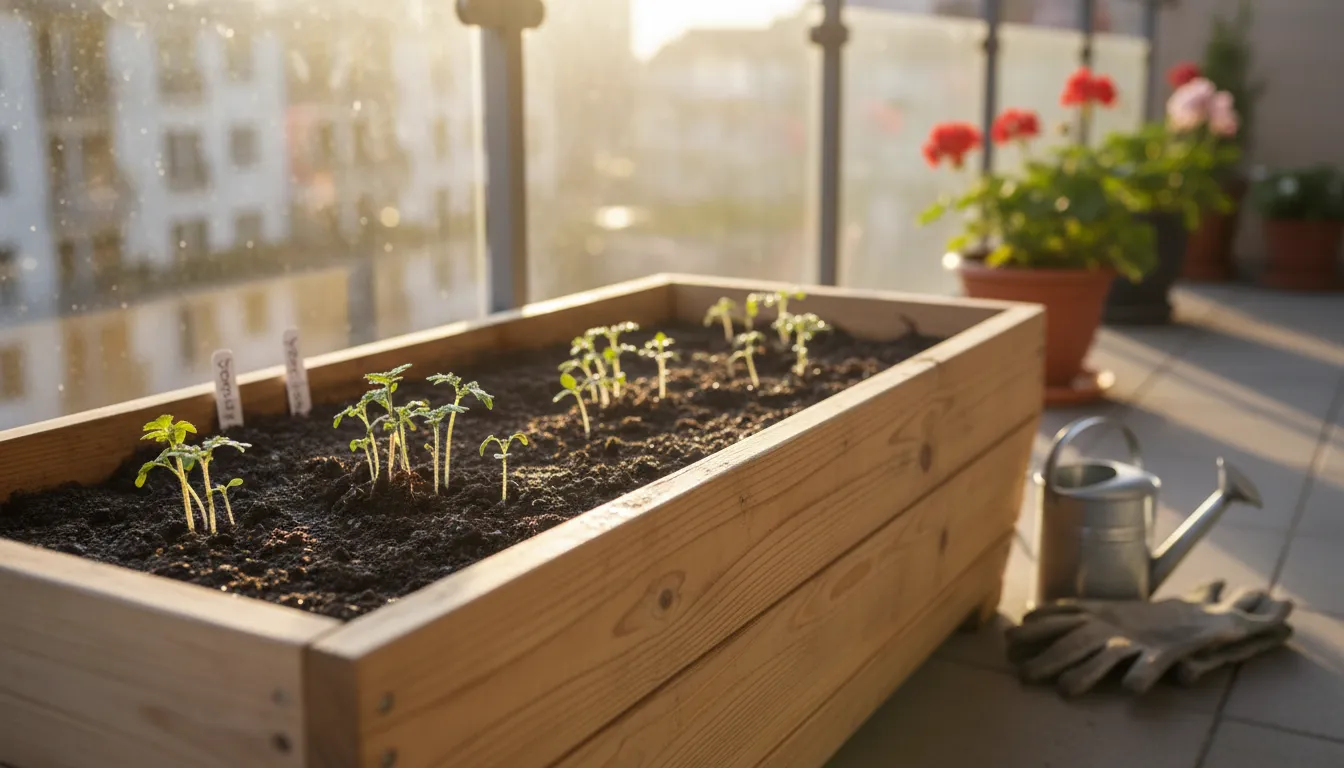
Starting a home garden doesn’t require perfection, large investments, or in-depth technical knowledge. What matters most is taking the first step and learning through practice — because inevitably there will be plants that won’t germinate, pests that will appear, and watering that will be excessive or insufficient. It’s part of the process.
Over time, you’ll develop an almost intuitive perception of your plants’ needs: when the soil is too dry, when a leaf is asking for more sun, when it’s time to fertilize. This sensitivity is built through daily observation, and it’s precisely what makes home gardening so rewarding.
If you want to continue exploring habits that connect science, daily life, and well-being, also check out our article on why your communication at work still fails — because cultivating good relationships, like a good garden, starts with attention and care. Now, grab that pot sitting in the corner and get your hands in the soil.