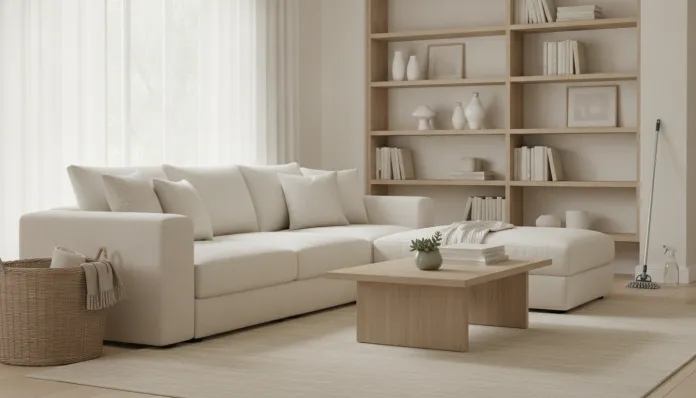
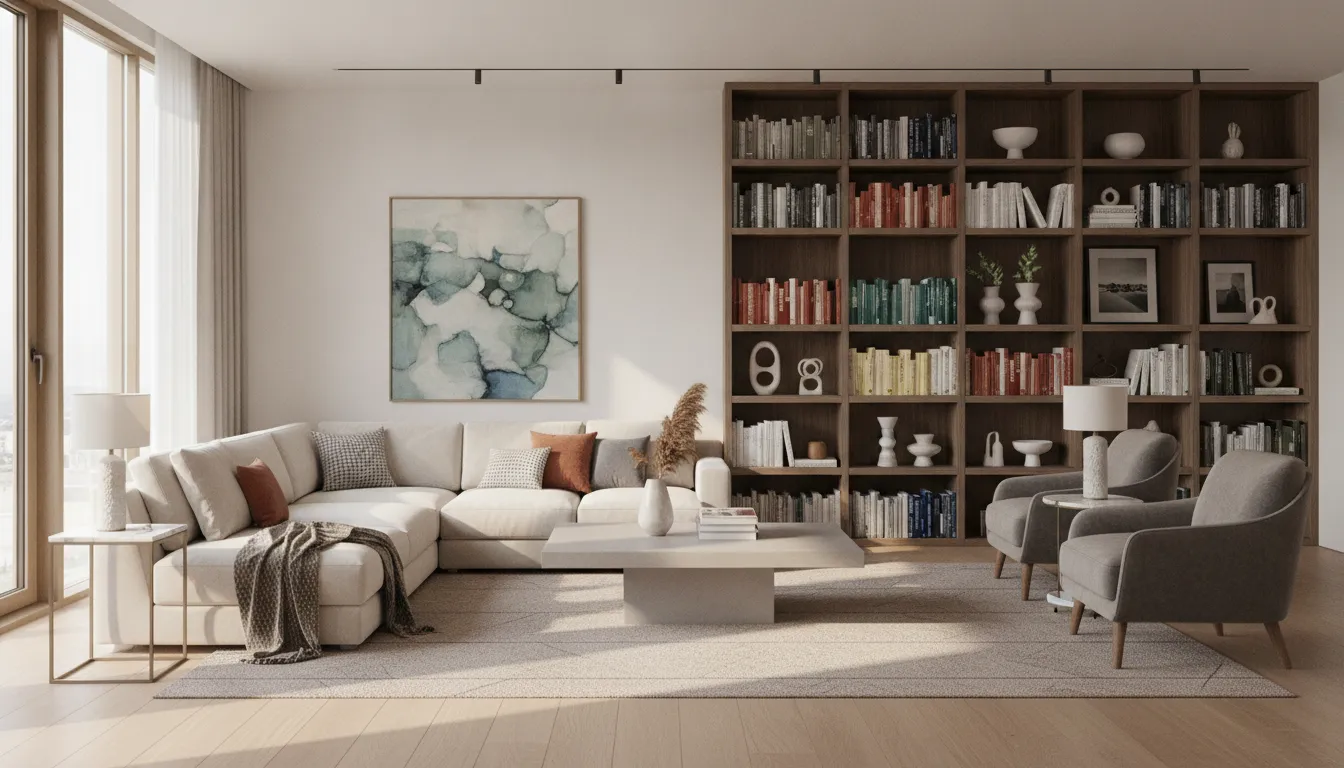
Looking at a messy room and feeling that weight on your chest — who hasn’t been there? A disorganized home is not just an aesthetic issue: environmental psychology research indicates that cluttered environments can increase stress levels and hinder concentration. On the other hand, a clean and organized space can bring lightness, energy, and even improve sleep quality.
The challenge, of course, is knowing where to start. Many people get stuck at this point: the feeling that there is so much to do that any effort seems insufficient. The good news is that organizing your home doesn’t require a renovation or an entire weekend of sacrifice. With method, intention, and a few simple tools, it’s possible to transform any environment — from a small apartment to a large house — into a pleasant place to live.
This guide presents a practical and accessible path for those who want to start from scratch, or for those who want to regain control of a home that has lost its order over time. No magical promises, just real steps.
The First Step: Understand the Cause of the Mess
Before grabbing a broom or buying a shelf organizer, it’s worth asking an honest question: why is the house disorganized? The causes vary greatly from family to family.
In many cases, the accumulation of objects happens due to habits acquired over the years — the tendency to keep things “just in case,” gifts that were never used, clothes that no longer fit but remain in the closet “to see if I lose weight.” In other cases, a busy routine simply leaves no time for maintenance.
Identifying the pattern helps create more lasting solutions. A home that accumulates objects needs a different approach from a home that has space but simply lacks a cleaning routine. Start by observing the points that bother you the most daily.
How to Diagnose Your Home
A simple diagnosis can be done in less than 30 minutes. Go through each room with the eyes of a visitor — as if you were seeing the space for the first time.
Questions to Guide the Diagnosis:
Are surfaces cluttered with items that have no fixed place?
Are there drawers or cabinets you avoid opening?
Does the kitchen accumulate utensils that are rarely used?
Does the bathroom have expired or duplicate products?
Do clothes end up on chairs because there’s no space in the wardrobe?
Write down the answers. This list will be your priority map. Don’t try to tackle everything at once — this leads to burnout and giving up.
Practical Method: Start with the Smallest Space
A very common mistake is wanting to start with the living room — the most visible area of the house — before establishing the habit of organization. The recommendation from organization experts is different: start with the smallest functional space available.
A drawer, a bathroom cabinet, the kitchen sink counter. The goal is not the grandeur of the result but the creation of a reward cycle: you organize something small, see the result quickly, and gain motivation to continue.
Step-by-Step to Organize Any Small Space:
Completely empty the space (drawer, shelf, cabinet).
Clean the surface before putting anything back.
Sort items into three groups: keep, donate/discard, need to go elsewhere.
Return only what will stay, with a logic of use: what you use most should be more accessible.
Label the space if necessary (simple labels work very well).
Establish a simple rule for maintenance: “everything has a place.”
Repeating this process gradually transforms the home without overwhelming anyone.
The Art of Conscious Discarding
Separating what stays from what goes is one of the most challenging moments in home organization. Emotional attachment to objects is real and understandable — but it can be a significant obstacle.
A useful question, popularized by Japanese consultant Marie Kondo in her KonMari method, is: “does this item bring me joy or real utility?” If the answer is no to both, it’s time to let it go.
For those who have difficulty discarding, some strategies help:
Six-month rule: if you haven’t used the item in the last six months (and it’s not seasonal), you probably won’t use it.
Donation as motivation: knowing the item will go to someone in need makes the process lighter.
Gradual discard: you don’t have to decide everything at once. A “maybe” box can be stored for 30 days — if you haven’t missed anything, discard without guilt.
Remember that discarding doesn’t necessarily mean throwing it in the trash. Many materials can be donated to social organizations, thrift stores, or exchange networks. Understanding how proper waste disposal works can make all the difference — for those who want to know more about this, it’s worth reading How Recycling Works in Brazil.
Cleaning and Organization: Which Comes First?
There’s an important logic here that many people reverse: organize first, clean later. Cleaning a messy house is frustrating and inefficient — you’re just moving dirt from place to place.
After organizing a room, cleaning becomes much faster and more effective. Free surfaces are easy to sanitize, and the final result is much more satisfying.
Cleaning Routine by Frequency
Frequency
What to Do
Daily
Sweep or vacuum high-traffic areas, wash dishes, clean stove
Creating a routine — even a simple one — is what differentiates an organized home from one that “always needs a general cleaning.”
Tools and Products: What Really Matters
You don’t need to spend much to organize well. The home organization industry offers everything from simple, cheap options to sophisticated solutions, but the foundation can be built with a few items.
What to Invest In:
Storage boxes with lids: ideal for storing less frequently used items in cabinets.
Drawer dividers: turn chaotic drawers into functional spaces.
Labels or masking tape + pen: identifying box contents eliminates the question “what’s in here?”
Adhesive hooks: practical solution for walls without drilling.
Baskets and trays: group smaller items on surfaces, creating an organized look without storing everything.
As for cleaning products, less can be more. A good quality multi-purpose cleaner, a degreaser for the kitchen, a specific product for the bathroom, and one for the floor cover most household needs. Avoid accumulating products that promise miracles but are never used — that’s clutter too.
Maintaining Organization in the Long Term
The biggest challenge is not organizing — it’s maintaining it. The key to this is creating small and consistent habits, rather than relying on large periodic cleanings.
Some habits that make a real difference daily:
The “now or never” rule: if something can be done in less than two minutes, do it immediately (putting an object back in place, throwing away a paper, washing a glass).
10-minute reset before bed: a brief nighttime ritual to leave the house “in order” for the next day makes a difference in how you start the morning.
Controlled entry: before buying a new item, ask if it has a defined place in the house. If not, think twice.
Involvement of the whole family: organization is not the responsibility of one person. Assigning responsibilities to each resident — including children, appropriately for their age — distributes the work and creates collective awareness.
Conclusion
Organizing and cleaning the house is, above all, an act of care — for the space, for those who live in it, and for one’s mental health. As we’ve seen throughout this guide, the secret is to start small, create a method, and build sustainable habits over time.
There is no single formula: each house has its reality, each family has its rhythm. But there is a starting point that applies to everyone — choose a space, act now, and don’t wait for perfect motivation to arrive. Motivation often appears after action, not before.
In 2026, with increasingly fast-paced routines and homes that accumulate more functions than ever (work, school, leisure), taking care of the domestic environment has also become a well-being strategy. Take the first step today — even if it’s just a drawer.
Para fornecer as melhores experiências, usamos tecnologias como cookies para armazenar e/ou acessar informações do dispositivo. O consentimento para essas tecnologias nos permitirá processar dados como comportamento de navegação ou IDs exclusivos neste site. Não consentir ou retirar o consentimento pode afetar negativamente certos recursos e funções.
Funcional
Always active
O armazenamento ou acesso técnico é estritamente necessário para a finalidade legítima de permitir a utilização de um serviço específico explicitamente solicitado pelo assinante ou utilizador, ou com a finalidade exclusiva de efetuar a transmissão de uma comunicação através de uma rede de comunicações eletrónicas.
Preferências
O armazenamento ou acesso técnico é necessário para o propósito legítimo de armazenar preferências que não são solicitadas pelo assinante ou usuário.
Estatísticas
O armazenamento ou acesso técnico que é usado exclusivamente para fins estatísticos.O armazenamento técnico ou acesso que é usado exclusivamente para fins estatísticos anônimos. Sem uma intimação, conformidade voluntária por parte de seu provedor de serviços de Internet ou registros adicionais de terceiros, as informações armazenadas ou recuperadas apenas para esse fim geralmente não podem ser usadas para identificá-lo.
Marketing
O armazenamento ou acesso técnico é necessário para criar perfis de usuário para enviar publicidade ou para rastrear o usuário em um site ou em vários sites para fins de marketing semelhantes.