
That Stain Will Never Defeat You Again
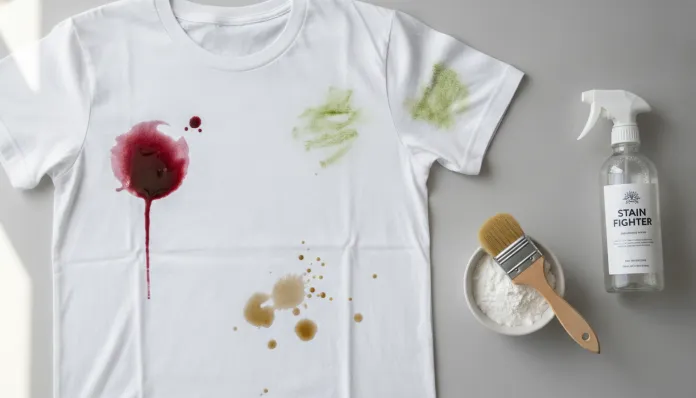
It happens to everyone: you’re enjoying a meal, the sauce slips, and there it is — a red streak right in the center of your favorite blouse. Or that white shirt that sat in the laundry basket for weeks and came out with yellow stains that only seem to worsen. Stubborn stains on clothes are one of the most frustrating household problems, and most people end up giving up and throwing clothes away prematurely.
The good news is that the science of fabric care has evolved greatly, and today there is established knowledge on how each type of stain reacts to different substances. It’s not magic or grandma’s tricks: it’s simple chemistry, applied correctly. The secret is understanding what caused the stain, what the fabric is, and acting with the right product at the right time.
In this guide, you’ll learn to identify and treat the most common types of stubborn stains using accessible products, many of which are already available in your kitchen or bathroom. No more throwing away good clothes.
Why Are Some Stains So Stubborn?
To understand why certain stains seem to have a life of their own, you need to understand a bit of chemistry. Stains can be classified into three major groups:
- Protein-based stains: blood, milk, egg, sweat. These stains coagulate with heat, so hot water is the enemy in these cases.
- Tannin-based stains: coffee, tea, red wine, fruit juice. They are water-soluble but quickly bind to fabric fibers.
- Oil or grease-based stains: olive oil, butter, sunscreen, lipstick. They require agents that break down the fat molecule to be removed.
- Mixed stains: many everyday stains combine more than one category, such as ketchup (which has fat, tannin, and protein) or makeup.
Time is another decisive factor. The longer a stain dries and sets into the fibers, the harder it is to remove. Therefore, the golden rule is always: act as soon as possible. A fresh red wine stain disappears with cold water and salt in minutes; the same stain after 48 hours may require more intensive treatment.
The Miracle Products You Probably Already Have at Home
Before rushing to buy expensive industrial removers, check what’s already in your pantry:
- Cold water: always the first resource for fresh protein stains
- Baking soda: excellent fat absorber and natural deodorizer
- White vinegar: weak acid that dissolves mineral deposits, tannins, and sweat stains
- Hydrogen peroxide 10 volumes: powerful oxidant for organic stains, especially on white or light-colored fabrics — attention: can bleach colored fabrics, always test on a hidden area
- Liquid dish detergent: one of the best allies against grease, thanks to its surfactants
- Coarse salt: absorbs liquids and prevents stains from penetrating deeper into the fabric
- Isopropyl alcohol: effective against pen, makeup, and certain types of ink
Step-by-Step for the Most Common Types of Stains
Blood Stains
The most common mistake is using hot water, which cooks the protein and sets the stain permanently.
- Use cold running water immediately, with pressure to help remove the excess
- Rub with neutral soap or liquid detergent in circular motions
- If the stain persists, apply a paste of baking soda with cold water for 15 minutes
- Wash normally in cold water
- For old and dry stains, soak in cold water with a bit of salt for 1 hour before treating
Red Wine Stains
- Pour coarse salt over the fresh stain immediately to absorb the liquid
- Wash with cold water (never hot)
- Apply a mixture of liquid detergent + hydrogen peroxide in a 1:2 ratio
- Let it act for 20 minutes
- Wash normally
Grease and Oil Stains
- Do not wet the stain! First, place baking soda on top to absorb the oil
- After 10 to 15 minutes, remove the powder with a soft brush
- Apply liquid dish detergent directly to the stain and rub with your fingers
- Let it act for 5 minutes
- Wash normally at the temperature indicated for the fabric
Coffee and Tea Stains
- Wet with cold water and wash with detergent immediately
- If the stain is dry, soak in a solution of white vinegar + water in a 1:3 ratio for 30 minutes
- Wash normally
Sweat Stains (Yellowing)
These stains, common in the armpits of white shirts, are caused by the reaction between sweat and aluminum compounds present in many antiperspirants.
- Make a paste with baking soda + white vinegar (it will bubble — that’s normal)
- Apply to the stained area and rub lightly
- Let it act for 1 hour
- For severe cases, apply pure hydrogen peroxide and expose to the sun for 30 minutes
- Wash normally
What to Do with Pen, Ink, and Makeup Stains
These stains belong to a special category: they are pigment and polymer-based, which bind strongly to fibers.
Ballpoint pen: isopropyl alcohol is the best ally. Place a clean cloth under the stain to absorb what comes out, apply alcohol with a cotton swab and press — never rub, as this spreads the ink. Repeat until the stain is gone.
Marker and highlighter: warm water with detergent is the first step. For stubborn stains, try isopropyl alcohol with caution.
Lipstick and makeup foundation: both have an oily base. Start with dish detergent, then use micellar water or makeup remover oil. For delicate fabrics, avoid rubbing and prefer pressing with a clean cloth.
Wall paint: if still fresh, wash with cold water and soap immediately. Dry paint is extremely difficult to remove — in many cases, the fabric may not be fully salvageable.
Golden Rules Many People Ignore
The difference between saving and losing a piece of clothing often lies in the small care steps that seem obvious but are forgotten in the rush:
- Always treat before machine washing: putting stained clothes directly in the wash without pre-treatment can set the stain with heat and agitation
- Never use the dryer on still-stained clothes: the heat of the dryer is final — if the stain didn’t come out in the wash, the dryer will seal it forever
- Read the fabric label: silk, wool, and viscose have serious restrictions and can be destroyed by inappropriate products
- Always test in a discreet area: before applying any product, test on the hem or the inside of the fabric
- Work from the outside in: to avoid spreading the stain, always treat from the edge to the center
- Press, don’t rub: rubbing opens the fabric fibers and spreads the dirt; pressing and blotting is more effective
When Homemade Products Aren’t Enough
There are cases where homemade solutions aren’t enough, and there’s no shame in admitting that. Specialized laundries have access to professional products with concentrations and formulations not available in common retail — and a professional’s trained eye can identify the type of stain and fabric with much more precision.
For items with high sentimental or financial value — a party dress, an imported silk tie, clothes with delicate embroidery — professional evaluation before any homemade attempt is always the safest route.
Another situation where it’s worth seeking professional help: unidentified stains, especially on old or thrift store items. Trying to remove without knowing what it is can irreversibly worsen the damage.
Conclusion: Information is the Best Stain Remover
Most stains that seem impossible to remove only won because they were treated with the wrong product, at the wrong temperature, at the wrong time. Understanding the nature of each stain — whether it’s protein, fat, or tannin — is already half the battle.
With the right products, patience, and quick action, you can recover items that seemed lost and significantly extend the lifespan of your favorite clothes. This is good for your wallet, good for your wardrobe, and, as a bonus, a more sustainable choice in a world that already overproduces fabric and clothing.
If you enjoyed practical everyday tips, you’ll also like discovering what your body does without you noticing — fascinating processes that happen while you’re worried about other things, like that stain on the collar.


