
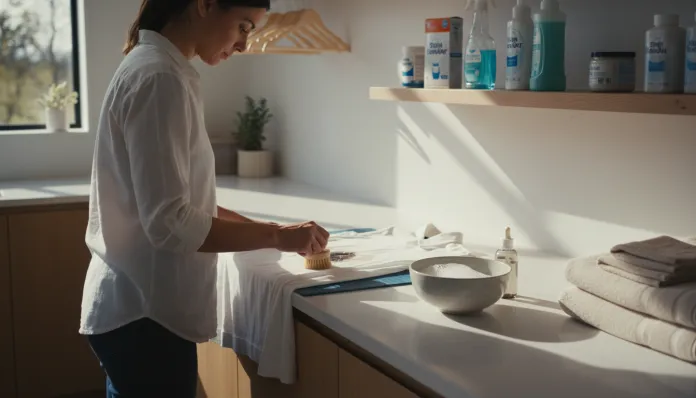
Who hasn’t faced the frustration of seeing their favorite shirt stained with red wine, olive oil, or even ink? It’s disheartening, but the good news is that most “lost” stains can be removed with simple products, the right techniques, and a bit of patience. The key is understanding the nature of each stain and acting correctly before it sets permanently into the fabric.
The problem is that many people make classic mistakes: scrubbing vigorously (which spreads the stain), using hot water before neutralizing the substance (which sets proteins like blood and egg), or mixing chemicals without knowing what they’re doing. The result? A garment that could have been saved ends up in the trash. With the right information, this waste can be avoided, and your clothes can last much longer.
In this practical guide, you’ll learn to identify the most common types of stains, which products really work, and how to apply effective techniques at home without needing to spend on specialized laundries for every daily emergency.
Understanding Stain Types: The First Step to Eliminating Them
Before applying any product, it’s crucial to understand what you’re dealing with. Stains generally fall into four major categories:
- Protein stains: blood, milk, egg, sweat, and saliva. They are set by heat, so cold water is essential for the initial treatment.
- Greasy stains: olive oil, butter, oily makeup, sauce. They need agents that break down the grease, like dish soap or baking soda.
- Tannic stains: red wine, coffee, tea, dark fruit juice. They respond well to cold water and oxidizing agents like hydrogen peroxide.
- Pigmented/artificial stains: pen, ink, food coloring. They require specific solvents depending on the composition.
Identifying the correct group prevents you from using the wrong product and worsening the situation. A common mistake, for example, is using hot water on blood stains — the heat “cooks” the protein and permanently binds it to the fabric fibers.
The Golden Rule: Act Quickly and Gently
Time is your greatest ally (or enemy) when it comes to stains. The fresher the dirt, the easier it is to remove. This applies to almost all types of stains.
What to Do in the First Minutes
- Remove excess with a blunt knife, spoon, or absorbent paper. Never rub — this pushes the substance into the fibers.
- Blot the area with a clean cloth and press lightly to absorb the liquid. Always work from the outside to the inside of the stain.
- Apply cold water (never hot) on protein stains. For greasy stains, avoid water before applying a degreasing product.
- Test any product on a discreet area of the garment before applying directly to the stain.
The rule of working “from the outside in” is especially important: it prevents the stain from spreading in the fabric while you try to treat it.
Household Products That Really Work
You don’t need expensive industrial products to solve most problems. Many ingredients already present in any kitchen or bathroom are highly effective:
Product Best Use Neutral dish soap Grease, makeup, olive oil Baking soda Deodorant, grease, odors 10-volume hydrogen peroxide Red wine, coffee, blood (light fabrics) White vinegar Sweat, odors, deodorant stains Coarse salt Red wine (immediate), fruit juice Isopropyl alcohol Ballpoint pen, ink, resin Lemon Rust on light fabrics Attention: hydrogen peroxide can discolor dark or colored fabrics. Always test first. Similarly, lemon has a bleaching effect and should only be used on white or very light pieces.
Step-by-Step for the Most Common Stains
Red Wine Stain
- Immediately cover with coarse salt to absorb the liquid.
- Wait 2 to 3 minutes and shake off the salt.
- Apply carbonated water or cold water and blot with a clean cloth.
- Create a paste of baking soda and water and let it sit for 10 minutes.
- Wash normally in cold water.
- If the stain persists after washing, apply 10-volume hydrogen peroxide and leave in the sun for 30 minutes (only on light fabrics).
Grease and Olive Oil Stain
- Cover the area with baking soda and let it sit for 15 to 20 minutes.
- Shake off and apply a drop of neutral dish soap directly.
- Gently rub with a soft cloth or an old toothbrush.
- Rinse with warm water and repeat if necessary.
- Only wash in the machine after verifying that the grease is removed — drying heat can set residues.
Blood Stain
- Use only cold water — never hot.
- Rinse thoroughly and immediately.
- Create a paste of cold water and salt and apply to the stain.
- For older stains, apply 10-volume hydrogen peroxide on light fabrics or water with a few drops of detergent on dark ones.
- Wash in the machine with cold water.
Ballpoint Pen Stain
- Place an absorbent cloth under the stained area.
- Apply isopropyl alcohol (or even cleaning alcohol) with a cotton swab, working from the outside in.
- Regularly change the cloth underneath so the ink transfers to it.
- Repeat until the stain disappears.
- Wash normally.
Deodorant Stain (Yellow Stains)
These stains are caused by the reaction between aluminum salts in many deodorants and sweat proteins. They usually appear after several washes.
- Mix white vinegar with baking soda directly on the stain (it will foam — this is normal).
- Let it sit for 30 minutes.
- Gently scrub and wash normally.
- For more resistant cases, a paste of baking soda with hydrogen peroxide and detergent can be effective on light clothes.
Stains on Delicate Fabrics: Extra Care Required
Silk, wool, lace, and velvet require special care. In many cases, the best decision is to take them to a specialized laundry — especially if the piece has sentimental or financial value. But for small emergencies, some general tips help:
- Never rub delicate fabrics. Press and blot.
- Always use cold water and neutral products, without enzymes.
- Avoid hydrogen peroxide and concentrated vinegar on delicate colored fabrics.
- Silk responds well to a mixture of cold water with a few drops of mild shampoo.
- Wool can be treated with cold water and a specific wool detergent, without wringing the piece.
If the label indicates “dry clean only,” respect this recommendation — the risk of damaging the fabric is real.
Mistakes That Ruin Clothes for Good
Knowing what not to do is as important as knowing the correct techniques. Here are the most common mistakes:
- Scrubbing vigorously: spreads the stain and damages the fibers.
- Using hot water on protein stains: sets the stain permanently.
- Drying clothes before removing the stain: the heat from the dryer or sun seals the stain into the fabric.
- Mixing bleach with vinegar or ammonia: can create irritating and even toxic compounds. Never mix cleaning products without knowing the reaction.
- Applying products without testing: can discolor or damage fabrics.
- Ignoring the care label instructions: it exists for a reason.
Conclusion: A Stain Is Not a Death Sentence for Your Clothes
With information and a little attention, it’s entirely possible to save most stained clothes without spending much or relying on industrial products. The secret lies in the combination of three factors: acting quickly, identifying the type of stain, and using the right product with the correct technique.
Keeping a basic kit at home — baking soda, neutral detergent, white vinegar, isopropyl alcohol, and hydrogen peroxide — already solves most everyday situations. And treating the garment while still fresh greatly increases the chances of success.
Just as it’s important to care for what you wear, paying attention to the small details of daily life makes a difference in the long run. For other practical everyday content, also check out our guide on Pix: What It Is and How to Use It Safely — another essential skill for those who want to make the most of their day-to-day without unpleasant surprises.
Mais Lidas
O Jornal Meia Hora é um portal de notícias que oferece informações atualizadas sobre política, economia, esportes, entretenimento e mais. Nosso compromisso é manter nossos leitores informados com notícias precisas e imparciais.
Redação
Trending
Categorias
© Jornal Meia Hora. Todos os direitos reservados.
- Using hot water on protein stains: sets the stain permanently.
- Always use cold water and neutral products, without enzymes.
- Shake off and apply a drop of neutral dish soap directly.
- Blot the area with a clean cloth and press lightly to absorb the liquid. Always work from the outside to the inside of the stain.
- Greasy stains: olive oil, butter, oily makeup, sauce. They need agents that break down the grease, like dish soap or baking soda.