
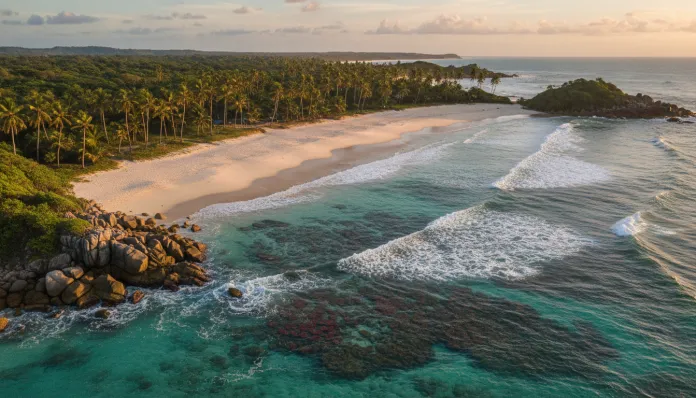
Brazil has approximately 7,500 kilometers of coastline, placing the country among those with the longest beach extensions in the world. From north to south, the Brazilian coast holds an impressive variety of landscapes: crystalline turquoise waters in the Northeast, wild corners in the coastal Amazon, protected bays in the Southeast, and temperate and preserved beaches in the South. With so much natural wealth, any list runs the risk of being unfair — but some destinations stand out so consistently that they deserve special attention.
If you’re planning a seaside trip in 2026 or simply dreaming about your next destination, this guide brings together some of the most beautiful and diverse beaches across the country. The selection considers water quality, environmental preservation, accessibility, and what each place uniquely offers — because a great beach isn’t just one with blue water, but one that stays in your memory.
Pack your beach bag, sunscreen, and curiosity. Brazil has much more than you imagine hidden along its coast.
Northeast: the postcard of Brazilian coastline
When the world thinks of Brazilian beaches, the Northeast is usually the first image that comes to mind — and for good reason. The combination of sun almost year-round, warm and transparent waters, and palm trees swaying in the breeze creates a scene that rivals any tropical paradise on the planet.
Baía dos Porcos and Baía do Sancho — Fernando de Noronha (PE)
Fernando de Noronha is an archipelago located approximately 545 kilometers off the coast of Recife and regularly ranks among the most beautiful beaches in the world in international tourism rankings. Baía do Sancho, in particular, is repeatedly cited as one of the most beautiful beaches on the planet by specialized tourism publications. Access is via a trail descending through a rock crevice, which already transforms the arrival into an experience in itself.
The neighboring Baía dos Porcos, equally stunning, offers natural pools formed by coral reefs during low tide. Being an Environmental Protection Area (APA) and part of a Marine National Park, the island limits the number of visitors per day — which ensures ecosystem preservation and a more peaceful experience.
Jericoacoara — Ceará
Jericoacoara was a fishing village that time transformed into one of Brazil’s most famous destinations, while maintaining (at least in part) village charm. Surrounded by the Jericoacoara National Park, the area has been protected by law since 2002, which restricted disorderly construction and preserved the dunes, lagoons, and winds that make the place unique.
Pedra Furada beach, with its natural rock formation framing the sunset, is one of the most photographed scenes on the Ceará coast. The Paraíso and Azul lagoons in the surroundings complete an itinerary that mixes sea, dunes, and freshwater in a way rarely seen elsewhere.
Praia do Espelho — Bahia
Located between Trancoso and Caraíva, on the Descobrimento Coast, Praia do Espelho is a stretch of Bahian coast with colorful cliffs, natural pools, and waters varying in color between green and blue. Access is still relatively complicated — which, in practice, keeps the beach less congested than other more famous Bahian destinations.
Southeast: beauty between mountains and sea
The Southeast coast has a characteristic that sets it apart: the Serra do Mar meets the ocean at several points, creating beaches nestled between mountains covered in Atlantic Rainforest. The result is a combination of green and blue that impresses even seasoned travelers.
Ilha Grande — Rio de Janeiro
Ilha Grande, located in Baía da Ilha Grande on the southern Fluminense coast, houses one of the largest Atlantic Rainforest reserves in the state of Rio de Janeiro. For decades, the presence of a penal colony and later a maximum-security prison prevented the island’s development — which, paradoxically, preserved it.
The Lopes Mendes is the island’s most famous beach and is constantly cited as one of Brazil’s most beautiful: almost three kilometers of fine, white sand, open sea, and no construction in sight. Access is only on foot or by boat, which contributes to the sense of isolation.
Trindade — Rio de Janeiro
Trindade is a district of Paraty and an increasingly less-secret gem: a small village with access to several beaches, trails, and waterfalls. The Praia do Cachadaço and the Trindade Natural Pools are the most sought-after spots, with rock formations creating calm lagoons ideal for snorkeling.
South: temperate beaches and surprising landscapes
Many people underestimate Brazil’s southern coast, imagining that cold waters make the experience less attractive. This is a big mistake. The region has beaches of singular beauty, with characteristics that exist nowhere else on the national coast.
Ilha do Mel — Paraná
Ilha do Mel sits at the entrance to Baía de Paranaguá and is a state Ecological Station. There are no cars on the island — transportation is on foot or by boat — which ensures an uncommon level of tranquility. Praia de Fora and Praia da Fortaleza, with its historic 18th-century fortress, are the most visited spots, but trails lead to almost deserted beaches.
Praia do Rosa — Santa Catarina
Praia do Rosa, on Santa Catarina’s southern coast, is famous for two main reasons: the waves, which attract advanced-level surfers, and the southern right whales, which appear between June and November for reproduction in calmer waters in the region. Sightings can be made from the coast itself, without needing boats, making the experience accessible and respectful to the animals.
North: beaches of the Amazon — a chapter of its own
Few know, but Brazil has beaches on the Amazon coast — and they are completely different from anything tourists usually imagine.
Alter do Chão — Pará
Technically on the shores of the Tapajós River, Alter do Chão is called the “Amazon’s Caribbean” for the beauty of its freshwater beaches, with clear sand and waters varying in color from green to blue. Sand islands appear and disappear as the river level changes, creating a dynamic and unique scene. The region is close to the city of Santarém and offers access to environmental protection reserves and riverside communities.
Practical tips for planning your visit
Before you go, it’s worth organizing to make the most of any of these destinations:
- Check seasonality: each region has its best time. The Northeast, for example, has heavier rains between February and May, depending on the state. The South has a shorter summer, with pleasant temperatures between December and March.
- Check access requirements: Fernando de Noronha charges an Environmental Preservation Tax (TPA), which increases according to the number of days of stay. Ilha Grande and Ilha do Mel also have access restrictions and visitor limits in preserved areas.
- Reserve accommodation in advance: destinations like Jericoacoara and Praia do Rosa have limited capacity, especially during the Brazilian summer (December to February) and extended holidays.
- Respect environmental rules: don’t collect corals, shells, or sand in protected areas. In Fernando de Noronha, removing any natural material is prohibited by law.
- Protect yourself from the sun: Brazil’s coast has high UV radiation, especially in the Northeast. Use sunscreen with adequate protection and reapply frequently — especially after swimming.
- Save your memories safely: if you plan to take many photos during your trip, it’s worth organizing your files before you leave. Check out this complete guide to saving phone photos without losing any and avoid losing your travel records.
What to consider when choosing your ideal beach
There is no “best beach of all” in absolute terms — the ideal destination depends on what you’re looking for:
| Traveler Profile | Recommended Destination |
|---|---|
| Want isolation and preserved nature | Fernando de Noronha, Ilha Grande |
| Prefer activity and structure | Jericoacoara, Trindade |
| Seek adventure and trails | Ilha do Mel, Praia do Espelho |
| Want a unique and different experience | Alter do Chão, Praia do Rosa |
| Family with children | Trindade Natural Pools, Alter do Chão |
Conclusion: the coastline Brazil still has to offer
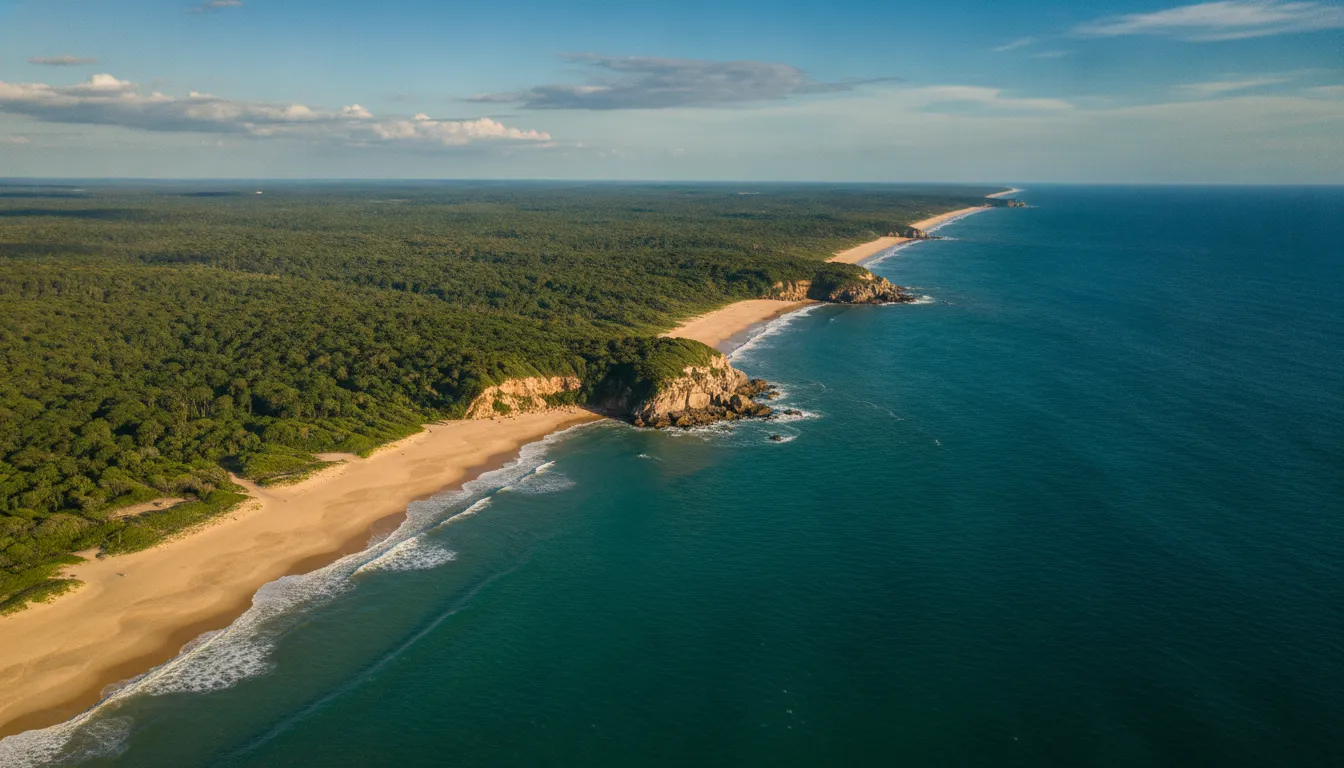
Brazil is a country of continental dimensions, and its coastline reflects exactly that diversity. In one week of vacation it’s impossible to see everything — and perhaps that’s the country’s greatest charm: there will always be a new beach to discover, a trail leading to an unseen corner, a lagoon you didn’t know existed.
The beaches listed here are starting points, not endpoints. Each one has variations, equally beautiful neighboring beaches, and experiences beyond swimming. The most important thing is to plan carefully, respect the environment you’re visiting, and — perhaps most of all — venture slightly off the obvious route. Brazil has famous beaches and secrets guarded closely. Both are worth it.