
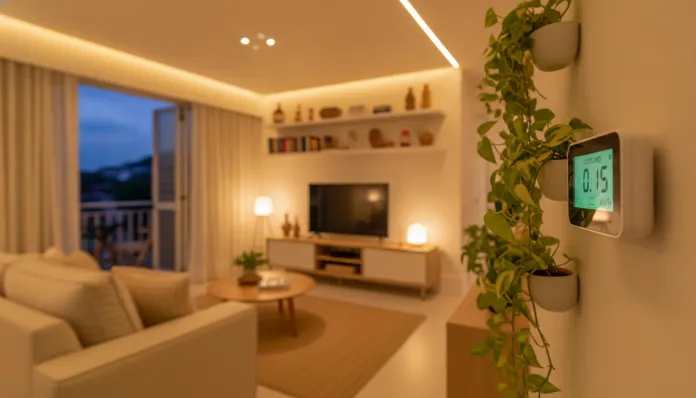
The electricity bill arrived, and the number on the smartphone screen brought that familiar sinking feeling. If this sounds familiar, know that you are not alone — and there is much more room to save than most people imagine. We’re not talking about giving up comfort or living in darkness: we’re talking about smart choices that, when combined, make a real difference in your wallet month after month.
Brazil has one of the highest electricity tariffs among developing countries, and residential consumption represents a significant portion of the total demand of the national electric system. This means that every individual action at home has weight — both financially and environmentally. When millions of people adopt more efficient habits, the collective impact is enormous.
The good news is that saving energy doesn’t require major investments to start. Many of the best actions cost zero reais and depend only on a closer look at what already exists in your home. In this article, we’ll show you where to start, what is most worthwhile, and how to turn this awareness into a natural daily habit.
Why the Electricity Bill Weighs Heavily on Brazilian Budgets
The structure of the electricity tariff in Brazil is composed of several components in addition to consumption itself: there are sector charges, taxes such as ICMS and PIS/Cofins, and the tariff flag — that color-coded system indicating extra costs charged depending on the conditions of the electric system and hydroelectric reservoirs.
The tariff flag was created by the National Electric Energy Agency (Aneel) to signal to consumers when the system is under pressure. In yellow, red 1, and red 2 flags, the cost per kilowatt-hour consumed rises. This means that the same consumption pattern can result in very different bills depending on the month and the country’s climatic conditions.
Furthermore, Brazilian residential consumption is mainly driven by electric showers, air conditioners, refrigerators, and irons — appliances that operate at high power or for long periods. Understanding which equipment consumes the most is the first step to making more efficient decisions.
The Consumption Villains: Meet the Biggest Spenders in Your Home
Not every appliance impacts the bill. The general rule is simple: the higher the power (measured in watts) and the longer the usage time, the higher the consumption. Here are the main culprits of domestic consumption:
- Electric shower: the absolute champion. A 5,500-watt shower running for 15 minutes consumes more energy than a modern refrigerator in an entire day.
- Air conditioner: older and poorly sized units are especially inefficient. Continuous use in poorly sealed environments is one of the biggest possible wastes.
- Refrigerator: operates 24 hours a day, every day. The model’s efficiency, temperature settings, and usage habits (such as frequently opening the door) make a real difference.
- Iron: high power in concentrated use. Ironing accumulated clothes all at once is more efficient than doing short, frequent sessions.
- Washing machine: the motor and, especially, water heating (in models that have this function) are the biggest consumers.
- Televisions and electronics on standby: individually small, but when added over time and in quantity, they represent real consumption that is often ignored.
Simple Habits That Make an Immediate Difference
Before spending a cent on new technology, there is a set of behaviors that already reduce consumption measurably. Don’t underestimate the power of habits:
- Reduce shower time: changing a 15-minute shower to 7 or 8 minutes with an electric shower can represent a significant reduction in the bill at the end of the month.
- Unplug devices: TVs, chargers, microwaves, and other electronics consume energy even on standby. Use power strips with switches to make it easier.
- Adjust refrigerator temperature: between 3°C and 5°C is enough to safely preserve food. There’s no need to set it to the maximum.
- Take advantage of natural light: organize spaces to maximize sunlight during the day. It’s free and healthy.
- Always run the washing machine full: washing with a half load wastes water and energy. Gather clothes and do a full wash.
- Avoid opening the refrigerator unnecessarily: each opening makes the compressor work harder to restore the internal temperature.
- Dry clothes in the sun whenever possible: clothes dryers have high consumption; the sun does the same job for free.
Air Conditioner: Enemy or Ally?
The air conditioner is seen as the great villain of residential electric consumption — and this reputation is founded, but deserves nuances. A modern inverter device, well-sized for the environment and with up-to-date maintenance, can be more efficient than fans running for many hours in extreme heat.
The problem lies in improper use: old devices without inverter technology, dirty filters forcing the equipment to work harder, open doors and windows while the air is on, and temperatures set lower than necessary (the ideal recommended by energy efficiency specialists is between 23°C and 24°C).
Some practical tips for using the air conditioner more efficiently:
- Clean the filters at least once a month
- Keep doors and windows closed during operation
- Set the timer to turn off during the night when the temperature drops
- Prefer devices with the Procel Energy Efficiency Seal, especially with an A rating
- Consider sealing gaps in doors and windows to keep the environment air-conditioned longer
Is It Worth Investing in More Efficient Technology?
Replacing old equipment with more efficient versions is, in many cases, an investment that pays off over time. The clearest example is lighting: LED bulbs consume about 75% less energy than old incandescent bulbs and have a much longer lifespan. The replacement pays off quickly in most cases.
Replacing a refrigerator or air conditioner with more efficient models may require more planning, but it is especially advantageous when the appliance is more than 10 or 15 years old — a period in which technology has advanced significantly in terms of efficiency.
The Procel Seal
The National Energy Conservation Program (Procel), linked to Eletrobras, is the main consumer guidance tool in this area. The Procel Seal classifies equipment on a scale from A to G, with A being the most efficient. When buying any appliance, checking this seal is a simple habit that can make a big difference in the long run.
Solar Energy: An Increasingly Accessible Option
In recent years, the residential photovoltaic solar energy market has grown significantly in Brazil. The country has one of the highest solar radiation incidences in the world, making this technology particularly suitable for the national context.
With self-generation of energy, the consumer can drastically reduce the monthly bill amount — in some cases, paying only the minimum availability fee to the distributor. The surplus generated can be injected into the grid and credited in subsequent months, according to the compensation rules established by Aneel.
The cost of installing a solar system has dropped considerably in the last decade. There are specific financing lines in banks like Caixa Econômica Federal and Banco do Brasil, as well as state incentive programs. The return on investment varies according to the house’s consumption, the size of the installed system, and the local tariff, but it usually occurs within a period of 4 to 8 years, with equipment having a lifespan of 25 years or more.
Just as taking care of diet and physical habits contributes to a healthier life — as you can see in our article on why practicing sports is good for your health — taking care of energy consumption is a way to care for the financial and environmental health of your home.
Monitoring: What Is Not Measured, Is Not Controlled
One of the most effective tools for saving energy is simply regularly monitoring consumption. Many distributors already offer apps that allow you to see consumption in real-time or by period. Some smart meters are being progressively installed in Brazil, allowing an even greater level of control.
Another useful strategy is to use outlets or power strips with built-in consumption meters — relatively affordable devices that show exactly how much each appliance consumes. When you see the number on the screen, it’s much easier to make conscious decisions.
A practical idea: for a month, note or record on your phone which appliances you use, for how long, and at what times. This visibility alone tends to provoke natural behavioral changes — just as organizing your routine in other areas of life brings surprising results, as we explore in our content on how to transform your routine with personal organization.
Conclusion: Small Changes, Real Results
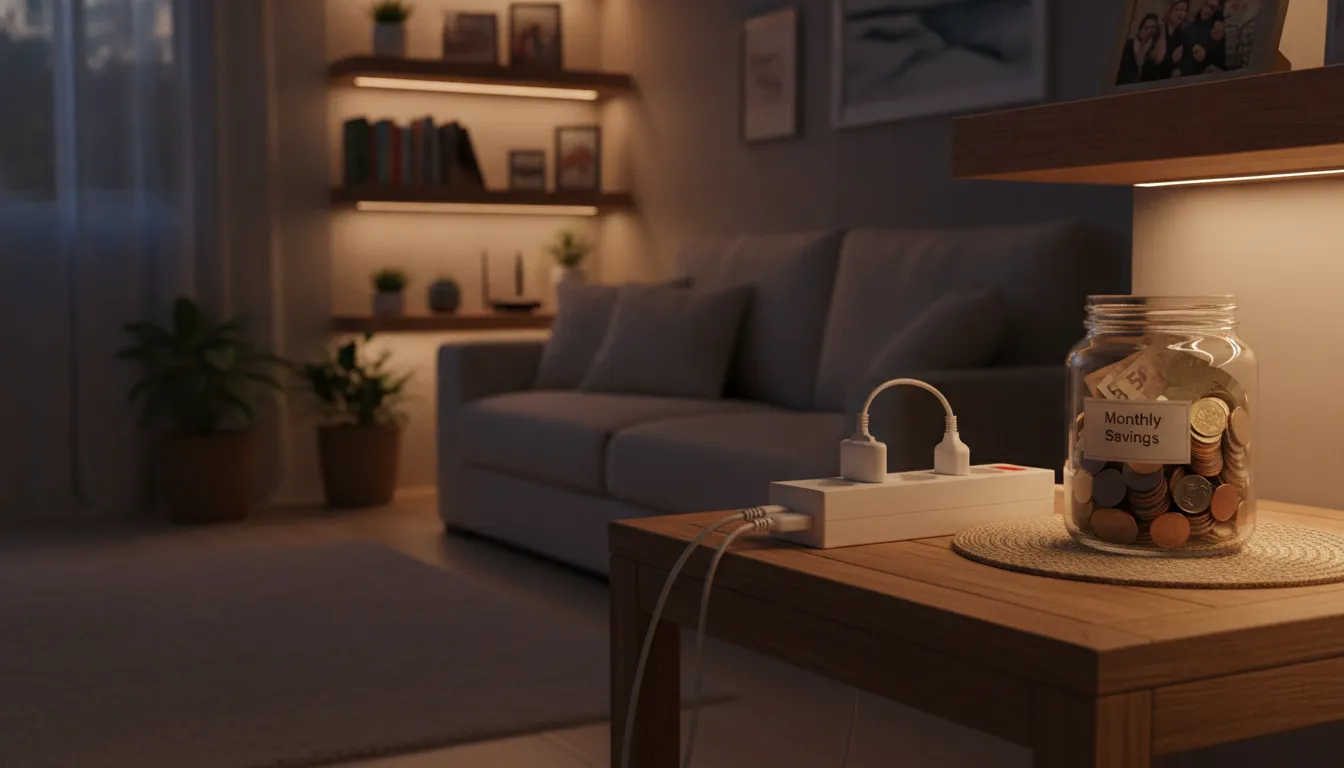
Saving electricity at home is not a sacrifice — it’s a sum of smart choices that, together, produce a tangible result in your wallet and the environment. It starts with simple habits, like reducing shower time and unplugging devices. It involves proper maintenance of the equipment you already have. And it can evolve, in your own time, into more structured investments, such as replacing appliances with efficient ones or installing solar energy.
The most important thing is to start. There is no perfect change or ideal moment — there is the step you take today. And when you notice the difference in the next electricity bill, you’ll understand that saving energy is indeed worth much more than you imagined.
- Unplug devices: TVs, chargers, microwaves, and other electronics consume energy even on standby. Use power strips with switches to make it easier.
- Air conditioner: older and poorly sized units are especially inefficient. Continuous use in poorly sealed environments is one of the biggest possible wastes.