
Why Your Kitchen Can Be Simpler Than You Think
How many times have you come home after a long day, looked at the fridge, and felt that mix of hunger and fatigue that paralyzes any desire to cook? This feeling is more common than it seems, and the good news is that it has a solution — without having to order delivery every time or rely on ultra-processed meals.
For many people, the kitchen still carries an aura of unnecessary complexity. Complicated techniques, endless ingredient lists, and the fear of making mistakes keep people away from the stove. But professional cooks and chefs around the world share an open secret: much of what makes cooking easier is not innate talent, but a set of simple habits, practical tricks, and smart organization.
In this article, we’ve gathered the best kitchen hacks that truly work in everyday life — those that save time, reduce waste, and even improve the final result of the dish. You don’t need to be a chef to apply any of this. Just curiosity and a willingness to change small habits.
Mise en Place: The Secret of Professionals at Your Fingertips
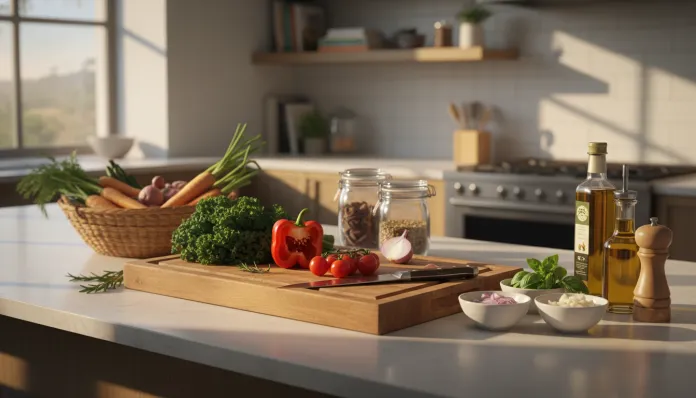
This French term literally means “put in place.” It’s the practice of separating, measuring, and organizing all the ingredients before you start cooking. Restaurants worldwide have used this technique for decades, and it works just as well in home kitchens.
The logic is simple: when you start sautéing the onion and realize the garlic is whole, unpeeled, and the tomato hasn’t been chopped, stress takes over. With mise en place, everything is ready when the stove is turned on.
How to apply at home:
- Read the entire recipe before starting.
- Place all ingredients on the counter.
- Make the necessary cuts and measurements.
- Organize in bowls or containers in order of use.
- Only then turn on the stove.
This habit reduces errors, prevents you from forgetting ingredients, and makes cooking a much more peaceful — almost meditative — experience.
Fridge Organization: Visibility is Everything
One of the biggest culprits of food waste is a disorganized fridge. When you can’t see what you have, you buy duplicates, forget leftovers, and end up throwing away food that was still good.
Consumer behavior studies show that we tend to grab what’s in front and at eye level. Therefore, the practical tip is:
- Place foods that need to be consumed first at eye level.
- Use transparent containers for leftovers so you can see the contents without opening them.
- Group by category: dairy together, vegetables in the specific drawer, proteins on a separate shelf.
- Label leftovers and opened foods with the date.
A well-organized fridge also helps in planning weekly meals — the famous meal prep, a popular technique of preparing meals in advance to consume throughout the days.
Cutting Techniques That Save Time and Effort
You don’t need culinary courses to cut foods efficiently. Some simple adjustments in how you use the knife make a big difference.
The Right Knife for Each Task
- Chef’s knife (the larger one, with a wide blade): for most cuts of vegetables, meats, and herbs.
- Paring knife (smaller, more agile): for peeling and making delicate cuts.
- Serrated knife: for bread, tomatoes, and fruits with firm skin.
A sharp knife is safer than a dull one. This seems counterintuitive, but a dull blade requires more force, increasing the risk of slipping. Sharpening the knife regularly — once a month, depending on use — is one of the most underestimated tricks in home cooking.
Quick Cuts Everyone Should Know
- Tear-free onion: leave the onion in the fridge for 30 minutes before cutting. The cold reduces the release of volatile compounds that irritate the eyes.
- Garlic peeled in seconds: press the garlic clove with the side of the knife. The peel comes off easily.
- Fresh herbs quickly: gather the leaves into a bundle, roll, and slice. Technique called chiffonade.
- Tomato without crushing: always use the serrated knife, with a gentle back-and-forth motion.
Full Use of Ingredients: Less Waste, More Flavor
Brazil is one of the largest food producers in the world, but it also wastes a significant amount of food throughout the production chain and in households. Part of this waste starts in the home kitchen, with parts of foods thrown away out of sheer ignorance.
Many peels, stems, and leaves that go to waste are actually tasty and nutritious:
- Broccoli and cauliflower stems: can be sautéed, used in soups, or cooked along with the rest.
- Beet peel: can be roasted in the oven with olive oil and turned into a crunchy snack.
- Carrot leaves: slightly bitter, work well in homemade pesto or stir-fries.
- Orange and lemon peel: grated, it flavors cakes, sauces, and marinades.
- Bread crust: ideal for making homemade breadcrumbs, just let it dry and grind.
In addition to reducing waste, this approach — called full use of ingredients — forces creativity in the kitchen and can yield surprising combinations.
If you’re interested in growing your own fresh ingredients to further reduce waste, check out this complete guide: Home Garden: How to Start from Scratch in a Few Steps.
Seasonings and Aromatics: Building Flavor with Simplicity
One of the biggest frustrations for those learning to cook is feeling that the food is bland, even when following the recipe. In many cases, the problem lies in the timing and method of seasoning — not the ingredients.
Basic Principles of Seasoning
- Layering salt: season at different stages of cooking, not just at the end. This builds depth of flavor.
- Acidity balances everything: a splash of lemon or a spoonful of vinegar at the end of a dish can enhance flavors that seemed muted.
- Fat carries flavor: sautéing spices in olive oil before adding other ingredients releases aromatic compounds and intensifies the flavor of the entire dish.
- Fresh herbs at the end, dried at the beginning: fresh herbs lose aroma with heat; add them at the end. Dried herbs need heat to release their essential oils.
Classic Combinations That Never Fail
| Dish Base | Seasoning Combination |
|---|---|
| Grilled chicken | Garlic, lemon, thyme, paprika |
| Beans and legumes | Bay leaf, cumin, garlic, onion |
| Fish | Lemon, dill, olive oil, salt |
| Pasta with tomato | Basil, oregano, garlic, black pepper |
| Soups and broths | Bay leaf, leek, carrot, parsley |
Weekly Planning: Cook Less, Eat Better
The meal prep — advance meal preparation — has gained popularity on social media in recent years and for good reasons: it works. The idea is not to prepare identical meals for every day, but to have ready components that make it easy to assemble varied dishes.
How to set up a simple meal prep routine:
- Choose a day of the week with available time (Sunday often works well for many people).
- Decide on the “pillars” of the week: a grain (rice, pasta, quinoa), a protein (chicken, egg, chickpeas), and roasted or cooked vegetables.
- Prepare these base components without very specific seasonings, so they can be combined in different ways.
- Store in individual containers in the fridge.
- At mealtime, assemble the dish according to the day’s desire and what’s available.
This logic reduces the time spent in the kitchen during the week, decreases daily decisions about what to eat, and avoids unnecessary improvisation that leads to delivery.
Smart Recipe Substitutions
Missing an ingredient? Before closing the delivery app, it’s worth knowing some substitutions that work surprisingly well:
- No buttermilk: mix 1 cup of regular milk with 1 tablespoon of vinegar or lemon juice. Wait 5 minutes.
- No eggs in cakes: 1 mashed banana or 3 tablespoons of aquafaba (the cooking water of chickpeas) replace 1 egg in baking recipes.
- No cream in savory dishes: whole natural yogurt works well in sauces and soups, with less fat.
- No breadcrumbs: crushed saltine crackers or dried bread slices serve the same purpose.
- No white wine in the recipe: vegetable broth with a tablespoon of white vinegar is a functional alternative.
These substitutions are not just emergency solutions — some of them improve the original recipe or make the dish more cost-effective.
Conclusion: The Kitchen as an Ally, Not an Obstacle
Cooking well is not a matter of talent or having free hours. It is largely a matter of method. Mise en place teaches organization; cutting tricks bring agility; full use reduces waste; seasoning principles transform simple dishes into flavorful experiences; and weekly planning frees up time during the week.
Each of these elements can be gradually incorporated into your routine. You don’t need to change everything at once. Start with a single habit — perhaps better organizing the fridge, or trying mise en place in the next recipe — and see how your relationship with the kitchen changes.
Over time, what seemed complicated becomes automatic. And the kitchen, instead of being just another task of the day, becomes a moment of satisfaction — and sometimes even creativity.