
Kitchen Hacks to Simplify Your Daily Routine
Who hasn’t come home after a long day, opened the fridge, and froze, unsure of what to prepare? The kitchen can be a place of pleasure or pure stress — and the difference between these two scenarios often lies in the habits and techniques you use daily. It’s not about having expensive equipment or professional chef skills, but about knowing small secrets that make a huge difference in practice.
The good news is that home cooking is full of smart shortcuts accumulated over generations. From ways to preserve food longer to methods that cut preparation time in half, there are simple, accessible, and effective tricks that anyone can incorporate into their routine. And best of all: most require no investment beyond a little attention.
In this article, we’ve compiled a practical guide with the best techniques to make your kitchen more functional, economical, and enjoyable — without sacrificing flavor.
Mise en place: The Secret of Professional Chefs
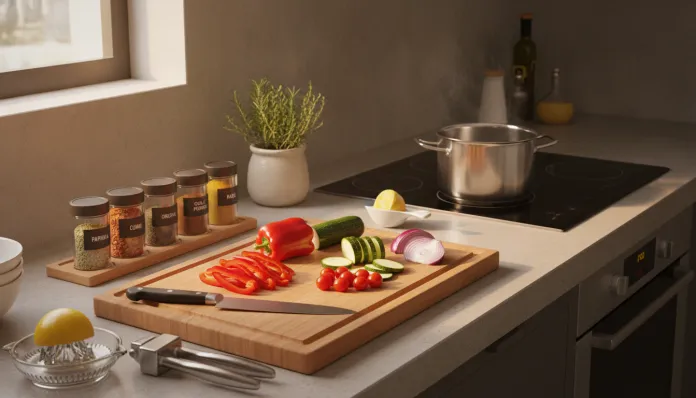
The French term mise en place literally means “putting in place” or “setting up.” In professional gastronomy, it’s a fundamental practice: before starting to cook, all ingredients are separated, washed, chopped, and measured. Only then does the cook turn on the stove.
It seems simple — and it is. But the impact on your daily life is enormous. By preparing everything in advance, you avoid that panic moment when the onion is burning while you’re still trying to find the garlic. The process becomes more fluid, the risk of errors decreases, and the total cooking time drops surprisingly.
How to Apply at Home
- Read the recipe from start to finish before you begin.
- Gather all ingredients on the counter.
- Do all the chopping and measuring before turning on the stove.
- Have pots, pans, and utensils ready at hand.
This habit also helps identify if any ingredient is missing before you’re halfway through the recipe — avoiding unnecessary improvisations.
Smart Preservation: Make Food Last Longer
One of the biggest wastes in home kitchens is throwing away food that spoiled prematurely. With a few simple preservation techniques, it’s possible to extend the shelf life of fruits, vegetables, and other ingredients without needing anything sophisticated.
Vegetables and Greens
- Green leaves (lettuce, arugula, spinach): wash, dry well with a salad spinner or paper towel, and store in a closed container with an absorbent paper at the bottom. They last up to twice as long.
- Fresh herbs (parsley, chives, cilantro): place the stems in a glass with a bit of water, like a bouquet, cover the leaves with a plastic bag, and refrigerate. They last up to two weeks.
- Tomatoes: never store in the fridge before ripe. The cold stops the ripening process and alters the texture. Keep at room temperature and refrigerate only when ripe.
Fruits and Other Items
- Bananas: separate bananas from the bunch and wrap the tip of each with plastic wrap. This slows down the release of ethylene, the gas responsible for accelerated ripening.
- Cut avocado: drizzle with lemon juice and store with the pit. The citric acid slows down the oxidation that darkens the pulp.
- Cheeses: wrap in parchment paper instead of plastic wrap. Cheese needs to “breathe” to avoid moisture buildup and mold development.
The Power of the Freezer: Cook Once, Eat Multiple Times
The freezer is one of the most underestimated allies in the home kitchen. With a bit of organization, it turns hours of weekend cooking into ready meals for the entire week.
The technique known as batch cooking — cooking in bulk — involves preparing large quantities of food at once and freezing in individual or family portions. It’s a common practice in many countries and is gaining popularity in Brazil for its practicality and economy.
What Freezes Well
- Cooked rice (in individual portions)
- Cooked beans, lentils, and chickpeas
- Seasoned raw or cooked meats
- Homemade tomato sauces
- Soups and broths
- Muffins, cakes, and breads
What to Avoid Freezing
- Cooked potatoes (become mushy)
- Mayonnaise and egg-based creams
- Lettuce and raw greens
- Fried foods (lose crispiness)
Practical Tip: label everything with the food name and preparation date. Frozen foods tend to “disappear” at the back of the freezer when not identified.
Cuts That Make a Difference in Flavor and Time
The way you cut food directly influences cooking time and, surprisingly, the dish’s flavor. Smaller pieces cook faster and absorb seasonings and broths better.
Some basic cutting techniques worth learning:
- Chiffonade: stacked leaves, rolled, and cut into thin strips. Ideal for basil and kale.
- Brunoise: very small cubes (about 3 mm). Perfect for stir-fries and sauces.
- Julienne: thin, long strips. Often used in vegetables for quick stir-frying.
- Concassé: peeled, seeded, and diced tomatoes. Provides a finer texture to sauces.
Besides the cuts, keeping the knife sharp is essential. A dull knife requires more force, increases the risk of accidents, and crushes food instead of cutting it. Regularly sharpening the knife — with a honing rod or whetstone — is a simple habit that transforms the kitchen experience.
Seasonings and Marinades: Flavor Without Complication
Seasoning food well doesn’t require a shelf full of imported spices. Some classic and versatile combinations solve most situations.
Combinations That Always Work
| Protein | Seasoning Combination |
|---|---|
| Chicken | Garlic, lemon, smoked paprika, and fresh herbs |
| Beef | Coarse salt, black pepper, garlic, and rosemary |
| Fish | Lemon, olive oil, cilantro, and ginger |
| Roasted vegetables | Olive oil, garlic, thyme, and pepper |
About Marinades: leaving meats in a mixture of acid (lemon or vinegar), fat (olive oil), and seasonings for at least 30 minutes — ideally overnight in the fridge — makes a huge difference in tenderness and flavor. The acidity breaks down muscle fibers and helps seasonings penetrate the meat.
Quick Techniques for Busy Days
Not every day allows for mise en place or batch cooking. For busier days, there are specific tricks that save time without compromising quality.
- Poached egg in under 3 minutes: boil water with a dash of vinegar, create a whirlpool with a spoon, and crack the egg in the center. The vinegar helps the white quickly coagulate around the yolk.
- Freshly chopped garlic: crush the garlic clove with the side of the knife to quickly release the peel and ease chopping.
- Tear-free onion: refrigerate the onion for 15 minutes before cutting. The cold reduces the release of sulfur compounds that irritate the eyes.
- Fluffier rice: add a few drops of lemon or a teaspoon of olive oil to the cooking water.
- Non-sticky pasta: don’t add olive oil to the cooking water (it prevents the sauce from adhering to the pasta). After draining, immediately mix with the sauce.
- Faster sautéing: dry foods well before placing them in a hot pan. Moisture creates steam and prevents browning.
Kitchen Organization: The Environment That Facilitates Everything
Knowing all the tricks is pointless if the kitchen is chaotic. The organization of the space directly influences the willingness to cook and the efficiency of the process.
Some simple practices make a big difference:
- Keep frequently used items within reach: olive oil, salt, pepper, and daily utensils should be immediately accessible.
- Organize the fridge by zones: dairy together, vegetables in the proper drawer, leftovers in a visible spot to avoid being forgotten.
- Use transparent containers to store grains, flours, and cereals. It makes stock visualization easier.
- Clean as you cook: use waiting times (while water boils or meat rests) to wash used utensils. The kitchen becomes less cluttered, and the final cleanup is much quicker.
Cooking in an organized environment also reduces stress — something that applies beyond the kitchen. If you want to understand better how to simplify your routine and relieve daily tension, check out this guide on how to reduce daily stress with simple and effective habits.
Conclusion
Cooking well is not a talent you’re born with — it’s a skill built with practice, curiosity, and the right tricks. By incorporating techniques like mise en place, batch cooking, smart preservation, and proper cuts, you transform the kitchen from a source of stress into a space of autonomy and creativity.
The secret lies in consistency: start with one or two new habits at a time and gradually expand your repertoire. Over time, these tricks stop being conscious techniques and become part of your natural way of cooking — and the results show in the dish, the wallet, and the free time you gain back.


