
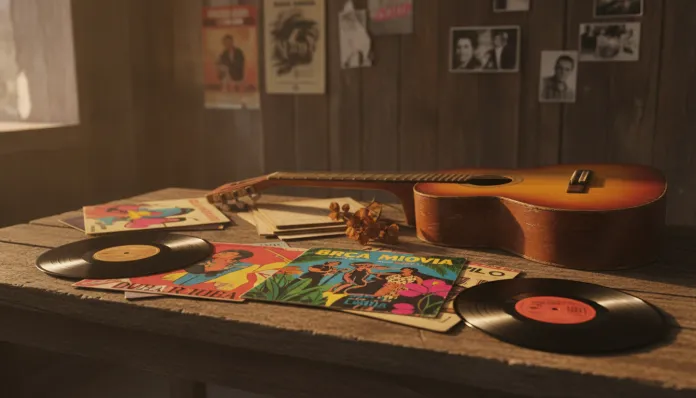
There is something magical about how a melody can traverse decades and still make someone close their eyes, tap their feet, and remember exactly where they were when they first heard that song. In Brazil, this phenomenon is especially powerful: a country of continental dimensions, with cultures as diverse as its biomes, has produced throughout the 20th and early 21st centuries a musical catalog that is, without exaggeration, one of the richest on the planet.
From Noel Rosa to Emicida, from Luiz Gonzaga to Caetano Veloso, from Roberto Carlos to Cazuza, Brazilian popular music has repeatedly served as both a mirror and a frame for entire generations. It has captured joys, revolts, loves, and social transformations in a way that no history book can reproduce with the same emotional intensity. Each era generated its anthems, and these anthems helped define collective identities.
In this article, we will explore some of the songs and musical movements that marked generations of Brazilians—not just as entertainment phenomena, but as cultural documents that reveal who we were and who we have become.
Bossa Nova and the Generation of Discreet Elegance
When João Gilberto recorded Chega de Saudade in 1958, with lyrics by Vinícius de Moraes and music by Tom Jobim, Brazil awoke to a new way of making—and feeling—music. Bossa Nova was not just a style. It was an attitude: a soft voice, economical guitar, sophisticated harmony. An elegant reaction to excess, an intimate conversation between musician and listener.
The generation that grew up listening to Bossa Nova in the 1960s was marked by an aesthetic of restraint that contrasted with the political effervescence of the time. Songs like Garota de Ipanema (1962) and Samba de Uma Nota Só became ambassadors of Brazil worldwide and are still globally recognized as symbols of national identity.
Why was Bossa Nova so defining?
- It synthesized traditional samba with influences from American jazz.
- Created a new class of listener: urban, university-educated, cosmopolitan.
- Projected Brazil culturally abroad even before Pelé became internationally famous.
- Established Rio de Janeiro—especially Ipanema and Copacabana—as symbolic settings for Brazilian music.
Tropicália: When Music Became a Manifesto
If Bossa Nova was a whispered conversation, Tropicália was a dissonant and colorful shout. In 1967 and 1968, Caetano Veloso and Gilberto Gil led a movement that mixed Beatles, electric guitars, samba, protest songs, and Dadaist references into an intentional and provocative collage.
The collective album Tropicália ou Panis et Circencis (1968) is considered one of the most important albums in the history of Brazilian music. Songs like Alegria, Alegria and Domingo no Parque scandalized part of the intellectual left of the time, which saw the use of the electric guitar as a capitulation to American cultural imperialism.
But Tropicália was exactly the opposite: it was a complex and ironic affirmation of Brazilian identity, capable of absorbing the foreign without dissolving into it. The generation that lived through this—in the midst of a military dictatorship—found in these songs a language to speak about freedom without being directly censored.
Roberto Carlos and Jovem Guarda: Pop for the Masses
While Bossa Nova and Tropicália engaged with more university audiences, Roberto Carlos built something different: a direct connection with the Brazil that worked, danced, and dreamed of romance. In the late 1960s and throughout the 1970s, he established himself as the biggest sales phenomenon in Brazilian popular music.
Songs like Emoções (1978), Detalhes, and Como é Grande o Meu Amor por Você became romantic anthems that spanned generations. Roberto Carlos not only sold records—he created a ritual. His year-end television specials became part of the emotional calendar of millions of Brazilian families.
The Jovem Guarda, a movement from the 1960s of which he was a part alongside Erasmo Carlos and Wanderléa, was the gateway for rock and roll into Brazilian daily life, translating the energy of the youth into a local context.
The Northeast that Sang Brazil: Luiz Gonzaga and Baião
Long before any musical globalization, Luiz Gonzaga did something extraordinary: he brought the sound of the northeastern sertão to radios and dance halls across the country. With his baião—a rhythm he helped systematize and popularize from the 1940s—and his unmistakable accordion, Gonzaga gave cultural visibility to a historically marginalized region.
Asa Branca (1947), with lyrics by Humberto Teixeira, is considered by many researchers and musicians as one of the greatest songs ever written in Portuguese. It speaks of drought, longing, and hope with poetry that is both simple and devastating.
Gonzaga defined the musical identity of the Northeast for the entire country—and his influence can be traced in artists as diverse as Dominguinhos, Alceu Valença, and even more contemporary manifestations of electronic forró. His music was, and continues to be, a declaration of existence for an entire culture.
Brazilian Rock of the 1980s: The Generation That Exploded
If there is a moment when Brazilian music functioned as a collective escape valve more explicitly, it was in the 1980s. With political opening after two decades of dictatorship, bands like Legião Urbana, Cazuza with Barão Vermelho, Titãs, Os Paralamas do Sucesso, and RPM translated into rock the anguish, hope, and rebellion of a generation.
Geração Coca-Cola (1985) by Legião Urbana was a declaration of existence. Brasil (1987) by Cazuza was a cry of disillusionment and love at the same time. The album Cabeça Dinossauro (1986) by Titãs remains a reference for visceral and political rock.
Some emblematic songs of this period:
- Eduardo e Mônica — Legião Urbana (1986)
- O Tempo Não Para — Cazuza (1988)
- Tédio — Barão Vermelho (1982)
- Alagados — Os Paralamas do Sucesso (1987)
- Que País É Este — Legião Urbana (1987)
- Rádio Pirata — RPM (1985)
This generation was the first to grow up entirely in post-industrialized urban Brazil, and rock was its natural language. Many of these songs continue to be played at concerts, in covers, and on playlists in 2026, almost four decades after their release.
Axé, Pagode, and Sertanejo: The Soundtrack of 1990s Brazil
The 1990s were plural and noisy. Axé music exploded from Salvador with names like Ivete Sangalo, Claudinha Leitte (in her early days), and Margareth Menezes, bringing the energy of the Bahian Carnival to the entire country. Romantic pagode—different from traditional samba—gained space with groups like Raça Negra, Art Popular, and Exaltasamba.
Meanwhile, sertanejo universitário began to take shape, modernizing the traditional caipira duo with pop production. Duos like Leandro & Leonardo and Chitãozinho & Xororó sold millions of records and filled stadiums.
Each of these genres created its own community of listeners—and therefore, its own identified generation. Those who grew up in the 1990s probably carry some of these soundtracks as an emotional memory, regardless of which social circle they frequented.
Funk and Rap: Voices from the Peripheries Reaching the Center
No analysis of Brazilian music by generations would be complete without discussing funk carioca and national rap. Both emerged from urban peripheries—the funk from Rio de Janeiro, the rap from São Paulo—and were systematically ignored or criminalized before gaining broad cultural recognition.
Brazilian rap gained its own contours with Racionais MC’s, whose album Sobrevivendo no Inferno (1997) sold over 1.5 million copies almost independently and is considered one of the most important albums in Brazilian musical history. Songs like Diário de um Detento and Capítulo 4, Versículo 3 were—and are—social documents as precise as any journalistic report.
Artists like Emicida, Criolo, and Rincon Sapiência continued this tradition in the following decades, taking Brazilian rap to international stages and dialogues with more traditional MPB. Funk, in turn, left the dance halls and invaded global charts, with artists like Anitta taking the rhythm to international collaborations in the 2010s and 2020s.
Conclusion: What the Songs Say About Who We Are
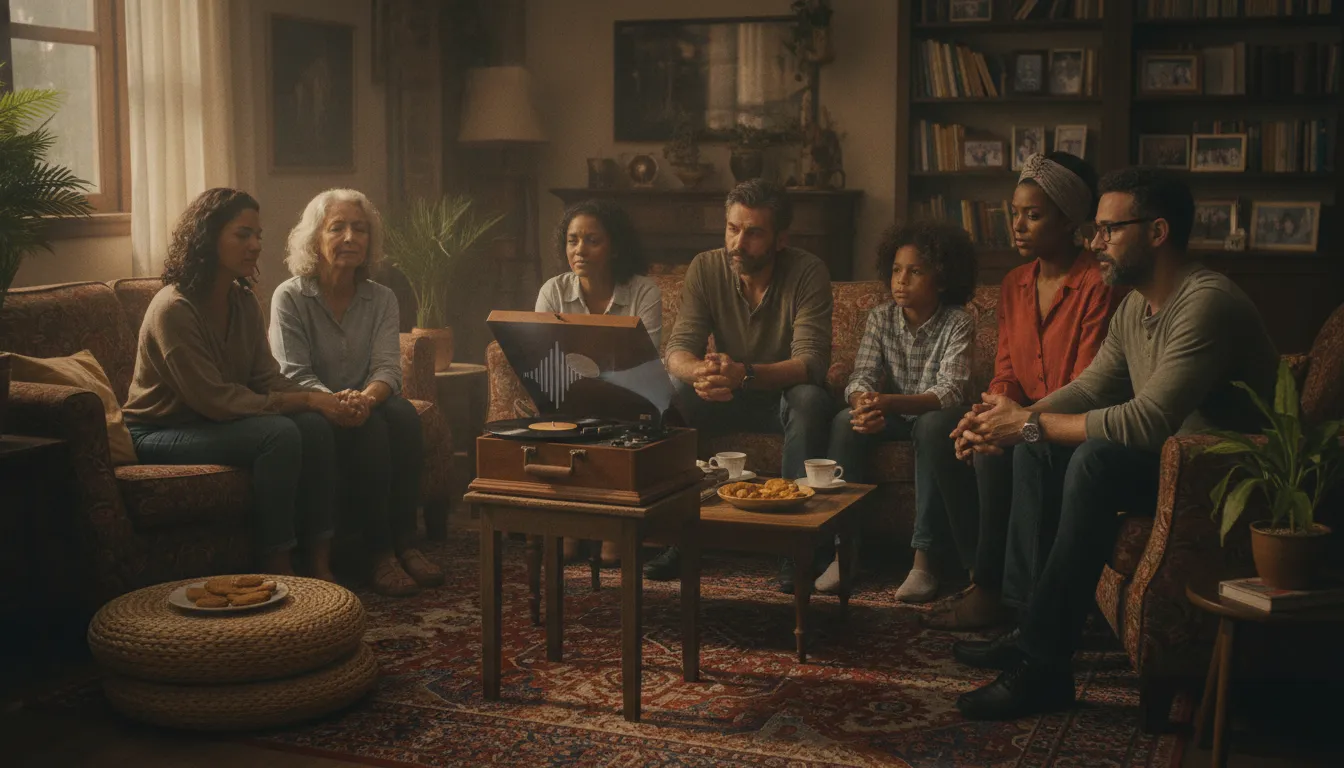
Brazilian popular music has never been just entertainment. It has always been an archive, a protest, an embrace, and a manifesto. Each generation found in it a language to name what it felt—and often, to say in verse what could not be said in prose.
What connects Luiz Gonzaga to Emicida, or Bossa Nova to funk, is precisely this: the ability to capture a moment, a collective emotion, a social tension—and transform it into something that remains. In 2026, with instant access to any music ever recorded, Brazilians still choose to return to Asa Branca, Eduardo e Mônica, Diário de um Detento. Not out of empty nostalgia, but because these songs still say something true about who we are.
The next generation is already being defined by its own music. And in twenty, thirty years, someone will write about them with the same reverence. Because in Brazil, music not only accompanies life—it explains it.
- O Tempo Não Para — Cazuza (1988)
- Eduardo e Mônica — Legião Urbana (1986)


