
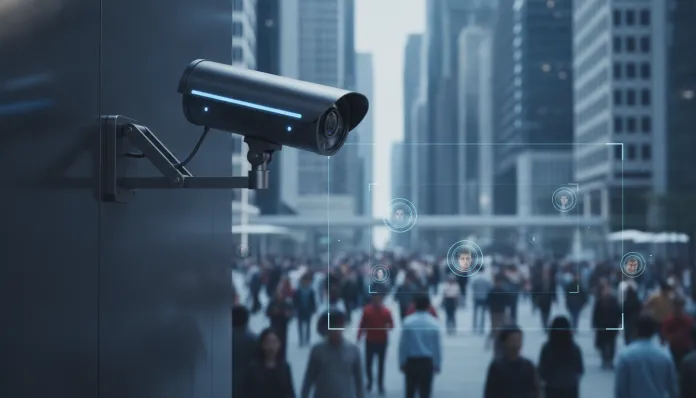
You pass through the airport turnstile without taking your ID out of your pocket. The camera flashes, an algorithm works in fractions of a second, and the gate opens. It seems like a scene from a science fiction movie, but it is a reality increasingly present in the daily lives of millions of people around the world. Facial recognition has transitioned from a laboratory technology to becoming part of the infrastructure of cities, companies, and even mobile apps.
But how does this technology really work? What happens between the moment the camera captures your face and the system confirms your identity? And what are the technical, legal, and ethical limits surrounding its use? These questions have become increasingly relevant as facial recognition advances into public spaces, banking systems, and digital platforms.
In this article, we will break down this technology piece by piece, explain its internal logic in accessible language, and show where it is already present in your life — sometimes without you noticing, similar to many other automatic processes that your body does without you noticing.
What is facial recognition, after all?
Facial recognition is a biometric technology — that is, a system that identifies people based on unique physical characteristics. In this case, the human face. Unlike a password or a card, the face cannot be left at home or easily transferred to another person, making this type of identification particularly attractive from a security standpoint.
The technology falls into a larger category called computer vision, which is the ability of machines to “see” and interpret images. For a computer to recognize a face, it needs to be trained with a vast amount of images — and this is where artificial intelligence comes into play.
It is worth distinguishing two concepts that are often confused:
- Facial verification: the system compares a face with a specific pre-registered image to confirm if they are the same person. This is what happens when you unlock your phone.
- Facial identification: the system compares a face with an entire database to find out who that person is. This is what some security forces use in public cameras.
How the algorithm “reads” a face
The technical process behind facial recognition involves several interconnected steps. Understanding them helps demystify — and evaluate more clearly — this technology.
1. Face detection
Before recognizing, the system needs to locate the face in the image. Detection algorithms identify typical visual patterns of a human face — eyes, nose, mouth, head contour — and outline this area within the captured image.
2. Normalization
The detected face image undergoes adjustments: orientation, lighting, and size are corrected so that the face is always analyzed under standardized conditions, regardless of the angle or camera quality.
3. Feature extraction
This is the heart of the system. The algorithm maps facial reference points — called landmarks — such as the distance between the eyes, nose width, cheekbone shape, jawline contour, and dozens of other points. This set of measurements is transformed into a unique numerical representation: the facial vector or faceprint.
4. Comparison and matching
The generated vector is compared with vectors stored in a database. The system calculates a similarity score and, if it exceeds a predefined threshold, considers that a match has occurred. This threshold can be more or less stringent depending on the security level required by the application.
The role of artificial intelligence
Modern facial recognition systems use convolutional neural networks (CNNs), a type of artificial intelligence architecture particularly effective for image analysis. These networks are trained with datasets that can contain millions of facial photographs, allowing the system to learn on its own which features are most relevant to distinguish one person from another.
The larger and more diverse the training set, in theory, the more accurate and less biased the system tends to be. Academic research, such as that conducted by the MIT Media Lab, has shown that some systems trained predominantly with images from certain demographic groups have higher error rates for other groups — especially black women. This issue of algorithmic bias is one of the main topics of ethical and technical debate in the field.
Where facial recognition is already present
The technology is more ubiquitous than it seems. Here are some of the main usage contexts:
- Smartphone unlocking: systems like Apple’s Face ID use infrared cameras and 3D point projectors to create a highly accurate three-dimensional map of the face.
- Airports and borders: several countries already use facial recognition to expedite the boarding process and passport verification.
- Banking systems: authentication for access to banking apps and authorization of financial transactions.
- Public security: cameras in public spaces integrated with police databases for identifying suspects or missing persons.
- Corporate access control: replacing badges and passwords in offices and industrial facilities.
- Social networks: platforms like Facebook used facial recognition algorithms for years to suggest photo tags — functionality that was suspended in 2021 after regulatory pressures.
- Retail: some chains experiment with the technology to identify frequent customers or detect suspicious behavior within stores.
Accuracy, limitations, and technical challenges
No technology is perfect, and facial recognition has concrete limitations that need to be considered:
- Lighting and angle: images captured in poor lighting conditions or at extreme angles significantly reduce accuracy.
- Aging: the face changes over time, and systems that are not regularly updated may lose accuracy.
- Identical twins: most systems struggle to distinguish identical twins.
- Mask usage: the Covid-19 pandemic exposed an obvious vulnerability in systems based solely on frontal face analysis. Since then, companies have developed adapted versions that identify people even with part of the face covered, based on eyes, eyebrows, and upper face geometry.
- False positives and negatives: a false positive occurs when the system mistakenly identifies two different people as the same. A false negative occurs when it fails to recognize someone it should recognize. Both errors have serious consequences depending on the usage context.
The legal and ethical dimension
The advancement of facial recognition has opened important debates involving privacy, civil liberties, and regulation. Different regions of the world have approached the topic in different ways.
The European Union, through the AI Act — artificial intelligence regulation approved in 2024 and in the process of implementation — classifies real-time facial recognition in public spaces as a high-risk application, subject to severe restrictions and prohibitions in certain contexts.
In the United States, regulation is fragmented: some states and municipalities have banned the use of the technology by police forces, while others have widely adopted it. There is no comprehensive federal law on the subject at the moment.
In Brazil, the General Data Protection Law (LGPD), in effect since 2020, classifies biometric data — including facial images — as sensitive data, which imposes specific obligations on those who collect and process them. The debate on more specific regulation for facial recognition in public spaces is ongoing in the country.
The main points of controversy include:
- The risk of mass surveillance and erosion of anonymity in public spaces
- The possibility of misuse by authoritarian governments
- Consent: generally, people filmed by public cameras have not explicitly consented to facial recognition
- Responsibility when the system makes a mistake that results in harm to an innocent person
What to expect in the coming years
The technology continues to advance on multiple fronts. The most modern systems already work with 3D analysis, becoming more resistant to attempts at fraud with photos or videos. Techniques called liveness detection verify if the captured face belongs to a real and present person, and not a static image.
At the same time, the field of differential privacy and anonymization technologies is growing, aiming to allow aggregated analyses without identifying specific individuals — a possible way to reconcile utility and privacy.
The discussion about international standards for auditing and certification of facial recognition systems is also gaining momentum, with organizations like NIST (National Institute of Standards and Technology in the USA) regularly publishing comparative evaluations of different algorithms.
Conclusion
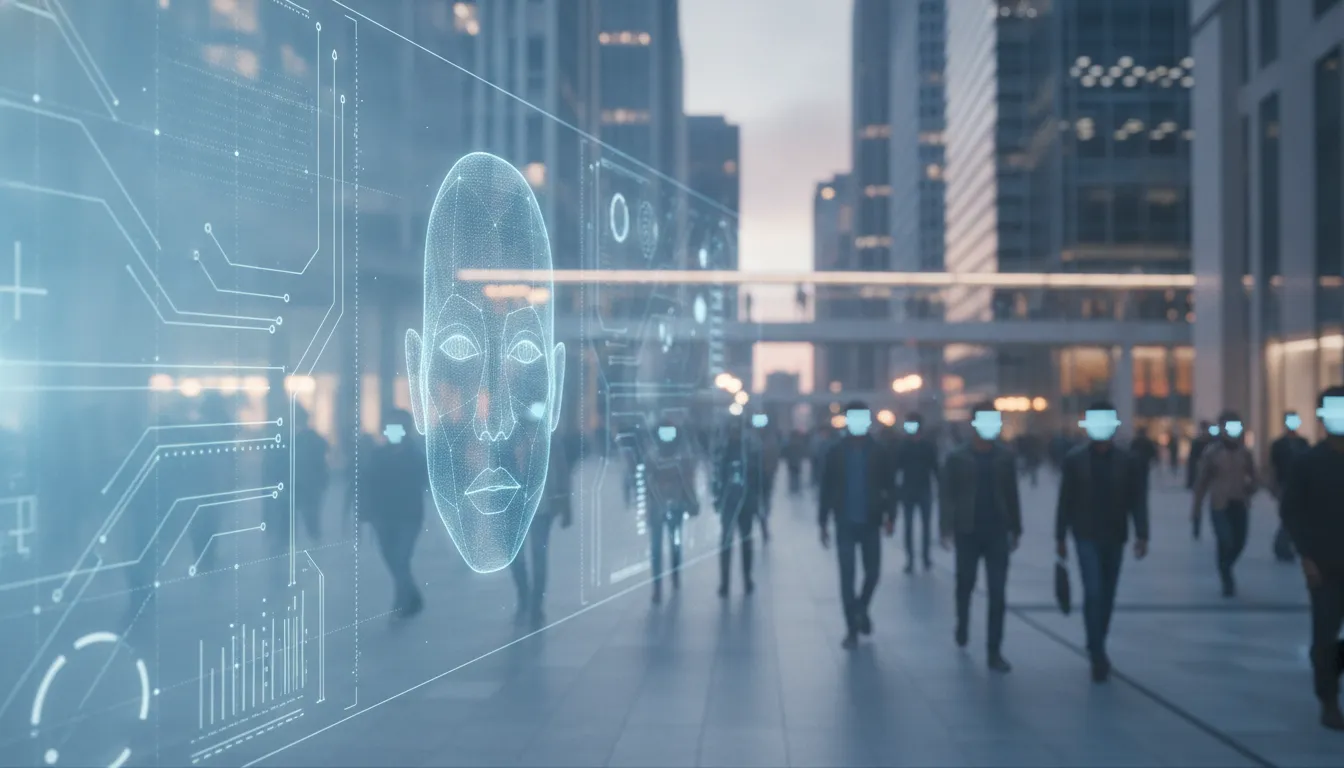
Facial recognition is simultaneously one of the most impressive and controversial technologies of our time. Its internal logic — based on geometric mapping, mathematical vectors, and trained neural networks — is fascinating and, when well applied, genuinely useful. But its expansion into public spaces and security systems raises legitimate questions about privacy, bias, and control that do not have simple answers.
Understanding how this technology works is the first step to participating in an informed debate about how — and where — it should be used. After all, decisions about systems that automatically identify who we are in public spaces concern all of us, not just engineers and legislators.
The technology will continue to evolve. The central question is not whether facial recognition will exist, but what rules, limits, and guarantees we need to collectively build so that it serves people — and not the other way around.
- Aging: the face changes over time, and systems that are not regularly updated may lose accuracy.
- Airports and borders: several countries already use facial recognition to expedite the boarding process and passport verification.
- Facial identification: the system compares a face with an entire database to find out who that person is. This is what some security forces use in public cameras.