
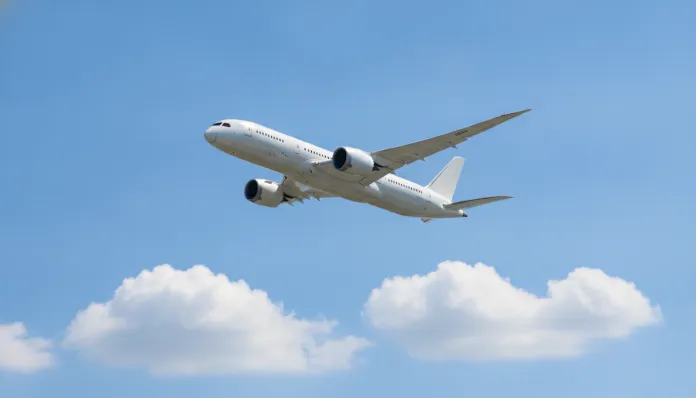
Imagine sitting by the window of an airplane, looking at the massive metal wings that seem too heavy to stay aloft. At some point during the flight, the question arises: how does a machine weighing hundreds of tons simply float up there? The answer involves physics, engineering, and a fascinating understanding of the nature of air — and it’s more accessible than it seems.
Flying is one of humanity’s most extraordinary achievements. From the historic flight of the Wright brothers on December 17, 1903, in Kitty Hawk, North Carolina (which lasted only 12 seconds and covered about 36 meters), to modern airplanes carrying over 800 passengers, aviation has evolved impressively. Yet, the basic principle that keeps everything in the air remains the same.
In this article, we will unravel in a simple and precise way why airplanes fly — without complicated formulas or aeronautical engineering jargon. Just science explained the way it should be: clear, curious, and accessible to all.
The Four Forces of Flight
To understand flight, the first step is to know the four fundamental forces acting on any moving aircraft. They work in balance — or imbalance — to determine if the airplane ascends, descends, accelerates, or maintains its course.
- Lift: the force that pushes the airplane upward, generated by the wings.
- Weight: the force of gravity pulling the airplane downward.
- Thrust: the force generated by the engines that propels the airplane forward.
- Drag: air resistance opposing the airplane’s movement.
For the airplane to take off, lift must exceed weight. For it to move forward, thrust must exceed drag. When these forces are balanced, the airplane maintains constant altitude and speed — known as cruise flight.
The Secret Lies in the Wings: The Airfoil
The star of the show is undoubtedly the wing. But not just any wing — its shape makes all the difference. Airplane wings have a specific shape called an airfoil.
Look closely at an airplane wing: the upper surface is more curved, while the lower surface is flatter. This seemingly simple detail is the heart of flight.
When the airplane moves forward (thanks to the engines), air is split as it hits the leading edge of the wing. Some air passes over, some under. Due to the greater curvature on the top, the air passing over has to travel a longer path in the same amount of time — making it move faster.
Here comes one of the most important principles of fluid physics:
Bernoulli’s Principle Explained Simply
Daniel Bernoulli was a Swiss mathematician and physicist who lived between 1700 and 1782. He discovered something that seems counterintuitive but is real: when a fluid (like air) moves faster, its pressure decreases.
Applying this to the airplane wing:
- Air passing over the wing moves faster → pressure lower
- Air passing under the wing moves slower → pressure higher
This pressure difference creates a resultant force that pushes the wing from below to above. This force is lift — what keeps the airplane in the air.
The higher the airplane’s speed, the greater the pressure difference, and the more lift is generated. That’s why airplanes need to reach a minimum speed on the runway before taking off: below this speed, the lift generated isn’t enough to overcome the aircraft’s weight.
Is Bernoulli the Only Explanation?
It’s important to be honest here: Bernoulli’s Principle is an essential part of the explanation, but it’s not the only one. The real physics of flight is more complex and also involves Newton’s Third Law — the law of action and reaction.
The wings are slightly angled relative to the airflow (the so-called angle of attack). This causes air to be deflected downward as it passes over the wing. According to Newton, if the wing pushes air down, the air pushes the wing up — generating additional lift. In simple physics terms: every action generates an equal and opposite reaction.
In practice, aeronautical engineers work with models that combine both effects to calculate the total lift of an aircraft.
The Role of Engines: Where Does Thrust Come From?
If wings generate lift, engines generate thrust — the force that moves the airplane forward and allows the wings to “work.”
The vast majority of modern commercial airplanes use turbofan engines. They work like this:
- Air enters through the large fan at the front of the engine.
- Part of this air passes through the engine core, where it is compressed, mixed with fuel, and burned.
- The hot gases produced by combustion are expelled at high speed through the rear.
- By Newton’s Third Law, this expulsion of gases backward generates a forward force — thrust.
- The other part of the air bypasses the engine core (the “bypass”) and is also accelerated backward, contributing significantly to the total thrust — and helping make the engine more efficient and quieter.
Engines on aircraft like the Boeing 777 or Airbus A350, for example, can generate tens of tons of thrust each — enough power to sustain and move structures weighing hundreds of tons.
How Does the Pilot Control the Flight?
Lift and thrust explain how the airplane stays in the air and moves forward, but how does it climb, descend, and turn? This is the function of control surfaces — movable parts of the wing and tail that the pilot manipulates.
- Ailerons: located at the wingtips, control roll (lateral tilt). When one aileron rises, the other lowers, causing the airplane to “tilt” to one side — initiating a turn.
- Elevator: located on the horizontal tail, controls the airplane’s nose up or down, determining ascent or descent.
- Rudder: located on the vertical tail, controls the lateral movement of the nose — mainly used to coordinate turns and compensate for crosswinds.
- Flaps: located at the rear of the wings, increase the surface area and curvature of the wings during takeoff and landing, generating more lift at lower speeds.
- Spoilers: panels that rise on the wing to reduce lift and increase drag — used during landing to help slow the airplane.
The intelligent combination of these surfaces, nowadays largely managed by fly-by-wire systems (electronic control), allows precise maneuvers even in gigantic airplanes.
Why Can Heavy Airplanes Fly?
A common question is: “But a Boeing 747 weighs over 400 tons! How is this possible?”
The answer lies in scale. The wings of a 747 have an area of approximately 541 square meters. With so much surface generating lift, and with the engines producing enough thrust to reach takeoff speed (around 280 km/h), physics simply works.
The same principle that keeps a sheet of paper aloft sustains an airplane — the difference is the scale of forces involved. Aeronautical engineering exists largely to ensure that materials, shapes, and power combine so that the lift generated always exceeds the aircraft’s weight under operating conditions.
It’s worth remembering that air, despite seeming like “nothing,” is a fluid with real mass and physical properties. Every square meter of wing interacting with air at high speed generates considerable forces — and that’s exactly what makes flight possible.
Flight Facts You Probably Didn’t Know
- The typical angle of attack during cruise is only 2 to 4 degrees — the wing is almost horizontal, but it’s enough to generate lift at high speed.
- The cruise speed of a modern commercial airplane is approximately 900 km/h, at about 10,000 to 12,000 meters altitude.
- At cruise altitudes, external pressure and temperature are extreme (about -56°C and very low pressure), so the cabin is artificially pressurized.
- The largest passenger airplane in the world in commercial service is the Airbus A380, with a capacity of over 800 passengers in maximum configuration — and it flies by the same principles described here.
- Birds and airplanes use the same aerodynamic principle, although birds generate lift actively (by flapping their wings), while airplanes rely on engines to maintain speed and let fixed wings do the work.
Aviation is, in many ways, a field where science and human culture meet in surprising ways — just as happens with other fascinating topics, like strange cultural traditions around the world, which show how human creativity knows no bounds.
Conclusion: Everyday Physics That Takes Us to the Skies
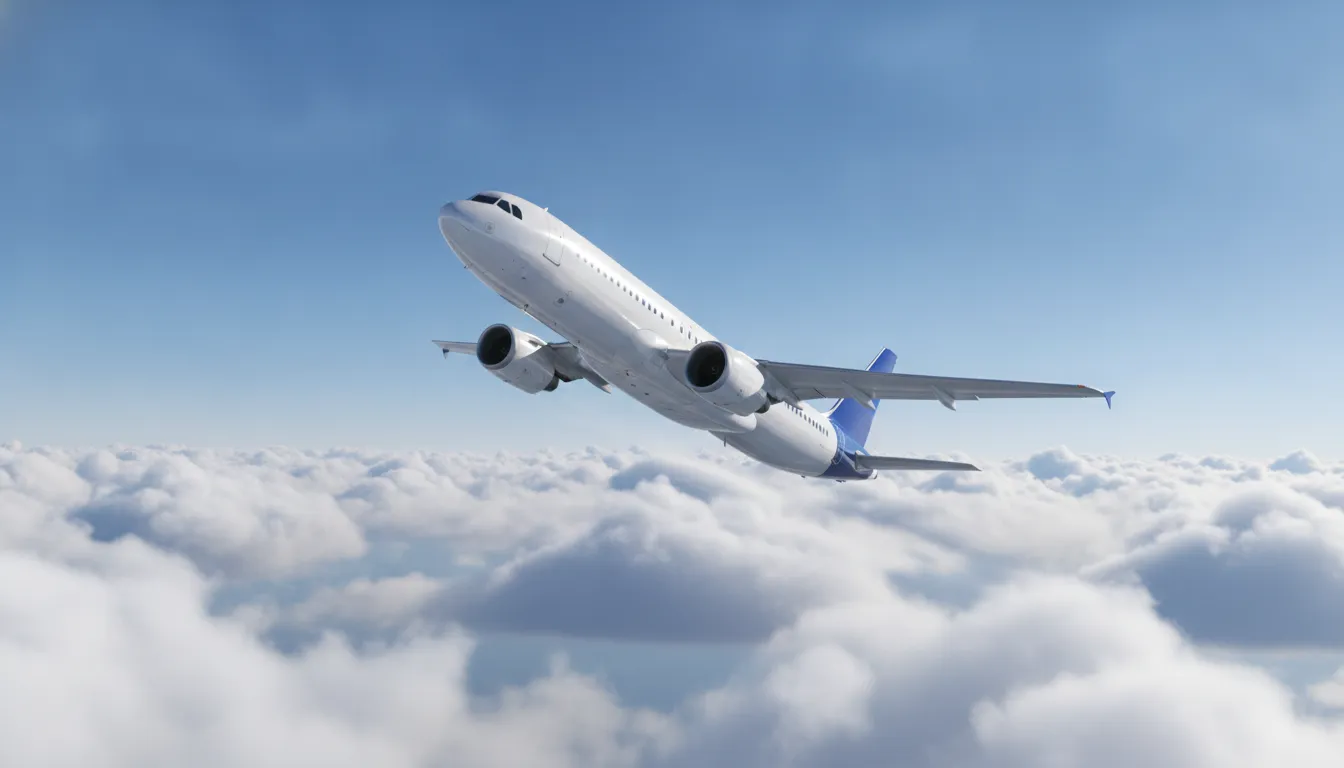
Flying may seem like magic, but it’s pure physics. The lift generated by the wings’ airfoil, explained by Bernoulli and Newton’s principles, combined with the thrust from engines and precise control of moving surfaces, results in one of the most impressive feats of human engineering.
Next time you’re on a plane and feel that moment when the wheels leave the ground, remember: it’s not a miracle or luck. It’s the pressure difference between the top and bottom of a huge wing, calculated by engineers, exhaustively tested, and repeated billions of times worldwide every year with an enviable safety rate.
Flight is, above all, an invitation to look at the world with curious eyes — and to realize that when we understand the principles behind things, even the impossible starts to make perfect sense.


