
Historic Cities of Brazil That Enchant Every Traveler
Brazil is much more than paradisiacal beaches and carnival. Hidden among mountains, valleys, and plateaus, some of the country’s most fascinating cities preserve centuries of history in every cobblestone street, in every colorful facade, and in every church bell that echoes at dusk. These are destinations that transform a simple trip into a true journey through time — and surprise even those who think they already know the country well.
Formed mainly during the gold, diamond, and sugarcane cycles of the 17th and 18th centuries, these cities grew under the influence of Portuguese baroque and left an architectural and cultural legacy that is now recognized worldwide. Many of them are listed as UNESCO World Heritage sites, which gives an idea of the magnitude of what is preserved in these regions. And the best part: most of them remain accessible destinations, with charming accommodations, rich regional cuisine, and an atmosphere that mass tourism hasn’t yet erased.
If you’re planning a different kind of trip — with more meaning, more contemplation, and more culture — Brazil’s historic cities deserve a place at the top of your list. Discover some of the most impressive ones and find out what makes each one unique.
Ouro Preto (MG): The Queen of Brazilian Baroque
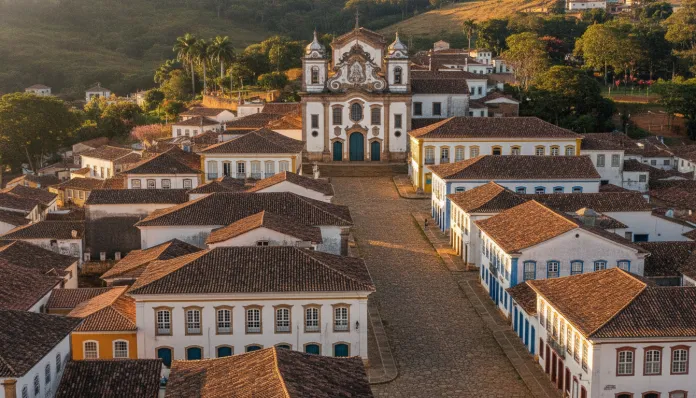
No list of Brazil’s historic cities begins without Ouro Preto, and for good reason. This city in Minas Gerais was declared a UNESCO World Heritage Site in 1980 — the first Brazilian city to receive this honor — and still maintains a practically intact baroque architectural ensemble, something rare in the world.
Founded in the early 18th century during the height of gold exploration in Minas Gerais, Ouro Preto became one of the richest and most populous cities in the Americas. Its churches are true works of art: the Church of São Francisco de Assis, with sculptures by the genius Antônio Francisco Lisboa, known as Aleijadinho, is frequently cited as one of the most important baroque works in the Western Hemisphere.
Besides the churches, the Inconfidência Museum — housed in the old Chamber and Prison House in Tiradentes Square — tells the story of the Inconfidência Mineira, the 18th-century independence movement that had Ouro Preto as its epicenter. Walking up and down the cobblestone hills of the city, with its colorful houses and antique lampposts, is an experience that stays in your memory.
Paraty (RJ): Where Mountains Meet the Sea
Located on the southern coast of Rio de Janeiro state, Paraty is a rare case of a city that combines colonial history with exuberant nature. Its historic center, protected by IPHAN (National Institute of Historic and Artistic Heritage), was inscribed on the UNESCO World Heritage list in 2019, along with the Atlantic Forest surrounding it.
Founded in 1667, the city was an important port for shipping gold from Minas Gerais to Portugal in the 18th century. The irregular stone streets — called “pé de moleque” — were purposely designed to be flooded by high tide, functioning as a natural cleaning system. Today, they still flood during full moon days, creating an almost surreal scene that attracts photographers from around the world.
Paraty is also famous for its artisanal cachaça, the FLIP (International Literary Festival of Paraty), and the numerous islands and beaches surrounding the city. Those who visit rarely leave without wanting to return.
São Luís (MA): The Tiles That Tell Stories
In the Northeast, São Luís stands out as one of the most underrated gems of Brazilian historical tourism. Capital of Maranhão, the city was founded by the French in 1612 and soon after occupied by the Dutch and Portuguese — a colonial history marked by European disputes that left unique marks on local culture.
The historic center of São Luís was declared a UNESCO World Heritage Site in 1997 and impresses with the quantity of colonial mansions covered with Portuguese tiles — many from the 19th century — that cover entire facades like paintings. The city has one of the largest collections of preserved Portuguese colonial architecture in the world.
Additionally, São Luís is the birthplace of bumba meu boi, a cultural manifestation recognized as Intangible Heritage of Humanity by UNESCO. Maranhão cuisine, with dishes like arroz de cuxá and shrimp pie, is another chapter entirely.
Diamantina (MG): The City That Inspired Juscelino
Less visited than Ouro Preto, Diamantina holds a beauty and authenticity that enchants those who arrive. Located in the Jequitinhonha Valley, the city was Brazil’s main diamond extraction center in the 18th century and became a UNESCO World Heritage Site in 1999.
Diamantina is also the birthplace of Juscelino Kubitschek, the president who founded Brasília. The house where he was born, humble and well-preserved, can be visited in the historic center. The churches, stone alleys, and colonial mansions form an intact setting that seems to have stopped in time.
A charming detail: the city has a very vibrant cultural tradition, with frequent serenades in the streets and a strong artisan community, especially in weaving and handcrafted jewelry.
Olinda (PE): Carnival, Art, and Faith in the Same Place
In Pernambuco, Olinda shares space with neighboring Recife but has a completely unique identity. Founded in 1535 by the Portuguese, it is one of Brazil’s oldest cities and was declared a UNESCO World Heritage Site in 1982 for the richness of its architectural ensembles and the cultural landscape that integrates nature and built heritage.
The Alto da Sé, with its panoramic view of the sea and Recife in the background, is one of the most photographed spots in the Northeast. The baroque churches, artists’ studios scattered across the hills, and the relaxed atmosphere make Olinda a destination that naturally combines high and popular culture.
Its carnival, with famous giant puppets and frevo in the streets, is considered one of the most authentic and participatory in the country. But Olinda is worth visiting any time of year.
Goiás Velho (GO): The City That Resisted Time
In the heart of Brazil, the city of Goiás — known as Goiás Velho to distinguish it from the state — is a surprise for those who don’t know it. Founded in 1727 on the banks of the Vermelho River, it was the capital of the then Captaincy of Goiás and the center of gold exploration in the Central-West region.
Inscribed on the UNESCO list in 2001, the city preserves a colonial urban ensemble with churches, mansions, stone bridges, and historic pavements in excellent condition. The Bandeiras Museum, housed in the old 18th-century Chamber and Prison House, is one of the best-preserved in Brazil’s interior.
Goiás Velho is also famous for the Fogaréu Procession, held during Holy Week, considered one of the oldest and most moving in the country — a tradition maintained since 1745 that attracts visitors from all over Brazil.
Cachoeira (BA): The Afro-Brazilian Heart of Recôncavo
For those who want to immerse themselves in Afro-Brazilian culture in its richest and most preserved form, Cachoeira, in Bahia’s Recôncavo region, is an unmissable destination. On the banks of the Paraguaçu River, about 110 km from Salvador, the city preserves a historical and cultural heritage deeply connected to slavery, Black resistance, and religious traditions of African origin.
The city was one of Brazil’s main producers of tobacco and sugarcane liquor during the colonial period and has a notable architectural collection, with churches, convents, and mansions protected by IPHAN. The Sisterhood of the Good Death, a religious women’s association founded by Black women in the 19th century as a form of resistance and emancipation, still exists and holds its annual celebrations — a powerful symbol of cultural resilience.
Practical Tips for Visiting Historic Cities
Before packing your bags, it’s worth keeping in mind some guidelines that make a difference when traveling to these destinations:
- Wear comfortable shoes: cobblestone streets and steep hills are the norm in these cities.
- Prefer visiting outside national holidays: the most popular destinations, like Ouro Preto and Paraty, get very crowded during dates like Carnival and Holy Week.
- Book accommodation in advance: historic inns in the centers have few rooms and sell out quickly.
- Respect religious spaces: many churches are still actively used — check schedules before visiting.
- Hire local guides: historical context completely transforms the experience. Certified guides charge affordable rates and greatly enrich the tour.
- Try regional cuisine: each of these cities has typical dishes that are as much part of local history as the monuments.
If you want to complement your trip with other impressive natural destinations, it’s also worth checking out the National Parks of Brazil You Need to Visit — many are close to historic cities and can be combined in the same itinerary.
Why Visiting These Cities Makes a Difference
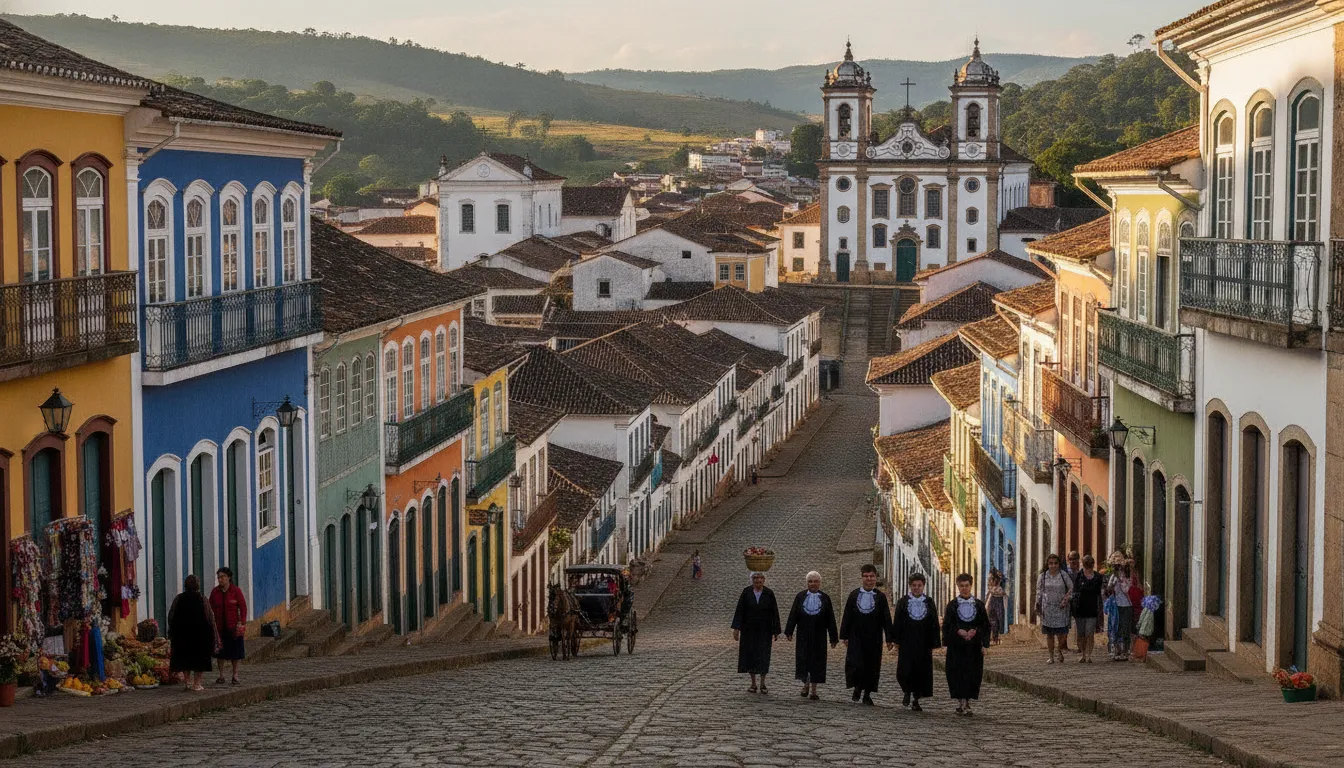
Traveling to historic cities is not just tourism — it’s an act of preservation. When visitors choose these destinations, they generate income for local communities, support family-owned inns and restaurants, and create economic incentive for heritage to continue being preserved. It’s a virtuous cycle that benefits both the traveler and the cities.
Moreover, there’s something deeply transformative about walking through streets that are four centuries old, looking at a painting by Aleijadinho, or hearing bumba meu boi echo through the alleys of São Luís. These experiences broaden our understanding of Brazil — a country much more complex, diverse, and fascinating than any postcard can capture.
The Brazil of stone and lime, of tile and bell, of candomblé and baroque, is waiting for you. And it has much to tell.