
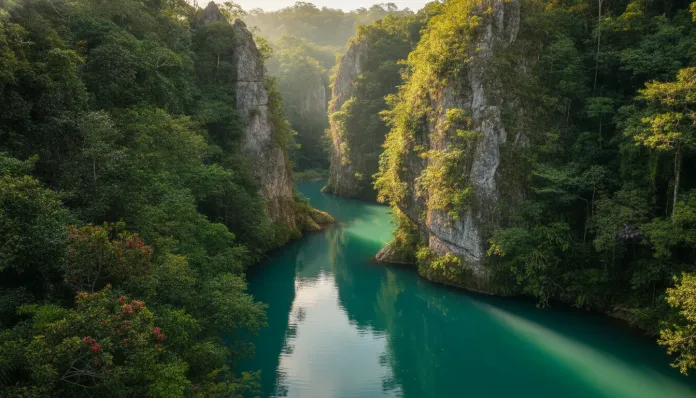
The Brazil Few Know: Incredible Destinations Off the Conventional Tourist Path
Brazil is a country of continental dimensions. With over 8.5 million square kilometers, 26 states, and a Federal District, the national territory harbors ecosystems, cultures, and landscapes that could take lifetimes to explore. Yet, the overwhelming majority of tourists — both Brazilian and foreign — focus their travels on a handful of already famous destinations: Rio de Janeiro, Foz do Iguaçu, Salvador, Florianópolis, Fernando de Noronha. These are excellent choices, of course. But they represent only a tiny fraction of what the country has to offer.
The good news is that there are dozens of destinations scattered across Brazil that combine breathtaking natural beauty, deep historical and cultural richness, and a growing tourism infrastructure — with far fewer crowds, more affordable prices, and a genuinely different travel experience. These places don’t appear on the first page of searches, aren’t in airline commercials, and are rarely suggested by traditional agencies. But those who discover them often leave with the certainty of having found a valuable secret.
This article gathers some of these forgotten — or simply under-publicized — destinations, with practical information for those who want to go beyond the obvious and explore the real Brazil.
Jalapão (TO): The Golden Desert in the Heart of Brazil
Jalapão, in the state of Tocantins, is perhaps the most surprising destination on this list. Located in a transition area between the Cerrado and other biogeographical regions, the territory hosts a set of almost surreal landscapes: golden sand dunes several meters high, fervedouros — natural springs where the pressure of the underground water is so strong that it literally prevents people from sinking — waterfalls, crystal-clear rivers, and extensive plateaus.
The Jalapão State Park, created in 2001, protects an area of over 158,000 hectares. Access is still predominantly via dirt roads, requiring 4×4 vehicles and, preferably, specialized local guides. This characteristic acts as a natural filter: only the most determined travelers make it there. The reward, however, is an experience of contact with nature hard to match in Brazil.
The best time to visit is the dry season, between May and September, when the rivers are at an ideal level for bathing and the dirt roads are passable. Outside this window, rains can make access risky or unfeasible.
Lençóis Maranhenses (MA): But the Surroundings Are Also Worth It
Lençóis Maranhenses has gained some international fame, especially after appearing in travel publications worldwide. But most tourists quickly visit the park and leave, ignoring the wealth of the surrounding region.
The city of Barreirinhas, the main access point, has its own cultural life and a cuisine based on seafood, rice with cuxá, and other typical Maranhão dishes that very few visitors stop to try. Further away, Ilha de Lençóis — accessible only by boat — is an almost untouched destination, inhabited by a traditional fishing community that maintains customs and ways of life that date back generations.
Following the Maranhão coast, Tutóia and the Delta do Parnaíba — the only delta on the American coast to flow into the ocean in open sea — offer breathtaking landscapes with a fraction of the tourist movement of neighboring destinations in Piauí and Ceará.
Bonito (MS): Known, But Still Underestimated
Bonito, in Mato Grosso do Sul, has some fame among more experienced ecotourists, but it is still vastly unknown to most of the Brazilian population. The local tourism system is one of the best-organized in Brazil: the flow of visitors in the rivers and caves is controlled by accredited agencies, ensuring the conservation of the environments and a quality experience.
The region’s rivers, such as the Rio da Prata and the Rio Sucuri, have underwater visibility of several meters, allowing snorkeling among huge schools of dourados, pacus, and other freshwater species. The Grutas do Lago Azul and São Miguel are limestone geological formations with impressively turquoise blue internal lakes.
The surroundings of Bonito also offer trails in the Cerrado, rappelling in waterfalls, and contact with Pantanal culture, making the region a complete destination that goes far beyond what brochures usually show.
Alcântara (MA): The City That Time Forgot
A few kilometers from São Luís — accessible by boat via the Baía de São Marcos — is Alcântara, one of the best-preserved and least-visited historical cities in Brazil. In the 17th and 18th centuries, Alcântara was one of the most important economic centers in Maranhão, sustained by sugar production and enslaved labor.
Today, what remains of this past is an architectural ensemble of enormous historical value: ruined churches, colonial mansions with Portuguese tiles, pillories, and the famous Praça da Matriz, with its deteriorated facades that exude a melancholic beauty hard to describe. The historic center of Alcântara is listed by the National Institute of Historic and Artistic Heritage (Iphan).
The city is also home to the Alcântara Launch Center (CLA), a Brazilian space base established in the 1980s, giving it an unusual combination of colonial history and aerospace technology.
Serra da Canastra (MG): The Birthplace of the São Francisco River
Minas Gerais is famous for historical cities like Ouro Preto and Tiradentes, but the state hides natural territories of extraordinary beauty that go almost unnoticed. The Serra da Canastra, in southwestern Minas, is one of them.
The Serra da Canastra National Park protects the plateau where the São Francisco River — the “Velho Chico,” one of the most important rivers in Brazilian history and culture — originates. The spring is accessible to visitors and is a moderate walk from the park entrance. Additionally, the region is home to monumental waterfalls, with Casca d’Anta — with a drop of over 180 meters — being one of the largest in Brazil in terms of water volume.
Canastra is also known for the famous canastra cheese, made artisanally, with a geographical indication registration and presence on the list of Brazil’s intangible heritage. Tasting the cheese directly at the region’s farms is a gastronomic experience that any food lover will cherish.
To plan the best time to visit destinations like Canastra, check out the complete guide When to Travel in Brazil: The Guide by Region.
Marajó (PA): The Largest Fluvio-Maritime Island in the World
The Marajó Archipelago, in Pará, is often cited in geography books as the largest fluvio-maritime island in the world, with an area of about 40,000 square kilometers — larger than several European countries. Yet, it remains practically ignored by national tourism.
The island has two distinct biomes: the eastern half, covered by floodable natural fields inhabited by buffalo (introduced by colonizers centuries ago and now integrated into the landscape and local economy), and the western half, taken by the dense Amazon rainforest. Cities like Soure and Salvaterra offer mixed freshwater and saltwater beaches, ceramics with influences from pre-colonial Marajoara culture, and a unique cuisine based on buffalo, açaí, and local fish.
Marajoara ceramics, by the way, are one of the most sophisticated artistic expressions produced by indigenous populations in the Americas, with pieces dating back over a thousand years and an absolutely original geometric decorative style.
Practical Tips for Exploring Brazil Off the Beaten Path
Traveling to less touristy destinations requires slightly different planning. Here are some essential points:
- Research the local infrastructure before going: destinations like Jalapão and Marajó have limited accommodation options, especially during regional high seasons. Book in advance.
- Consider local guides: besides ensuring safety on trails and difficult-to-navigate accesses, local guides generate direct income for communities, making tourism more sustainable.
- Check seasonality: most of these destinations have well-defined ideal visiting periods. Ignoring the right time can compromise the experience or even make access unfeasible.
- Adjust expectations: these destinations don’t have the polish of major tourist centers. The beauty lies largely in the rusticity and authenticity.
- Respect local communities: many of these places have traditional populations — fishermen, quilombolas, indigenous, rural communities. Respect for cultures and the environment is non-negotiable.
- Bring cash: in smaller cities and remote areas, card machines and bank access may be limited.
- Check documentation and permissions: some national parks require prior scheduling, and in indigenous areas, Funai authorization may be necessary.
Conclusion: The Brazil You Haven’t Discovered Yet Is Waiting
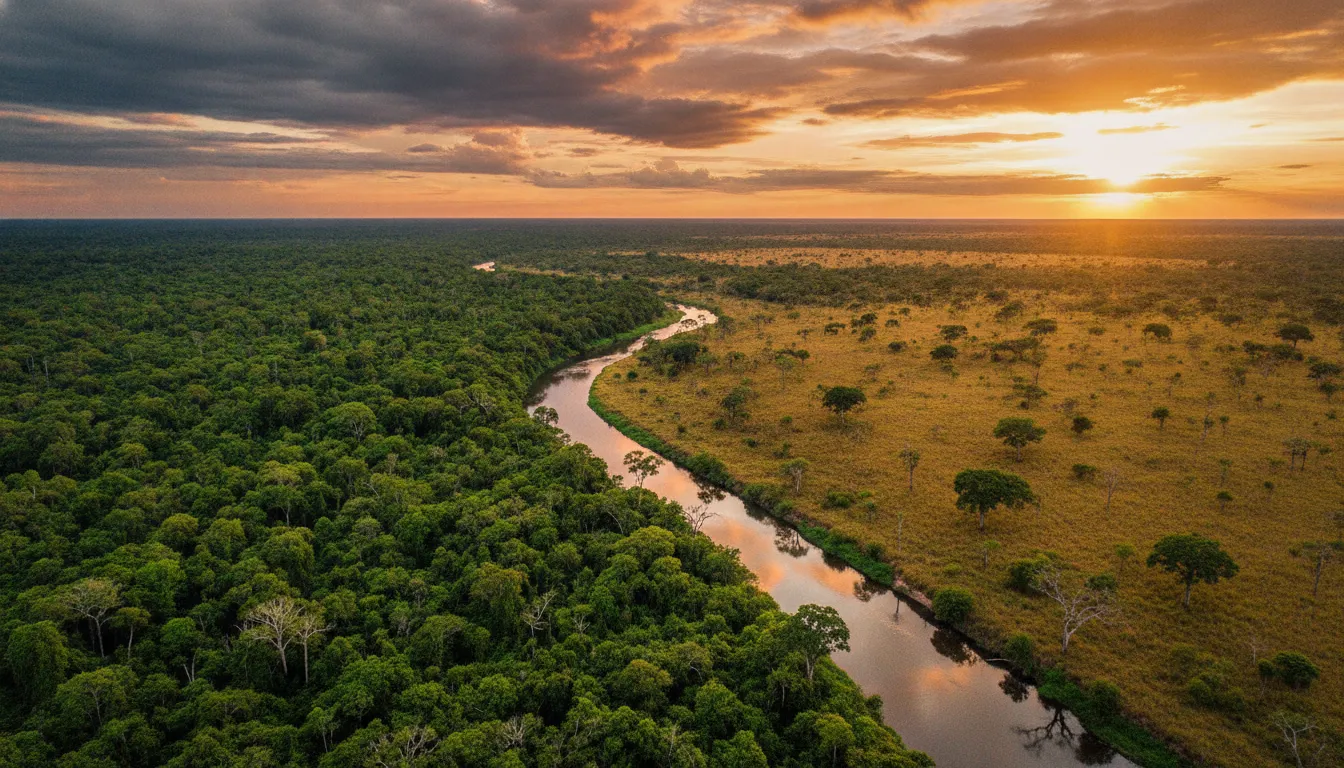
Brazil has the rare privilege of being a country that, even for its own inhabitants, remains largely unexplored. Each of the destinations mentioned in this article represents not just a beautiful landscape, but a fragment of history, culture, and biodiversity that deserves to be known, valued, and preserved.
Going off the conventional path is not just a matter of personal adventure — it is also an act of valuing national heritage and supporting communities that depend on more distributed and responsible tourism. When the flow of visitors diversifies, more regions benefit economically, and more environments have an incentive to be protected.
If you’re planning your next trip and want something genuinely different, start with one of these destinations. And remember: the best discovery is rarely in the most obvious place on the map.