
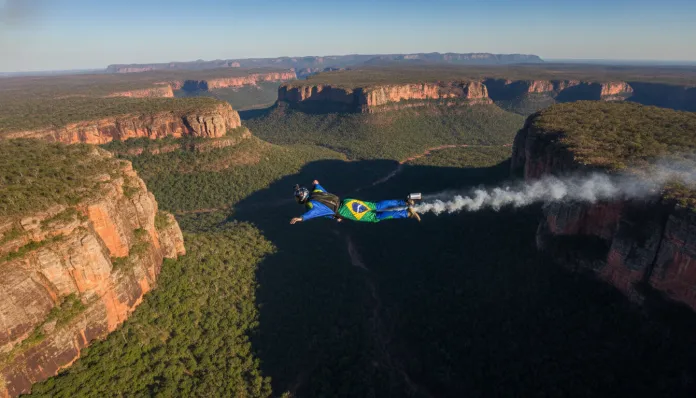
Extreme Sports in Brazil: Adrenaline Everywhere
Brazil is a country that seems to have been designed for those seeking excitement. With privileged geography that combines mountains, beaches, powerful rivers, waterfalls and dense forests, Brazilian territory offers a rich menu for extreme sports lovers. From the Rio coast to the plateaus of the Center-West, through the mountains of Rio Grande do Sul and the Amazon, there’s always a new adventure waiting for those brave enough to seek it.
In recent years, the culture of adventure sports has grown significantly in the country. Local clubs, specialized schools and adventure tourism operators have multiplied across all regions, democratizing access to modalities that previously seemed exclusive to professional athletes or wealthy individuals. Today, it’s perfectly possible to make your first skydive or descend a kayak rapid with professional support and certified safety, without spending a fortune.
But what exactly characterizes an extreme sport? Generally, these are modalities involving speed, height, contact with nature and a high degree of controlled risk. This “controlled risk” is the key word: with appropriate equipment, qualified instructors and well-established safety protocols, most of these activities are accessible to beginners. This article explores the main modalities practiced in Brazil, the most popular destinations and what you need to know before embarking on this adventure.
Skydiving: Flying is Possible
Skydiving is perhaps the extreme sport most desired by those who haven’t practiced one yet. The sensation of jumping from an aircraft at altitudes between 3,000 and 4,000 meters and falling freely for about 60 seconds before opening the parachute is described by practitioners as a transformative experience.
In Brazil, the city of Boituva, in the interior of São Paulo, is considered the national capital of skydiving. The region concentrates several accredited schools and regularly hosts national and international competitions. Other cities with strong tradition in the modality include Resende (RJ), Taubaté (SP) and Santa Branca (SP).
For beginners, the most common modality is tandem, in which the student jumps coupled to an experienced instructor, without the need for extensive prior training. Safety theory sessions and correct equipment use are explained before the jump. Skydiving in Brazil is regulated by CBPA (Brazilian Skydiving Confederation), which establishes training and certification standards for instructors.
Hang Gliding and Paragliding: The River That Flies
If skydiving is freefall, hang gliding and paragliding are about soaring. And few places in the world offer conditions as favorable for these modalities as Rio de Janeiro. Pedra Bonita Peak, in the Tijuca Forest, is one of the most famous takeoff points on the planet, with views of Barra da Tijuca and the sea. The descent ends at São Conrado beach, creating a unique visual spectacle.
Paragliding uses a flexible wing inflated by the wind, while hang gliding has a triangular rigid structure. Both allow for long-duration flights by taking advantage of thermal air currents. In Brazil, besides Rio, destinations like Nova Petrópolis (RS), Ibituruna (MG) and Ubatuba (SP) are also references for these practices.
The CBDAL (Brazilian Confederation of Hang Gliding and Paragliding) is the national body that regulates both modalities. Dual flights with a certified instructor are the entry point for those wanting to experience it without commitment.
Surfing and Bodyboarding: The Cradle of Brazilian Radicalism
Brazil has a historical relationship with surfing. Since board riding arrived at Brazilian beaches in the mid-twentieth century, the country has never been the same. Today, it is one of the world’s greatest powers in the modality, with internationally recognized athletes and an infrastructure of schools and shops spread along the entire coast.
Must-visit destinations for surfers include:
- Fernando de Noronha (PE) — world-class waves and crystal-clear waters
- Itacaré (BA) — Jeribucuçu and Engenhoca beaches, highly sought after by intermediates and advanced surfers
- Florianópolis (SC) — Joaquina and Praia Mole, traditional on the national circuit
- Saquarema (RJ) — historic venue for world surfing circuit stages
- Maresias (SP) — reference on the São Paulo coast
Bodyboarding, a modality where the practitioner lies or kneels on a smaller board, is equally popular and technically demanding in more advanced versions. Both sports can be practiced by beginners with supervised lessons, which are usually offered on practically every tourist beach in the country.
Rappelling and Rock Climbing: The Mountain Calls
For those who prefer the verticality of rocks to ocean waves, rappelling and climbing are irresistible invitations. Brazil has spectacular rock formations that attract national and foreign practitioners.
Rappelling involves descending a vertical surface — such as a rock wall, waterfall or even an urban building — using ropes and safety equipment. It is one of the most accessible extreme activities for beginners and is widely offered in nature parks and ecotourism routes.
Meanwhile, rock climbing requires more technique and progressive physical conditioning. Pedra do Baú, in São Bento do Sapucaí (SP), is one of the most iconic climbing destinations in Brazil. Other references include:
- Teresópolis (RJ) — Dedo de Deus and Agulha do Diabo
- Serra do Cipó (MG) — routes for all levels
- Capitólio (MG) — red sandstone canyons
- Chapada Diamantina (BA) — combination of trails, waterfall rappelling and climbing
The CBME (Brazilian Confederation of Mountaineering and Climbing) is the entity that organizes and regulates the practice in the country.
Rafting and Canoeing: The Force of Rivers
Brazil is a country of immense rivers and powerful currents. It’s no wonder that rafting — descending rapids in collective inflatable boats — found fertile ground here. The modality combines teamwork, contact with nature and a guaranteed dose of excitement.
Brotas, in the interior of São Paulo, is considered the Brazilian capital of rafting and adventure tourism. The city has developed a robust ecotourism hub, with certified operators and routes for different experience levels. Other highlighted destinations include Rio Preto (in Serra da Canastra, MG) and the rivers in the mountain region of Santa Catarina.
Slalom canoeing and kayaking are individual modalities that are also gaining ground in Brazil, especially after greater exposure in international competitions. Practice can begin in calm waters and progressively advance to more challenging rapids.
The CBCa (Brazilian Canoeing Confederation) regulates these modalities at the national level.
Motocross and Downhill: Speed on Land
Extreme sports in Brazil don’t live only on water and air. Motocross — motorcycle racing on rough terrain, with jumps and natural or constructed obstacles — has a huge fan base in Brazil, especially in the South and Southeast regions. Tracks spread across medium-sized cities host training and competitions year-round.
Downhill is the mountain bike version: descending steep trails at high speed, with natural obstacles and jumps, requires complete protective equipment and lots of technique. Destinations like Campos do Jordão (SP), Gramado (RS) and mountain regions of Minas Gerais are regular on the competition calendar and guided tours of the modality.
For those starting in any of these wheeled sports, seeking schools with certified instructors is the first essential step — even before thinking about equipment.
What to Consider Before Practicing
Regardless of the modality chosen, some precautions are universal and fundamental:
- Seek certified schools and operators — Check if the company is associated with the national confederation of the chosen modality.
- Demand the use of appropriate protective equipment — Helmet, harness, vest and other items must be in good condition and certified.
- Inform health conditions — Hypertension, heart problems, orthopedic injuries and other conditions may contraindicate certain activities. Consult a doctor before practicing high-intensity sports, especially if you have a history of cardiovascular or respiratory diseases. Each case should be evaluated individually by a health professional.
- Respect your current level — Progressing gradually reduces risks and increases enjoyment.
- Check weather conditions — Heavy rain, strong wind and extreme temperatures can turn a safe activity into something dangerous.
- Purchase adventure insurance — Some packages already include coverage, but it’s worth confirming before heading out.
Conclusion: Brazil as a Natural Playground
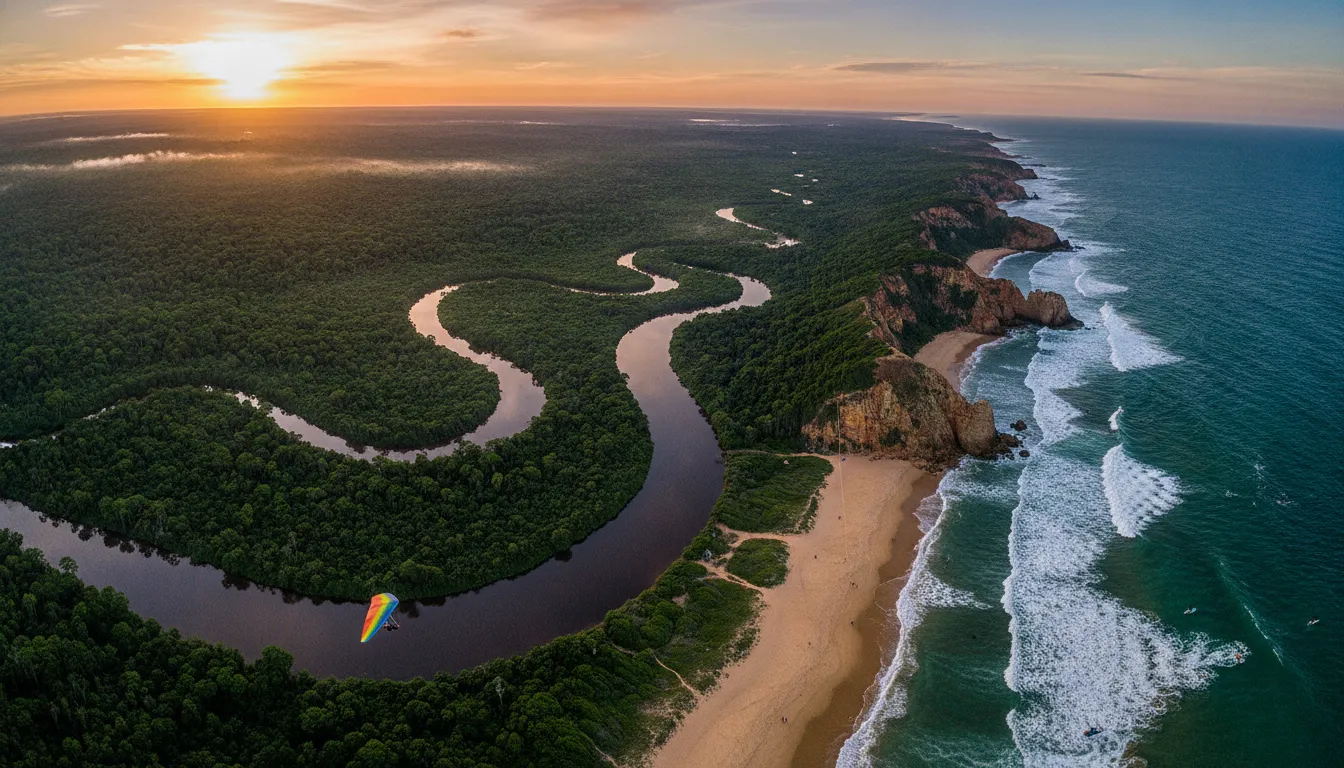
From the Amazon to the beaches of the Northeast, from the mountains of the South to the valleys of the Southeast, Brazil offers a practically inexhaustible setting for those seeking adrenaline and contact with nature. Extreme sports, far from being just entertainment, develop confidence, personal achievement, team spirit and genuine respect for the natural environment.
The good news is that this universe is increasingly structured and accessible. With a little research, planning and respect for safety standards, anyone can take the first step toward an unforgettable experience. Radical Brazil is waiting — and it has room for everyone. Just as entrepreneurship or creating something from scratch requires courage and planning, diving into the world of adventure sports is also a way to reinvent yourself. After all, Brazilian songs that marked entire generations also talk about this: about going beyond, about boldness and about the spirit of a people that has no fear of taking the plunge.


