
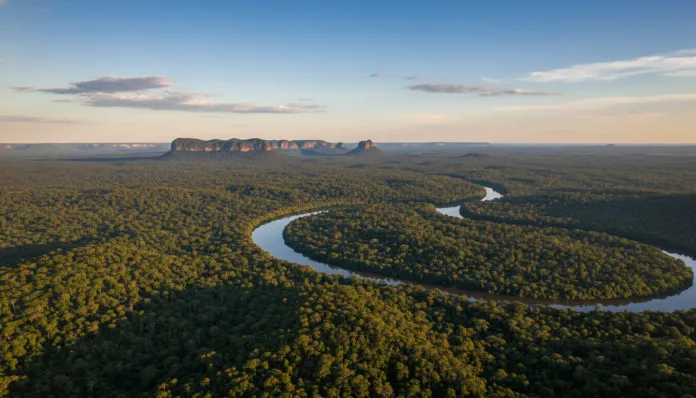
Brazil is one of the countries with the greatest biodiversity on the planet, home to about 20% of all known species on Earth. Amidst such natural wealth, national parks serve as true guardians of this living heritage — spaces protected by law where nature follows its own rhythm, virtually untouched. For those looking to reconnect with wild landscapes, embark on memorable hikes, or simply breathe fresh air away from urban chaos, these territories are top destinations.
With more than 70 national parks spread across Brazil, there are options for every type of traveler: from the golden dunes of Maranhão to the stone glaciers of Chapada Diamantina, from the crystal-clear waters of Jalapão to the vast forests of the Amazon. Each park tells a different story, shaped by millions of years of geological and biological evolution. The challenge — and also the pleasure — is choosing where to start.
In this article, you will learn about some of the most impressive national parks in Brazil, understand what makes each one special, and discover practical tips for planning your visit safely and responsibly.
What Are National Parks and Why Do They Exist?
National parks are fully protected conservation units, created and managed by the federal government — in Brazil, by the Chico Mendes Institute for Biodiversity Conservation, ICMBio. They exist to preserve ecosystems of great ecological relevance and scenic beauty, allowing for scientific research and low-impact tourism.
The creation of national parks in Brazil dates back to 1937, when the Itatiaia National Park was founded in Rio de Janeiro — the country’s first. Since then, the network of protected areas has grown enormously and today covers millions of hectares in different biomes: Amazon, Cerrado, Atlantic Forest, Caatinga, Pampa, and Pantanal.
Visiting a national park is not just leisure: it is an act of environmental awareness. By entering these spaces, visitors contribute, through access fees, to the maintenance and supervision of these areas. And, of course, they take home an experience that no screen can reproduce.
Lençóis Maranhenses National Park (MA)
If there is one place in Brazil capable of seeming like a dream, it is the Lençóis Maranhenses National Park, located in Maranhão, in the Northeast region. Created in 1981, the park covers about 155,000 hectares of white sand dunes that, between July and September, fill with fresh, translucent water lagoons — forming one of the most surreal landscapes in the world.
The lagoons form because the sand, despite appearing desert-like, is impermeable to water: the rain that falls between January and June is retained between the dunes, creating hundreds of water mirrors that vary from turquoise blue to emerald green. The most famous are Lagoa Azul and Lagoa Bonita, but there are dozens of others scattered throughout the park.
Practical tips:
- The best time to visit is between July and September, when the lagoons are full.
- The main access is through the city of Barreirinhas.
- Local guides are highly recommended and, in many areas, mandatory.
- Use sunscreen and a hat: the reflection of the white sand intensifies the heat.
Chapada Diamantina National Park (BA)
In the heart of Bahia, Chapada Diamantina is one of the most sought-after ecotourism destinations in Brazil. The park, created in 1985, occupies about 152,000 hectares of plateaus, caves, waterfalls, and crystal-clear rivers. The name refers to the region’s mining past, when diamonds were extracted from these lands in the 19th century.
Today, the gold of Chapada is something else: its biodiversity and breathtaking landscapes. Among the most visited spots are the Poço Encantado, famous for the natural lighting that makes the water an indescribable blue; the Cachoeira da Fumaça, one of the highest waterfalls in Brazil; and the Morro do Pai Inácio, with a panoramic view from the top.
The city of Lençóis is the main gateway and offers good accommodation infrastructure and tourism agencies. The trails range from light walks to technical multi-day routes, making the park accessible to both beginners and experienced adventurers.
Jalapão National Park (TO)
Jalapão, in the state of Tocantins, is one of Brazil’s best-kept secrets — and is gaining increasing attention from national and international travelers. The national park, created in 2001, is located in a Cerrado region with unique characteristics: reddish sand dunes, natural springs, and clear rivers that cut through almost untouched landscapes.
The springs are the main attraction: underground water springs with pressure so strong that it is impossible to sink — visitors literally float above the sand. The Fervedouro do Ceiça and Fervedouro de São Félix are the most well-known. In addition, the Cachoeira da Velha, a set of rapids over flat stones, is another highlight.
Access to Jalapão is via dirt roads and requires a four-wheel-drive vehicle, especially outside the dry season (May to September). The local infrastructure is still limited, ensuring a more authentic experience — but requires careful planning.
Iguaçu National Park (PR)
The Iguazu Falls need no introduction. A UNESCO World Natural Heritage site since 1986, the Iguaçu National Park houses one of the largest waterfall systems on the planet: about 275 falls distributed over nearly 3 km of the Iguaçu River, on the border between Brazil and Argentina.
The Devil’s Throat, the most imposing point of the set, can be admired from both sides of the border — each perspective offers a different experience. On the Brazilian side, walkways provide a panoramic and horizontal view of the falls; on the Argentine side, it is possible to get closer to the heart of the falls.
The park also hosts a rich Atlantic Forest fauna: coatis, tapirs, ocelots, and hundreds of bird species can be seen on the trails. The Macuco Safari, a boat tour that approaches the falls, is one of the most popular attractions — be prepared to get wet.
Useful information:
- The park is open every day, with varying hours by season.
- Online ticket purchase in advance is recommended, especially in high season.
- Access is via the city of Foz do Iguaçu.
Serra dos Órgãos National Park (RJ)
Less than 60 km from Rio de Janeiro, the Serra dos Órgãos National Park is one of the oldest in Brazil — created in 1939 — and one of the most accessible for those living in the Southeast region. Its granite mountains, sculpted by millennia of erosion, form characteristic silhouettes, such as the famous Dedo de Deus, an unmistakable peak that has become a symbol of the park.
The park is a paradise for climbing, hiking, and mountaineering enthusiasts. The Petrópolis-Teresópolis Crossing, about 42 km long, is one of the best-known long-distance trails in Brazil and attracts mountaineers from all over the country. The route passes through high-altitude fields, preserved Atlantic Forests, and offers stunning views of the surrounding cities.
For those who prefer something more relaxed, there are short trails leading to accessible waterfalls and viewpoints. The park has headquarters in Petrópolis and Teresópolis, both with visitor infrastructure.
How to Prepare for Visiting a National Park
Regardless of the chosen destination, some good practices make the visit safer, more enjoyable, and responsible:
- Plan in advance: check access conditions, the need for scheduling, and the specific rules of each park on the ICMBio website.
- Hire local guides: besides enriching the experience, they support surrounding communities and ensure your safety on the trails.
- Bring the right equipment: appropriate footwear, sunscreen, insect repellent, enough water, and lightweight but body-covering clothing are essential.
- Respect the fauna and flora: do not feed animals, do not collect plants or minerals, and do not stray from marked trails.
- Leave only footprints: take all trash produced during the visit and do not make fires outside permitted areas.
- Inform yourself about the weather: weather conditions can change quickly in mountain or cerrado environments. Check forecasts before leaving.
- Respect your physical limits: some trails require conditioning and experience. Be honest about your capabilities before choosing a route.
Conclusion
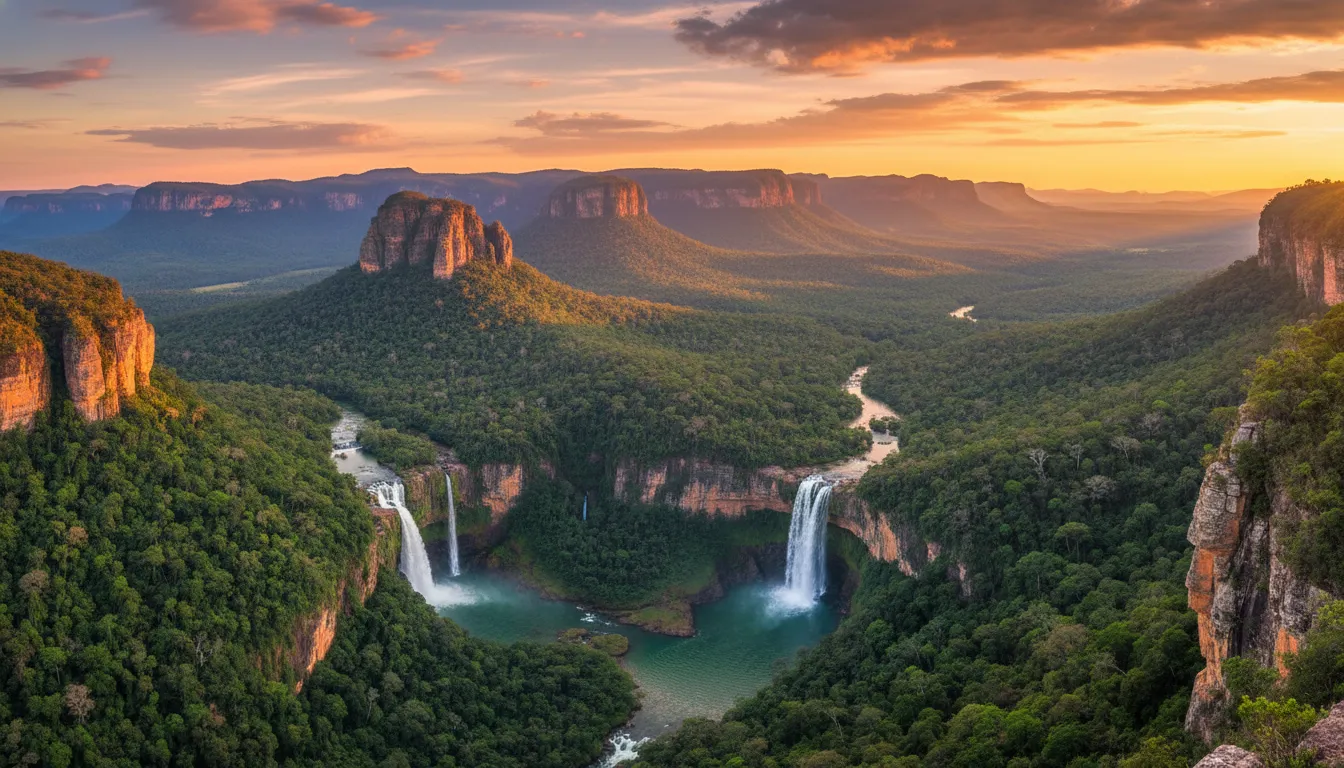
Brazil is fortunate — and responsible — to host some of the most extraordinary ecosystems on the planet. From Lençóis Maranhenses to Iguaçu, from Jalapão to Serra dos Órgãos, each national park is a window into a world that existed long before us and, hopefully, will exist long after. Exploring them with respect and curiosity is one of the most transformative experiences the country can offer.
If you haven’t yet included a national park in your travel itinerary, 2026 could be the year to start. And if you want to further expand your knowledge of Brazil beyond nature, it’s worth discovering the historic cities of Brazil that deserve your visit — another equally rich dimension of the country.
Nature is waiting. Just take the first step.
- Hire local guides: besides enriching the experience, they support surrounding communities and ensure your safety on the trails.
- Plan in advance: check access conditions, the need for scheduling, and the specific rules of each park on the ICMBio website.