Who hasn’t come home after a long day, opened the fridge, and stared at the ingredients with no idea what to make—or felt that cooking would take too much time? The kitchen can seem like an intimidating place, full of complicated techniques and lengthy recipes. But the good news is that much of the effort can be reduced with small adjustments to your routine, without sacrificing flavor or quality.
These adjustments have a name: they are called kitchen hacks, a collection of techniques, habits, and discoveries accumulated over generations by both professional and home cooks. Some come from classic French cuisine, others were popularized by TV shows, internet videos, or simply passed down from grandmother to grandchild. What they all have in common is the ability to transform everyday cooking into something lighter, quicker, and even enjoyable.
This article provides a practical and accessible guide with the most useful hacks for everyday life—from organization before cooking to preparation, preservation, and food utilization techniques. You don’t need to be a chef to put all this into practice. Just curiosity, a little attention, and a willingness to experiment.
Mise en place: The Habit That Changes Everything
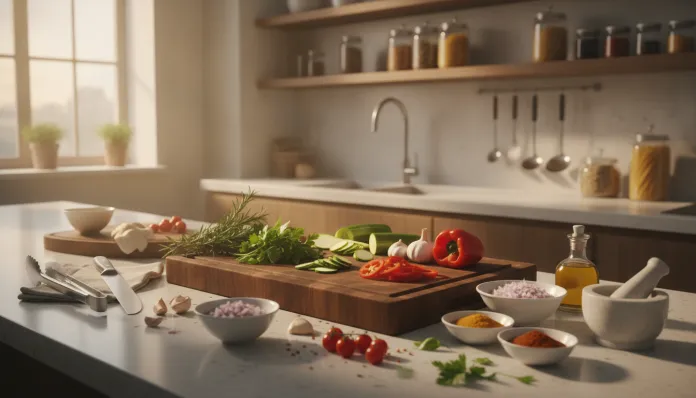
The term mise en place comes from French and literally means “putting in place.” It’s a fundamental practice in professional kitchens that involves separating, measuring, and organizing all ingredients and utensils before you start cooking.
It seems simple—and it is. But the difference it makes in daily life is enormous. When you have the onion chopped, the garlic separated, and the seasoning measured before turning on the stove, the cooking process flows much more smoothly. You avoid that panic moment when the pan is hot, the meat is browning, and you’re still trying to find the pot lid or figure out where you put the cumin.
How to Apply It Daily
Read the entire recipe before starting.
Arrange all ingredients on the counter.
Chop, measure, and organize in smaller bowls or containers.
Keep the utensils you’ll use within reach.
Only then, light the stove.
This habit also helps avoid waste: when you see everything organized on the counter, you perceive more clearly what you have and what you’re missing—and can adapt the recipe before starting.
Sharp Knives: Safety and Efficiency
One of the most common mistakes in home kitchens is using dull knives. It seems counterintuitive, but sharp knives are safer than dull ones. This is because a dull blade requires more force, slips more easily, and increases the risk of accidents.
Besides safety, a sharp knife cuts precisely, better preserves the texture of foods, and makes the work much faster. A tomato, for instance, gets squashed when cut with a dull knife—and is well divided when the blade is sharp.
Tips for Keeping Knives in Good Condition
Use a sharpening stone or a honing steel (the long steel rod chefs use) regularly.
Avoid washing quality knives in the dishwasher—the hot water and harsh detergents damage the edge.
Store knives on a magnetic strip or in a sheath, never loose in a drawer.
Replace cheap plastic knives with at least one quality chef’s knife: the investment pays off over time.
The Power of Salt: When and How to Use It
Salt is the most universal seasoning in cooking, but many people don’t know how to use it most efficiently. Salting at the right moment makes all the difference in a dish’s final result.
When cooking pasta, for example, the water should be salted before adding the pasta—and generously. The idea is for the water to be slightly salty, similar to well-diluted seawater. This seasons the pasta from the inside, not just the outside.
When grilling meats, it’s ideal to salt shortly before cooking or right after, depending on the type of meat and technique used. Salting too early can draw moisture out and dry the piece—although this effect varies greatly depending on the cut and waiting time.
Sautéed vegetables taste better when they receive a pinch of salt at the start of cooking, as this helps release natural juices and concentrate flavor.
Preservation Techniques That Prevent Waste
Brazil wastes a significant amount of food every year—and much of this happens at home, in the fridge or pantry. Knowing how to properly preserve ingredients is a way to save money and reduce environmental impact.
Fresh Herbs
Herbs like parsley, cilantro, and basil wilt quickly. An efficient trick is to treat herbs like flowers: place the stems in a glass with a bit of water, cover the leaves with a plastic bag, and store in the fridge. This way, they last up to two weeks.
Another option is to chop the herbs, place them in ice cube trays, cover with oil or water, and freeze. Then, just take out a cube and toss it directly into the pan.
Fruits and Vegetables
Avocado: to prevent browning after cutting, keep the pit in contact with the flesh and cover with plastic wrap close to the surface.
Lettuce and leafy greens: wash, dry well (a salad spinner helps a lot), wrap in paper towels, and store in a sealed bag in the fridge.
Tomatoes: never store ripe tomatoes in the fridge—the cold stops ripening and affects texture. Keep at room temperature.
Lemon: if using only half, store the other half with the cut side down on a plate, or wrap in plastic wrap.
Meats and Proteins
Freeze meats in individual portions already seasoned or marinated. When ready to use, just defrost—and the dish is halfway done. Always label with the freezing date.
Smart Recipe Substitutions
Missing an ingredient in the middle of a recipe? Often it’s possible to substitute without compromising the result. Knowing these equivalents avoids an unnecessary market run.
Original Ingredient
Possible Substitution
Baking powder (1 teaspoon)
1/4 teaspoon baking soda + 1/2 teaspoon lemon juice
Buttermilk (1 cup)
1 cup milk + 1 tablespoon white vinegar (let sit 5 min)
Egg (in batters)
3 tablespoons aquafaba (chickpea water)
Heavy cream
Chilled and well-whipped boxed cream (for not too demanding recipes)
Wheat flour (in sauces)
Cornstarch at half the amount
These substitutions work well in most home recipes but may vary depending on the context. In more technical preparations, like professional baking, the results may differ.
Quick Tricks for Busy Days
For those with little time during the week, some simple habits make a huge difference:
Batch cooking: set aside a few hours on the weekend to cook large quantities of rice, beans, roasted vegetables, and proteins. During the week, just assemble the dishes.
Use cooking water: the water in which you cooked pasta, potatoes, or vegetables is full of starch and nutrients. Use it to thicken sauces or as a soup base.
Defrost in advance: taking meat out of the freezer the day before and letting it defrost in the fridge preserves texture and prevents bacteria growth—which occurs when defrosting is done outside the fridge for too long.
Season in advance: marinating proteins for at least 30 minutes before cooking (or overnight) results in much more flavorful meats.
Creatively use leftovers: yesterday’s rice becomes fried rice. Roasted chicken becomes pie filling or salad. Cooked vegetables turn into soup or puree.
Some simple techniques elevate any dish without requiring special equipment or years of practice:
Sautéing Onion and Garlic Well
The base of much Brazilian cuisine, sautéed onion and garlic release aromatic compounds that add depth to the dish. The secret is patience: medium-low heat, no rush, stirring occasionally. Caramelized onion, for example, takes between 20 and 30 minutes on low heat—but completely transforms the flavor of any recipe.
Sealing Meats
Sealing means browning the surface of the meat on high heat before finishing the cooking. This creates a flavorful crust and helps concentrate internal juices. To seal well: the pan needs to be very hot, the meat needs to be dry (no moisture on the surface), and you shouldn’t move it before it releases naturally.
Balancing Flavors
The kitchen works with a balance between four basic elements: salt, acidity, fat, and sweetness. When a dish is bland, it’s often missing acidity (a few drops of lemon or vinegar solve it). When it’s too salty, a bit of sugar or boiled potato in the pot can help soften it. When it’s too acidic, a pinch of salt or a spoonful of honey balances it.
Conclusion
Cooking well doesn’t depend on innate talent or elaborate recipes. It depends, above all, on organization, technique, and attention to detail. The hacks gathered here are accessible to anyone, regardless of their level of kitchen experience—and most can be put into practice at the next meal.
The kitchen is one of the most lively spaces in the house: it’s where flavors are built, where emotional memories are formed, and where creativity finds fertile ground to flourish. By simplifying the process with smart habits, you transform what often seems like an obligation into something more enjoyable—and you eat better in the process.
Start with one hack at a time. Try mise en place the next time you cook. Sharpen the knife. Freeze herbs in oil cubes. Small changes, big results.
Para fornecer as melhores experiências, usamos tecnologias como cookies para armazenar e/ou acessar informações do dispositivo. O consentimento para essas tecnologias nos permitirá processar dados como comportamento de navegação ou IDs exclusivos neste site. Não consentir ou retirar o consentimento pode afetar negativamente certos recursos e funções.
Funcional
Always active
O armazenamento ou acesso técnico é estritamente necessário para a finalidade legítima de permitir a utilização de um serviço específico explicitamente solicitado pelo assinante ou utilizador, ou com a finalidade exclusiva de efetuar a transmissão de uma comunicação através de uma rede de comunicações eletrónicas.
Preferências
O armazenamento ou acesso técnico é necessário para o propósito legítimo de armazenar preferências que não são solicitadas pelo assinante ou usuário.
Estatísticas
O armazenamento ou acesso técnico que é usado exclusivamente para fins estatísticos.O armazenamento técnico ou acesso que é usado exclusivamente para fins estatísticos anônimos. Sem uma intimação, conformidade voluntária por parte de seu provedor de serviços de Internet ou registros adicionais de terceiros, as informações armazenadas ou recuperadas apenas para esse fim geralmente não podem ser usadas para identificá-lo.
Marketing
O armazenamento ou acesso técnico é necessário para criar perfis de usuário para enviar publicidade ou para rastrear o usuário em um site ou em vários sites para fins de marketing semelhantes.