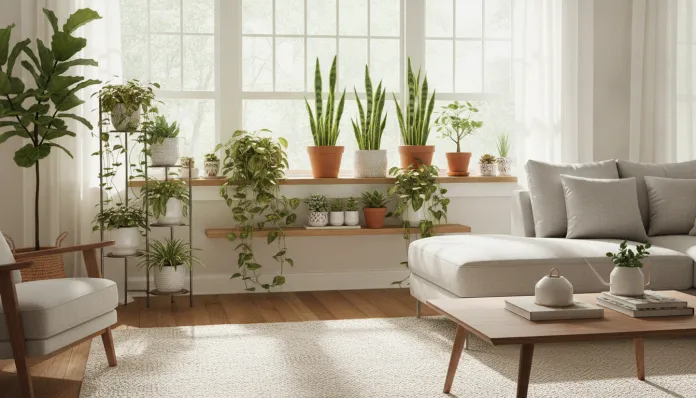
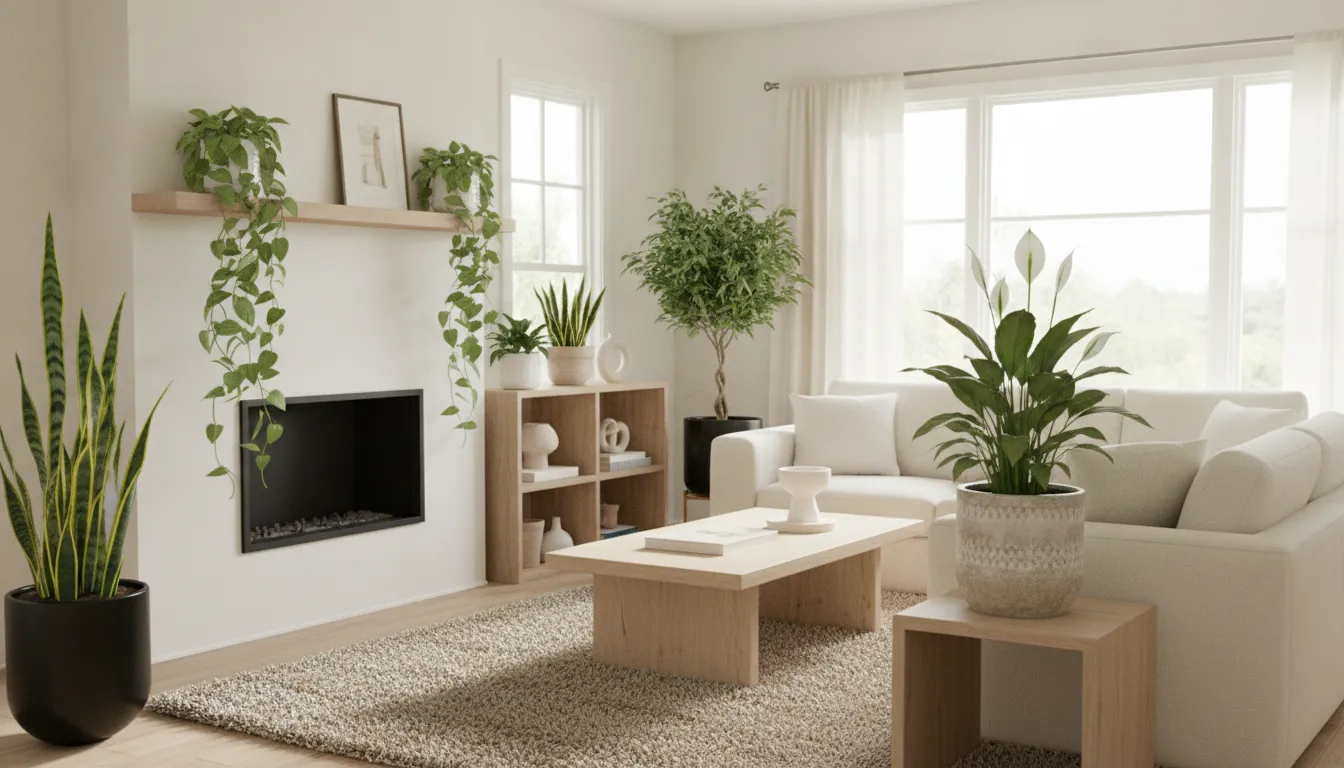
Having a green corner at home has never been more desired. Whether in a compact apartment in the city center or a house with a spacious balcony, plants have become the stars of home decor and well-being. It’s easy to see why: they bring life, color, and even a sense of lightness to spaces that might otherwise feel cold and impersonal.
But who hasn’t had their heart broken seeing a plant wilt and die despite all the care? The good news is that there is a vast world of resilient, beautiful species that forgive even the most classic beginner gardener mistakes — like overwatering or forgetting to water for days. Choosing the right plant for the right environment is the first step to a greener home and a hobby that truly works.
In this article, you’ll discover the best options for those who want to start (or resume) growing plants at home, understand what each one needs to thrive, and learn practical tips that make all the difference in daily care.
Why Having Plants at Home is Beneficial
Before diving into the list of species, it’s worth understanding why so many people have embraced this habit. Research conducted over the years by institutions like NASA and universities worldwide indicates that indoor plants can help improve air quality by filtering some volatile organic compounds found in paints, furniture, and cleaning products.
Beyond the physical aspect, contact with plants is associated with stress reduction and increased well-being. The simple act of caring for a living being — watering, observing new shoots, noticing a flower blooming — creates a routine of attention and presence that acts almost like practical meditation.
From a decor perspective, plants fill empty spaces, add texture, and create visual contrasts that no inanimate object can replicate. And the best part: they are naturally unique. Two plants of the same species never look exactly alike.
> Remember: Information about the benefits of plants is general. People with specific allergies or respiratory conditions should consult a doctor before introducing many plants indoors.
The Easiest Plants to Care For
Swiss Cheese Plant (Monstera deliciosa)
Perhaps the most photographed plant of the last decade, the Swiss Cheese Plant has won homes worldwide with the unmistakable beauty of its cut leaves and easygoing nature. It adapts well to indirect light, doesn’t require frequent watering, and grows exuberantly even in pots.
What it needs:
Bright indirect light (away from direct sun, which burns the leaves)
Moderate watering: wait for the top layer of soil to dry before watering again
Reasonable humidity — misting the leaves on drier days helps
Zamioculcas (Zamioculcas zamiifolia)
If there’s a plant for those who travel a lot, work too much, or simply forget to water, it’s the Zamioculcas. It stores water in its rhizomes (underground structures similar to potatoes) and withstands long periods of drought without complaint. Its shiny, deep green leaves add a sophisticated touch to any corner.
What it needs:
Low light (works well in corridors and offices with artificial lighting)
Spaced watering: every 15 to 20 days in winter and every 10 days in summer
Well-drained soil to prevent root rot
Snake Plant (Sansevieria trifasciata)
Popular in clinics and receptions, the Snake Plant is practically indestructible. It tolerates low-light environments, air conditioning, watering forgetfulness, and even poor soils. It is one of the species most recommended by feng shui experts for home environments, especially to place at the entrance.
What it needs:
Low to medium light
Very spaced watering: it suffers most from excess water
Mandatory drainage pot
Pothos (Epipremnum aureum)
Pothos is a classic in Brazilian apartments. With leaves in shades of green, yellow, and even white (depending on the variety), it can be grown in a tall pot, hung, or even in water — without soil. It grows quickly and fills spaces gracefully.
What it needs:
Indirect light or even low light
Watering when the soil is dry to the touch
Can be easily propagated: just place a branch in water until it roots
Succulents and Cacti
These little wonders are perfect for those with limited space. Succulents like Echeveria, Aloe Vera, and Burro’s Tail store water in their leaves and tolerate forgetfulness well. Cacti, in turn, are synonymous with resilience — but beware: they need plenty of direct sunlight to survive indoors.
What they need:
Direct sun (at least a few hours a day) or plenty of natural light
Very spaced watering
Specific substrate for succulents, which drains quickly
How to Choose the Right Plant for Each Environment
Not every plant works in every corner, and understanding your home’s environment is as important as choosing the species. Here is a general guide:
Environment
Characteristic
Recommended Plants
Living room with large window
Bright indirect light
Swiss Cheese Plant, Pothos, Ficus
Bedroom with low light
Low luminosity
Zamioculcas, Snake Plant
Kitchen
Humidity and variable temperature
Aromatic herbs, Pothos
Bathroom
High humidity, low light
Fern, Peace Lily
Balcony or terrace
Direct sun or partial shade
Succulents, Cacti, Begonias
The general rule is simple: observe the light entering the room throughout the day before buying any plant. A full-sun plant in a dark room will wither, just as a shade plant on a sunny balcony will burn.
Common Mistakes for Beginners
Even with resilient plants, some mistakes are common and can compromise their development. Knowing these pitfalls in advance is the best way to avoid them.
Overwatering: is the number one mistake. Most indoor plants die from too much water, not too little. Always check the soil before watering.
Pot without drainage: without drainage, water accumulates at the bottom and rots the roots. Always use pots with holes at the base or a layer of stones at the bottom.
Ignoring light: placing a plant far from any window and expecting it to bloom is too optimistic. Research the light requirements before positioning it.
Not cleaning the leaves: dust on the leaves hinders photosynthesis. A soft damp cloth solves the problem.
Forgetting to fertilize: the potting soil depletes nutrients over time. Fertilizing every two or three months during spring and summer keeps growth healthy.
Mixing plants with very different needs: placing a cactus and a fern in the same pot, for example, is a recipe for the failure of at least one of them.
Aromatic Plants in the Kitchen: Useful and Decorative
A special category deserves attention: aromatic herbs. Growing basil, rosemary, mint, parsley, and chives in small pots in the kitchen is one of the most practical ways to integrate nature and functionality into daily life. You save on groceries, have fresh herbs always at hand, and even leave the room with a pleasant aroma.
Prefer individual pots for each herb, as each has different watering needs
Place them near the kitchen’s sunniest window
Harvest regularly: this stimulates growth
Avoid placing herbs directly over the stove — excessive heat harms the roots
How to Set Up Your First Home Garden
If you’ve made it this far and want to take the first step, the process is simpler than it seems. Follow this basic guide:
Observe your home’s environments and identify which have more light, humidity, and ventilation.
Start with no more than three species — one drought-resistant, one shade-loving, and one aromatic, for example.
Buy from reliable nurseries or florists, where you can ask about the origin and care of each plant.
Choose pots with drainage and use the appropriate soil for each type of plant.
Create a simple routine: a fixed day of the week to check the plants, water those that need it, and observe their overall condition.
Record and learn: taking photos over time helps to notice growth and identify problems before they worsen.
Expand gradually: as your confidence grows, add new species and experiment with propagation, replanting, and composition with different pots.
Conclusion
Caring for plants at home is much more accessible than it seems. With the right choice of species for the right environment, balanced watering, and a keen eye, anyone — even without experience — can transform their home into a more vibrant and welcoming space. The secret is to start small, learn from mistakes, and let each plant grow at its own pace.
In 2026, with life increasingly digitized and fast-paced, cultivating plants has also become a form of conscious deceleration. Caring for something that grows, that changes every week, that depends on attention and affection — this has a value that goes far beyond decoration. And if a resilient Zamioculcas or a pot of basil on the kitchen window is the starting point, let the garden come.
Para fornecer as melhores experiências, usamos tecnologias como cookies para armazenar e/ou acessar informações do dispositivo. O consentimento para essas tecnologias nos permitirá processar dados como comportamento de navegação ou IDs exclusivos neste site. Não consentir ou retirar o consentimento pode afetar negativamente certos recursos e funções.
Funcional
Always active
O armazenamento ou acesso técnico é estritamente necessário para a finalidade legítima de permitir a utilização de um serviço específico explicitamente solicitado pelo assinante ou utilizador, ou com a finalidade exclusiva de efetuar a transmissão de uma comunicação através de uma rede de comunicações eletrónicas.
Preferências
O armazenamento ou acesso técnico é necessário para o propósito legítimo de armazenar preferências que não são solicitadas pelo assinante ou usuário.
Estatísticas
O armazenamento ou acesso técnico que é usado exclusivamente para fins estatísticos.O armazenamento técnico ou acesso que é usado exclusivamente para fins estatísticos anônimos. Sem uma intimação, conformidade voluntária por parte de seu provedor de serviços de Internet ou registros adicionais de terceiros, as informações armazenadas ou recuperadas apenas para esse fim geralmente não podem ser usadas para identificá-lo.
Marketing
O armazenamento ou acesso técnico é necessário para criar perfis de usuário para enviar publicidade ou para rastrear o usuário em um site ou em vários sites para fins de marketing semelhantes.