
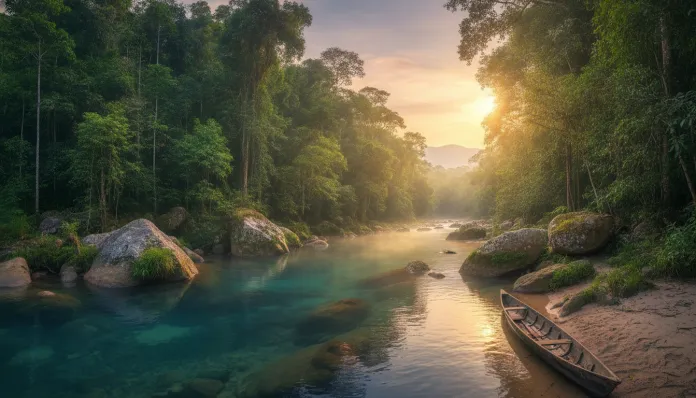
Brazil boasts over 8.5 million square kilometers, 26 states, a Federal District, and a geographical diversity ranging from the Amazon to the Pampas, including plateaus, sand dunes, mangroves, and ancient caves. Despite this, most tourist itineraries are repetitive: Fernando de Noronha, Bonito, Chapada Diamantina, Gramado, and Foz do Iguaçu. These are undoubtedly beautiful destinations — but they represent just a fragment of what the country has to offer.
The good news is that there is a parallel Brazil, little publicized and surprising, waiting for curious travelers willing to trade the safety of the well-trodden path for the adventure of the unknown. Small historic towns in the interior of Minas, turquoise lagoons in the heart of Maranhão, waterfalls in Chapada dos Veadeiros that are hours of walking from the nearest access point — this Brazil exists and is, in many cases, well preserved precisely because it receives few visitors.
This article presents Brazilian destinations off the conventional radar: places with proven natural beauty, relevant historical heritage, and sufficient infrastructure for a comfortable, albeit rustic, trip. The idea is not to encourage mass tourism in these locations but to show that Brazil’s map has much more to reveal than travel agency brochures usually show.
Jalapão, Tocantins: The Desert That Isn’t a Desert
Jalapão is located in the far east of the state of Tocantins and is technically a cerrado region — not a desert. The informal name “desert” arose from the unusual landscape: fine reddish sand dunes called Dunas do Jalapão, fervedouros (water springs that emerge from the ground with enough pressure to keep the human body afloat), and crystal-clear rivers cutting through the dry savanna.
The main access is via dirt roads, which limits the flow of visitors and keeps the environment quite preserved. The Serras Gerais and Cachoeira da Velha are must-see stops within the region, which is partly protected by the Jalapão State Park, created in 2001. The best time to visit is the dry season, between May and September, when the rivers are at ideal levels and the roads are passable.
The local handicraft with capim dourado — a grass unique to Jalapão — is another attraction. The plant can only be harvested from September 20th, according to environmental regulations, and is transformed into bags, hats, and jewelry by quilombola and indigenous communities in the region.
Lençóis Maranhenses: The Side Tourists Don’t See
Everyone has heard of Lençóis Maranhenses. But few know that the Lençóis Maranhenses National Park, created in 1981, spans nearly 157,000 hectares — and most visitors only see a small strip near the city of Barreirinhas. There are trails leading to virtually deserted lagoons, such as Lagoa Bonita and the lagoons near the village of Atins, accessible only by boat via the Rio Preguiças.
Atins itself is a destination apart: a small community on the far east of the park, with simple inns, kitesurfing, sunsets over the dunes, and an end-of-the-world atmosphere that contrasts with the bustle of Barreirinhas. The journey there is by boat via the Rio Preguiças, taking about three hours, which is an experience in itself.
The ideal time for full lagoons is from July to September, when the rains of the first semester have filled the reservoirs between the dunes.
Morretes and the Coast of Paraná: Nature and Gastronomy
The coast of Paraná is largely ignored by sun and beach tourism itineraries, partly because the region’s beaches are more geared towards local tourism. But what attracts attentive travelers is something else: the Serra do Mar paranaense, the preserved Atlantic Forest, and the small colonial town of Morretes.
Founded in the 18th century, Morretes is about 70 km from Curitiba and can be accessed via the Estrada Graciosa, one of the most beautiful mountain roads in the country, or by train via the famous Serra Verde Express — one of the few regular tourist trains in Brazil, departing from Curitiba and crossing the mountain range in about three hours, with breathtaking views.
In gastronomy, the highlight is the barreado, a typical Paraná dish made of beef cooked for hours in a clay pot sealed with manioc flour. It is one of the oldest dishes of caiçara cuisine and deserves to be experienced in the cultural context in which it originated.
Chapada dos Guimarães, Mato Grosso: The Geodesic Center of Brazil
Before Brasília existed as the capital, there was a theory that the most central point of South America was in the region of Chapada dos Guimarães, in Mato Grosso. This curious geographical detail is just the gateway to one of the most impressive plateaus in the country.
The Chapada dos Guimarães National Park houses the Véu de Noiva, an 86-meter waterfall that plunges over the Vale do Rio Claro, as well as viewpoints overlooking the Pantanal plain and trails of varying difficulty. The town of Chapada dos Guimarães, with its colonial architecture and one of the oldest churches in Mato Grosso (the Matriz de Nossa Senhora de Sant’Ana, from the 18th century), is a comfortable base for exploring the region.
The Mato Grosso cerrado surrounding the chapada is also exceptional for birdwatching — Brazil is the second country with the most bird species in the world, and the cerrado is one of the richest biomes in this diversity.
Canindé de São Francisco, Sergipe: The Canyon the Northeast Hides
Most people do not associate Sergipe — Brazil’s smallest state — with canyons and grand landscapes. But the Cânion do Rio São Francisco, which forms the natural border between Sergipe and Alagoas, is one of the largest and most beautiful in the country.
The boat tour through the canyon departs from Canindé de São Francisco and traverses the multicolored rocky walls of the Cânion do Xingó, created after the construction of the Xingó Hydroelectric Plant in the 1990s. There are rapids, walls up to 150 meters high, and turquoise waters that impress even those who have visited other Brazilian canyons.
The region is also a passage point for the Rio São Francisco, the “Velho Chico,” one of the most important rivers in the history and culture of the northeastern hinterland. Combining a visit to the canyon with a tour through the Alto Sertão of Sergipe reveals a Northeast far from the coast and the more well-known postcards.
Cavalcante and the Wild Chapada dos Veadeiros
Chapada dos Veadeiros, in Goiás, already appears in more publicized itineraries — especially the town of São Jorge. But the town of Cavalcante, at the far north of the chapada, offers a completely different experience: less infrastructure, more untouched nature, and a strong connection with the quilombola culture of the region.
Cavalcante is the access point to waterfalls like Cachoeira Santa Bárbara and the Vale do Rio Prata, as well as the gateway to the Kalunga territory, the largest quilombola community in Brazil in territorial extension, recognized by the State of Goiás in 1991. Visiting the Kalunga communities with local guides is a community-based tourism experience that very few Brazilians know.
The dirt road connecting Cavalcante to São Jorge crosses the chapada from within and is, in itself, a scenic drive — but it is only recommended with a traction vehicle and in the dry season.
Practical Tips for Exploring Unknown Brazil
Before heading to these less conventional destinations, keep in mind a few essential points:
- Research road conditions before departing. Many of these locations have access via dirt roads that may be impassable during the rainy season.
- Prefer local guides. Besides supporting the regional economy, native guides know trails, schedules, and peculiarities that no app maps.
- Check the correct time of year. Each destination has its best period: Jalapão is from May to September, Lençóis Maranhenses from July to September, Chapada dos Guimarães is visitable year-round but better in the dry season.
- Bring cash. Small towns and rural communities do not always have card machines or good internet coverage for using Pix.
- Respect the limits of each protected area. Many of these locations are in national or state parks with their own access rules, maximum number of visitors, and permitted trails.
- Inform yourself about health and vaccines. Regions like Jalapão and parts of Maranhão and Tocantins have yellow fever vaccine recommendations. Consult a doctor or vaccination post in advance.
- Don’t just theoretically take your trash back. The lack of regular collection in these destinations makes the “leave no trace” principle even more important.
Conclusion: The Brazil That Brazil Doesn’t Know Yet
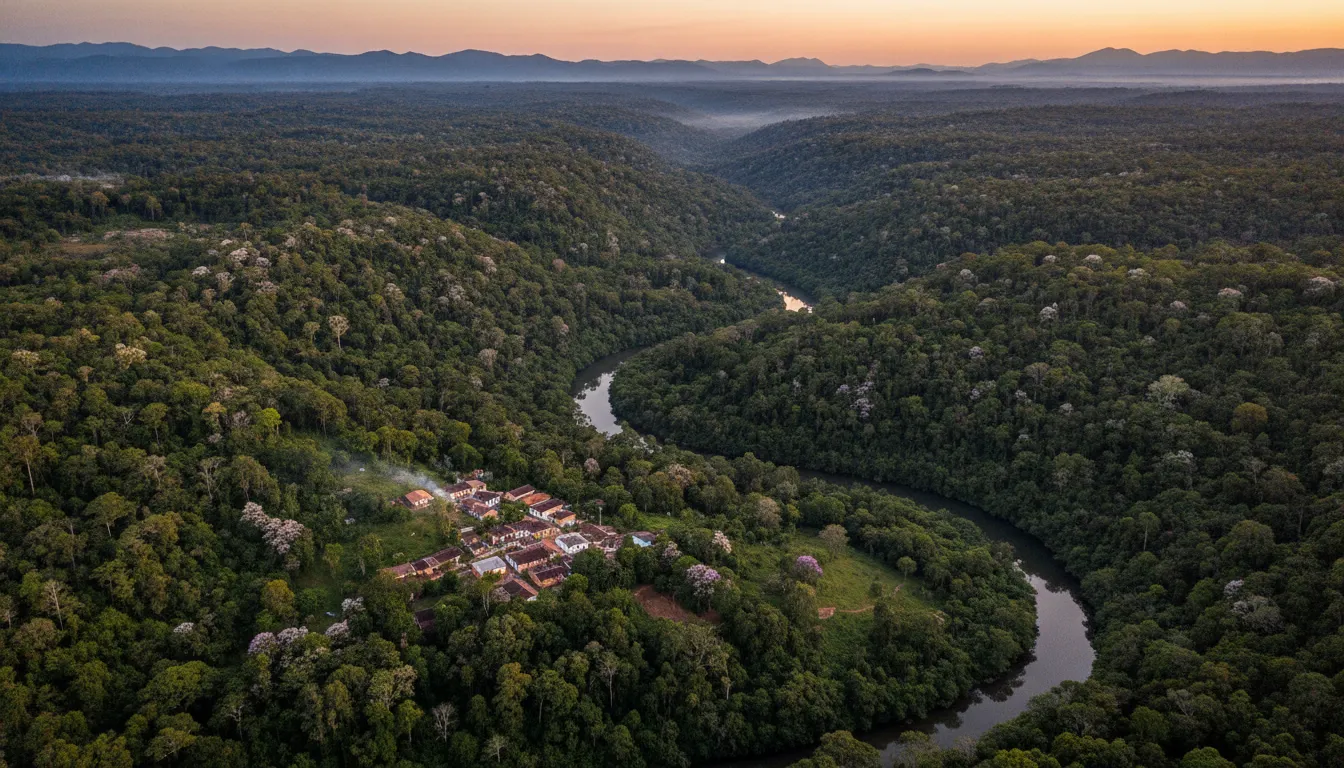
There is a certain irony in the fact that many Brazilians have been to Europe or the Caribbean but have never set foot in Jalapão, never navigated the Xingó Canyon, and never watched the sunset over the white dunes of Atins. The unknown Brazil is not a motivational cliché — it is a geographical and cultural reality of continental proportions that is yet to be discovered.
Traveling to these destinations requires more planning, more willingness to improvise, and often more comfort with discomfort. But it is precisely this extra effort that filters out mass tourism and preserves what is most genuine in these regions. When you reach a waterfall after a three-hour hike and find only the sound of water, you realize the effort was worth it.
Brazil has much more than what appears in travel guides. For those willing to go beyond the obvious, the country offers an adventure that doesn’t require a passport — and, in 2026, is still surprisingly accessible for those who plan ahead.
- Prefer local guides. Besides supporting the regional economy, native guides know trails, schedules, and peculiarities that no app maps.