
The Northeast on a Budget: How to Explore Brazil’s Most Vibrant Region Without Overspending
The Brazilian Northeast is undoubtedly one of the country’s most fascinating tourist destinations. With over 3,300 kilometers of coastline filled with paradisiacal beaches, monumental dunes, freshwater lagoons, historical heritage sites, and a cuisine that delights any palate, it’s a must-visit. However, a persistent myth deters many travelers: that visiting the region is expensive. The good news is that this myth doesn’t hold up.
In reality, the Northeast is one of the regions in Brazil where budget tourism has flourished over the years. There’s an abundance of affordable accommodation, well-structured intercity bus transport, and local gastronomy — sold at fairs, beach stalls, and neighborhood restaurants — that is both cheap and authentic. With planning, it’s possible to enjoy a comprehensive 10 to 14-day trip through the region at a significantly lower cost than in destinations in the Southeast or South.
This itinerary is designed for those who want to experience the best of the Northeast without breaking the bank. It covers different states, suggests smart ways to get around, indicates where to eat well for less, and highlights free or low-cost attractions worth every minute.
Where to Start: Choosing Your Entry Point
Most flights to the Northeast arrive at three main airports: Recife (PE), Fortaleza (CE), and Salvador (BA). For the best airfare deals, it’s ideal to monitor prices 60 to 90 days in advance and be flexible with travel dates.
A common strategy among backpackers is to enter through one city and exit through another — for example, flying into Recife and leaving from Fortaleza, traveling overland between the two destinations. This approach allows you to explore several states in one trip without returning to the starting point.
For those living in the interior or cities without direct flights to the Northeast, long-distance intercity buses are still a viable and much cheaper option. Companies like Itapemirim and Cometa operate routes connecting capitals in the Southeast to the Northeast, with trips that, although long, can cost a fraction of a flight.
Salvador: History, Culture, and Free Beaches
The Bahian capital offers a lot without demanding excessive spending. The Pelourinho, the city’s historic center and a UNESCO World Heritage Site since 1985, can be explored on foot for free. The baroque churches, colorful colonial mansions, and cobblestone streets create a unique setting unmatched in Brazil.
Free or Low-Cost Activities in Salvador
- Elevador Lacerda: the city’s icon costs cents and connects the Upper City to the Lower City with panoramic views of the Bay of All Saints
- Farol da Barra: a public area with sea views and a famous sunset
- Mercado Modelo: free entry, great for observing local crafts
- Praia de Itapuã and Praia do Flamengo: public beaches farther from the center, less crowded and free to access
- Afro-Brazilian Museum (MAFRO): one of the largest collections of Afro-Brazilian art and culture in the country, with affordable entrance fees
For dining, the municipal market and Bahian food restaurants in the Comércio and Liberdade neighborhoods offer meals at prices that rarely exceed modest amounts, far below the tourist restaurants in Pelourinho.
Porto Seguro and Morro de São Paulo: Are They Worth Including?
Porto Seguro, in the far south of Bahia, is known for mass tourism and its reputation as an expensive destination. Visiting economically is possible, but it requires more research. Meanwhile, Morro de São Paulo, on Tinharé Island, is a different case: there are no cars on the island, and transportation is on foot or by rented quad bike, attracting those who want to escape the hustle and bustle.
Access to Morro de São Paulo is by boat from Salvador or Valença, and the cost of the crossing is part of the investment. To save money, it’s recommended to avoid the high season (December to February and July) and compare inn prices in advance. Off-season, prices drop significantly.
Recife and Olinda: The Best of Historic Northeast
Recife, the capital of Pernambuco, is a vibrant city with a relatively affordable cost of living for tourists. The Boa Viagem Beach is publicly accessible and free, and the Recife Antigo district offers colonial architecture, the famous Marco Zero, and the Porto Digital — a tech hub in restored historic buildings, which can be visited externally.
A few kilometers from Recife, Olinda is another UNESCO World Heritage Site and has one of the best-preserved historic centers in the Northeast. Walking through Olinda’s hills, visiting the churches, and observing the popular art studios is a complete cultural experience — and essentially free.
Practical Tips for Saving in Recife
- Use the Recife metro to travel between the airport, the city center, and Boa Viagem at public transport prices
- Eat at the São José Market, the oldest operating public market in Brazil, where typical Pernambucan food is plentiful and cheap
- Visit the Ricardo Brennand Institute, a museum with an impressive collection (check current ticket prices before visiting, as they may vary)
- Choose inns in the Boa Viagem or Casa Forte neighborhoods instead of hotels in the tourist center
Fortaleza and the Cearense Coast: Endless Beaches
Ceará has a coastline that impresses with its length and diversity. Fortaleza serves as a base for exploring beaches like Cumbuco, Lagoinha, Canoa Quebrada, and Jericoacoara — each with a different personality.
Jericoacoara deserves special mention. Declared a National Park in 2002, the village without paved streets amid the dunes is considered one of the most beautiful beaches in the world by several international publications. Access is via buggy or 4×4 through the sand, representing an additional cost to consider in the budget.
For those on a tighter budget, Cumbuco (about 30 km from Fortaleza) offers an authentic northeastern beach experience with much less expense. It’s possible to reach by regular bus or shared transport, and the local infrastructure includes simple inns and reasonably priced stalls.
How to Travel the Cearense Coast for Less
- Use shared shuttles for routes like Fortaleza–Canoa Quebrada or Fortaleza–Cumbuco
- Research inns away from the shore: the price difference compared to beachfront accommodations can be significant, with less than 500 meters of distance
- Avoid private buggies whenever there are collective or shared transportation options
- Eat at Fortaleza’s night markets: the Beira Mar Fair and other popular markets offer fresh seafood at prices much lower than restaurants
Maceió and Fernando de Noronha: Understanding Cost Differences
Maceió, the capital of Alagoas, is often cited as one of the most beautiful and accessible destinations in the Northeast. The natural pools formed by coral reefs at Praia do Francês, Pajuçara, and Praia de Gunga are breathtaking attractions that can be accessed at popular prices, especially by the traditional jangadeiros of Pajuçara, who transport visitors to the pools.
Fernando de Noronha, on the other hand, is the Pernambuco archipelago that represents the exception in the budget itinerary. The Environmental Preservation Fee (TPA) charged per day of stay, combined with airfare and accommodation costs, places Noronha in a different category. It’s not impossible to visit with a controlled budget, but it requires much more rigorous planning and, in most cases, a specific trip to the destination.
Financial Planning: How Much to Save and How to Cut Costs
Setting a daily spending limit is the first step to a successful budget trip. With organization, it’s possible to keep costs within a controlled range.
Spending Categories and Saving Tips:
- Accommodation: prioritize family-run inns, hostels with private rooms, or room rentals via sharing platforms. Avoid booking on local holiday dates
- Food: have lunch at buffet restaurants or with set meals. Reserve tourist restaurants for one or two special occasions
- Transport: intercity buses are always the cheapest option. Research schedules in advance at ticket offices or company websites
- Attractions: create a list of free attractions before leaving and complement it with one or two paid tours that are truly unique
- Shopping: local crafts bought directly from artisans at fairs are cheaper and more authentic than in tourist kiosks
Keeping finances organized during the trip is also part of the process — as is keeping luggage and belongings in order. Those who have the habit of organizing the house before traveling tend to arrive at the destination with a clearer mind to enjoy every moment.
Conclusion: The Northeast That Fits Any Budget
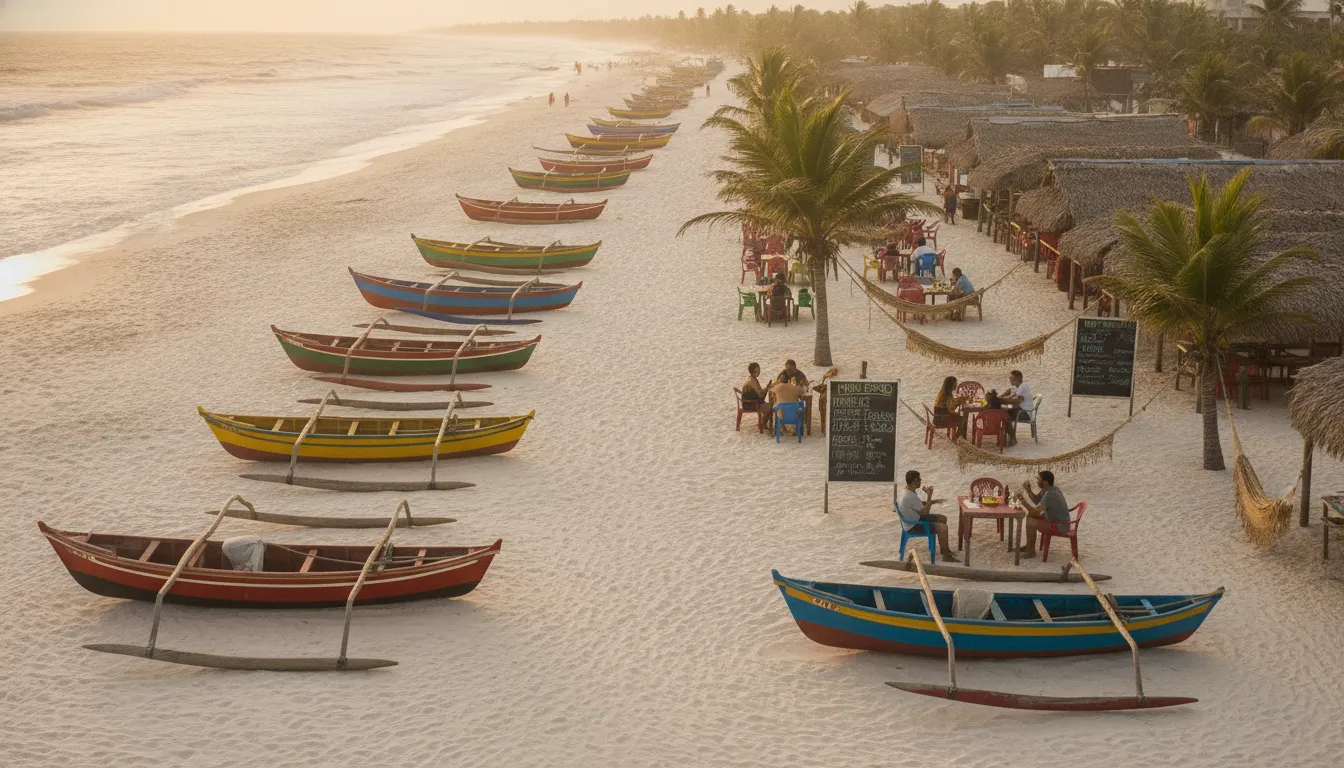
Traveling economically through the Northeast is not a compromise — it’s an intelligent choice that often brings the traveler closer to the region’s most authentic experience. Eating at beach stalls, taking local buses, talking to artisans at fairs, and walking through historic centers on foot are ways to truly know the Northeast, without the artificial layer that luxury tourism sometimes imposes.
The itinerary can be adapted according to the available time and budget. Those with two weeks can combine Salvador, Recife, Olinda, and Fortaleza with stops at intermediate beaches. Those with only one week can choose one or two states and delve into them.
The essential thing is to plan in advance, be flexible with dates and destinations, and resist the temptation to spend on what doesn’t make a real difference in the experience. After all, what remains in memory after a trip to the Northeast is not the most expensive hotel — it’s the color of the sea in Alagoas, the smell of acarajé on the streets of Salvador, and the silence of the dunes at sunset in Jericoacoara.


