
A country that still holds secrets
Brazil is frequently presented to the world through Carnival, football, and the Amazon. But those who pause and look carefully discover that this continental country conceals layers of history, science, nature, and culture that surprise even Brazilians themselves. There are ignored world records, rare natural phenomena, inventions that changed global daily life, and historical facts that rarely appear in school textbooks.
With more than 8.5 million square kilometers and a population exceeding 215 million people, Brazil is the fifth-largest country in the world by territorial extension and the largest in Latin America. This gigantic scale guarantees diversity in everything: climate, fauna, flora, gastronomy, and traditions. And it is precisely in this immensity that the most fascinating curiosities are hidden.
Prepare yourself to see the country from a different angle. Some of this information will change the way you tell Brazil’s story to friends and family.
The land of forests — and natural records
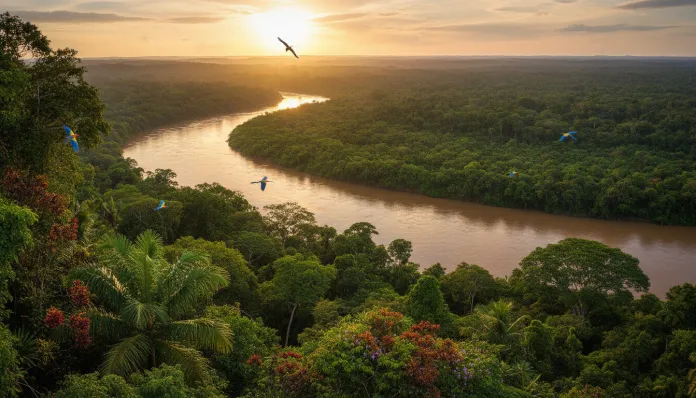
When discussing the Amazon, most people think of an enormous forest. But the concrete numbers are still staggering: the Brazilian Amazon alone shelters approximately 10% of all living species on the planet. This includes roughly 40,000 plant species, 1,300 bird species, and more than 3,000 types of freshwater fish — more than the total number of fish species found in all the Atlantic Ocean.
The Amazon River, in turn, carries alone about 20% of all the freshwater that flows into the planet’s oceans. During flood season, its mouth can reach widths exceeding 300 kilometers. And there is a spectacular phenomenon that occurs mainly between February and March: the pororoca, the meeting of the Atlantic Ocean’s tides with the Amazon River current, which generates a continuous wave capable of advancing for dozens of kilometers upriver. The municipality of São Domingos do Capim in Pará is one of the most famous points to observe the phenomenon — and even to surf it.
But the Amazon is not Brazil’s only surprising biome. The Pantanal is the largest continuous tropical wetland area on the planet, with approximately 150,000 square kilometers distributed mainly between Mato Grosso and Mato Grosso do Sul. The concentration of jaguars there is among the highest in the world, making the region one of the best places on the planet to observe this wild feline in its natural state.
Brazilian inventions that the world uses without knowing
Brazil has a respectable list of inventions and scientific contributions that rarely gain prominence in the global narrative. Check out some of the most relevant:
- The airplane: The invention’s parentage is a matter of historical debate, but Brazilian inventor Alberto Santos Dumont accomplished, in October 1906, the first flight of an apparatus heavier than air under publicly verified conditions in Europe, with the 14-Bis, in Paris. Unlike other models of the time, his aircraft took off under its own power, without rails or catapults.
- The color digital inkjet printer: Physicist Hélio Franchini Neto led research that contributed to the development of this technology in Brazil.
- Orkut: The social network was created by Orkut Büyükkökten, a Turkish engineer, but was developed within Google and launched in 2004. Brazil became so quickly the platform’s largest market that the country came to concentrate more than half of all global users — a phenomenon of digital adoption rarely seen in any technological product.
- The coronary angioplasty technique: Brazilian physician Adib Jatene was a pioneer in cardiac surgeries, including correction of transposition of the great arteries in newborns, an operation that saves lives worldwide to this day. Jatene was also responsible for popularizing myocardial revascularization surgery in the country.
Cultures and languages that most people don’t know
Portuguese is the official language, but Brazil has a far more complex linguistic history. According to surveys by the Socio-Environmental Institute (ISA), the country is home to more than 150 isolated indigenous peoples or those with recent contact, and it is estimated that more than 150 indigenous languages are spoken in national territory. Some of these languages have fewer than 50 speakers, placing them in a critical preservation situation.
Additionally, there are communities that maintain European languages in a surprising way. In the interior of Rio Grande do Sul and Santa Catarina, there are municipalities where a significant portion of the population still converses in dialects of German and Italian brought by immigrants in the 19th and 20th centuries. Talian, for example, is a Venetian dialect spoken mainly in southern Brazil and has been recognized as intangible heritage in several Rio Grande do Sul municipalities.
Cultural diversity also appears in religiosity. Brazil concentrates the world’s largest Catholic population in absolute numbers, but at the same time harbors one of the planet’s most expressive Spiritist communities, along with Candomblé and Umbanda temples and other practices rooted in African traditions that are part of Brazilian intangible cultural heritage recognized by UNESCO.
Geographic records that surprise
Brazil has a series of geographic records that few know:
- It is the only country in the world that borders ten other South American nations (it only does not border Chile and Ecuador).
- It possesses the longest continuous coastline of any single country in the Americas, with approximately 7,400 kilometers of shoreline.
- The Lençóis Maranhenses, in Maranhão, is a unique ecosystem in the world: white sand dunes that, during the rainy season (between July and September), form crystal-clear lagoons with turquoise-blue water. The result is a landscape that seems from another planet.
- The Janelão Cave, in Cavernas do Peruaçu National Park, in Minas Gerais, has one of the world’s largest natural windows in limestone rock, with more than 100 meters of opening.
- The point most distant from Earth’s center is not the top of Everest, but rather Chimborazo Mountain, in Ecuador — but Brazil is home to Mount Roraima, shared with Venezuela and Guyana, which is one of the oldest tepuis on the planet, with geological formations over 1.8 billion years old.
Urban biodiversity: cities with integrated nature
Brazilian biodiversity does not live solely in remote forests. Brazil has remarkable examples of coexistence between wildlife and urban environments. In the Federal District, marmosets inhabit central parks of the capital. In Florianópolis, sea lions appear on beaches during winter. In Rio de Janeiro, the Tijuca Forest is considered the world’s largest replanted urban forest, with more than 30 square kilometers within the city.
For those interested in adventures and outdoor sports in contact with this exuberant nature, Brazil offers unique experiences. See more in Radical sports in Brazil: adrenaline everywhere.
Gastronomy: much more than beans and rice
Brazilian cuisine is a direct reflection of its ethnic and geographic diversity. Some facts that many people ignore:
- Brazil is one of the world’s largest producers of cocoa, the raw material for chocolate, and Bahia concentrates much of this production.
- Cupuaçu, a fruit from the cacao family, has been used in the Amazon for centuries and has attracted international food industry interest for its unique flavor and versatility.
- Tapioca, today consumed throughout Brazil and exported as a healthy delicacy to other countries, is made from cassava starch and was the food base of indigenous peoples long before the arrival of Europeans.
- Brazil has been the world’s largest coffee exporter for more than 150 consecutive years, but domestic consumption is also very high: Brazilians are among the world’s largest per capita coffee consumers.
- Gaucho barbecue has its own rules and rituals recognized as intangible cultural heritage by IPHAN (Institute of Historical and Artistic Heritage).
Science and technology: contributions that stay behind the scenes
Few know, but Brazil has a consistent scientific trajectory in areas such as tropical agriculture, medicine, and aeronautical technology. Embrapa (Brazilian Agricultural Research Corporation), founded in 1973, is internationally recognized for having transformed the Cerrado — previously considered unsuitable for large-scale cultivation — into one of the planet’s most productive agricultural regions, through research in seed genetics and soil management.
In aviation, Embraer, founded in 1969, became one of the world’s four largest commercial aircraft manufacturers, competing with North American and European giants. Its regional jets are used by airlines in dozens of countries.
And for those who like to deepen their knowledge in a dynamic way, watching documentaries about Brazil and its biomes can be a fascinating gateway to better understanding what data and statistics alone cannot convey.
Brazil that is yet to be discovered
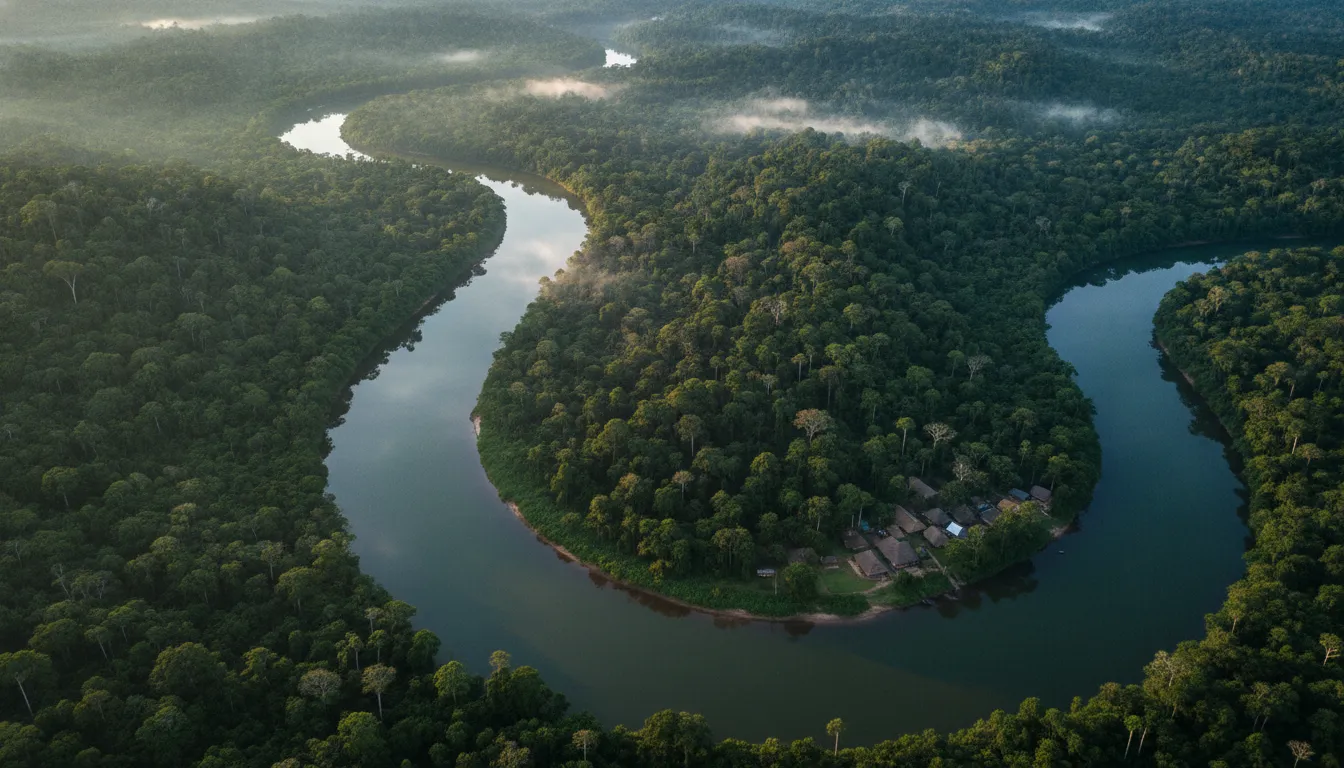
What all these curiosities have in common is scale. Brazil is too big to be summed up in a single label, whether positive or negative. Each biome, each community, each scientific innovation or cultural expression tells part of a story that is still being written.
Knowing these less obvious facets of the country is not just an exercise in curiosity — it is also a way to value what exists here and to realize how much is still to explore, preserve, and tell. Brazil surprises precisely because the more you learn about it, the more you realize how much there is still to know.