
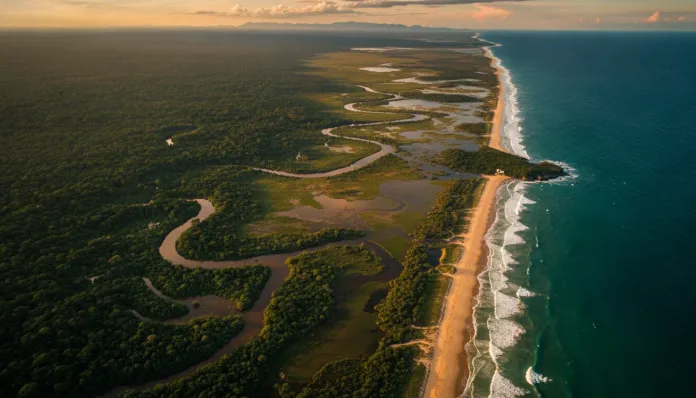
Brazil is a country of continental dimensions — and that’s not just an expression. With over 8.5 million square kilometers, the national territory encompasses five regions with completely distinct climates, landscapes, and rhythms. Planning a trip without considering the calendar might lead to rain at the wrong time, excessive heat, or missing out on a festival that happens only once a year. The good news is that Brazil has a good season somewhere all year round — you just need to know where and when.
Understanding the seasonality of each region is not just a matter of comfort. It’s also a financial decision: airfare and accommodations tend to vary significantly between high and low seasons. Planning ahead and choosing the right periods can make a huge difference in your budget and the quality of your experience. Whether you’re a solo traveler, a couple on a honeymoon, or a whole family, the timing of the trip matters as much as the chosen destination.
In this guide, we will explore the five regions of Brazil — North, Northeast, Central-West, Southeast, and South — explaining the best time to visit each one, what to expect from the climate, and the attractions that justify careful planning.
North: The Amazon at Its Best Time
The North region is dominated by the Amazon Rainforest, the largest tropical biome in the world. Here, talking about “dry season” or “rainy season” is more accurate than talking about “summer” or “winter,” as temperatures remain high throughout the year — generally between 25°C and 35°C.
Best Time: July to November
The period between July and November is considered the dry season in the Amazon and represents the best time to visit the region. Rainfall decreases considerably, rivers recede, and white sandy river beaches emerge along the banks of the Rio Negro, the Amazon, and their tributaries. Beaches like Ponta das Lajes, near Manaus, are crowded with Brazilian tourists during this period — and for good reason.
Additionally, this is the time when the phenomenon of the “meeting of the waters” — where the Rio Negro and the Solimões River meet without mixing for kilometers — can be observed with clearer waters and easier boat access.
The Parintins Folklore Festival, held annually in June in the municipality of Parintins (AM), is an important exception: even though it’s in the transition between rainy and dry, it is one of the most important cultural events in Brazil and may justify a visit during this specific period.
Northeast: Sun Almost All Year Round, But with Nuances
The Brazilian Northeast is the favorite beach destination for Brazilians — and for good reasons. With spectacular beaches in states like Ceará, Rio Grande do Norte, Alagoas, Bahia, and Pernambuco, the region has much to offer. But “sun all year round” doesn’t mean “perfect weather all year round.”
Best Time: August to January
The period from August to January represents the dry season for much of the northeastern coast, especially for the states of Ceará, Rio Grande do Norte, and Piauí. It’s when the sun shines more consistently, the sea is calmer, and conditions for buggy rides, kitesurfing, and diving are ideal.
- Ceará and Rio Grande do Norte: best months are from August to December
- Pernambuco and Alagoas: from October to March offer drier weather
- Bahia: varies greatly by sub-region; southern Bahia tends to have rains from November to February, while the northern coast has drier weather in the same period
The Northeast is also famous for Carnival, celebrated in February or March. Salvador and Recife/Olinda host two of the most celebrated carnivals in the country. If the goal is to experience this festival, it’s worth enduring the typical humid heat of the period.
Central-West: The Pantanal and Cerrado Require the Right Timing
The Central-West region is often underestimated by travelers, but it hides two of the world’s richest ecosystems: the Pantanal, the largest continental wetland on the planet, and the Cerrado, a tropical savanna with impressive biodiversity. Chapada dos Guimarães (MT) and Chapada dos Veadeiros (GO) are also in this region.
Best Time: May to September
The dry season in the Central-West runs from May to September and is by far the best period to visit the region.
In the Pantanal, this is the time when animals concentrate near the remaining water sources, making it much easier to spot jaguars, capybaras, jabirus, and caimans. Ecolodges and specialized guides in the region confirm that the chances of seeing wildlife are significantly higher during the dry season.
In Chapada dos Veadeiros and Chapada dos Guimarães, waterfalls still flow with good volume in May and June (right after the rains), while trails become passable and the sky clearer.
Attention: visiting the Pantanal during the rainy season (October to March) can be a very different experience — with flooded roads and restricted access to certain areas. It’s not impossible, but it requires more planning and acceptance of limitations.
Southeast: Climatic Diversity Between Beaches and Mountains
The Southeast includes the states of São Paulo, Rio de Janeiro, Minas Gerais, and Espírito Santo — and a huge variety of attractions. From the coast of Rio to the historical circuit of Minas, from the waterfalls of Vale do Ribeira to the mountainous region of southern Minas, each sub-destination has its own climatic logic.
Best Time: April to September (for most destinations)
The period from April to September corresponds to autumn and winter in the Southeast, with less rain, mild temperatures, and drier days. For those who want to visit historical cities in Minas Gerais like Ouro Preto, Tiradentes, or Diamantina, this is the ideal period — the dry weather favors walks on cobblestone streets and the enjoyment of baroque churches and museums.
In Rio de Janeiro, summer (December to March) is the high season for beaches, with Carnival as the highlight in February or March. However, it’s also the time of highest heat and torrential rains. Those who prefer Rio with fewer people and more pleasant weather might prefer to visit between May and August.
For the Mantiqueira Mountains — which include municipalities like Campos do Jordão (SP) and Visconde de Mauá (RJ) — the winter (June to August) is the most sought-after period, with temperatures that can drop below 5°C and the rare possibility of frost. It’s precisely this cold that attracts tourists looking for a different setting from tropical Brazil.
South: The Only Place in Brazil Where It Can Snow
The South region — Paraná, Santa Catarina, and Rio Grande do Sul — has the most temperate climate in Brazil, with four well-defined seasons. Here, unlike the rest of the country, the winter cold is real, and snow, although rare, occurs in cities like Urupema and São Joaquim (SC) and Gramado (RS).
Best Time: Depends on What You Want
This is the region with the greatest variation in traveler intentions:
- For Santa Catarina beaches (Florianópolis, Bombinhas, Garopaba): summer, from December to March, is the high season, with sun, warm sea, and excitement. It’s the most expensive and busiest period.
- For Gramado and Canela (RS): winter, from June to August, is the peak of tourism — with the famous Natal Luz in November and December being another major attraction.
- For the Iguaçu Falls (PR): can be visited year-round, but the water volume is higher between March and July. Access and climate are more pleasant from April to September.
The South is also the right destination for those looking to escape the suffocating heat of the Brazilian summer — while the rest of the country boils, the gaucho and catarinense mountains offer refreshing temperatures.
Practical Tips for Better Trip Planning
Regardless of the chosen region, some precautions apply to any trip across Brazil:
- Book in advance during high season: long weekends, Carnival, and July vacations fill the most popular destinations weeks or months in advance.
- Check access conditions: in remote regions like the Pantanal or the Amazon, roads and rivers change with the season — consult local operators before traveling.
- Consider the low season: besides being cheaper, the low season usually offers fewer lines, more personalized service, and a more relaxed experience.
- Observe the local event calendar: festivals, religious celebrations, and cultural events can enrich — or complicate — your trip depending on your preference for movement.
- Research the climatic specifics of each city: within the same region, the microclimate can vary greatly. Chapada Diamantina (BA), for example, has a different rainfall regime from the Bahian coast.
If you’re thinking about planning an economical and smart itinerary, it’s worth checking out our content on cheap destinations to travel in Brazil in 2026, with suggestions that combine good cost-benefit with the best times of the year.
Conclusion: The Right Brazil for Every Moment
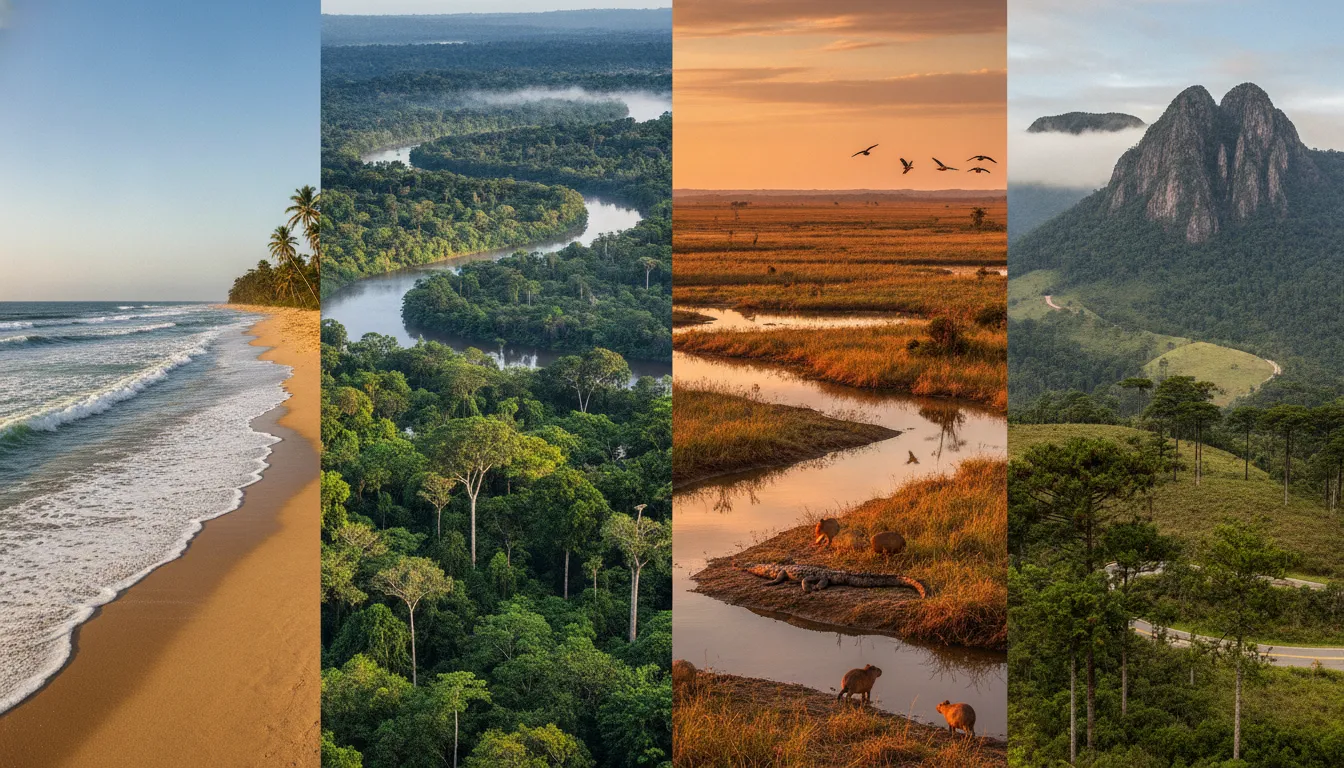
Traveling around Brazil is an experience that can be transformative — but timing makes all the difference between a memorable trip and one full of unforeseen events. The good news is that in such a large and diverse country, there’s always a region at its best, regardless of when you can travel.
The North shines in the Amazon dry season between July and November. The Northeast enchants with its generous sun from August to January. The Central-West reveals its extraordinary wildlife from May to September. The Southeast offers comfort and history during autumn and winter. And the South surprises both in the summer of beaches and in the snowy winter of the mountains.
Planning based on climate, local events, and your own travel style is the first step to enjoying everything this gigantic country has to offer. The map is open — now it’s time to choose where to start.
- Check access conditions: in remote regions like the Pantanal or the Amazon, roads and rivers change with the season — consult local operators before traveling.
- For Gramado and Canela (RS): winter, from June to August, is the peak of tourism — with the famous Natal Luz in November and December being another major attraction.
- Pernambuco and Alagoas: from October to March offer drier weather