
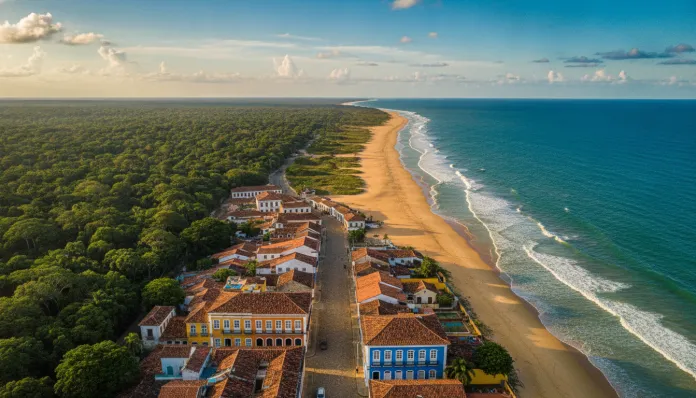
Best Time to Travel in Brazil: A Comprehensive Regional Guide
Brazil is a country of continental proportions — it spans over 8.5 million square kilometers divided into five distinct regions, each with its own rhythm, climate, landscape, and culture. To make the most of your trip, choosing the right time can mean the difference between an unforgettable experience and one filled with unwanted surprises: torrential rain on a hike, crowded beaches, or off-season destinations with reduced services.
The good news is that somewhere in Brazil, it’s always a good time to travel. The secret is to understand the climatic particularities of each region and align them with your traveler profile — whether you prefer deserted beaches, mild-weather hikes, or vibrant cities at the height of festivities. This guide is designed to help you make that choice with more confidence and less improvisation.
Throughout this article, you’ll find a practical overview of Brazil’s five regions, with the best times of the year to visit each, climatic points of attention, and some tips to make the most of your trip — regardless of your destination.
Northeast Region: Almost Year-Round Sunshine with Important Nuances
The Northeast is probably the most sought-after region for those looking for beaches, sun, and warmth. States like Ceará, Rio Grande do Norte, Paraíba, Pernambuco, Alagoas, and Bahia are among the most visited destinations in Brazil — and for good reasons.
Best Time: July to December
The northeastern coast is bathed by trade winds coming from the Atlantic, bringing a unique characteristic: most states have their driest period between July and December, exactly the opposite of the rest of the country. This phenomenon is especially notable in the so-called “dune coast,” which includes Ceará and Rio Grande do Norte.
- Ceará and RN: July to November is the season of strong winds, ideal for kitesurfing and windsurfing in Jericoacoara and Cumbuco.
- Bahia (southern coast): From September to March, with more stable weather and less frequent rains.
- Alagoas and Pernambuco: October to March is the best window for beaches like Maragogi and Porto de Galinhas.
- Rio de Janeiro: Summer is the busiest (and most expensive) time. For less crowded beaches, September and October are great choices.
- Minas Gerais (historic cities like Ouro Preto and Tiradentes): The whole year has its appeal, but the winter in Minas (June and July) offers traditional cultural festivals and cooler weather.
- Coast of SP and ES: November to March for those who want heat; April to October for those who prefer tranquility.
- Beaches of SC (Florianópolis, Balneário Camboriú, Bombinhas): December to March, with warm weather and sea suitable for swimming. July is busy, but the cold can surprise.
- Serra Gaúcha (Gramado, Canela, Bento Gonçalves): June to August is the most sought-after time, with winter festivals, hot chocolates, and occasional frost.
- Foz do Iguaçu: Can be visited year-round. The Iguaçu Falls are more voluminous between May and August, due to rains in the river headwaters.
- Curitiba and surroundings: A city with infrastructure for any time, but March to May offers pleasant temperatures and less rain.
- Pantanal: The best time for wildlife observation is July to October, when the waters recede, and animals gather around water bodies. The jaguar, for example, is much more commonly seen during this period.
- Chapada dos Veadeiros (GO): Can be visited year-round, but the waterfalls are fuller between December and March. For hikes, the dry period (May to September) is safer.
- Chapada dos Guimarães (MT) and Bonito (MS): The dry season, between May and October, offers the best conditions for diving in crystal-clear rivers and hiking.
- Manaus and surroundings: The meeting of the waters (of the Negro and Solimões rivers) can be seen year-round, but the low-water period (July to November) reveals river beaches and facilitates hiking.
- Ilha de Marajó (PA): Visited year-round, but the dry season (July to December) offers more comfort.
- Jalapão (TO): Although it is in the Cerrado, it is administratively part of the North. The best time is from June to September, with accessible springs and dunes.
- Check the calendar of local holidays and festivals. Events like Carnival (February/March), Festa Junina (June/July), and New Year’s Eve inflate prices and fill destinations.
- Book accommodation in advance, especially in summer and during July school holidays. Destinations like Florianópolis, Porto de Galinhas, and Gramado sell out months in advance.
- Research vaccination requirements. For trips to the Amazon and Pantanal, the yellow fever vaccine is recommended — consult a healthcare professional before traveling.
- Consider the high and low seasons in pricing. Traveling outside the high season can mean significant savings on tickets and accommodations, with equally beautiful and much less crowded destinations.
- Plan internal travel time. Brazil is huge: the distance between Manaus (AM) and Porto Alegre (RS) is greater than from Lisbon to Moscow. Airplane, bus, and car have different implications for cost and experience.
- Pack appropriate clothing for the local climate. Many people underestimate the cold of Serra Gaúcha in winter or the humid heat of the Amazon.
Conclusion
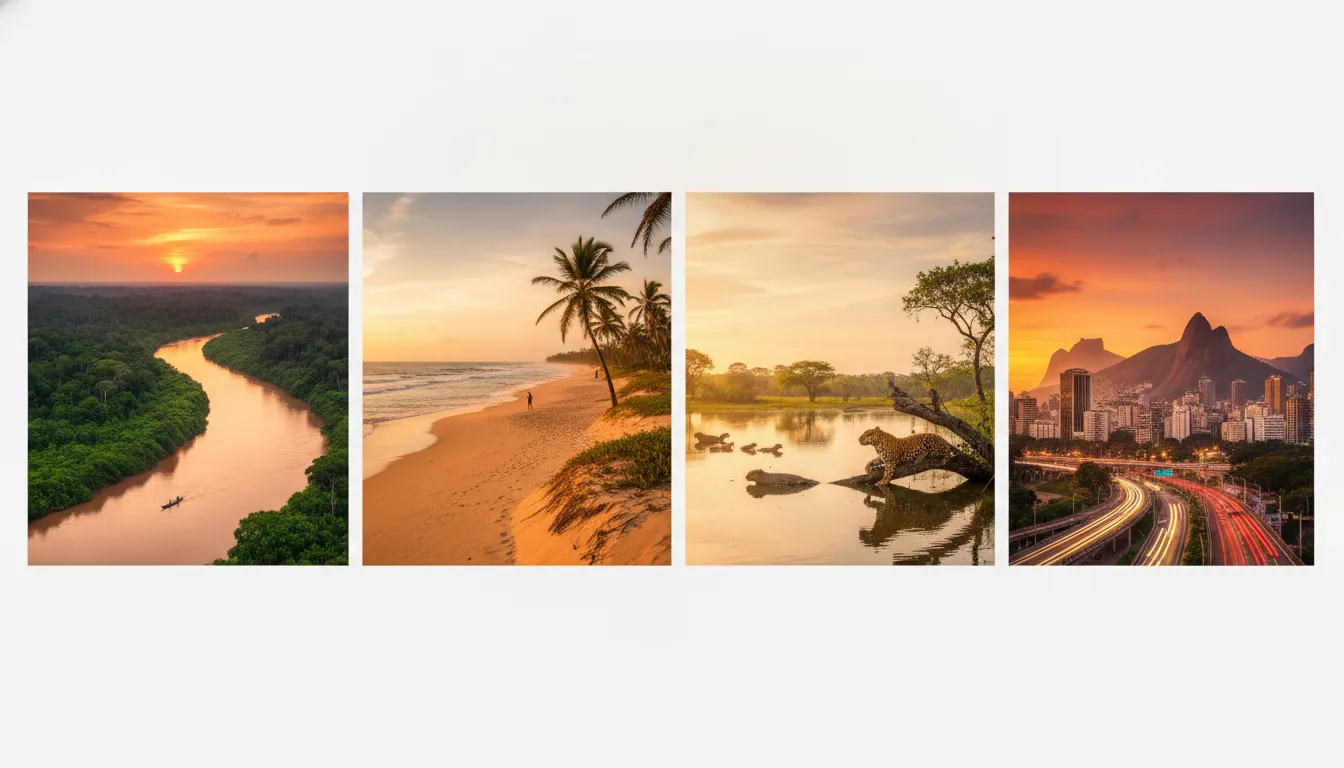
Traveling through Brazil is, above all, an exercise in humility in the face of diversity. A country with five such distinct regions — from the northeastern semi-arid to the snow in the South, from the coral beaches of Alagoas to the flooded forests of the Amazon — requires planning that goes beyond choosing a beautiful destination on the map.
Understanding the climatic rhythm of each region is the first step to ensuring you arrive at the right time, with expectations aligned and the right gear. More than that, it is a way of respecting the destination: traveling outside the season of an attraction can mean finding it closed, inaccessible, or simply below what it could offer.
Brazil is always waiting — whether with sun, rain, cold, or heat. The question is to discover the moment when each part of it is at its best. And this guide is just the beginning of that discovery.
Good to Know: The flood season (February to June) has its own charm: the “flooded” forest (igapó) is accessed by canoe, and the experience is completely different. Many experienced ecotourists prefer this version of the Amazon.
A Quick Calendar to Plan Your Trip
Time of Year Best Regions to Visit January – March Northeast (coast), North (river flood) April – June Southeast, South (autumn), Central-West (transition) July – September South (mountains), Central-West (dry), North (dry) October – December Northeast (coast), Southeast (spring) Practical Tips for Planning Ahead
Regardless of the chosen region, some practices make a difference:
Important Tip: Bonito requires advance booking for almost all attractions, regardless of the time of year. Book in advance.
Northern Region: Amazon for All Types of Travelers
The Amazon covers most of the Northern Region — Pará, Amazonas, Acre, Roraima, Rondônia, Amapá, and Tocantins — and is the destination with the greatest potential to transform a traveler’s perspective. The forest, rivers, and biodiversity have no parallel on the planet.
Best Time: June to November (dry period)
Contrary to what many imagine, the Amazon does not have a dry season in the classic sense — it rains all year round. But between June and November, the rains are less intense, and the rivers recede, making navigation and access to certain areas easier.
Central-West Region: Pantanal, Chapada, and Cerrado
The Central-West is formed by Mato Grosso, Mato Grosso do Sul, Goiás, and the Federal District. It is one of the regions with the most significant tourism growth in recent decades, driven by ecotourism and the rich fauna and flora of the Cerrado and Pantanal biomes.
Best Time: May to September (dry season)
The Central-West has a well-marked climate regime: a rainy season (October to April) and a dry season (May to September). For most destinations, the dry season is the ideal window.
Southern Region: Four Distinct Seasons and European Charm
Paraná, Santa Catarina, and Rio Grande do Sul form the region with the most temperate climate in Brazil. It’s the only one where snow is a real and frequent event in the higher parts, such as in São Joaquim (SC) and Campos de Cima da Serra (RS).
Best Time: December to March (summer) or June to August (winter in the mountains)
The choice depends on what you want to experience:
Attention: The northeastern hinterland follows a different logic. The heat is intense almost all year round, and the rainy season (locally called “winter”) runs from February to May. Those planning to visit the interior should take this into account.
Southeast Region: The Country’s Most Versatile Destination
The Southeast comprises the states of São Paulo, Rio de Janeiro, Minas Gerais, and Espírito Santo — and is the region with the most extensive tourist infrastructure in Brazil. From mountain ranges to urban beaches, through historic cities and cultural metropolises, the variety is enormous.
Best Time: April to September
Summer in the Southeast (December to March) is marked by high temperatures and heavy rains, especially in the mountainous regions of Petrópolis, Campos do Jordão, and the Serra da Mantiqueira. The period from April to September offers drier days, mild temperatures, and less risk of flooding.