
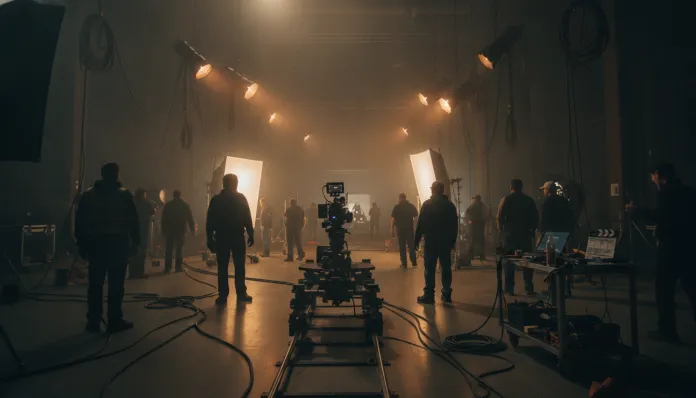
When the lights dim in the cinema and the screen begins to glow, few viewers imagine the amount of work, creativity, and technology required to bring those moving images before their eyes. A two-hour film may have taken years to complete — and what happens between the initial idea and the final product is a story as fascinating as any Hollywood script.
The world of cinematic behind-the-scenes is filled with unknown professions, unexpected decisions, and ingenious solutions to problems the audience will never notice. It’s a world where hundreds of people work in harmony — or constant tension — to create the perfect illusion. Understanding this process not only increases admiration for cinema but also reveals much about how art and industry intertwine in surprising ways.
From Ideas to Script: Where It All Begins
Before any camera starts rolling, a film needs to exist on paper. The script is the fundamental document of any film production. It can originate from an original idea, a book adaptation, a comic book, a real event, or even a video game — as has become increasingly common in recent decades.
The work of a screenwriter goes far beyond writing dialogues. It’s necessary to structure the narrative in three acts (introduction, confrontation, and resolution), develop convincing characters, and describe scenes in a way that other professionals can visualize and execute them. In large productions, it’s common for multiple screenwriters to work on different versions of the same script over time — a phenomenon known as “development hell,” which can last for years.
After the script is completed, it goes through a stage called project development, where producers analyze its commercial and artistic viability. Many scripts are bought by studios and never become films — they remain in a sort of limbo called “development hell,” waiting for the right moment, the right director, or the right budget.
The Producer’s Role: The Invisible Force Behind It All
If the director is the creative face of a film, the producer is the invisible architect ensuring the project comes to life. There are different types of producers — executive, associate, line — each with distinct responsibilities. Generally, the producer handles the financial, logistical, and administrative aspects of a production.
The producer negotiates with studios to secure funding, hires the main stars and the director, and resolves crises during filming. When an actor falls ill, when the weather turns during an outdoor scene, or when a set is accidentally destroyed, it’s the producer who must find quick solutions without exceeding the budget.
The budget itself is a confidential document in most productions. Studios rarely disclose to the public how much was spent in each department — costumes, special effects, actor fees — and the numbers reported in the press are usually estimates based on industry sources.
Art Direction and Set Design: Building Worlds from Scratch
One of the most impressive departments behind the scenes of cinema is art direction and set design. This team builds the physical sets where scenes take place — or decides how real environments will be adapted to look as the script requires.
In a period film, for example, all the furniture, props, tapestries, and even wallpapers need to be authentic or carefully reproduced. Some studios maintain prop warehouses with thousands of cataloged items, rented or reused in different productions. Warner Bros., for instance, has one of the largest collections of props and sets in the world at its studios in California and the UK.
Set design also involves decisions about what is physically built and what will be added later through computer graphics. This choice affects both the budget and the actors’ performances — many artists report that working in front of green screens (the famous chroma key) is much more challenging than interacting with real sets, as it requires a high level of imagination and concentration.
The Magic (and Hard Work) of Special Effects
When we talk about special effects in cinema, most people immediately think of computer graphics. But the world of effects is much broader — and much more analog than we imagine.
Practical effects (or physical effects) are those performed live on the film set: controlled explosions, artificial rain, prosthetic makeup that transforms human faces into fantastic creatures, animatronic puppets, and much more. Classics like the dinosaurs in “Jurassic Park” (1993) combined physical animatronics built by Stan Winston’s team with CGI — and this combination is still considered a technical milestone in cinema.
Digital visual effects (VFX) are applied in post-production and can include anything from removing a safety wire to creating entirely digital characters. Specialized companies like Industrial Light & Magic, founded by George Lucas in 1975, and New Zealand’s Weta FX are among the most respected in the global industry.
One surprising fact: in many high-budget productions, more than half of the total work time is spent in post-production — the phase that includes editing, color correction, sound mixing, and visual effects application.
Sound: The Unsung Hero of the Cinematic Experience
Few viewers realize, but the sound of a film is almost entirely reconstructed in the studio after filming. The audio captured on set is often full of imperfections — wind, equipment noises, background conversations — and serves mainly as a reference for the sound team in post-production.
The process of ADR (Automated Dialogue Replacement) involves bringing actors back to the studio to re-record their lines cleanly, synchronizing them with the images. Meanwhile, foley artists are specialists in recreating everyday sounds — footsteps on different surfaces, the sound of clothes being folded, the clinking of cutlery — using physical objects in the studio.
The soundtrack is another crucial element. Composers like John Williams, Hans Zimmer, and Ennio Morricone — the latter having passed away in 2020 — are as legendary as the directors they worked with. Music not only accompanies the images: it tells the viewer what to feel, anticipating emotions and creating lasting emotional memories. Just as Brazilian songs that marked generations carry stories and cultural identities, the soundtracks of iconic films become part of the collective memory.
Professions You’ve Never Heard Of
Cinema employs dozens of specialized roles that rarely get credit in everyday conversations. Here are a few:
- Continuity Supervisor: responsible for ensuring the details of a scene (object positions, actors’ clothes, hairstyles) are identical in all takes, even if filmed on different days.
- Gaffer: head of the electrical department, controlling all the lighting on set.
- Key Grip: oversees camera and lighting support equipment, like tracks, cranes, and dollies.
- Clapper Loader: operates the clapperboard (the little board that appears at the start of takes) and loads film reels or memory cards.
- Script Doctor: a screenwriter hired to review and improve an existing script, often without receiving public credit.
- Stunt Coordinator: coordinates and plans all action and stunt scenes, ensuring the safety of those involved.
- Colorist: in post-production, applies “color correction” that gives the film its final visual identity — the cold tone of a thriller or the golden warmth of a period film.
Distribution and Exhibition: The Journey to Your Seat
Even after completion, a film must travel a long path before reaching the viewer. Film distribution is a complex sector involving negotiations between producers, distributors, and cinema chains in different countries.
The definition of the release window — the period during which a film is exclusively in theaters before being available on streaming platforms — has been one of the most debated topics in the industry in recent years. The Covid-19 pandemic accelerated changes in this model, and the balance between the dark room experience and home consumption is still being negotiated by the industry in 2026.
Trailers and marketing campaigns are also part of this behind-the-scenes universe — and are productions in their own right. There are companies specialized exclusively in creating trailers, with their own teams of editors and composers. A good trailer can make or break a film’s perception even before its release.
Conclusion
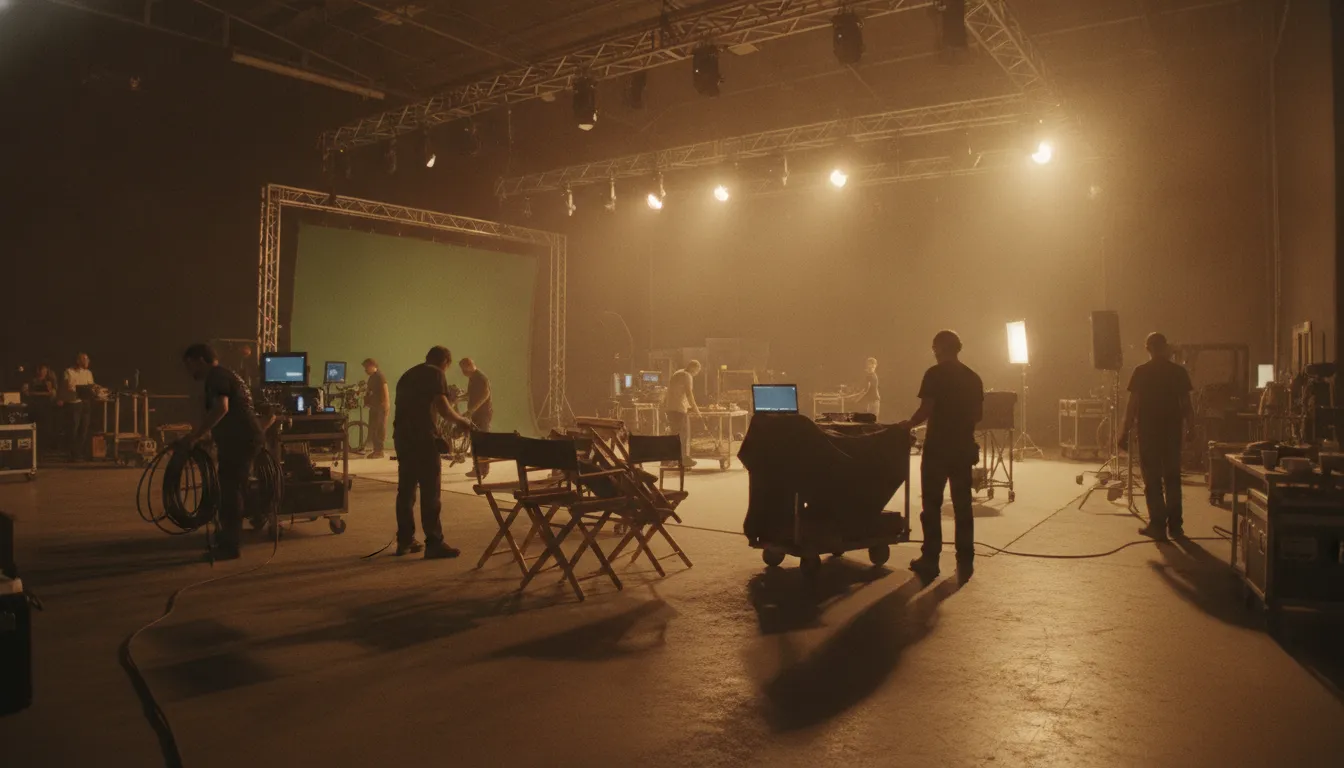
Cinema is, at its core, a collective art. Behind every shot that moves us, frightens us, or makes us laugh, there is a vast chain of dedicated professionals, sophisticated technologies, and creative decisions that never appear in the final credits — or go unnoticed when they do. Understanding the behind-the-scenes is a way to broaden our perspective on this medium that, since the late 19th century, remains one of the most powerful forms of storytelling.
Just as we admire the complexity behind extraordinary natural phenomena — like the unique abilities of animals described in fascinating reports such as The Most Incredible Animals and Their Unique Abilities — learning about the mechanisms of cinema invites us to look beyond the obvious and recognize the intelligence and effort hidden in what seems simple. Next time the credits roll, it might be worth staying a bit longer in your seat to read each name that went unnoticed.
- Gaffer: head of the electrical department, controlling all the lighting on set.