
Adrenaline everywhere: Brazil as a radical destination
Brazil is a country of continental dimensions, with a geography that seems to have been designed especially for those seeking emotion. There are mountains covered with Atlantic Forest, endless dunes, rivers with turbulent rapids, beaches with monumental waves and abundant open sky. It is no accident that the country has become one of the most sought-after destinations by extreme sports practitioners from around the world.
The culture of adventure sports in Brazil gained strength especially from the 1990s onwards, when trails, jumps and river descents ceased to be the exclusive domain of very specific groups and became accessible to a broader audience. Today, in 2026, the adventure tourism sector continues to expand, with growing infrastructure in different regions of the country, training of certified professionals and an active community that shares experiences and destinations.
If you have already felt that desire to break away from routine in a way that goes beyond the common sightseeing tour, this guide is for you. Here you will learn about the main extreme sports practiced in Brazil, the best places for each modality and what to consider before heading out on your adventure.
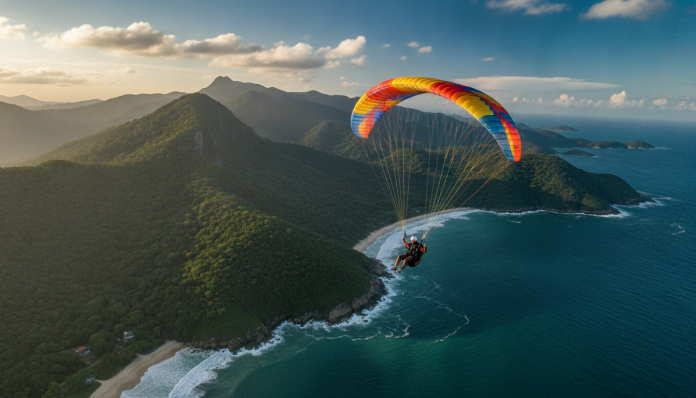
Hang gliding and paragliding: fly here
Few countries in the world offer conditions as favorable for free flight as Brazil. The combination of constant winds, elevated terrain close to the coast and warm climate throughout almost the entire year creates a naturally privileged environment for hang gliding and paragliding.
The Pedra Bonita, in Rio de Janeiro, is probably the most famous free flight point in Brazil. Located in Tijuca National Park, the ramp allows landings on São Conrado Beach, with a view of the sea, Christ the Redeemer and the entire city. It is one of the most cinematic experiences anyone can have in the country.
Other notable destinations include:
- Governador Valadares (MG): considered the Brazilian capital of free flight, hosts international competitions and has a very active pilot community
- Ubatuba (SP): option on the São Paulo coast with ramps and paragliding school
- Praia da Pipa (RN): in the Northeast, with favorable winds and stunning landscapes
- São Thomé das Letras (MG): known for its mystique and good wind conditions
For beginners, tandem flights with a certified pilot are the ideal gateway. No previous experience is necessary, and the sensation of gliding over the horizon tends to change anyone’s perspective.
Surfing: waves for all levels
Brazil has more than 7,000 kilometers of coastline, and much of this shoreline offers waves ranging from gentle beach breaks to powerful swells that demand absolute respect. Surfing is one of the most democratic extreme sports in the country, with schools spread across practically all coastal states.
For the more experienced, Fernando de Noronha (PE) and Itacaré (BA) are references with powerful and consistent waves. Saquarema (RJ) is historically associated with high-level surfing and has hosted professional circuit stages for decades. On the South coast, Imbituba (SC) and Torres (RS) are known for quality waves, especially in winter.
Those just starting out find good conditions on beaches with smaller and gentler waves, such as Maresias (SP), Maracaípe (PE) and various beaches in Bahia. Most schools offer lessons with foam boards (softboards), which are more stable and safe for beginners.
Rafting and whitewater canoeing
For those who prefer water adventure, but with their feet closer to the ground, rafting is one of the best options. The activity consists of descending rapids in inflatable boats guided by experienced guides, and Brazil has rivers with different difficulty levels spread across various regions.
The Jacaré-Pepira River, in Brotas (SP), is one of the most visited destinations in the country for rafting, attracting thousands of tourists per year. The city has established itself as a hub for ecotourism and adventure, with well-structured operators and activities for different profiles.
Other rivers worth noting:
- Itajaí-Açu River (SC): especially in Apiúna and Presidente Nereu, with challenging rapids
- Formoso River (MS): in Bonito, with crystal-clear waters and floating options
- Preto River (MG): Ibitipoca State Park region, with sections of good intensity
- São Francisco River (AL/SE): sections with rapids in the Xingó canyon
Rapids are classified in degrees I to VI. Grade I is practically obstacle-free, while grade VI is extreme and reserved for specialists. Most tourist circuits work between grades II and IV, which already offer plenty of excitement without requiring previous experience.
Rock climbing: between rocks and conquests
Rock climbing is experiencing a special moment in Brazil and around the world. Since entering the Olympic program in Tokyo 2021, the sport has gained even more visibility. In the country, there are routes for all levels, from classic rock lines to overhanging walls that challenge advanced climbers.
Petrópolis (RJ) and the Serra dos Órgãos concentrate some of the country’s most traditional routes. The Morro do Pai Inácio (BA), in Chapada Diamantina National Park, is another icon, as are the rock formations of Pedra do Baú (SP), in São Bento do Sapucaí.
For those who want to start out, indoor climbing walls have spread across capitals like São Paulo, Rio de Janeiro, Belo Horizonte and Curitiba. These structures allow you to learn the basic techniques safely before heading to natural rock.
Sandboarding and dune buggying
Brazil’s Northeast region is a unique area for adventure sports. The sand dunes formed by wind along the coastline create a scenery that combines beauty and adrenaline. Sandboarding — the “snowboard of the dunes” — is practiced in places like Natal (RN), Jericoacoara (CE) and the Lençóis Maranhenses (MA).
The sport consists of descending the dunes on a specific board, with tricks ranging from gentle slides to jumps and spins for the more experienced. The equipment is simple and learning is usually quick, making the activity accessible to children, adults and seniors in good physical condition.
Riding ATVs through the dunes is also very popular in the region, especially in Natal and around Fortaleza. No license is required for guided tourist circuits, but it is important to verify the conditions offered by the operator before booking.
Diving: the Brazil that exists underwater
Brazil has some of the richest marine biodiversity waters in the South Atlantic, and scuba diving is a gateway to a completely different world. Bonito (MS) is internationally recognized for diving in crystal-clear river waters, with visibility that can reach dozens of meters.
On the coast, the most celebrated destinations are:
- Fernando de Noronha (PE): warm waters, dolphins, sea turtles and shipwrecks
- Arraial do Cabo (RJ): nicknamed the “Brazilian Caribbean”, with impressive visibility
- Abrolhos (BA): Marine National Park with coral reefs unique in South America
- Mel Island (PR): option in the South of the country with diverse marine fauna
The most common diving certificate in the world is from PADI (Professional Association of Diving Instructors), and basic courses are offered in coastal cities throughout the country. Practicing regular physical activities is good preparation for those who want to start diving, as the activity requires minimum cardiorespiratory conditioning.
Before you leave: what to consider
The excitement of extreme sports does not dispense with planning. Some important guidelines for those just starting out:
- Look for certified operators: in Brazil, accreditation by the Ministry of Tourism and affiliation with entities such as ABETA (Brazilian Association of Ecotourism and Adventure Tourism Companies) are good indicators of seriousness.
- Check the equipment: helmets, life jackets, harnesses and other safety equipment must be in good condition and appropriate for the activity.
- Consult a doctor first: people with pre-existing health conditions, such as heart problems, hypertension or musculoskeletal injuries, should evaluate with a healthcare professional whether a particular activity is appropriate. This is general guidance — each case is individual.
- Respect your limits: there is no shame in opting for the most basic level of an activity. The goal is fun and safety, not proving something to anyone.
- Inform yourself about local conditions: weather, time of year and water levels in rivers can vary greatly and directly influence the safety and quality of the experience.
- Purchase travel insurance with adventure coverage: many conventional insurance policies do not cover risk sports; verify before traveling.
The Brazil that invites adventure
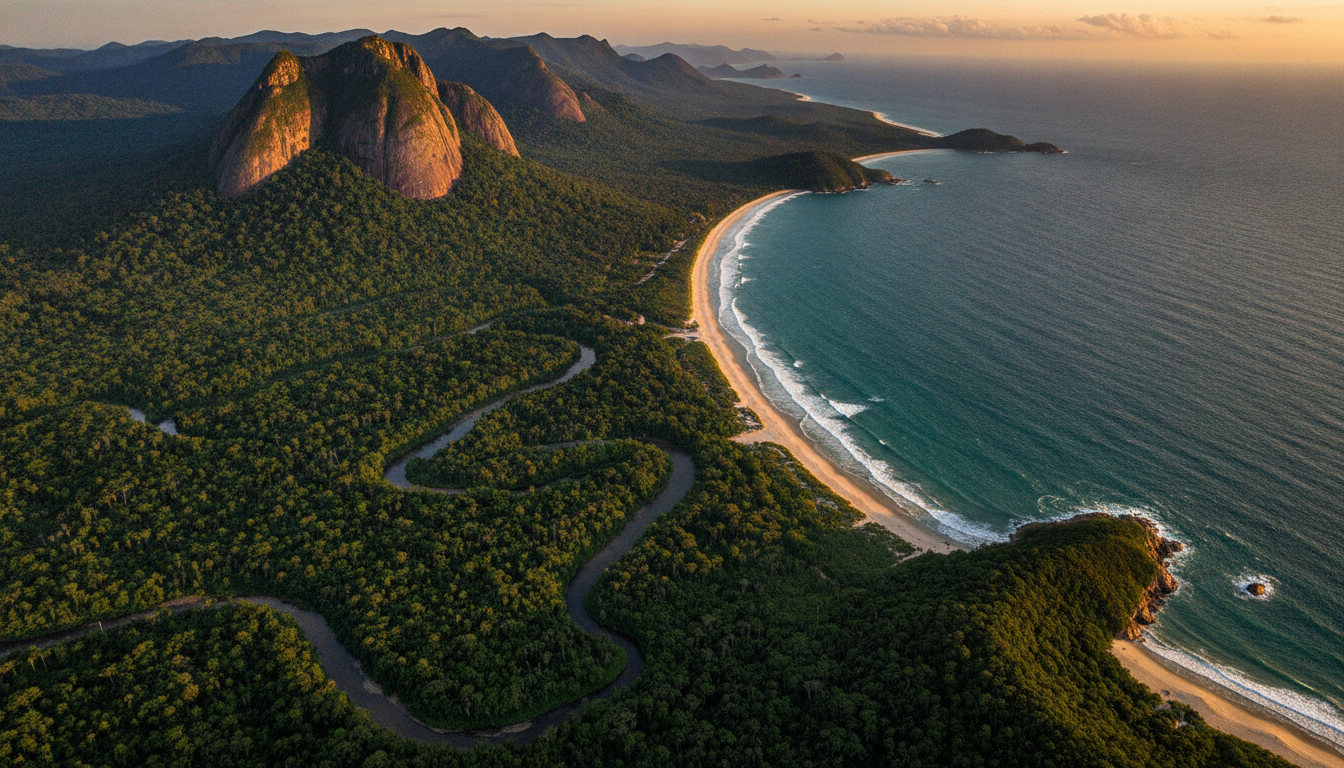
Brazil is not just football, carnival and tranquil beaches. It is also a country that offers some of the most intense and memorable experiences for those seeking extreme sports with growing structure and safety. From north to south, from sea to mountains, from dunes to rivers, there is always a new challenge awaiting those who have the courage to take the first step.
The best way to make the most of all this is to prepare well, choose trusted partners and keep an open mind. After all, real adventure is not just about adrenaline — it is about discovery, overcoming and the unique feeling that the world is bigger and more beautiful than it seemed before. And that is a feeling that is well worth seeking — perhaps with that necessary break in routine that makes all the difference in the energy for what comes next.


