
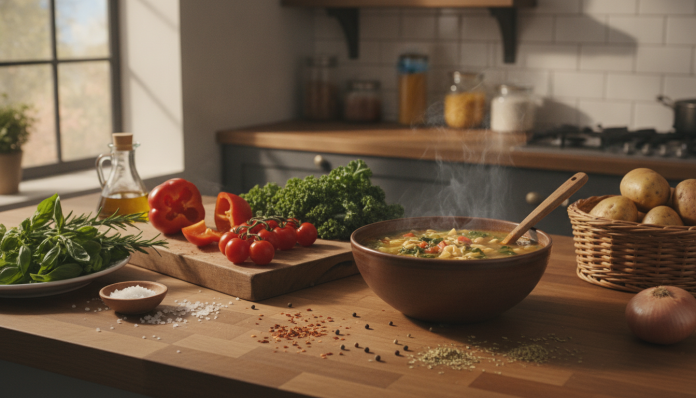
Who hasn’t come home after a long day, looked at the fridge, and thought: “I don’t have time or energy to cook anything”? This moment is more common than you’d think — and it usually ends in delivery, snacks, or whatever appears first. The good news is that practical cooking doesn’t require chef talent or hours in front of the stove. With a few simple techniques and strategic ingredients, you can get good, nutritious food on the table in less time than waiting for your order to arrive.
Everyday cooking doesn’t need to be sophisticated. It needs to be functional. This means recipes that use few ingredients, take advantage of what’s already in the pantry, and can be adapted based on what’s left in the fridge. This type of cooking — practical, economical, and tasty — is what most people really need in their daily lives, but rarely learn in an organized way.
In this article, we’ve gathered tips, techniques, and accessible recipes to transform your relationship with cooking without turning your routine into another task. Get your apron ready (or not — many of these recipes don’t even need one).
Why cooking at home is still worth it
Much is said about the cost of delivery and restaurants, but the central point isn’t just financial. Cooking at home gives you control over what goes into your food: the amount of salt, the type of oil, the presence or absence of additives. This has a direct impact on everyday eating.
From a practical standpoint, preparing meals at home also tends to generate less waste, since the cook decides portions and uses ingredients in a planned way. With minimal organization, it’s possible to save time throughout the week — not the opposite, as many people imagine.
The idea isn’t to abandon restaurants or delivery. It’s to have simple recipes up your sleeve that work on the busiest days, leaving outings for when they’re a choice, not a necessity.
The secret lies in pantry organization
Before talking about recipes, it’s worth understanding the foundation of everything: having the right ingredients available. A well-organized pantry eliminates the main obstacle to cooking on a daily basis — the lack of ingredients at the right time.
Essential items to always have at home
- Grains and carbohydrates: rice, pasta, lentils, canned chickpeas, beans
- Versatile proteins: eggs, canned tuna, sardines, frozen chicken, sausage
- Long-lasting vegetables: onion, garlic, carrot, potato, tomato
- Basic seasonings: salt, pepper, garlic powder, paprika, bay leaf, oregano, cumin
- Good fats: olive oil, sunflower oil
- Preserves and ready-made sauces: tomato extract, soy sauce, coconut milk
With these items at home, it’s possible to improvise dozens of meals without needing an elaborate shopping list. The idea is to set up a base that works as a wildcard.
Techniques that save time without sacrificing flavor
Cooking quickly isn’t carelessness — it’s technique. A few simple practices significantly reduce prep time.
Mise en place: the secret of professional chefs
The French term mise en place means “everything in its place”. Before turning on the stove, separate and chop all the ingredients you’ll use. It seems like a small detail, but it prevents the chaos of looking for garlic while the onion burns in the pan. With everything ready on the counter, cooking flows without interruptions.
Batch cooking
Set aside a time during the week — usually Sunday — to cook large quantities of grains, meats, and vegetables. Rice, beans, shredded chicken, and cooked carrots, for example, keep well in the fridge for three to four days. With these components ready, putting together a meal during the week becomes a matter of minutes.
Pressure cooker and air fryer as allies
The pressure cooker drastically reduces cooking time for legumes and meats. Beans that would take 40 minutes on regular heat are ready in about 15 minutes under pressure. The air fryer has gained popularity for cooking with less oil and in less time than a conventional oven — chicken, vegetables, and even eggs are ready in 15 to 20 minutes.
Quick recipes that actually work
Below are some simple recipes with real prep time — that is, from start to finish, without romanticizing.
Garlic and oil pasta with tuna (20 minutes)
A classic that rarely disappoints.
- Cook the pasta according to package directions (average 8 to 10 minutes in salted water).
- Meanwhile, sauté 3 sliced garlic cloves in olive oil over low heat until lightly golden.
- Add one can of drained tuna to the garlic. Mix well.
- Drain the pasta and mix it into the sauce directly in the pan.
- Finish with black pepper, chopped parsley, and a drizzle of raw olive oil.
Why it works: few ingredients, short time, satisfying result. Can be adapted with sardines, mushrooms, or vegetables.
Microwave stuffed omelet (5 minutes)
For the busiest days of all.
- Beat 2 eggs in a container with a pinch of salt.
- Add your preferred filling: grated cheese, chopped ham, tomato, spinach.
- Pour into a greased deep plate with olive oil or butter.
- Microwave for 2 minutes on high power.
- Check the consistency — if still liquid in the center, add 30 more seconds.
Tip: egg in the microwave may seem strange at first, but the result is a firm, flavorful omelet without a dirty frying pan.
Single-pot rice with vegetables and sausage (30 minutes)
This dish is a complete meal in one pot — which also means less dishes.
- Sauté slices of sausage in a deep pan until lightly golden.
- Add chopped onion and garlic. Sauté for 2 minutes.
- Add diced carrots and bell pepper. Stir.
- Add 2 cups of washed raw rice. Stir well to incorporate flavors.
- Add 4 cups of hot water, salt to taste, and bay leaf.
- Cover and cook on medium-low heat for about 20 minutes or until water dries up.
Variations: swap the sausage for diced chicken, shrimp, or just vegetables for a vegetarian version.
Quick lentil soup (25 minutes)
Lentils have the advantage of not needing to soak — unlike beans and chickpeas.
- Sauté garlic and onion in olive oil.
- Add 1 cup of washed red lentils, 1 diced carrot, and 1 chopped tomato.
- Cover with 4 cups of water or vegetable broth.
- Season with cumin, salt, and pepper.
- Cook on medium heat for 20 minutes, until lentils dissolve and create a creamy texture.
- Finish with fresh lemon juice and olive oil.
Using leftovers intelligently
One of the biggest sources of waste in home kitchens is leftovers that are forgotten in the fridge until they’re no good anymore. Transforming leftovers into new meals is a simple skill that saves money and time.
- Yesterday’s rice becomes fried rice with egg and vegetables in 10 minutes in a pan.
- Leftover cooked chicken transforms into tapioca filling, wraps, or quick pie.
- Day-old bread can become sweet French toast or salad croutons.
- Cooked vegetables easily go into soups, omelets, or stir-fries.
The logic is simple: when planning your weekly menu, already think about how ingredients from one meal can appear in the next. This reduces the number of items you buy and guarantees variety without extra effort.
Practical eating and health: what’s worth considering
Cooking at home tends to result in meals with less sodium, less saturated fat, and fewer ultra-processed products than ready-made options. This doesn’t mean that every home-cooked meal is automatically healthy — it depends on the ingredients and techniques used.
Important: the tips in this article are general and informational in nature. People with specific health conditions, dietary restrictions, or particular nutritional needs should seek guidance from a nutritionist or doctor. Each case is individual, and balanced eating needs to consider each person’s specific needs.
In any case, the simple act of cooking more at home — even with simple recipes — is already a concrete step toward a more conscious routine. And since practicing good daily habits impacts the body in surprising ways, taking care of what you eat is part of broader health care.
Conclusion: the kitchen as an ally, not a task
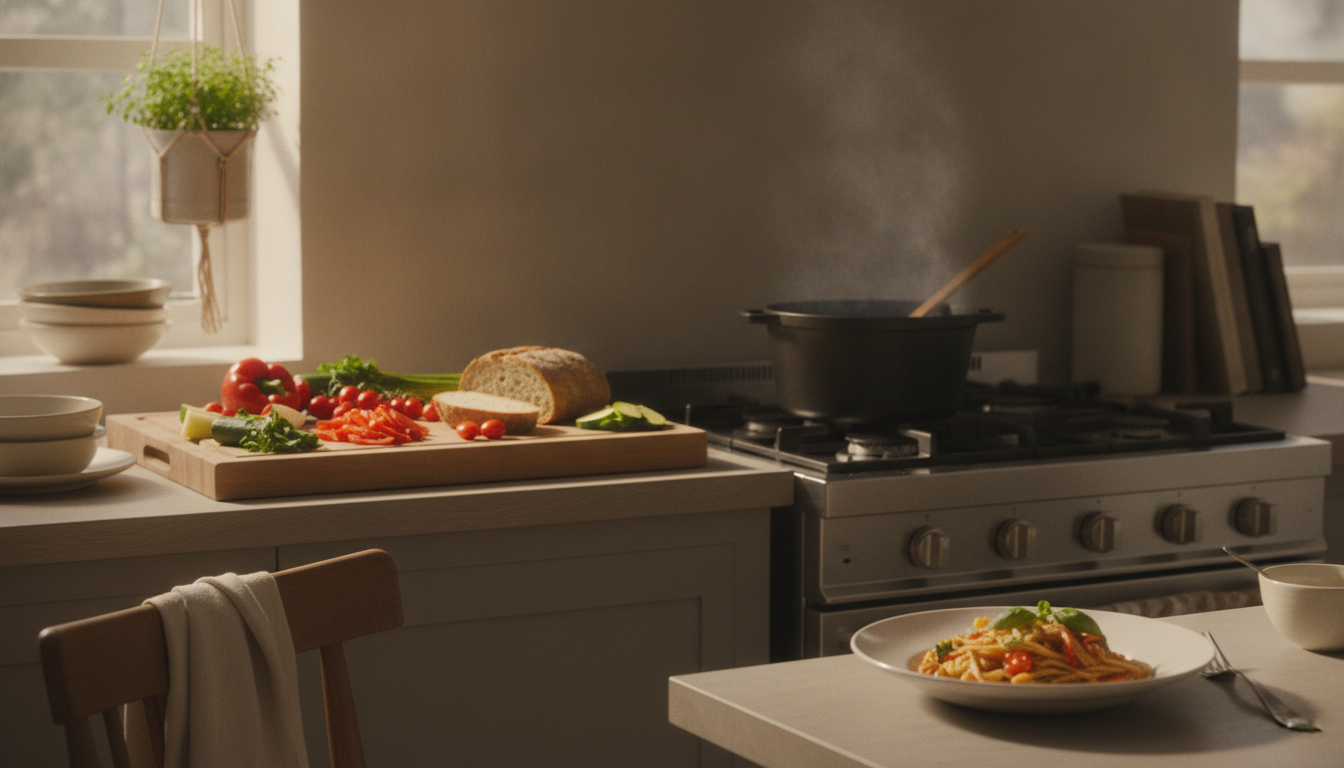
Cooking well on a daily basis doesn’t require free hours, rare ingredients, or advanced technical skill. It requires basic organization, a few simple techniques, and the willingness to experiment. With a well-stocked pantry, versatile ingredients, and recipes that actually work, the kitchen stops being an obstacle and becomes a space of autonomy — and even pleasure.
The goal isn’t culinary perfection. It’s having delicious, practical, and accessible meals on the table without costing time or energy you don’t have. Start with one recipe per week. After a few weeks, your repertoire naturally grows — and your dependence on delivery decreases proportionally.
The best recipe, in the end, is the one you’re actually going to make.


