
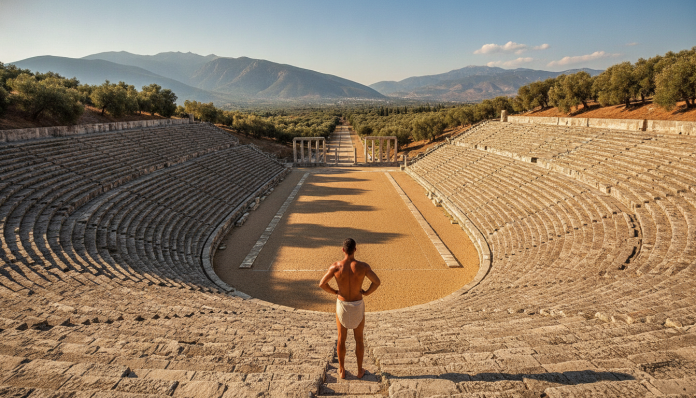
More than 2,700 years ago, in the heart of Ancient Greece, athletes from different city-states set aside their wars and rivalries to compete in peace for a few days. This sacred truce — called ekecheiria — already said much about the power of the Olympic Games: their ability to bring different peoples together around a common ideal. What began as a religious festival in honor of Zeus would become, millennia later, the greatest sporting event on the planet.
The trajectory of the Olympic Games is one of humanity’s most fascinating stories. It spans centuries of glory in Antiquity, passes through a long silence of more than a thousand years, is reborn in the late nineteenth century with a modern vision of peace and brotherhood, and reaches the present day as a phenomenon that mobilizes billions of people around the world. Understanding this history is also understanding much of the history of Western civilization itself.
In this article, you’ll learn about the origins of the Olympic Games, how they evolved over the centuries, what the most significant moments were, and how this event continues to be relevant — and sometimes controversial — in the twenty-first century.
The Origin in Ancient Greece
The first historical records of the Olympic Games date to 776 B.C., when they were held in Olympia, a city in the northwestern Peloponnese, in Greece. However, many historians believe that similar competitions already took place at the site long before that, perhaps since the eleventh century B.C.
Olympia was no ordinary city: it was a religious sanctuary dedicated to Zeus, the supreme god of the Greek pantheon. The games were held every four years — a period that the Greeks called an Olympiad — and served both as a religious celebration and as a demonstration of physical excellence. Winning was considered a divine blessing.
Who could participate?
The rules of participation were quite restrictive by today’s standards:
- Only free men of Greek origin could compete.
- Women were prohibited from participating and, in some periods, even from attending.
- Slaves and foreigners (called barbarians) had no right to compete.
- Athletes competed naked — the word gymnasium comes from the Greek gymnós, which means “naked.”
The events included foot races (such as the stadium, approximately 192 meters), wrestling, pentathlon (long jump, javelin throw, discus throw, running and wrestling), boxing, chariot racing and other disciplines. The winner received a crown of olive branches, a symbol of glory and honor — there were no gold, silver or bronze medals as we know them today.
The End of the Ancient Games
For centuries, the Olympic Games withstood wars, invasions and political changes. But the advance of the Roman Empire and, later, the rise of Christianity as the official religion of the empire put Greek pagan traditions at risk.
In 393 A.D., the Roman emperor Theodosius I decreed the end of the games, forbidding pagan cults throughout the empire. With this, the Ancient Olympic Games ended their trajectory of more than a millennium. The sanctuary of Olympia was gradually abandoned, damaged by earthquakes and buried by sediment over the following centuries.
For more than 1,500 years, there were no Olympic Games. It would take until the late nineteenth century for an idealistic Frenchman to change that reality.
The Renaissance: The Modern Games
The person responsible for the resurrection of the Olympic Games was Baron Pierre de Coubertin, a French educator and pedagogue who believed in the power of sport to promote peace, friendship and human development. Inspired by archaeological excavations in Olympia — which had been resumed from 1875 by German archaeologist Ernst Curtius — and by sporting events held in Greece throughout the nineteenth century, Coubertin proposed the creation of a modern international competition.
In 1894, during a congress held at the Sorbonne University in Paris, the International Olympic Committee (IOC) was founded. Two years later, in 1896, Athens hosted the first Olympic Games of the Modern Era. 14 countries participated with approximately 241 athletes — all men.
The symbols we know today
Many of the elements we associate with the Olympic Games were created or consolidated in the following decades:
- The five Olympic rings: created by Coubertin in 1913, they represent the five inhabited continents united by the Olympic movement.
- The Olympic torch: the torch relay was introduced at the Berlin Games in 1936.
- The Olympic motto: Citius, Altius, Fortius (in Latin, “Faster, Higher, Stronger”) was officially adopted in 1894. In 2021, the word Communiter (“Together”) was added.
- The Olympic flag: raised for the first time at the Antwerp Games in 1920.
Expansion and Great Moments of the Twentieth Century
Throughout the twentieth century, the Olympic Games grew exponentially in size, reach and significance. But they were also the stage for tensions that reflected conflicts in the world beyond.
Women in the Games
Women were admitted for the first time at the Paris Games in 1900, although in very small numbers and only in some events, such as tennis and golf. Female participation grew progressively over the decades, and at the London 2012 Games it was the first time all participating countries sent female athletes.
Boycotts and politics
The Olympic Games also suffered significant political interference:
- 1936 – Berlin: the games were used by Adolf Hitler’s Nazi regime as an ideological showcase, but African-American athlete Jesse Owens won four gold medals, defying the theory of Aryan supremacy.
- 1972 – Munich: the terrorist attack by the Black September group killed 11 members of the Israeli delegation, in one of the most tragic episodes in Olympic history.
- 1980 and 1984: mutual boycotts between Western bloc countries (led by the USA) and the Soviet bloc marked the Moscow and Los Angeles editions, respectively.
Cancelled editions
Three editions of the Olympic Games were cancelled due to world wars: 1916 (Berlin), 1940 (Tokyo/Helsinki) and 1944 (London).
The Paralympic Games and Inclusion
A fundamental chapter in modern Olympic history is the emergence of the Paralympic Games. Started in 1960 in Rome as a competition for athletes with physical disabilities, the Paralympics grew to become the world’s second largest multi-sport event.
Today, the Paralympic Games are held always after the Olympic Games, in the same host city, and follow the same ideals of excellence, determination and perseverance. The Paralympic movement has significantly broadened the concept of athlete and human capacity.
Brazil in Olympic History
Brazil made its Olympic Games debut in 1920 at the Antwerp edition, and has since built a sporting trajectory that culminated in hosting the 2016 Games in Rio de Janeiro — the first edition held in South America.
Over the decades, Brazilian athletes have won medals in sports such as volleyball, judo, athletics, swimming, football and others. To learn more about the athletes who left their mark on sporting history, check out our article on Brazilian athletes who made sporting history.
The Games in the Twenty-First Century: Challenges and Perspectives
The most recent editions of the Olympic Games have brought new challenges and debates:
- Sustainability: the high cost of hosting the games and the environmental impact of construction have been constant targets of criticism.
- New sports: sports such as skateboarding, surfing, sport climbing and breaking were included in the most recent editions, reflecting an attempt to rejuvenate the event and attract new audiences.
- Doping: the fight against the use of banned substances continues to be one of the great challenges of the Olympic movement.
- COVID-19: the Tokyo Games, held in 2021 (after being postponed from 2020), took place without the presence of spectators — an unprecedented situation in the modern history of the games.
- Paris 2024: the edition held in the French capital in 2024 celebrated 100 years since Paris had last hosted the games (1924), with an opening ceremony held along the Seine River.
The next Summer Olympic Games are scheduled for Los Angeles in 2028, and the 2026 Winter Games will be held in Milan-Cortina, Italy.
Conclusion
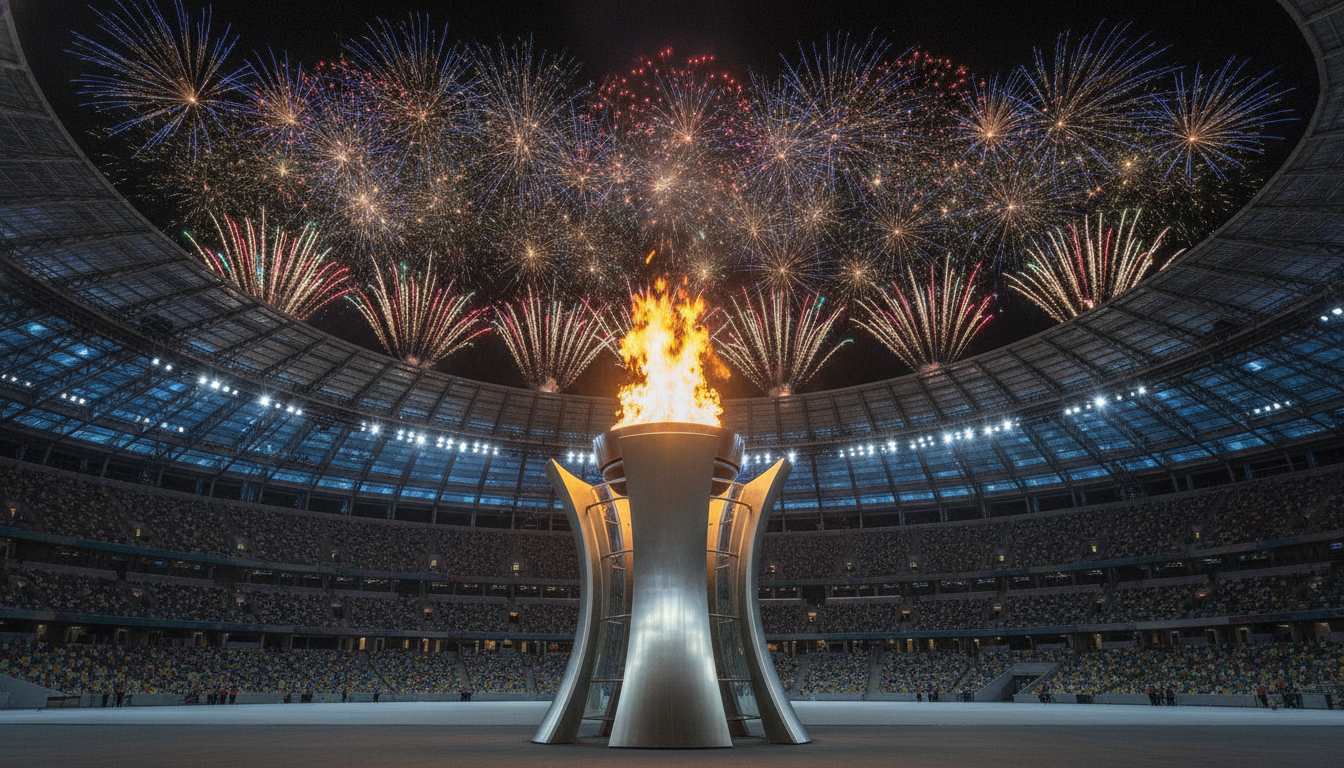
From Ancient Greece to the twenty-first century, the Olympic Games have traveled an extraordinary path. They were born as a religious ritual, survived empires, were extinguished and reborn thanks to the dream of a French educator, and today mobilize the entire planet every four years.
More than a sporting competition, the Games represent an ideal: that different nations can meet in peace, that the human body can always be pushed beyond its limits, and that sport has the power to build bridges between cultures. Of course, throughout history, that ideal was not always achieved — politics, exclusion and tragedies were also part of the Olympic narrative.
But it is precisely this complexity that makes the history of the Olympic Games so rich and so human. They are, at the same time, a mirror of the world as it is and a projection of the world as we would like it to be.


