
Understand Pix and Protect Your Money When Using It
In just a few years, Pix has radically transformed how Brazilians handle money in their daily lives. Launched by Brazil’s Central Bank in November 2020, the instant payment system arrived promising simplicity, speed, and free transactions for individuals — and it delivered on that promise. Today, in 2026, it has already surpassed other traditional payment methods in transaction volume and become an indispensable part of the routine for those paying bills, splitting lunch with friends, or shopping online.
But along with popularity came risks. Scammers specialized in fraud quickly adapted to the new technology and developed increasingly sophisticated schemes to deceive inattentive users. The good news is that, with knowledge and attention, it’s possible to use Pix securely and take advantage of everything it offers. This article explains how the system works, what the main dangers are, and most importantly, what you can do to protect your money.
Understanding the tool is the first step to using it well. After all, as the saying goes, there’s no bad technology — there’s just technology poorly understood. So let’s start from the beginning.
What is Pix and how does it work
Pix is an instant payment system created and regulated by the Central Bank of Brazil (Bacen). Unlike TED or DOC — which could take hours or even a business day to complete — Pix settles the transfer in up to 10 seconds, at any time of day, including weekends and holidays.
The operation is simple: instead of providing the recipient’s bank branch, account, and bank details, the user uses a Pix key, which can be:
- CPF or CNPJ
- Mobile phone number
- Email address
- Random key (a code automatically generated by the system)
These keys are registered in the DICT (Directory of Transactional Account Identifiers), a database managed by Bacen that associates each key with a bank account. When you send money via Pix, the system consults this directory, identifies the recipient’s account, and performs the transfer automatically.
The service is free for individuals at virtually all banks and fintechs. For businesses, financial institutions may charge fees, but market competition generally keeps rates low.
Pix modalities you need to know
The system has evolved since its launch and now offers different modalities beyond simple transfers. Knowing them helps both use the service more efficiently and identify possible fraud.
Pix Copy and Paste and QR Code
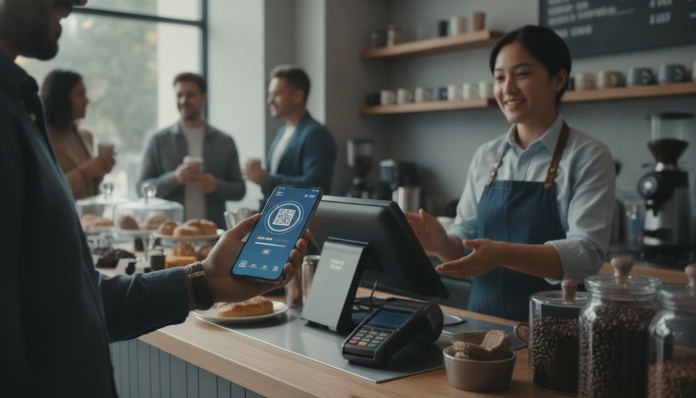
Widely used in commerce, the Pix QR Code is generated by the store or service provider and read by the mobile camera. Pix Copy and Paste is the text version of that same code, useful when the camera doesn’t work well or payment is made in a digital environment.
Scheduled Pix
Allows you to schedule a transfer for a future date, working similarly to scheduling bills.
Pix in batches
Mainly used by companies to make multiple payments at once, such as payroll.
Guaranteed Pix and Installment Pix
Newer features, still expanding in the market, that allow merchants to offer installment payments to customers using Pix as the basis. Conditions vary according to the financial institution.
The main scams involving Pix
As the system grew, so did criminals’ creativity. Knowing the most common scams is the best way to avoid them.
Fake bank employee scam The scammer calls pretending to be an employee of your financial institution, claiming there’s a problem with your account or a suspicious transaction. They ask you to make a Pix to “cancel” the operation or “protect” your funds. No legitimate bank asks for this.
Fake QR Code scam At physical establishments or online ads, the criminal replaces the original QR Code with a fake one that directs payment to their account. Before scanning any code, verify the recipient’s identity that appears in the app.
Social engineering via WhatsApp The scammer takes control of the victim’s phone number (or creates a similar fake number) and contacts friends and family asking for money via Pix in situations of supposed financial distress. Always be suspicious of urgent money requests via message, even if they seem to come from someone you know.
Fake Pix receipt In private sales, the scammer sends a fake receipt, edited in a mobile app, claiming they’ve already made the payment. Never hand over a product or provide a service before verifying the money in your account, and don’t rely solely on the receipt image.
Phishing via fake links Emails or messages with links imitating the bank’s website trick users into entering passwords and login credentials. These details are used to access the account and make unauthorized transfers.
How to protect yourself: practical tips
Security when using Pix starts with simple habits. Here’s what to do:
- Always confirm the recipient’s details before confirming the transfer. The app shows the full name and financial institution of the person. If it doesn’t match what you expected, cancel.
- Never make a Pix under pressure. Scammers create artificial urgency to prevent you from thinking clearly.
- Be suspicious of promotions that require Pix in advance. If it sounds too good to be true, it probably is a scam.
- Activate Pix nighttime limits. Since 2021, Bacen allows users to set lower limits for transactions made between 8 PM and 6 AM, reducing losses in case of phone theft.
- Never provide passwords or access codes by phone, email, or message, regardless of who claims to be asking.
- Always use your bank’s official app, downloaded directly from official stores (App Store or Google Play). Avoid accessing banking services on public Wi-Fi networks.
- Register your Pix keys only in your financial institution’s app, never on third-party websites.
- Monitor your transactions regularly. Any unusual activity should be reported to your bank immediately.
What to do if you fall for a scam
Even with care, accidents happen. If you realize you’ve been a victim of fraud, act quickly:
- Contact your bank immediately and report what happened. Institutions have a deadline set by Bacen to analyze fraud cases and, in some scenarios, can activate the Special Return Mechanism (MED), which attempts to recover funds transferred to fraudulent accounts.
- File a police report at a station or online (in many states, the report can be filed online).
- Keep all receipts, conversation screenshots, and any evidence of fraud. They will be essential for the investigation.
- Inform the Central Bank through the official website (bcb.gov.br) or the Bacen app, reporting the Pix key used in the scam so it can be investigated.
It’s worth noting that the MED does not guarantee refunds in all cases — it depends on whether the fraudulent account still has available balance. That’s why prevention remains the best strategy.
Limits and controls: a powerful tool in your favor
The Central Bank requires all financial institutions to offer customers the ability to adjust transaction limits by amount and period, for both daytime and nighttime hours. Using these controls is one of the most effective ways to reduce the impact of potential fraud.
If you use Pix mainly for small daily transactions, it makes sense to keep lower limits and increase them when you need to make a larger payment. Most banks allow this adjustment directly in the app, but it’s common for limit increases to have a waiting period of up to 24 hours — precisely to make it harder for criminals to act.
Also, activate your bank’s notification alerts. Receiving a notice for each transaction allows you to quickly identify any unauthorized activity.
Just as organizing your home requires method and attention to detail — as this guide on organized and clean home: practical tips for everyday life explains — organizing your digital financial life also depends on small consistent habits.
Conclusion: technology in favor of those who understand it
Pix is undoubtedly one of the most successful innovations in the Brazilian financial system. It democratized access to fast, cost-free payments, benefiting everyone from informal workers to large companies. In 2026, it’s hard to imagine Brazilians’ financial daily lives without it.
But every powerful tool requires responsibility. Scams exist not because the system is flawed, but because the most vulnerable link in any technology is the human factor. Knowing how Pix works, identifying the main risks, and adopting simple security habits are actions any user can — and should — take.
Protecting your money doesn’t require being a technology expert. It requires attention, healthy skepticism toward situations of pressure, and the habit of verifying information before confirming any transaction. With that in mind, Pix stops being a concern and becomes what it should always have been: a convenience in your daily life.