
Why did Brazil become a paradise for extreme sports?
Brazil has always been synonymous with exuberant nature — kilometer-long beaches, mountains covered with Atlantic Rainforest, roaring rivers in the Amazon, and plateaus that seem to touch the sky. What perhaps not everyone knows is that this same nature has transformed the country into one of the most sought-after destinations in the world for those seeking emotion, self-challenge, and that dose of adrenaline that only extreme sports can deliver.
From Florianópolis to Fernando de Noronha, from Morro da Igreja in Santa Catarina to the waterfalls of Chapada dos Veadeiros, Brazil hosts an impressive variety of radical sports practiced by both beginners and elite-level athletes. Paragliding, big wave surfing, rappelling, kitesurfing, diving, mountain biking, and hang gliding are just some of the sports that have found an almost perfect environment here to evolve.
In this article, you’ll learn about the main extreme sports practiced in Brazil, the best destinations for each one, what you need to start safely, and why this adventure culture continues to grow — from the coast to the interior mountains.
Surfing and the waves that shaped a culture
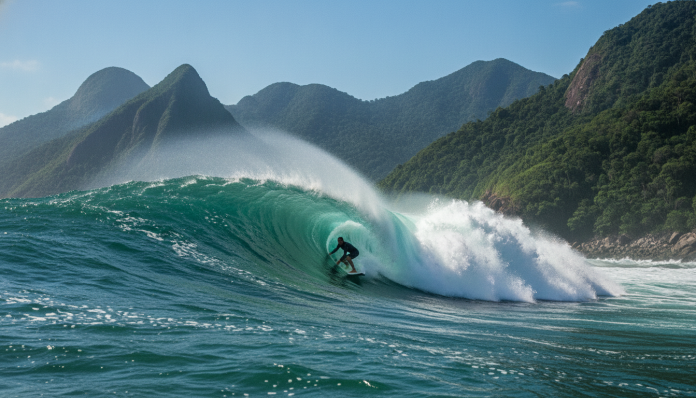
When talking about extreme sports in Brazil, surfing is almost inevitable. The country has more than 7,400 kilometers of coastline, with waves ranging from gentle and ideal for beginners to authentic walls of water that challenge the world’s best surfers.
Itacoatiara beach in Niterói (RJ) is famous for tubular and powerful waves that attract experienced surfers. Fernando de Noronha in Pernambuco combines scenic beauty with quality waves at Praia da Cacimba do Padre — a location that has hosted high-level international competitions. Maresias, on the north coast of São Paulo, is another national reference point.
Surfing was included in the Tokyo 2020 Olympic Games (held in 2021) and returned to Paris 2024, which further increased the interest of young Brazilians in the sport. Brazil has a solid tradition in training elite surfers, and the sport is now regulated by the Brazilian Surfing Confederation (CBS), which organizes national circuits and supports athletes in international competitions.
Paragliding and hang gliding: flying over Brazil
For those dreaming of seeing Brazil from above, paragliding and hang gliding are the natural choices. And the country has locations that rank among the most beautiful in the world for practicing these sports.
Governador Valadares in Minas Gerais is considered the world capital of free flight. The city sits at the foot of Pico da Ibituruna, and the region’s thermal conditions allow for long, stable flights that attract practitioners from around the world. The city has hosted stages of international paragliding competitions over the years.
Other notable destinations:
- Serra da Canastra (MG): cerrado landscapes and good wind conditions
- Praia Grande (SC): combination of sea and mountain for stunning flights
- Monte Verde (MG): popular for tandem flights (with instructor), ideal for beginners
- São Conrado (RJ): historic hang gliding ramp, with landing on the beach
Tandem flying, also called tandem, is the entry point for those wanting to experience the thrill without needing a license. To fly solo, you must take a course recognized by the Brazilian Free Flight Association (ABVL) and obtain a pilot’s license.
From waterfalls to sea: diving and rafting
Diving in Brazilian waters
Brazil offers diving in completely distinct environments. On the coast, Fernando de Noronha is the most famous destination — with visibility up to 50 meters in some spots, turtles, dolphins, and lemon sharks coexisting with divers. The archipelago has been a UNESCO World Heritage Site since 2001 and has controlled access precisely to preserve this ecosystem.
In the interior of the country, Bonito (MS) is another absolute highlight. The crystal-clear waters of the region’s rivers, such as Rio da Prata and Sucuri, allow for so-called drifting — a kind of snorkeling in gentle currents, with schools of colorful fish around. The municipality strictly controls the number of visitors per day, ensuring the sustainability of adventure tourism.
Rafting on Brazilian rivers
Rafting — descent through rapids in inflatable boats — has rivers in Brazil that rank among the most challenging in the world. Rio Pedreiras in Brotas (SP) transformed the São Paulo city into the national capital of adventure tourism. The Rio Itajaí-Açu in Santa Catarina is the stage for international-level competitions.
Jalapão State Park in Tocantins has established itself in recent years as a destination for radical trails, rappelling in waterfalls, and contact with practically untouched nature.
Mountain biking and trails: cycling at the limit
Brazil has terrain that seems made for mountain biking (MTB). With mountains, dirt roads, and trails through varied biomes, the country trains high-level cyclists and offers routes for all types of adventurers.
Campos do Jordão (SP) and the Serra da Mantiqueira region have well-mapped trails and MTB infrastructure. In Minas Gerais, Serra do Cipó combines waterfalls, rocky outcrops, and well-marked trails. In the South, Gramado and Canela offer cycling options with breathtaking views.
For those wanting more wild adventure, Where to Travel Alone in Brazil: The Best Destinations can be a good starting point for planning a solo trip in search of lesser-known trails.
Climbing and rappelling: the vertical as a challenge
Climbing gained enormous popularity in Brazil over the past few decades, and the sport also debuted at the Tokyo 2020 Olympic Games, which helped further project the sport among the Brazilian public.
The country has extraordinary rock formations for the practice:
- Pedra da Gávea and Pedra Bonita (RJ): Rio icons that challenge experienced climbers
- Pedra Azul (ES): natural granite monument with routes for different levels
- Serra do Cipó (MG): quartzite walls with well-established routes
- Urubici (SC): region with climbing in an altitude environment
Rappelling — descent by ropes down vertical walls or waterfalls — is the more accessible version of vertical climbing for beginners. At locations like Cachoeira do Tabuleiro (MG), one of Brazil’s largest waterfalls at approximately 273 meters, rappelling is offered by accredited operators.
Important note: climbing and rappelling require appropriate equipment and supervision from certified professionals. Never practice these sports without guidance from qualified guides or instructors.
How to start safely: a practical guide
If you want to enter the world of extreme sports, enthusiasm is great — but safety comes before any emotion. See a step-by-step guide to start the right way:
- Choose the sport according to your physical and psychological profile. Some require cardiovascular conditioning, others muscular strength. Consult a doctor before starting any high-impact activity.
- Research accredited operators and schools. Check if the company is registered with the Ministry of Tourism and if instructors have recognized certifications (such as ABVL for free flight or CBME for climbing).
- Never improvise equipment. Always use certified and inspected materials. Helmets, harnesses, ropes, and life jackets must be in perfect condition.
- Start with lower-risk versions. Tandem flight before solo, rappelling before climbing, short trails before long ones. Gradual progression prevents accidents and builds confidence.
- Inform yourself about weather conditions. Many extreme sports accidents occur due to weather oversight. Rain, strong winds, and high tides completely change the risk scenario.
- Tell someone about your route. Even in organized activities, it’s always good for someone you trust to know where you are and when you should return.
- Respect your body’s limits. Knowing when to stop is just as important as knowing when to advance.
> General information: this article provides informational guidance. Each person has specific physical and health conditions that should be individually evaluated by a healthcare professional before starting adventure sports.
Brazil on the world adventure map
The combination of biodiversity, variety of terrains, and favorable climate puts Brazil in a unique position in global adventure tourism. The country is a signatory to ISO 21101 standards, the international safety standard for adventure tourism activities, and the sector has grown with the professionalization of operators and infrastructure expansion in destinations like Brotas, Bonito, Chapada Diamantina, and Lençóis Maranhenses.
Setting clear goals before embarking on any adventure — whether learning to surf in six months or completing a three-day trail — makes all the difference in the result. If you want to better understand how to structure these personal goals, check out: Personal goals: how to set and really achieve them.
Conclusion: adventure is right there
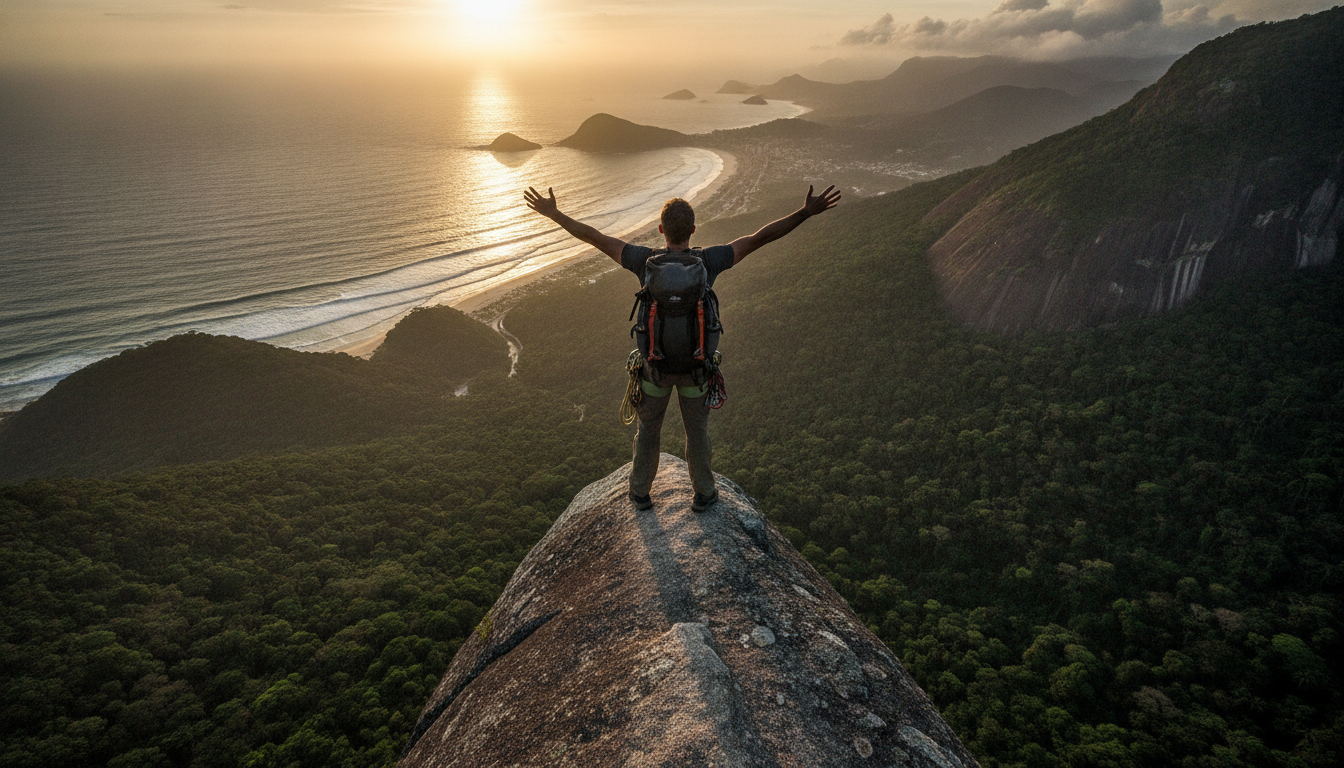
From the crystal-clear mirror waters of Bonito to the rapids of Brotas, from paragliding jumps in Governador Valadares to the waves of Fernando de Noronha, Brazil is a country that invites adventure in each biome, in each season of the year. Extreme sports are no longer the exclusive domain of professional athletes or adrenaline junkies — today, with planning, adequate equipment, and professional guidance, anyone can experience these moments.
The key is to respect the environment, your own limits, and safety standards. When these elements align, extreme sports cease to be just risk and become what they truly are: one of the most intense ways to connect with Brazil, with nature, and with yourself.