
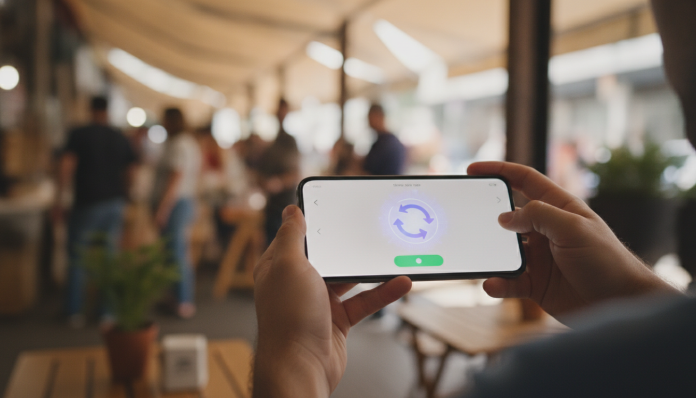
Imagine transferring money to a friend, paying a bill or receiving payment for a service in just seconds, anytime of day, even at three in the morning on a Sunday. It sounds like something from the future, but that’s exactly what Pix does since November 2020, when it was launched by Brazil’s Central Bank. In a short time, the instant payment system became part of the daily life of millions of Brazilians and profoundly changed the way the country deals with money.
More than a passing fad, Pix has established itself as a robust financial infrastructure. Traditional banks, fintechs, small merchants and individuals began to operate within this ecosystem. If you still have doubts about how it works, what its limits are and how to protect yourself from scams, this guide was made for you.
In the following sections, we’ll explain everything you need to know about Pix: its origins, how it works in practice, security tips and much more.
What is Pix, after all?
Pix is the instant payment system created and regulated by Brazil’s Central Bank (BCB). Unlike a regular transfer — such as TED or DOC, which follow banking hours and can take hours or even a business day — Pix processes transactions in up to 10 seconds, 24 hours a day, 7 days a week, including holidays and weekends.
The system works through Pix keys, which are unique identifiers registered by the user with their bank or financial institution. These keys can be:
- CPF or CNPJ
- Mobile phone number
- Email address
- Random key (a sequence generated automatically by the system, without connection to personal data)
In addition to keys, payments can be made via QR Code (static or dynamic) and, in some cases, via copy and paste of a long code generated by the financial institution.
Pix is free for individuals in most situations. For legal entities, fees vary according to each financial institution. Central Bank regulations prohibit charging fees from individuals for transfers and receipts made through Pix.
How to register a Pix key
Registering a Pix key is simple and takes less than five minutes. See the step-by-step:
- Access your bank or financial institution’s app where you have an account.
- Look for the “Pix” section in the main menu. Almost all banking apps have this option featured.
- Click on “My keys” or “Register key”.
- Choose the type of key you want to register: CPF, mobile phone, email or random key.
- Confirm your identity with your app password, biometrics or token sent via SMS.
- Wait for validation, which usually happens immediately, but can take a few minutes.
You can have up to 5 keys per account if you’re an individual, and up to 20 keys if you’re a legal entity. It’s possible to register the same key at only one financial institution at a time. If you want to move the key to another bank, you need to do the portability, which can also be done through the app itself.
How to send and receive a Pix
Performing a transaction is equally intuitive. To send money:
- Open your bank’s app.
- Select the option “Pix > Transfer” (or similar).
- Enter the recipient’s Pix key, scan the QR Code or use the copy and paste option.
- Check the recipient’s information displayed on the screen (name, bank, account type) before confirming.
- Enter the desired amount.
- Authenticate the transaction with password, biometrics or token.
- Done — the money reaches the recipient in seconds.
To receive a Pix, simply share one of your registered keys with whoever will pay you, or generate a QR Code through the app. There’s no need to install any Pix-specific app — everything happens within your own financial institution’s app.
Limits and restrictions
The Central Bank establishes rules on value limits to protect users. Financial institutions can set their own limits within these rules, and the user has the right to request adjustments.
There are two main types of limits:
- Daytime limit: for transactions carried out between 6am and 8pm.
- Nighttime limit: more restrictive, applied between 8pm and 6am, precisely to reduce risk in case of coercion or theft.
There’s also Pix by approximation, a more recent feature that allows payments on card machines without needing to open the app — similar to NFC already used on credit cards.
To increase your limits, you can make the request directly in the bank’s app, but there’s a waiting period of up to 24 hours before the new limit takes effect — a security measure to prevent fraud.
Pix scams: the most common ones and how to protect yourself
With the popularization of Pix, the number of fraud attempts has also grown. Knowing the most common scams is the best way to protect yourself.
The most frequent scams
- Fake bank center scam: the scammer calls pretending to be a bank employee, says there’s a suspicious transaction and asks you to make a Pix to “cancel” the operation. Banks never ask for Pix over the phone.
- Fake QR Code: the criminal replaces QR Codes in physical establishments with others that direct payment to fraudulent accounts. Always check the beneficiary’s name before confirming.
- Social engineering: messages via WhatsApp or SMS impersonating relatives, friends or companies asking for an urgent Pix. Be suspicious of urgency and call to confirm using the number you already know.
- Fake proof of payment scam: the scammer sends a forged screenshot or PDF of alleged Pix proof of payment. Always verify that the amount arrived in the account before releasing any product or service.
- Fake scheduled Pix: fraudsters claim to have made a Pix that “will be credited later”. Pix is instant — there is no future settlement.
Security best practices
- Never share your password, token or authentication code with anyone.
- Always verify the recipient’s full name and institution before confirming.
- Activate a reduced nighttime limit in your banking app — this measure can save your money in case of theft or coercion.
- Be suspicious of promotions that require an upfront Pix to unlock prizes or discounts.
- Keep your phone password-protected and two-factor authentication active.
- Use the random key when you don’t want to expose your CPF or mobile number publicly.
The Central Bank also provides the Special Refund Mechanism (MED), a resource that allows you to request a refund of amounts transferred in case of proven fraud. The request must be made through the bank’s own app, and the financial institution has a deadline to analyze and, if fraud is confirmed, activate the refund with the receiving institution.
News and evolution of Pix
Since its launch, Pix has undergone several updates. Among the features that were incorporated over time, the following stand out:
- Pix Installments: allows dividing payments into installments, expanding use in larger purchases.
- Automatic Pix: authorizes recurring charges, useful for paying subscriptions, water, electricity and other regular services, without having to make a new transaction for each due date.
- International Pix: the Central Bank has advanced discussions to allow transactions between Brazil and other countries using compatible payment systems.
- Pix by approximation: integration with NFC technology, facilitating payments on card machines in physical retail.
The ecosystem continues to expand, with the Central Bank regularly signaling new improvements to make the system even more secure and accessible.
Why Pix matters for financial inclusion
One of the less-commented — but extremely relevant — effects of Pix is its impact on financial inclusion. Before its arrival, bank transfers were less accessible to those who didn’t have an account at a traditional bank. With the arrival of fintechs and free digital accounts, combined with Pix at no cost for individuals, people who previously depended exclusively on cash were able to access safe and fast digital transactions.
Small entrepreneurs, freelance workers, fair vendors and informal service providers were especially benefited by the possibility of receiving instant payments without needing a card machine or corporate account.
If you’re planning to travel alone through Brazil, know that Pix is already widely accepted throughout the country — from major capitals to smaller cities — making the independent traveler’s life much more practical and secure than carrying large amounts of cash.
Conclusion
Pix has transformed Brazilians’ relationship with money quickly and profoundly. In just a few years, it went from novelty to necessity — present in the pockets, routines and businesses of millions of people. Free for individuals, instant anytime and integrated into the financial system regulated by the Central Bank, it represents one of the most successful digital infrastructures ever implemented in Brazil.
As with any powerful tool, however, knowledge is the best protection. Understanding how the system works, what the most common scams are and how to configure your limits correctly makes all the difference between a smooth experience and unnecessary loss.
Register your keys, adjust your nighttime limits, be suspicious of urgencies and always check the recipient’s name. With these simple precautions, Pix is indeed one of the most practical and secure resources available in the palm of your hand.