
Introduction
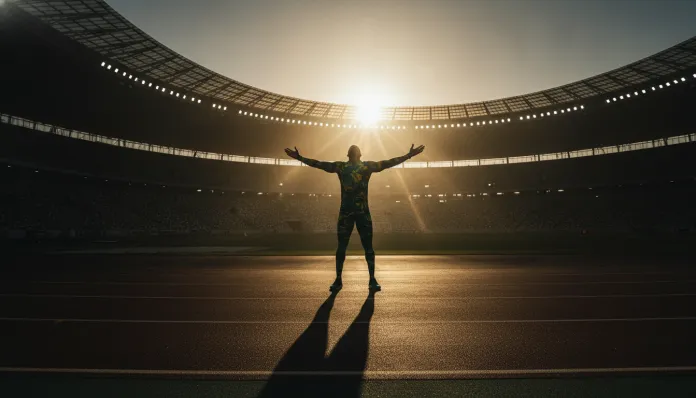
Brazil is a country that lives and breathes sport. From football fields to Olympic pools, from volleyball courts to athletics tracks, the Brazilian people have a visceral relationship with competition, overcoming challenges, and glory. It’s no wonder that, over the decades, the country has produced a gallery of athletes who not only won championships but changed the way the world sees certain sports.
Talking about Brazilian athletes who made history is, at the same time, a celebration and an exercise in collective memory. These are stories of people from humble origins who faced social barriers, overcame devastating injuries, and yet raised trophies, broke records, and planted the green and yellow flag at the top of the world. Each name on this list carries a narrative that goes far beyond the medals.
This article brings together some of the greatest icons of Brazilian sports of all time — figures whose stories continue to inspire generations, both inside and outside sports arenas. It’s not a definitive list, but a panorama of athletes whose legacies are undeniable and well-documented.
Pelé: The King Recognized Worldwide
No list about Brazilian sports could start with any other name. Edson Arantes do Nascimento, Pelé, is widely considered the greatest football player of all time. Born in 1940 in Três Corações, Minas Gerais, he debuted at Santos FC as a teenager and quickly caught the world’s attention with technical skills that seemed to defy the laws of physics.
With the Brazilian national team, Pelé won three World Cups (1958, 1962, and 1970), being the only player in history to achieve this feat. At 17 years old, he was instrumental in winning the title in Sweden in 1958 — becoming the youngest player to score goals in a World Cup final. Throughout his career, he accumulated over a thousand goals in official matches, a number that remains a historical reference in football.
Pelé passed away in December 2022, but his name continues to be synonymous with excellence. His trajectory transformed Brazil into a global football powerhouse and opened doors for countless generations of players around the planet.
Ayrton Senna: Speed, Genius, and an Immortal Legend
If Pelé is the king of football, Ayrton Senna is the supreme idol of Formula 1. Born in São Paulo in 1960, Senna made his debut in the highest category of motorsport in 1984 and quickly demonstrated extraordinary talent — especially in adverse conditions, such as wet tracks, where his superiority was even more evident.
Three-time Formula 1 World Champion (1988, 1990, and 1991) with the McLaren team, Senna was known for his intensity both on and off the track. His historic rivalry with French driver Alain Prost is one of the most studied chapters in motorsport history. Beyond victories, Senna collected 65 pole positions — the most favorable starting position in a race — and 41 wins throughout his career.
His tragic death in Imola, Italy, in May 1994, shocked the sports world. But Senna’s legacy lives on: his name is associated with discipline, spirituality, social commitment, and an almost artistic way of driving. The Ayrton Senna Institute, founded by his family, has already benefited millions of Brazilian children and youth through education.
Gustavo Borges and Swimming’s Brilliant Beginning
Brazilian swimming has a rich history, and few names contributed to it as much as Gustavo Borges. Born in São Paulo in 1972, he was one of the first Brazilian swimmers to compete on equal footing with the world’s swimming powers.
Borges participated in four Olympics — Barcelona (1992), Atlanta (1996), Sydney (2000), and Athens (2004) — winning numerous medals, including silver in the 100-meter freestyle in Atlanta. His presence in international competitions paved the way for a new generation of Brazilian swimmers and popularized swimming in a country historically dominated by football.
Hortência and Magic Paula: Queens of Women’s Basketball
Brazilian women’s basketball has a glorious history, and two names are absolutely unavoidable in this narrative: Hortência Marcari and Maria Paula Gonçalves da Silva, known as Magic Paula.
Hortência, born in 1959 in Jundiaí, São Paulo, is considered one of the greatest basketball players in history. Elected the world’s best player on several occasions in the 1980s and early 1990s, she led the Brazilian national team to impressive titles, including the world runner-up in 1994, in which she was the main protagonist with a historic performance against the United States. Her skill, determination, and charisma made her a symbol of Brazilian women’s sports.
Magic Paula, Hortência’s teammate on the national squad, also left an indelible mark. Together, the two formed one of the most iconic duos in Brazilian sports, inspiring generations of girls to play basketball throughout Brazil.
Daiane dos Santos: Brazil Soaring on the Gymnastics Mat
Few stories in Brazilian sports are as moving as that of Daiane dos Santos. Born in 1983 in Porto Alegre, from a humble family, Daiane found in artistic gymnastics both an escape and a passion. And she transformed that love into history.
In 2003, she became the first Western gymnast to win a gold medal at the world championship in floor exercise, a feat repeated in 2006. Her jumps, named “The Arabian” and “The dos Santos“, were incorporated into the International Federation of Gymnastics scoring code — an honor reserved for athletes who create unprecedented and technically complex moves.
Daiane represented Brazil at the Athens (2004) and Beijing (2008) Olympics, being one of the most charismatic gymnasts of her generation. Her trajectory proves that, with talent and determination, it’s possible to reach the top even when starting from a place full of obstacles.
Formiga and Marta: Pillars of Women’s Football
Brazilian women’s football has two names that transcend any discussion: Miraildes Maciel Mota, Formiga, and Marta Vieira da Silva.
Formiga, born in 1978 in Salvador, is one of the greatest defenders in the history of world women’s football. Her longevity is astounding: she participated in seven editions of the Olympic Games, from Atlanta 1996 to Tokyo 2020 (held in 2021 due to the pandemic), becoming a symbol of resilience and professionalism.
Marta, on the other hand, was born in 1986 in Dois Riachos, Alagoas, and is frequently cited as the greatest women’s football player of all time. Elected six times as FIFA’s best player in the world — an absolute record, even surpassing men’s records — she is the greatest goal scorer in World Cup history, considering both the men’s and women’s tournaments. Her goals, her leadership, and her active voice in defense of women’s football make Marta much more than an athlete: she is a cause.
César Cielo and Swimming’s Golden Generation
While Gustavo Borges opened the doors, César Cielo threw them wide open. Born in 1987 in Santa Bárbara d’Oeste, São Paulo, Cielo became the first Brazilian to win Olympic gold in swimming, at the Beijing 2008 Games, in the 50-meter freestyle.
More than that, in 2009, he set the world record for the 50-meter freestyle with a time of 20s91 — a mark that remains the official record for this event to this day, making Cielo the fastest swimmer in history in this race. His legacy transformed swimming into a high-prestige sport in Brazil and inspired a new generation of aquatic athletes.
What These Athletes Have in Common
Despite different sports and eras, these athletes share characteristics that made them legends:
- Overcoming humble origins: most came from difficult social contexts and used sports as a path to advancement
- Extreme dedication: all are known for rigorous training routines and total commitment to their sport
- Pioneering spirit: each of them was the first in something — whether a title, a technique, or a historic achievement
- Representativeness: they carried Brazil on their shoulders in decisive moments and made the entire country stop
- Lasting legacy: their names and stories continue to be reference points for athletes and fans decades later
Conclusion
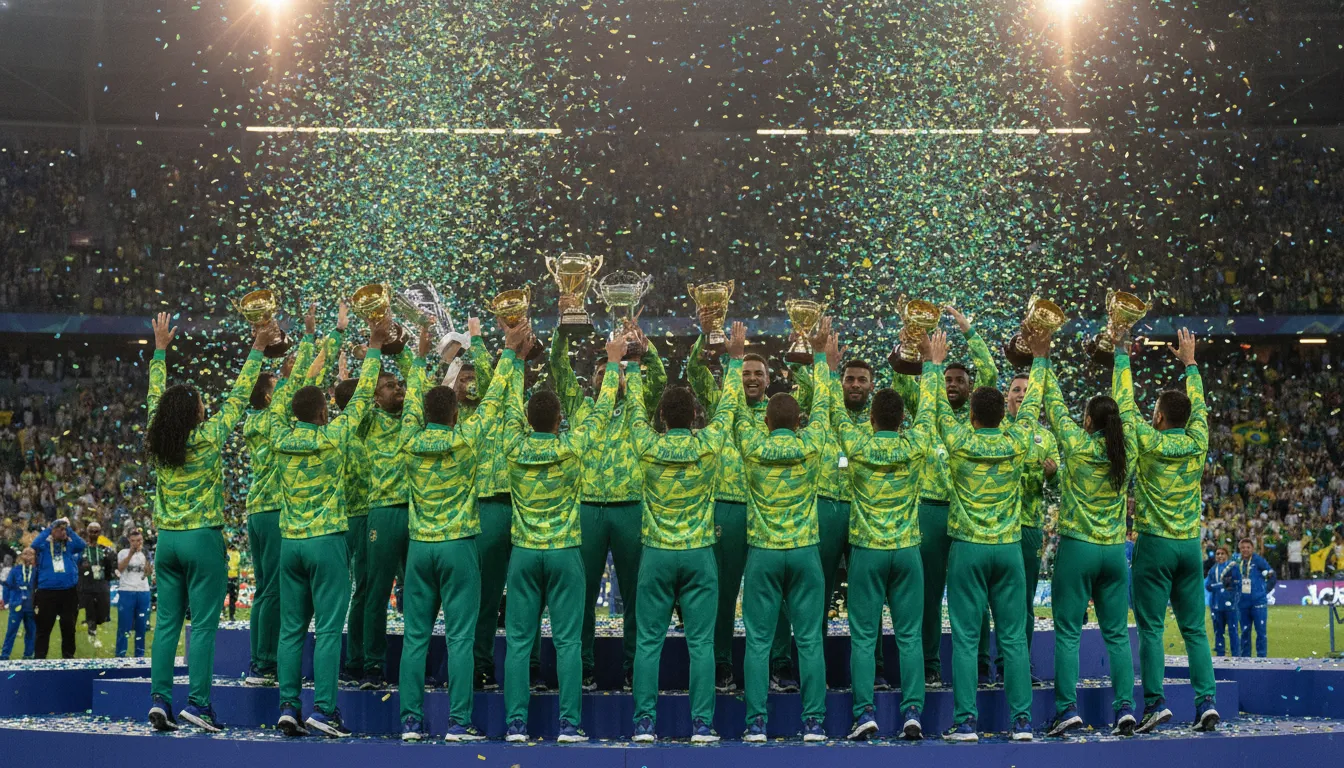
The history of Brazilian sports is, in large part, the history of extraordinary people who refused to accept limitations. Pelé, Senna, Marta, Daiane, Cielo — each of these names represents not only a sports achievement but a narrative of overcoming that resonates far beyond the arenas and tracks where they shined.
In 2026, with new athletes emerging and new chapters being written, it’s essential to look at this legacy with admiration and learning. Knowing these stories is a way of understanding Brazil, its determination, its creativity, and its unique ability to transform raw talent into art and excellence.
Sport, after all, is much more than competition. It’s identity. And Brazil has much to be proud of.
If you enjoy content about sports and curiosities, also check out our article on Basic Volleyball Rules Explained for Beginners — a sport in which Brazil also has a rich and glorious history to tell.