
When the “Strange” is Sacred: Traditions That Challenge Western Perspectives
Imagine waking up on a cold winter morning and realizing your neighbors are rolling flaming barrels down a hillside. Or that the most important celebration of the year involves adults allowing themselves to be stung by bullet ants — one of the planet’s insects with the most painful sting. For those who grew up far from these practices, the first reaction may be shock. But culture is exactly that: a set of meanings constructed collectively over generations, which make perfect sense for those who live within them.
The world is home to thousands of traditions that, viewed from outside, seem incomprehensible or even shocking. Some have existed for centuries and resist globalization with surprising vigor. Others have undergone gradual transformations, losing more radical elements but maintaining the symbolic core. What they all have in common is that they reveal something essential about the human group that practices them — their fears, their values, their relationship with time, death, and the sacred.
In this article, Jornal Meia Hora takes you on a journey through some of the most unusual traditions that still exist in the world. Without judgment, with genuine curiosity — because understanding the different is the first step to understanding yourself.
The Bullet Ant Test: A Rite of Passage for the Sateré-Mawé (Brazil)
We begin at home. The Brazilian Amazon is home to the Sateré-Mawé people, whose male rite of passage is one of the most discussed by anthropologists and documentarians around the world. To be recognized as an adult warrior, a young man must wear, for about ten minutes, gloves woven from palm straw and filled with live bullet ants (Paraponera clavata).
The sting of this species is classified on the Schmidt Pain Index — a scientific scale used by entomologists to compare the pain caused by insect stings — as the most intense among all studied species. The sensation is described as a pulsating burn that can last for hours. During the ritual, the young man is expected not to show weakness. The process can be repeated dozens of times throughout his life.
What might seem like cruelty is, for the Sateré-Mawé, a way of preparing individuals for the challenges of adult life and community leadership. The ritual is collective, celebrated, and loaded with spiritual significance. Thanks to visibility given by documentaries and research, the practice is now recognized as living cultural heritage — not as violence.
Thaipusam: Faith, Devotion, and Body Piercings
In Malaysia, Singapore, and Hindu communities scattered across the world, the festival Thaipusam occurs annually in January or February, according to the Tamil calendar. The celebration honors the god Murugan, son of Shiva, and includes one of the most visually striking practices in the global religious calendar.
Devotees called kavadi attam carry elaborate metal structures — the kavadis — attached to their own bodies through hooks and skewers that pierce the skin, cheeks, and even the tongue. Preparation involves days of fasting, prayer, and meditation. Participants report that during the devotional trance, they do not feel pain.
The event attracts hundreds of thousands of people in Kuala Lumpur, especially at the Batu Caves — a complex of limestone caverns that serves as a temple. Thaipusam is simultaneously a vow, a gesture of gratitude, and a public demonstration of faith. Briefly prohibited in some regions during the twentieth century, the festival has endured and is now recognized as a cultural heritage.
Día de Muertos: Death as Conversation, Not Fear
In Mexico, Día de Muertos (Day of the Dead), celebrated on November 1st and 2nd, is perhaps the most internationally known non-Western tradition — and also the most frequently misunderstood. It is not equivalent to Halloween, even though the dates are close.
The celebration has roots in pre-Columbian cultures, especially Aztec, and was blended with the Catholic calendar after Spanish colonization. Families build ofrendas (altars) in their homes and cemeteries, decorated with cempasúchil flowers (a variety of marigold), photos of the deceased, favorite foods of the deceased, and candles. The belief is that during this period, the spirits of the dead return to visit the living.
Far from being macabre, the ritual is colorful, loud, and profoundly affectionate. In 2008, UNESCO inscribed the Mexican indigenous tradition on the List of Intangible Cultural Heritage of Humanity. Since then, international visibility has grown — which brings both preservation and the risk of superficial folklorization.
La Tomatina and Holi: Chaos as Collective Celebration
Some traditions seem to have the sole purpose of joyful disorder. Two classic examples:
- La Tomatina takes place in Buñol, Spain, on the last Wednesday of August since 1945. Tons of tomatoes are thrown between participants for about an hour. The exact origin is disputed — versions range from a teenage fight to a prank involving a local market. Today, the event is regulated by the city and attracts tourists from dozens of countries.
- The Holi festival, celebrated mainly in India and Nepal, marks the arrival of spring with an explosion of colored powder thrown between people. With mythological origins linked to the victory of good over evil, the festival also celebrates the end of winter and the fertility of the earth. It occurs in February or March, according to the lunar calendar.
Both events have been absorbed by global culture and today have “themed” versions around the world — which raises debates about cultural appropriation and decontextualization.
Kanamara Matsuri and Fertility Without Shame
In Japan, the city of Kawasaki hosts annually, on the first Sunday of April, the Kanamara Matsuri — the “Festival of the Iron Penis”. The event originates in a Shinto temple and is historically linked to sex workers who prayed for protection against sexually transmitted infections.
Today, the festival is a mix of religious devotion, popular humor, and fundraising for HIV research. Phallic statues are carried in processions through the streets, and lollipops and sculptures with the same theme are sold as souvenirs. What might sound like a scandal in the West is experienced in Japan with lightness and even a sense of local pride.
Shintoism, the traditional Japanese religion, has a more direct relationship with nature and fertility than many Western religions, which helps explain the absence of embarrassment. The festival, which was initially small, gained enormous tourist popularity from the 1980s and 1990s onward.
The Coffin Racing Festival in the Philippines and Other Mortuary Traditions
The human relationship with death is fertile ground for the most surprising traditions. Some examples from around the world:
- Philippines (Sagada): The Kankanaey people have the custom of hanging coffins on the sides of rocky cliffs. The practice, with centuries of existence, is based on the belief that the dead are closer to their ancestors and to heaven the higher they are. The oldest visible coffins in Sagada are over a hundred years old.
- Indonesia (Tana Toraja): The Toraja people of Sulawesi keep the bodies of their dead at home for weeks or months — sometimes years — while the family gathers resources for an elaborate funeral. During this time, the deceased is treated as “ill”, receiving food and being included in family conversations. The Toraja funeral is one of the most complex and lengthy ceremonies in the world.
- Madagascar: The ritual Famadihana (“the turning of the dead”) consists of exhuming ancestors, wrapping them in new shrouds, and dancing with them to music. The practice is a way of maintaining the bond with the dead and asking for their blessings.
To learn more about how different cultures enrich our understanding of the world, check out our selection of documentaries to learn: the best by theme.
Why Do These Traditions Still Exist?
In the age of the internet and globalization, it is legitimate to ask: why do practices so distant from Western norms survive? The answer is multiple:
- Identity: Traditions are anchors of collective identity. Practicing them affirms belonging to a group and a history.
- Spiritual meaning: Many of these practices are connected to deep religious or cosmological systems that continue to make sense for their practitioners.
- Resistance: In contexts of colonization or cultural pressure, maintaining traditions is also a political act of resistance.
- Adaptation: Many traditions have adapted over time, incorporating new elements without losing the original core.
- Tourism and visibility: In some cases, external interest helped revitalize practices that were in decline — although this also brings risks of superficial folklorization.
Conclusion: The Strange as a Mirror
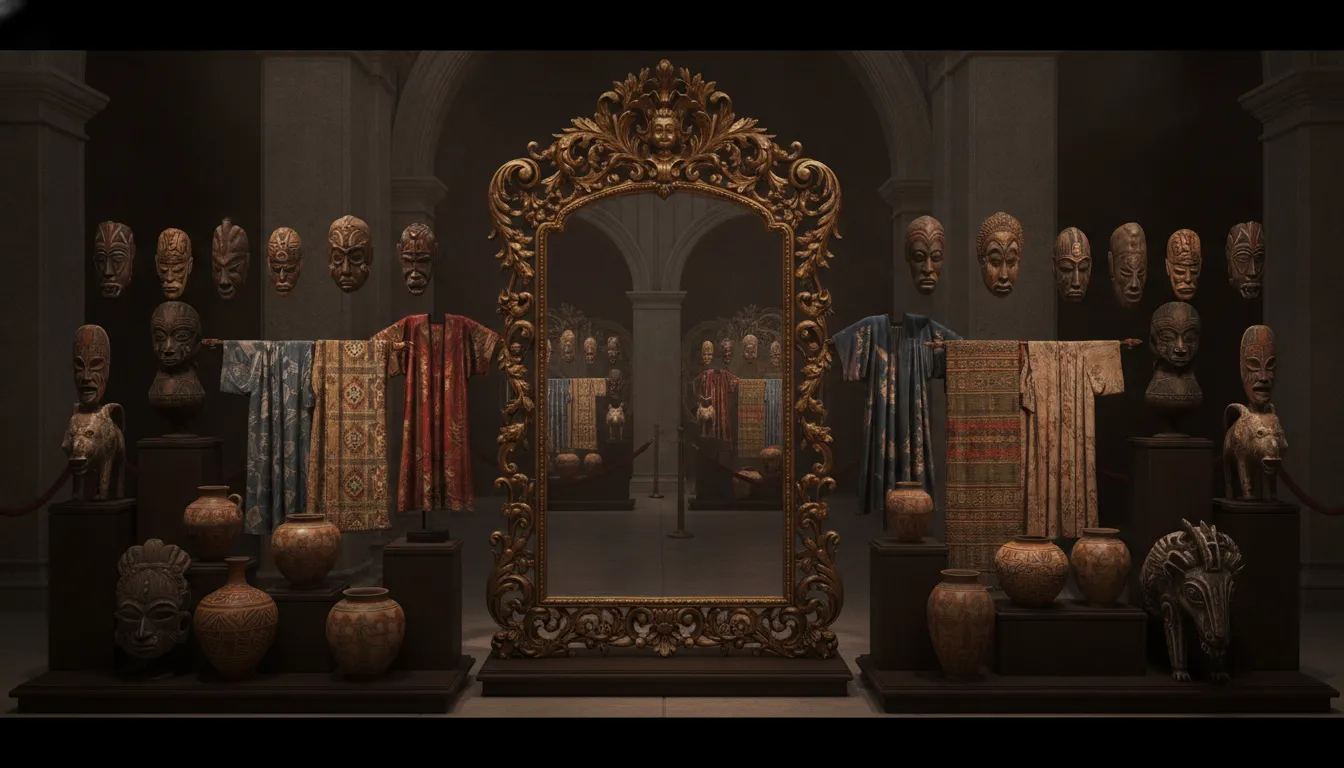
Each tradition considered “strange” is actually a mirror. It reveals not only the people who practice it but also the values and norms of those who observe it with bewilderment. Discomfort in the face of a body-piercing ritual or a funeral that lasts months says as much about our own culture as about the other’s.
Knowing these practices does not mean approving them uncritically — especially when they involve coercion or harm to vulnerable groups. But the first step is always understanding: understand the context, the history, and the meaning before judging. The world is richer — and more human — than any single perspective can encompass.
If curiosity about different cultures brought you this far, perhaps you would also be interested in the historic cities of Brazil that enchant any traveler — where history and tradition meet at every corner.


