
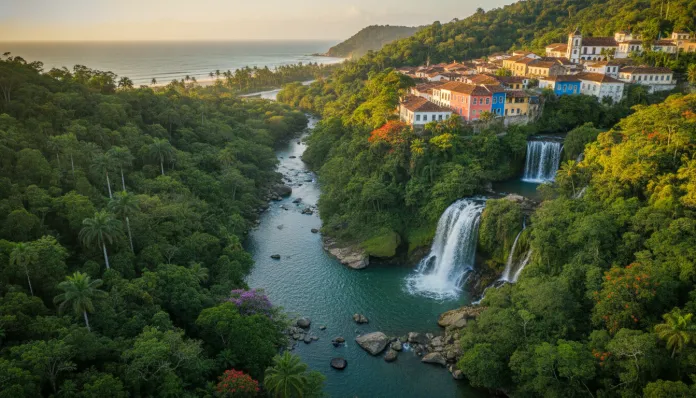
Explore Unique and Lesser-Known Brazilian Destinations
Brazil is world-renowned for its undeniable landmarks: Copacabana beaches, Rio’s Carnival, Iguazu Falls, and the Amazon. However, a country with over 8.5 million square kilometers — the fifth largest in the world — offers much more than the itineraries popularized by travel agencies. There are nearly deserted waterfalls, historic towns that seem frozen in time, plateaus with impossible colors, and fishing villages that have yet to experience tourist crowds.
If you’ve already visited the “must-see” destinations and are craving something different — or if you’re planning your first major trip across the country and prefer to avoid the crowds — this list is for you. The destinations below are real, accessible, and full of personality. Some are little known even among Brazilians.
The good news is that “off the beaten path” doesn’t necessarily mean hard to reach or expensive. It means, above all, a more genuine experience, with less crowding and greater contact with local culture.
Jericoacoara was once a secret, but what about now?
Jeri, as it is affectionately called, has become a famous destination — that’s true. But the western coast of Ceará, which starts there and extends towards Piauí, still holds virtually untouched treasures. Tatajuba Beach, about 25 km from Jericoacoara, is accessible only by boat or small motorized boats and features dunes, freshwater lagoons, and a fishing village where time seems suspended.
Further ahead, the Parnaíba Delta, where Piauí meets Maranhão, is one of the few deltas in the Americas that flows directly into the ocean. It consists of over 70 islands, streams, and channels forming a unique ecosystem with herons, scarlet ibis, and sea turtles. The base city is Parnaíba (PI), well served by flights and with growing tourism infrastructure, yet far from the chaos of the more popular beaches in the Northeast.
Chapada dos Veadeiros: the heart of Central Brazil
While Chapada Diamantina (BA) is already featured in almost every ecotourism itinerary in the country, the Chapada dos Veadeiros, in northern Goiás, is still underestimated by many. The National Park of the same name was created in 1961 and declared a UNESCO World Heritage Site in 2001 — a prestigious credential that few Brazilian destinations boast.
The region is about 250 km from Brasília and can be visited over a long weekend. The gateway city is Alto Paraíso de Goiás, charming, with independent inns and a surprising culinary scene. The trails lead to waterfalls like Couros and Vale da Lua, a rock formation carved by the São Miguel River over thousands of years — a landscape that seems to come from another planet.
The best time to visit is between May and September, during the dry season in the cerrado, when the trails are accessible, and the risk of heavy rains is lower.
Bonito (MS): the destination that preserves while visiting
Bonito, in Mato Grosso do Sul, is a rare case in Brazilian tourism: a destination that used its environmental appeal to build a serious visitor control system. Each tourist spot — such as the Rio da Prata, Abismo Anhumas, and Buraco das Araras — has a daily visitor quota, and entry is only possible with a certified guide.
The result is that the waters of the Rio Formoso and other rivers in the region maintain the crystal-clear transparency that made Bonito famous. Floating over schools of dourados and piraputangas in water so clear it resembles an aquarium is an unparalleled experience in Brazil.
The destination is more accessible than it seems: it has an airport with direct flights from São Paulo and Campo Grande, as well as a good range of inns for different traveler profiles.
Lençóis Maranhenses: the desert that isn’t a desert
Technically, the Lençóis Maranhenses are not a desert: the region receives regular rainfall between January and June. That’s precisely why, starting in July, the white dunes covering about 155,000 hectares of the Maranhão coast form hundreds of turquoise-blue freshwater lagoons — a natural phenomenon unmatched in the world.
The most common access is via the city of Barreirinhas, about 4 hours from São Luís. But few know that it’s possible to make the complete crossing of the Lençóis, from Barreirinhas to Atins (east) or Paulino Neves (west), in multi-day expeditions by horse, 4×4, or on foot. This immersive experience is far from the standard itinerary and offers direct contact with fishing and cowboy communities surrounding the National Park.
The best visiting window is between July and September, when the lagoons are full, and access to the dunes is open.
Not Pelourinho, but… the Recôncavo Baiano
Salvador is a well-established and undeniably rich destination. The problem is that many visitors remain concentrated in Pelourinho and its surroundings without exploring the Recôncavo Baiano — the region surrounding the Bay of All Saints and historically one of the cradles of Afro-Brazilian culture.
Cities like Cachoeira and São Félix, separated only by the Paraguaçu River, are National Historic and Artistic Heritage sites. The preserved colonial architecture, syncretic religious festivals, and artisanal production of cachaça and cigars keep traditions alive that date back to the colonial period. Maragogipe, known for its brightly painted wooden boats, and Santo Amaro, birthplace of Caetano Veloso and Maria Bethânia, complete an itinerary that can be done in two or three days from Salvador.
Serra Gaúcha beyond Gramado
Gramado and Canela are always crowded, especially in winter and during the holiday season. But Rio Grande do Sul has an entire Serra to discover beyond these two showcase cities.
- Bento Gonçalves and the Vale dos Vinhedos are better known, but still retain family wineries that welcome visitors on a smaller scale and with much more intimacy.
- Antônio Prado is a National Historic Heritage site and has the largest collection of wooden buildings in the country, a result of 19th-century Italian colonization.
- São Francisco de Paula offers the Fortalezas de Aparados — breathtaking canyons just a few hours from Porto Alegre, with fewer visitors than the famous Aparados da Serra National Park.
- The Rota dos Tropeiros, which crosses municipalities like Vacaria and Bom Jesus, features native field landscapes and deep gaucho culture, far removed from the European chalets of Gramado.
Amazon beyond Manaus: Marajó and the lower Amazon
When thinking of the Amazon, Manaus naturally comes to mind as the gateway. But the Marajó Archipelago, at the mouth of the Amazon River in Pará, is a world apart. With an area larger than Switzerland (about 49,000 km²), Marajó is known for the buffaloes inhabiting the flooded plains, the river beaches of Soure, and the ceramic craftsmanship of the Marajoara culture, one of the most sophisticated pre-Columbian civilizations on the continent.
Access is by boat or plane from Belém, which is itself an underrated destination — the capital of Pará boasts a vibrant culinary scene with dishes like pato no tucupi and maniçoba, as well as the Ver-o-Peso market, one of the largest open-air markets in Latin America.
Further west, Alter do Chão, a district of Santarém (PA), offers freshwater beaches at the confluence of the Tapajós and Amazon rivers, with clarity and color rivaling sea beaches. The place still has modest infrastructure and receives far fewer visitors than its beauty would justify.
Before you embark: practical tips for alternative itineraries
Exploring lesser-known destinations requires a bit more planning. Here are some points to consider:
- Research local infrastructure first: not every “hidden” destination has good accommodation or health services.
- Hire local guides: besides supporting the community’s economy, guides know trails, schedules, and conditions that no app will tell you.
- Respect visitation quotas: destinations like Bonito exist as they do precisely because they control the flow.
- Check the best time: many natural destinations have specific windows — untimely rains can close trails or hide landscapes.
- Carry cash: small towns still struggle with card machines and internet signals.
- Inform yourself about health and vaccines: Amazonian and cerrado regions may require yellow fever vaccination and other precautions. Consult a doctor or vaccine clinic in advance.
Conclusion
Brazil is perhaps the country with the greatest diversity of landscapes, cultures, and experiences in the world — and most of it is still off the traditional routes. From the river delta of Maranhão to the ancient stones of the Goiás cerrado, from the impossible lagoons of the Lençóis to the millenary crafts of Marajó, there is a Brazil waiting for curious travelers to step beyond the postcard.
Exploring these destinations is not just a matter of personal adventure. It’s also a way to better distribute the economic benefits of tourism, preserve local cultures, and relieve pressure on destinations already suffering from visitor overload. Those who travel consciously reap richer experiences — and contribute to ensuring these places continue to exist for future generations.
Planning your trip well also means taking care of yourself daily. Simple health and wellness habits make a real difference before, during, and after any adventure. Check out Simple Healthy Habits That Make a Real Difference to arrive in shape at your next destination.


