
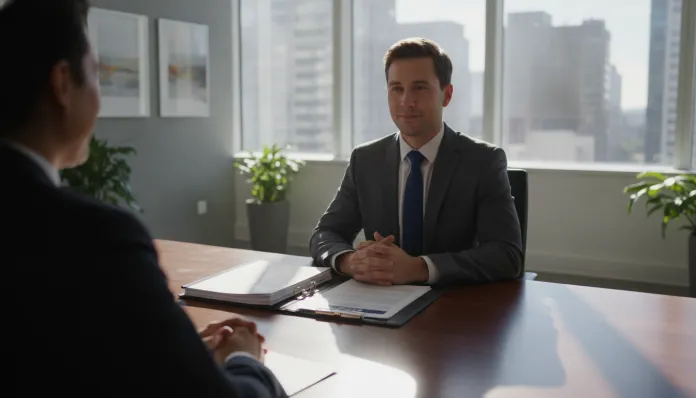
You finally did it: the job you wanted is available, your resume has been sent, and the recruiter has contacted you. Now comes the part that makes many people nervous — the job interview. For some, it’s a smooth ritual; for others, a true test of nerves. The good news is that, like any skill, performing well in an interview can be learned, practiced, and perfected with proper preparation.
The job market in 2026 remains demanding and competitive. With the expansion of remote and hybrid work, interviews have adopted new formats — video calls, online dynamics, practical tests sent via digital platforms — but the fundamentals of a good interview remain the same: knowledge about the company, clarity in communication, and confidence when talking about yourself. Ignoring these pillars is the quickest way to lose an opportunity.
This guide is designed for those preparing to face this moment with more confidence, whether for their first job, a career change, or a job transition. There is no magic formula, but there is a method — and that’s what we’ll discuss.
Research the Company First and Foremost
Arriving at an interview without knowing what the company does is one of the most common and fatal mistakes. Recruiters immediately notice when a candidate hasn’t done their homework, leaving an impression of disinterest or lack of commitment.
Before the scheduled day, take time to investigate:
- The company’s industry: Is it retail, technology, healthcare, or agribusiness?
- The products or services offered: What do they sell, produce, or deliver?
- The organizational culture: Does the company value innovation? Collaborative work? Strict hierarchy or horizontal management?
- Recent news: Mergers, launches, awards received, or ongoing projects
- Social media profiles: LinkedIn, Instagram, and the official website often reveal a lot about the company’s tone
This research serves two purposes: it demonstrates genuine interest to the recruiter and helps you assess if that environment is really where you want to work.
Study the Job Description Carefully
The job description is a map. It lists the skills the company considers essential for the position. Read it carefully and identify which of these skills you already possess and, most importantly, how you will demonstrate them during the conversation.
How to Use the Description to Your Advantage
- Highlight keywords: Terms like “proactivity,” “leadership,” “assertive communication,” or “Excel proficiency” appear for a reason. Prepare concrete examples of when you demonstrated each of these characteristics.
- Relate real experiences: The STAR method (Situation, Task, Action, and Result) is widely used by recruiters to structure behavioral questions — and you can use it to structure your answers. Describe a situation, explain your responsibility, what you did, and the result.
- Identify honest gaps: If the job requires a skill you’re still developing, be transparent. Lying about technical competencies is often discovered early and compromises credibility.
Prepare Answers to Common Questions
Some questions appear in almost every job interview. Preparing them in advance avoids the dreaded “blanks” and unfocused answers.
The most frequent include:
- “Tell me about yourself” — this is not the time for a complete family history. Focus on the professional journey relevant to the job.
- “What are your strengths?” — choose two or three and illustrate each with real examples.
- “What are your weaknesses?” — be honest, but show that you are working on them. Avoid clichés like “I’m too much of a perfectionist.”
- “Why do you want to work here?” — use the research you did about the company. Show that the choice is not random.
- “Where do you see yourself in five years?” — demonstrate realistic ambition aligned with the sector.
- “Why did you leave your previous job?” — be honest, but avoid heavy criticism of former bosses or colleagues.
Practicing these answers out loud — alone, in front of a mirror, or with someone you trust — makes a huge difference in the actual moment.
Take Care of Personal Presentation and Body Language
Communication goes far beyond words. Classic studies in communication psychology, like the works of researcher Albert Mehrabian, indicate that a significant part of the impression we make comes from non-verbal elements: posture, facial expression, tone of voice, and eye contact.
Practical Presentation Tips
- Dress appropriately for the context: In formal corporate environments, opt for more conservative attire. In startups or creative companies, the dress code tends to be more casual — but the look should be clean and tidy in any case.
- Punctuality: Arriving 10 to 15 minutes early conveys responsibility. Unannounced delays are rarely well received.
- Open posture: Sit up straight, without crossing your arms, and maintain eye contact without staring uncomfortably.
- Speak at a moderate pace: Anxiety tends to speed up speech. Breathe before responding and take the necessary time.
- Avoid excessive “you know,” “like,” and other language tics: They appear more when we’re nervous, so practicing out loud helps reduce them.
Online Interviews: Special Considerations
With the consolidation of remote work, video call interviews — via Google Meet, Zoom, Teams, or other platforms — have become routine. They have their own pitfalls.
Before the online interview:
- Test the camera, microphone, and connection at least an hour in advance
- Choose an environment with good front lighting (the light should illuminate your face, not come from behind)
- Ensure the background is neutral and organized — clean walls work better than cluttered environments
- Inform household members about the schedule to avoid interruptions
- Close other tabs and notifications on the computer
During the call:
- Look at the camera when speaking, not at the interviewer’s image on the screen — this simulates eye contact
- Have water nearby, but discreetly
- If there’s a connection drop, stay calm and communicate the problem clearly
Questions You Can — and Should — Ask the Recruiter
An interview is not a one-way street. At the end of the conversation, the recruiter almost always opens space for candidate questions. Using this moment wisely demonstrates interest and professional maturity.
Some pertinent questions:
- “What is the onboarding process for new employees?”
- “What are the biggest challenges for someone in this position?”
- “How does the team usually work — more autonomously or collaboratively?”
- “What are the growth opportunities within the company?”
- “What is the next step in the selection process?”
Avoid asking about salary and benefits right away, unless the recruiter brings it up. When the time comes, talk about compensation naturally — research the market salary range for the role before the interview and know your baseline.
After the Interview: What to Do
The process doesn’t end when the call ends or you leave the room. There are important post-interview steps that make a difference.
- Send a thank-you email: brief, polite, and personalized. Thank them for their time, reinforce your interest in the position, and, if you wish, mention a significant point from the conversation.
- Reflect on your performance: What went well? What could have been better? This honest analysis serves as a basis for the next interview.
- Maintain follow-up without overdoing it: If the informed deadline for feedback has passed, a gentle email contact is appropriate. Multiple daily messages are not.
- Continue looking for other opportunities: Until you receive a concrete and signed offer, keep the selection process active elsewhere.
Conclusion

Preparing for a job interview is, above all, an exercise in self-awareness and planning. Knowing who you are professionally, what you have to offer, and how to communicate that clearly doesn’t happen overnight — it’s the result of practice and reflection.
Researching the company, studying the job, practicing responses, paying attention to posture, and the technical details of a video call: each of these elements contributes to you arriving at the decisive moment with more confidence and less anxiety. No interview is identical to another, but the more prepared you are, the more naturally the conversation will flow.
Finally, remember that an interview is also an opportunity for you to evaluate the company. The job market is a two-way street — and finding the right place to grow professionally is worth every minute invested in preparation.
- Reflect on your performance: What went well? What could have been better? This honest analysis serves as a basis for the next interview.
- “What are the biggest challenges for someone in this position?”
- “What is the onboarding process for new employees?”
- Punctuality: Arriving 10 to 15 minutes early conveys responsibility. Unannounced delays are rarely well received.
- “What are your strengths?” — choose two or three and illustrate each with real examples.
- Relate real experiences: The STAR method (Situation, Task, Action, and Result) is widely used by recruiters to structure behavioral questions — and you can use it to structure your answers. Describe a situation, explain your responsibility, what you did, and the result.
- The products or services offered: What do they sell, produce, or deliver?


