
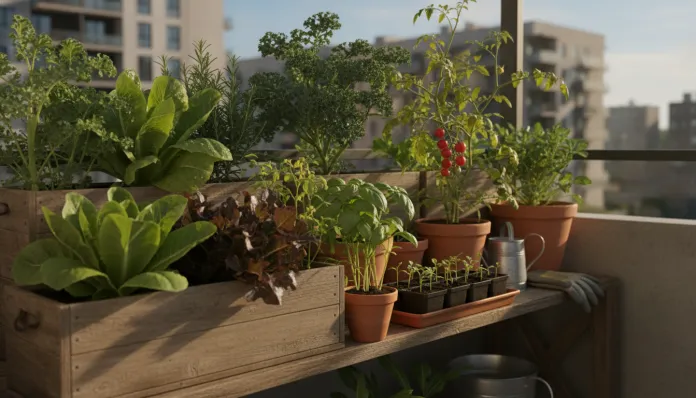
The Idea That Fits on Your Window Sill
You don’t need a large backyard, fertile soil in the countryside, or advanced agronomy knowledge to grow your own food. A sunny window, some pots, a bit of soil, and the will to start are enough to take the first steps towards a home garden—and reap surprising results in just a few weeks.
This practice has gained momentum over the years, especially in large urban centers, where high living costs and growing concerns about food origins have led many families to rethink their relationship with food. Growing at home, even on a small scale, offers benefits beyond the plate: it reduces waste, brings adults and children closer to nature, and transforms even a balcony into a lively and productive space.
If you’re thinking of starting in 2026 and don’t know where to begin, this guide is for you. From choosing the space to the first harvest, we’ll walk through each step practically and without complications.
Why Start a Home Garden?
Before getting your hands dirty, it’s worth understanding what motivates so many people to adopt this practice—and why it makes sense even for those living in small apartments.
Tangible Benefits of Home Cultivation
- Budget savings: herbs like basil, chives, parsley, and mint are frequently consumed and have variable prices in markets. Growing them at home means having a continuous supply without recurring costs.
- Control over what you eat: by planting without pesticides, you know exactly what’s going on your plate.
- Mental well-being: contact with plants and watching them grow is associated with feelings of calm and satisfaction—widely recognized by mental health professionals, though effects vary from person to person.
- Waste reduction: with fresh herbs always at hand, you use only what’s needed, preventing entire bunches from rotting in the fridge.
- Education for children: a home garden is a live lesson in biology, patience, and responsibility.
Evaluating Your Space: What Do You Have Available?
The first real step is an honest analysis of the available space. There’s no such thing as “too little” space—only poorly utilized space.
Types of Spaces and Their Possibilities
| Available Space | What You Can Grow |
|---|---|
| Window with direct sunlight | Herbs, lettuce, radish |
| Small balcony (up to 3 m²) | Cherry tomatoes, peppers, arugula, kale |
| Large balcony or terrace | Zucchini, cucumber, beans, dwarf corn |
| Backyard | Virtually any vegetable |
| Indoor without direct light | Sprouts (like sunflower and bean sprouts) with artificial lighting |
The most important factor is not size, but sunlight exposure. Most vegetables need at least four to six hours of direct sunlight per day. If your space is shaded, there are alternatives—but plant selection will be more limited.
Choosing the Right Plants to Start
The main pitfall for beginners is being too ambitious from the start. Planting many species at once without knowing their needs often leads to frustration.
Recommended Plants for Beginners
Aromatic herbs are the ideal starting point. They grow well in small pots, require little maintenance, and are guaranteed to be used in the kitchen:
- Chives
- Parsley
- Basil
- Mint (note: it spreads a lot, prefer separate pots)
- Cilantro
- Rosemary
Short-cycle leafy greens are also great for beginners because they grow quickly and provide motivating visual returns:
- Lettuce (especially loose-leaf varieties for continuous harvest)
- Arugula
- Spinach
- Kale
For those with a bit more space, cherry tomatoes are an excellent choice: they produce abundantly even in medium-sized pots, provided they receive plenty of sunlight.
What You Will Need: Basic Materials
Setting up a home garden doesn’t require a large investment. Many items you probably already have at home or can improvise.
Essential Materials List
- Containers: plastic pots, ceramic pots, wooden crates, cut PET bottles, buckets—any container with or that can have drainage holes at the bottom will work.
- Quality substrate: avoid using pure garden or construction soil. Ideally, use a potting mix or a blend of topsoil, organic compost, and coarse sand (or perlite) for good drainage and nutrition.
- Seeds or seedlings: seeds are cheaper and rewarding, but ready seedlings speed up the process. Both are available at agricultural stores, garden centers, and even farmers’ markets.
- Watering can or bottle with holes in the cap: allows more controlled irrigation.
- Trays: placed under pots, they prevent mess and allow excess water to drain without damage.
- Organic fertilizer: worm castings, bokashi (fermented compost), or bone meal are natural and effective options for replenishing nutrients over time.
Step-by-Step: From Seed to First Harvest
1. Prepare the Container
Ensure the pot has drainage holes at the bottom. Place a layer of gravel, expanded clay, or ceramic shards at the bottom to facilitate drainage. Fill with substrate up to about 2 cm below the rim.
2. Plant the Seeds or Seedlings
- For seeds: make small furrows or holes as indicated on the package (depth varies by species). Lightly cover with soil and water gently.
- For seedlings: make a space in the center of the pot, insert the seedling without squeezing the roots too much, and firm the soil around it.
3. Water with Care
The most common mistake for beginners is overwatering. The soil should be moist but not waterlogged. A practical tip: insert your finger about 2 cm into the soil—if it’s still moist, wait before watering. The ideal frequency varies with climate, season, and plant type.
4. Position in a Well-Lit Area
Place the pots in the sunniest spot available. If necessary, rotate the pots every two or three days so all parts of the plant receive balanced light.
5. Monitor Growth and Fertilize Periodically
Every 15 to 30 days, add a small amount of organic fertilizer. Observe the leaves: yellowing may indicate nutrient deficiency or excess water; shriveled leaves may signal thirst or too much sun.
6. Harvest Smartly
Herbs and leafy greens allow for continuous harvesting: instead of pulling out the entire plant, remove only the outer leaves or the most developed branches. This stimulates growth and prolongs the plant’s lifespan.
Tips for Apartment Dwellers
Growing in an apartment has specific challenges, but all are manageable:
- Weight of pots: prefer lightweight substrates (with perlite or coconut fiber) and plastic pots instead of heavy ceramic, especially on balconies.
- Wind: on high floors, wind can quickly dehydrate plants. Use simple barriers or choose more resistant species.
- Artificial lighting: if natural light is insufficient, full-spectrum LED lights (called “grow lights”) allow indoor cultivation. They are available in specialty stores and e-commerce platforms.
- Compact composting: even without a backyard, you can compost organic waste with a small worm composter (vermicomposter)—it doesn’t smell bad when well-managed and produces rich humus for fertilizing pots.
Common Mistakes and How to Avoid Them
- Overwatering: the main villain of home gardens. Waterlogged roots rot. Always check before watering.
- Low-quality substrate: compacted garden soil blocks growth. Invest in a good substrate from the start.
- Too small pots: each plant needs adequate space for roots. Tomatoes, for example, require pots of at least 15 liters.
- Ignoring pests: aphids, mealybugs, and mites appear. Regularly monitor plants and, at the first sign, treat with homemade solutions like diluted neutral soap spray.
- Giving up too soon: some plants take weeks to germinate. Patience is part of the process.
Conclusion: Your First Handful of Soil
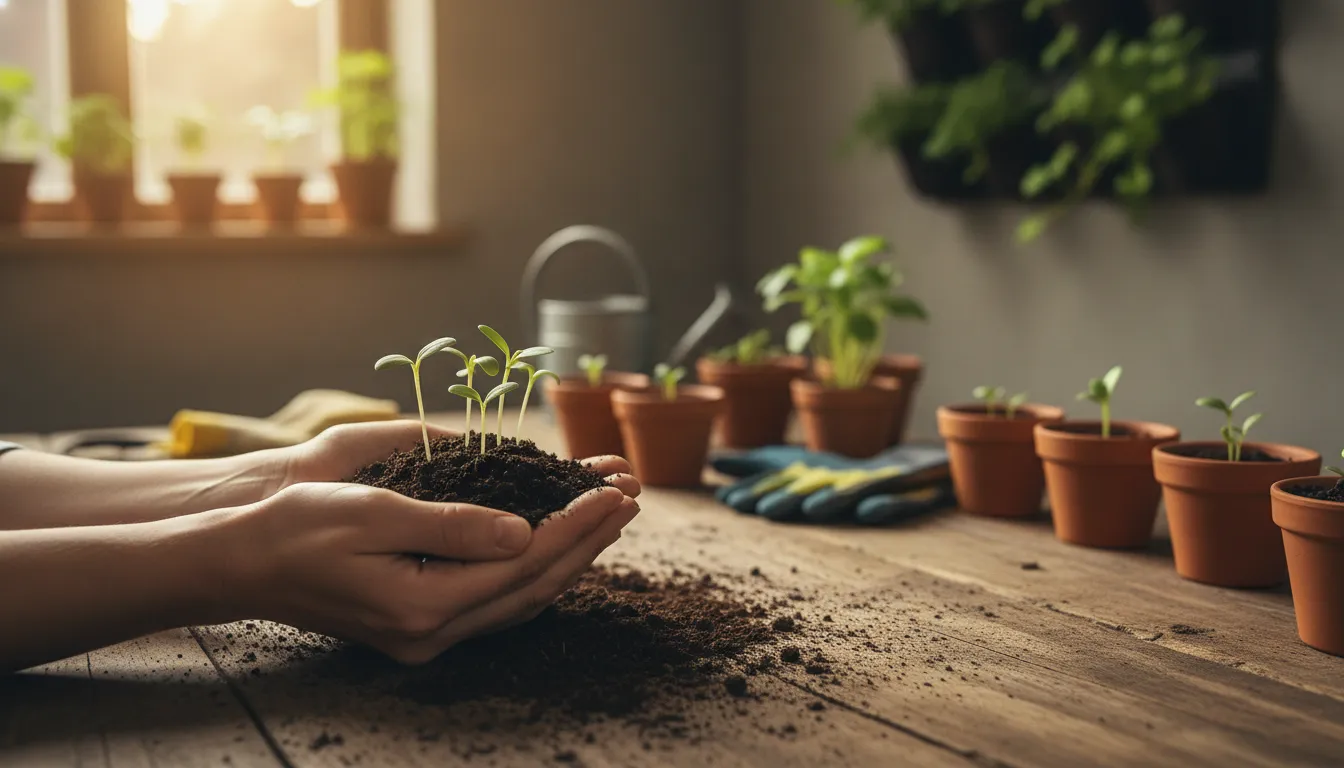
Starting a home garden is, above all, an exercise in observation and presence. You learn to notice the difference between a healthy and a stressed leaf, understand plant rhythms, and recognize that producing food—even on a minimal scale—is a process that has its own time.
There’s no right size to start. A single pot of chives on the window is already a garden. And a garden, no matter how small, is already a change in your relationship with what you eat and the space you live in. In 2026, with access to information and resources more than ever, there’s no lack of resources—just the need to take the first step.
If you want to go further and rethink other aspects of your daily life with the same creativity, also check out this guide on how to boost your productivity with essential habits—because cultivating a garden and cultivating good habits have much more in common than it seems.


