
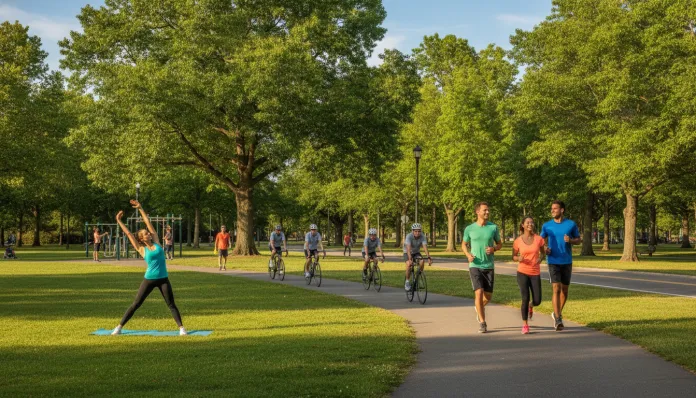
Imagine waking up in the morning with more energy, sleeping better at night, and feeling less daily stress — all without needing any medication. It sounds like an advertisement promise, but it’s exactly what decades of scientific research confirm: regular physical exercise is one of the most powerful tools available to improve human life quality. And the best part: the benefits go far beyond what most people imagine.
You don’t need to be a high-performance athlete or spend hours in the gym to reap these rewards. A 30-minute walk, an evening bike ride, or a weekend soccer game with friends can bring significant changes to your body. The secret lies in regularity — and understanding why the human body responds so well to movement.
In this article, we’ll explore the main reasons why practicing sports is good for your health, covering the heart, brain, immune system, and even mood. The information here is general and educational; for personalized guidance, always consult a doctor or physical education professional.
What Happens in Your Body When You Exercise
To understand the benefits of sports, it’s worth first understanding what happens inside the body during physical activity. When you start moving more intensely, the heart speeds up to pump more blood — and with it, more oxygen and nutrients — to the active muscles.
At the same time, the body releases a series of chemicals. Among them are endorphins, neurotransmitters produced by the central nervous system that act as natural painkillers and are associated with a sense of well-being. Dopamine and serotonin are also released, substances directly linked to pleasure, motivation, and mood regulation.
With time and regular practice, the body adapts: the heart becomes more efficient, the lungs increase their capacity, muscles become stronger and more resistant, and metabolism starts functioning more balanced. This is known as the principle of physiological adaptation — the body learns and evolves according to the stimuli it receives.
Heart and Circulation: The Most Known Benefit
Cardiovascular health is probably the field where the benefits of physical exercise are most studied and well-documented. Regular aerobic activities — such as running, swimming, cycling, and dancing — strengthen the heart muscle, reduce blood pressure, and improve the blood lipid profile (helping to balance cholesterol levels).
Organizations like the World Health Organization (WHO) recommend that adults engage in at least 150 minutes of moderate physical activity per week — equivalent to about 30 minutes a day, five times a week. This level is already sufficient to bring significant reductions in the risk of cardiovascular diseases, which are among the leading causes of death in Brazil and worldwide.
Moreover, regular exercise helps control type 2 diabetes, as it improves cells’ sensitivity to insulin, facilitating glucose utilization by the body. For people already living with these conditions, physical activity is usually a fundamental part of treatment — always with medical supervision.
Mental Health: Sports as an Ally for Emotional Well-being
If the physical benefits are impressive, the effects of exercise on mental health are equally significant — and still underestimated by many. Regular sports practice is associated with reduced symptoms of anxiety and depression, improved self-esteem, and a greater sense of control over one’s life.
This occurs through multiple mechanisms. The release of endorphins and serotonin during exercise has an immediate effect on mood. But there’s also a long-term effect: by establishing a workout routine, one develops discipline, a sense of achievement, and improves self-image — factors that directly contribute to emotional balance.
Studies in psychiatry and psychology suggest that exercise can be an effective complement in treating disorders such as mild to moderate depression. It’s important to emphasize: sports do not replace mental health professional care, but can be a powerful ally when integrated into a therapeutic plan.
There’s also the social component. Team sports, group classes, and runs with friends create bonds, combat isolation, and promote belonging — factors recognized by science as essential for psychological well-being.
Bones, Muscles, and Joints: Movement That Protects
A common belief is that sports “wear out” joints. In most cases, the reality is the opposite: proper physical exercise strengthens bones, muscles, and joint structures, making the body more resistant and functional throughout life.
Moderate-impact activities, such as walking, light running, and weight training, stimulate bone density — which is especially important in preventing osteoporosis, a condition that weakens bones and increases fracture risk, particularly in postmenopausal women and the elderly.
Muscle strengthening, in turn, protects joints by redistributing the body’s mechanical loads. Those with stronger muscles around the knee, for example, experience less pressure on the joint during daily activities like climbing stairs or squatting.
For people with conditions like arthritis or osteoarthritis, guided physical activity can help reduce pain and improve mobility — but in these cases, the choice of exercise type and intensity should always be discussed with a doctor or physiotherapist.
Immune System and Longevity: Living Longer and Better
The immune system — our defense mechanism against infections and diseases — also benefits from movement. Moderate and regular exercise is associated with a more efficient immune response, with reduced frequency and severity of common infections, such as colds and flu.
The relationship between exercise and immunity, however, has an interesting curve: while moderate exercise strengthens defenses, excess — especially in high-performance athletes without adequate recovery — can have the opposite effect and leave the body more vulnerable. Another reason to seek balance and professional guidance.
In the field of longevity, the evidence is consistent: physically active people tend to live longer and, perhaps more importantly, maintain quality of life for longer. Functional capacity — the ability to perform daily activities independently — deteriorates more slowly in those who exercise regularly throughout life.
Sleep, Energy, and Productivity: Everyday Benefits
Those who exercise regularly often report significant improvement in sleep quality. This is no coincidence: physical exercise contributes to the regulation of circadian rhythms (the internal biological clock), reduces accumulated muscle tension, and promotes deeper, restorative sleep.
Sleeping well, in turn, directly affects energy levels during the day, concentration ability, and productivity — whether at work, in studies, or personal relationships. It’s a virtuous cycle: exercise improves sleep, sleep enhances performance, and performance boosts the willingness to keep exercising.
If you want to transform your routine more broadly, it’s worth combining sports practice with other personal organization strategies — as explored in the article How Personal Organization Can Change Your Routine, here at Jornal Meia Hora.
How to Start: Practical Tips for Taking the First Step
Knowing that sports are beneficial is one thing; starting to practice them is another. The good news is that there are no prerequisites. Anyone, at any age and with any initial physical condition, can start — with the necessary adaptations.
Here are some practical guidelines to start safely:
- Consult a doctor before starting, especially if you’ve been sedentary for a long time, have a pre-existing health condition, or are resuming activities after a long break.
- Start slowly and gradually increase the intensity and duration of workouts. The body needs time to adapt.
- Choose an activity you enjoy — or at least can tolerate. Long-term adherence is much higher when there’s some pleasure in the process.
- Set a realistic frequency. Three times a week is a great start for those starting from scratch.
- Vary the types of exercise: combine aerobic activities (walking, swimming, dancing) with strength exercises (weight training, calisthenics) and flexibility exercises (stretching, yoga).
- Stay well-hydrated before, during, and after workouts.
- Respect the body’s signals: acute pain, dizziness, and intense shortness of breath are warning signs — stop and seek medical advice.
- Exercise outdoors when possible: sunlight and nature contact amplify mood benefits
- Invite friends or family: social commitment increases consistency
- Use apps or simple records to track your progress — small achievements motivate
- Don’t punish yourself for rest days: recovery is also part of the process
Conclusion: Movement as an Investment in Yourself

Practicing sports is not a luxury reserved for athletes or people with plenty of free time. It is, above all, an accessible and proven investment in one’s health — physical, mental, and emotional. The benefits accumulate over time, and even small changes in routine can produce tangible results.
From a stronger heart to more restful sleep, a more balanced mind to stronger bones, exercise acts on multiple fronts simultaneously. And the best part: it starts working from the first step.
Always remember that the information in this article is educational and general. Each body is unique, and any significant change in physical activity routine should be planned with the support of a doctor and a physical education professional. With the right guidance, sports can be one of the best decisions you’ve ever made for your health.
- Start slowly and gradually increase the intensity and duration of workouts. The body needs time to adapt.


