
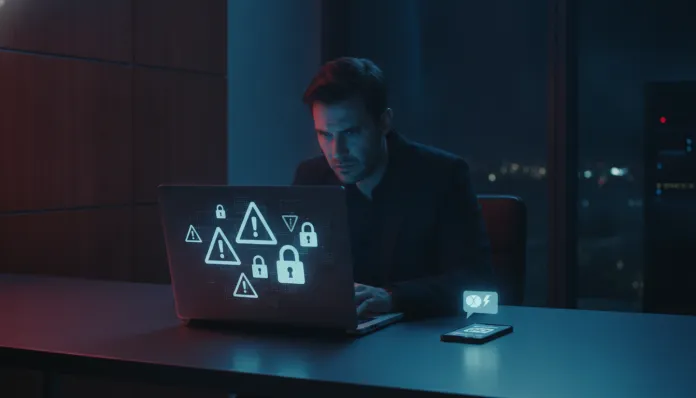
Why Digital Scams Are More Sophisticated Than Ever
You received a message from your bank asking for data confirmation. It seemed legitimate — correct logo, formal language, seemingly official link. But it was a scam. This type of situation has become routine for millions of Brazilians, and in 2026 the scenario is even more challenging: digital criminals use increasingly advanced tools, including artificial intelligence, to make their traps almost indistinguishable from reality.
Brazil ranks among the countries most targeted by digital scams worldwide. According to recurring surveys by cybersecurity companies, the country records tens of millions of phishing attempts — the technical term for frauds that “fish” for personal data — per year. The volume grows alongside the use of smartphones and digital financial services, which have democratized internet access but also expanded the attack surface for scammers.
The good news is that with information and attention, it is possible to identify most of these traps before falling into them. This guide gathers the main types of scams in circulation, the warning signs you need to know, and practical measures to protect your data, your money, and your peace of mind.
The Most Common Scams in Brazil Today
Phishing: The Digital Bait
Phishing is the oldest and still the most prevalent scam. It works like this: the criminal poses as a company, bank, government agency, or known person and tries to convince the victim to click on a link, provide passwords, bank details, or install malicious software.
The channels used are varied: email, SMS (in this case called smishing), WhatsApp, and even phone calls (vishing, from the English voice phishing). The messages usually create urgency — “your account will be blocked”, “you have a tax pending”, “your package is held”.
PIX and Bank Transfer Scams
With the popularization of PIX in Brazil, scammers have adapted their methods. Among the most common are:
- Fake PIX Receipt: the scammer sends an altered receipt to convince the seller that the payment was made before receiving the product.
- Fake Bank Center Scam: someone calls pretending to be a bank employee, warns about an “ongoing fraud” and instructs the victim to transfer money to a “safe account” — which actually belongs to the criminal.
- Wrong PIX and Refund Request: the scammer sends money from a suspicious source and then asks for a refund outside the system, before the bank blocks the original transaction.
WhatsApp and Number Cloning Scam
In this scheme, the criminal obtains the victim’s phone number and tries to clone their WhatsApp account. To do this, they call asking for the six-digit verification code sent by SMS — usually posing as a company or known person. With the cloned number, they contact family and friends asking for borrowed money.
Scams with Artificial Intelligence
In 2026, voice and video cloning by AI has become a real and growing threat. Deepfake technologies allow scammers to create fake audios and even videos with the voice and face of people known to the victim, making it much more difficult to identify the fraud. A “child” calling in distress asking for money may actually be a computer-generated synthetic voice.
Generative AI tools, like those explained in our guide ChatGPT Explained: Understand and Use for Free, have legitimate and powerful uses — but the same technology can be misused when in the wrong hands.
How to Identify a Scam: Warning Signs
Recognizing a fraud attempt requires attention to some recurring patterns. Here are the main ones:
- Artificial Urgency: messages that require immediate action, threatening account blocking, fines, or loss of benefits.
- Portuguese Errors or Strange Formatting: although AI-powered scams have greatly improved text, inconsistencies are still common.
- Suspicious Links: URLs that mimic official addresses with small changes (e.g., “bradesc0.com” instead of “bradesco.com”). Hover over the link before clicking to see the real address.
- Request for Sensitive Data: legitimate banks and government agencies never ask for passwords, verification codes, or full card details by phone or message.
- Unknown Sender or Strange Number: emails from free domains (gmail, hotmail) posing as companies are a clear sign of fraud.
- Too Good to Be True Offers: prizes, absurd cashback, loans without analysis — if it seems unreal, it probably is.
Step-by-Step: What to Do If You Suspect a Scam
- Do not click on any links and do not provide any data before verifying the authenticity of the message.
- Contact the company directly through the official channel (website, app, or phone number on the back of the card) to confirm if the message is real.
- Never provide the verification code for WhatsApp, email, or bank to anyone, regardless of who they claim to be.
- Notify the person whose name was used — if you received a message “from your child” or “from your manager”, call that person directly to confirm.
- File a Police Report (BO) online if you fell for the scam. This is necessary to trigger insurance, dispute transactions, and help authorities.
- Report the scam to the impersonated company: banks, postal services, the Federal Revenue, and major retailers have channels for reporting frauds in their name.
- Change passwords immediately if you believe your data has been compromised, starting with your main email and bank.
How to Protect Yourself: Practical Prevention Measures
Prevention is always more effective than cure. Adopt the following habits:
Account Security
- Enable two-factor authentication (2FA) on all important accounts — bank, email, social networks. This requires a second confirmation (usually a code on the phone) besides the password, making unauthorized access much more difficult.
- Use unique and strong passwords for each service. Password managers like Bitwarden or Google’s/Apple’s native ones help organize this without having to memorize everything.
- Activate chip lock with your carrier to make number cloning more difficult.
Be Careful What You Share
- Avoid exposing your phone number and CPF in unnecessary registrations.
- Be wary of social media promotions that ask for personal data as a “condition of participation”.
- Review privacy settings on your social networks — public profiles make it easier for scammers to personalize their approach.
Device Security
- Keep the operating system and apps updated: updates fix security flaws exploited by malware.
- Install only apps from official stores (Google Play, App Store) and check the rating and developer before installing.
- Avoid public Wi-Fi networks for banking or shopping. If you must use them, use a reliable VPN.
- Install recognized antivirus on your phone and computer.
What to Do If You’ve Already Fallen for a Scam
Falling for a scam is not a reason for shame — the schemes are increasingly elaborate and anyone can be a victim. The most important thing is to act quickly:
- Immediately block cards and bank access through the app or customer service center.
- File the police report online on your state’s Electronic Police Station website.
- Notify the bank: in cases of unauthorized transfers, the bank may have dispute mechanisms. The Central Bank of Brazil maintains ombudsman channels and the PIX refund system in cases of proven fraud.
- Monitor your CPF: use the service from Serasa or the Central Bank itself (registrato.bcb.gov.br) to check if there are accounts or loans opened in your name.
- Tell someone you trust: besides emotional support, this helps prevent the same person or others in your network from falling for the same scam.
The Role of Digital Education in Prevention
Technology evolves quickly, and scammers evolve along with it. Therefore, staying informed about how digital tools work — and how they can be used maliciously — is one of the most effective forms of protection.
Understanding, for example, how artificial intelligence works helps to comprehend both the risks of deepfakes and the ways to verify the authenticity of content. Our guide ChatGPT Explained: Understand and Use for Free is a good starting point for those who want to understand this technology without complication.
Talking with family members — especially the elderly and teenagers, more targeted groups — about these scams also makes a difference. Often, the information shared in a dinner table conversation is what prevents a disastrous transfer.
Conclusion: Attention Is the Best Antivirus

Digital scams exist because they exploit two universal human characteristics: haste and trust. Criminals build convincing scenarios precisely so you don’t have time to think before acting.
The main lesson of this guide can be summed up in a golden rule: distrust, verify, and only then act. Before clicking any link, transferring any amount, or providing any data, pause for a moment. Confirm through the official channel. Ask someone you trust.
In a world where digital threats become more sophisticated at the same speed as the technologies we use daily, information, safe habits, and a healthy degree of skepticism are the best tools you have — and all of them are within your reach at no cost.


