
Who hasn’t found themselves standing in front of the sink, peeling onions with teary eyes, or waiting for water to boil for what feels like hours? The kitchen can be a space of pleasure and creativity, but also a place of unnecessary frustrations—especially when we don’t know the right shortcuts. The good news is that decades of practical cooking have generated an arsenal of simple techniques that turn tedious tasks into quick and efficient steps.
It’s not about star chef secrets or expensive equipment. The most useful kitchen tricks tend to be the simplest: small habit changes, smart uses of ingredients, and different ways of approaching processes that are already part of the routine. With them, you save time, reduce waste, and often even improve the final result of the dish.
In this article, we’ve gathered practical and tested tips that cover everything from preparation to storage, including cutting techniques, ingredient substitutions, and much more. Regardless of your cooking experience level, there’s something here for your daily routine.
Cutting Without Tears: Techniques That Make a Difference
Cutting is one of the most repetitive tasks in the kitchen, and learning to do it well saves a lot of time and effort.
The Secret to Tear-Free Onions
Onions release sulfur compounds when cut, which react with the moisture in your eyes and cause irritation. Some strategies help reduce this effect:
- Chill the onion for 15 to 30 minutes before cutting — the cold slows the release of volatile compounds.
- Cut near an open flame (like a gas stove): the heat consumes part of the compounds before they reach your eyes.
- Use a sharp knife. Dull knives crush onion cells instead of cutting them, releasing more irritating juice.
Easy Garlic Peeling
Lightly crush the garlic clove with the side of a knife (known as the “light crushing” motion) to loosen the skin in seconds. Another option: place the cloves in a closed glass jar and shake vigorously for a few seconds — the skin comes off by itself due to friction.
Seedless Tomatoes in Seconds
For recipes that call for seedless tomatoes without excess liquid, cut the tomato in half crosswise (through the “belly,” not the stem) and gently squeeze over the sink. The seeds come out easily without needing a spoon.
Faster and More Efficient Cooking
Water Boils Faster with a Lid
It seems obvious, but many people forget: covering the pot while heating water significantly reduces the time to boil, as it prevents heat loss through evaporation. The same goes for sautéing vegetables — covering the pan speeds up cooking.
Salt in Pasta Water: The Right Measure
Pasta water should be generously salted — the ideal point is for it to have a slight sea taste, which corresponds to approximately 10 grams of salt per liter of water. This salt is not fully absorbed by the pasta; most of it remains in the discarded water. The result is pasta with a more developed flavor from within.
Juicier Meat: The Post-Cooking Rest
After grilling or roasting a piece of meat, let it rest for a few minutes before cutting — 3 to 5 minutes for smaller steaks, up to 15 minutes for larger pieces. During cooking, juices concentrate in the center of the meat; resting allows them to redistribute throughout the piece, resulting in moister and tastier slices.
Smart Ingredient Substitutions
Running out of an ingredient in the middle of a recipe is frustrating, but there are often practical alternatives at hand.
Missing Ingredient Possible Substitution Proportion Buttermilk Milk + lemon juice 240 ml of milk + 1 tablespoon of lemon juice Baking powder Baking soda + cream of tartar 1/4 teaspoon (baking soda) + 1/2 teaspoon (cream) Flour (thickener) Cornstarch Use half the indicated amount Vinegar Lemon juice Same proportion Eggs (in cakes) Mashed ripe banana 1 egg = 1/2 medium banana These substitutions don’t work perfectly in all recipes, but they’re useful in most everyday situations.
Storage to Extend Food Life
Properly storing ingredients can make the difference between food that lasts days and one that spoils in hours.
Fresh Herbs as “Bouquet”
Parsley, cilantro, basil, and other fresh herbs last much longer when stored with the stems dipped in a glass with a little water, like a bouquet of flowers, loosely covered with a plastic bag, and kept in the fridge (except basil, which prefers room temperature). This way, they can last up to two weeks.
Cut Avocado Without Browning
The browning of avocado after cutting is caused by oxidation, a chemical reaction between air oxygen and fruit compounds. To slow this process:
- Squeeze lemon or lime juice over the exposed pulp.
- Keep the pit in contact with the unused part.
- Wrap tightly with plastic wrap, removing as much air as possible.
Longer-Lasting Cheese
Wrap cheeses in parchment paper before storing in the fridge, instead of plastic wrap. The paper allows the cheese to “breathe” slightly, preventing excess moisture that promotes mold.
Potatoes and Onions: Keep Them Separate
Potatoes and onions release natural gases that accelerate each other’s ripening and rotting when stored together. Store them in separate, cool, dry, and well-ventilated places — but never in the fridge, as the cold converts potato starch into sugar undesirably.
Easy Cleaning: Less Time at the Sink
Cleaning is often the least loved part of the kitchen. Some simple habits greatly reduce the work.
- Soak pots and pans immediately after use, while they’re still warm. Stuck-on residues come off much easier than when cooled and hardened.
- To clean the microwave, place a bowl with water and lemon slices and run for 3 to 5 minutes. The steam softens dried splatters, which come off with a simple damp cloth.
- Coarse salt and oil work as a natural scrub to clean wooden boards with persistent odors, like garlic and fish.
- Line the baking sheet with aluminum foil before roasting meats or vegetables that release fat — the cleanup afterward is virtually zero.
Techniques to Enhance Flavor Without Complication
Toasting Spices
Heating dry spices (cumin, coriander seeds, paprika) in a dry skillet over medium heat for 1 to 2 minutes, stirring constantly, releases aromatic oils and intensifies the flavor surprisingly. Do this before grinding or adding to the dish.
The Power of “Fond”
When you grill meat or sauté vegetables in a heavy-bottomed pan, golden residues form at the bottom — this is the fond (French for “bottom”). Instead of discarding them, add a little wine, broth, or even water and scrape with a wooden spoon while the liquid boils. You create a concentrated flavor base that enriches sauces and stews without any extra ingredients.
Acid at the End
A drizzle of lemon juice or a spoonful of vinegar added at the end of cooking soups, beans, or sauces “wakes up” the entire dish. The acid balances the fat and enhances the flavors already present, without leaving a sour taste when used in moderation.
Planning: The Most Underrated Trick
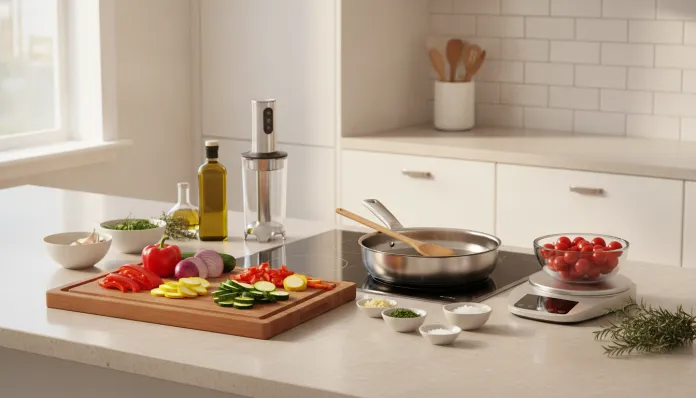
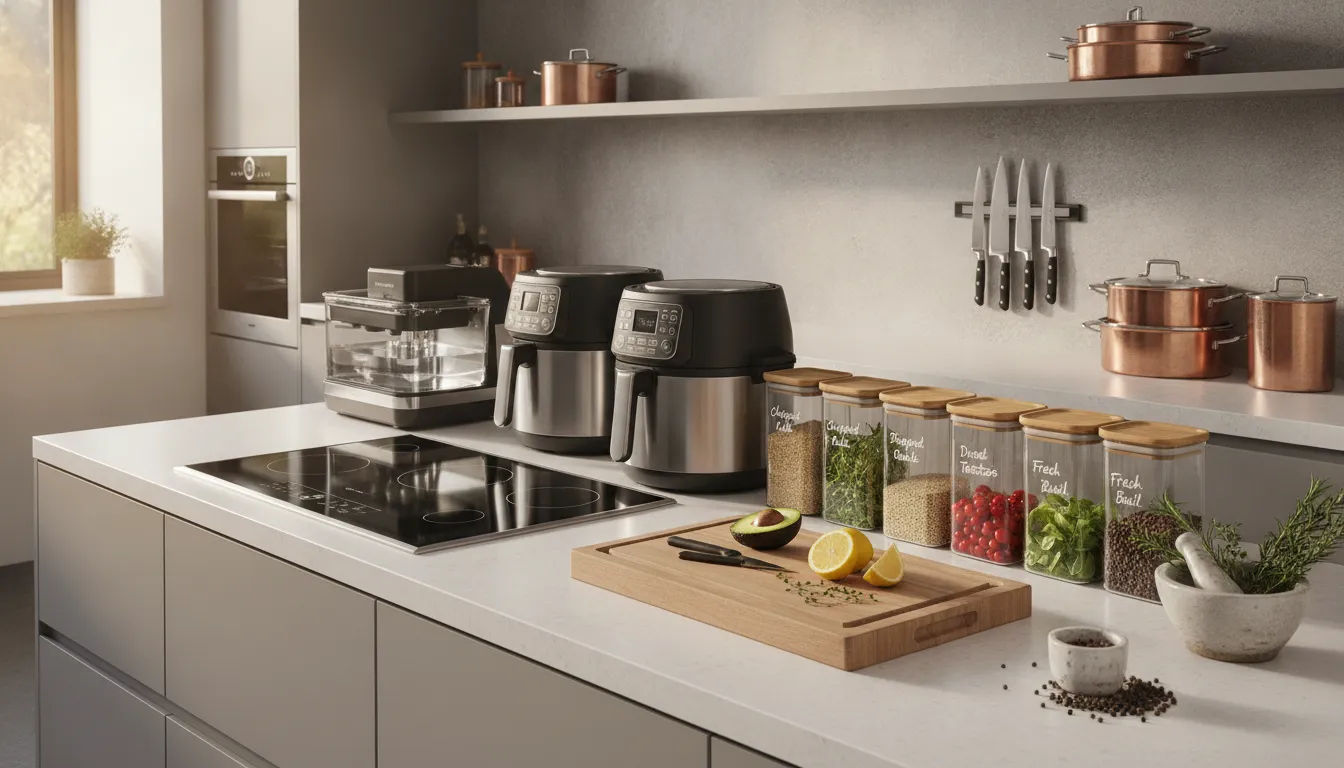
No technical trick replaces good planning. The so-called mise en place — a French expression that literally means “putting in place” — is the practice of preparing and organizing all ingredients before actually starting to cook. Measuring, chopping, separating, and having everything at hand before turning on the stove reduces mistakes, avoids last-minute rushes, and makes the process much smoother.
Additionally, dedicating a few hours on the weekend to batch cooking — cooking base items in bulk, such as rice, beans, roasted vegetables, and shredded chicken — ensures practical meals during weekdays without giving up homemade food. These practices are established trends among those seeking convenience without constantly resorting to processed foods.
Conclusion
The everyday kitchen doesn’t have to be a battlefield. With simple adjustments in cutting, cooking, storing, and organizing, you can reduce the time spent, improve results, and even make the process more enjoyable. The tricks presented here don’t require special equipment or advanced skills — they only require attention and the willingness to try a different way of doing what you already do.
Start with one or two that make the most sense for your routine. Over time, they become automatic, and you naturally incorporate others. Cooking well, after all, is less about innate talent and more about habits built with practice and curiosity.
And if, after a long day in the kitchen, you still have the energy to explore other everyday topics, why not discover why we dream and what dreams mean? Sometimes, rest also holds its own surprises.
Mais Lidas
O Jornal Meia Hora é um portal de notícias que oferece informações atualizadas sobre política, economia, esportes, entretenimento e mais. Nosso compromisso é manter nossos leitores informados com notícias precisas e imparciais.
Redação
Trending
Categorias
© Jornal Meia Hora. Todos os direitos reservados.
- Soak pots and pans immediately after use, while they’re still warm. Stuck-on residues come off much easier than when cooled and hardened.


