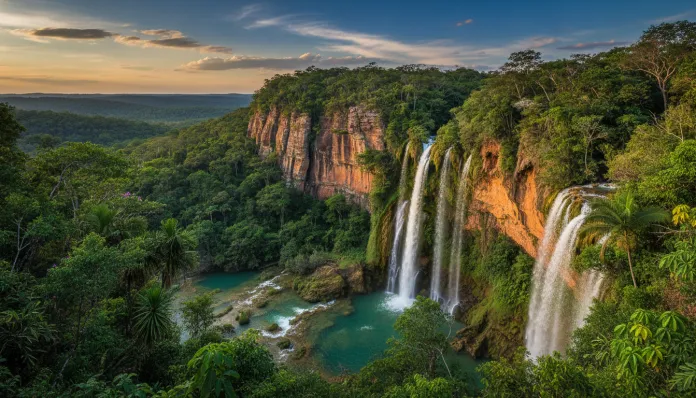
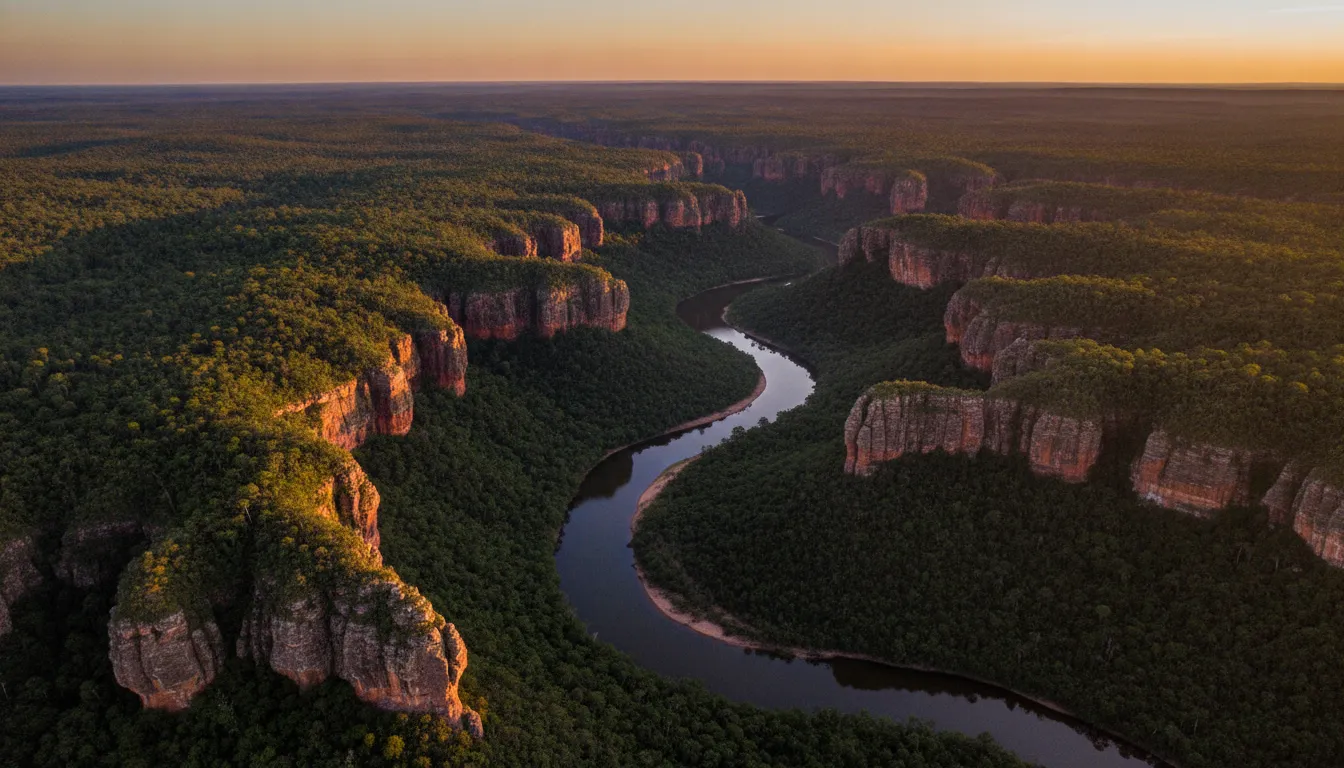
Brazil is home to one of the planet’s largest biodiversities — much of this natural heritage is protected within a network of national parks stretching from north to south. These parks feature vast plateaus, golden dunes, hidden waterfalls amidst the Atlantic Forest, tropical corals, and wetlands that change color with the seasons. Yet, many Brazilians have never set foot in any of them.
With over 70 national parks managed by the Chico Mendes Institute for Biodiversity Conservation (ICMBio), the country offers options for all types of travelers: adventurers, families, nature photographers, long trail enthusiasts, or those simply seeking fresh air away from the asphalt. The challenge is often knowing where to start.
This guide highlights some of Brazil’s most impressive national parks, with information on what makes each one special, how to get there, the best time to visit, and what should not be missed in your itinerary. Pack your backpack.
Why Visit National Parks?
Brazilian national parks are not just tourist destinations: they are fully protected areas created by law to conserve ecosystems, species of fauna and flora, and landscapes of exceptional value. This means that by visiting them, tourists contribute directly to the maintenance of these areas — as entrance and visitation fees finance part of the local management.
Beyond the environmental appeal, the parks offer experiences that simply do not exist in any resort or theme park: the sensation of standing before an 86-meter free-falling waterfall, walking inside a cave illuminated by bioluminescent fireflies, or watching the sunrise over a sea of clouds on a plateau nearly 1,700 meters high.
Chapada Diamantina (BA): The Heart of Bahia’s Hinterland
Located in the interior of Bahia, the Chapada Diamantina National Park was created in 1985 and covers about 152,000 hectares of cerrado, rocky fields, and caatinga. It is one of the country’s most established ecotourism destinations.
What to Visit
Cachoeira da Fumaça: At 340 meters, it is considered one of the tallest in Brazil. The wind disperses the water before it reaches the bottom, creating the “smoke” effect that gives the place its name.
Gruta Azul and Poço Encantado: Underground lagoons whose waters turn intense blue when sunlight penetrates through the cave opening — a phenomenon that occurs at specific times.
Morro do Pai Inácio: A lookout with a privileged panoramic view, ideal for sunset.
Best time to visit: May to September, during the dry season. Poço Encantado has restricted visitation hours to preserve the ecosystem.
How to get there: The city of Lençóis is the main access point. There are flights to Feira de Santana or Salvador, with car or bus transfers to Lençóis.
Lençóis Maranhenses (MA): Desert with Lagoons
Few places in Brazil are as visually impactful as the Lençóis Maranhenses National Park, created in 1981. Approximately 155,000 hectares of white quartz dunes, which between March and September, host hundreds of freshwater and crystal-clear lagoons — formed by rains that cannot be absorbed by the impermeable soil beneath the sand.
The result is a landscape that seems from another planet: the white of the dunes, the blue and green of the lagoons, and the Maranhão sky in the background.
What to Visit
Lagoa Azul and Lagoa Bonita: The most famous and accessible in the park.
Lagoa Tropical: Less visited, with warmer waters and fewer tourists.
Airplane or helicopter flight: Offers a completely different dimension of the park’s vastness.
Best time: July to September, when the lagoons are full and the dunes have dried after the rains.
How to get there: The municipality of Barreirinhas is the main gateway. There are flights to São Luís, with van or car transfers to Barreirinhas (about 3 hours).
Iguaçu (PR): The World’s Most Famous Waterfalls
The Iguaçu National Park is a UNESCO World Heritage Site since 1986 and shares a border with Argentina. The Iguaçu Falls consist of about 275 waterfalls stretching nearly 3 kilometers, with heights reaching 80 meters. The force of the water and the constant mist create rainbows from almost every angle.
Practical Tips
The tour to the Devil’s Throat — the most impressive point of the falls — requires advance ticket purchase, especially during high seasons.
The park is home to jaguars, tapirs, and over 600 bird species, including the great kiskadee and the black-billed toucan.
There are boat tours that take visitors very close to the falls — be prepared to get wet.
Best time: The park is open year-round. During rainy periods, the flow is greater, and the spectacle even more intense. Avoid long holidays to escape excessive crowds.
How to get there: Foz do Iguaçu has an airport with flights from various capitals. The park is about 20 km from the city center.
Chapada dos Veadeiros (GO): Stars and Trails in the Cerrado
Less than 300 kilometers from Brasília, the Chapada dos Veadeiros National Park is one of the most sought-after destinations in the Midwest. Created in 1961, the park covers an area of 240,000 hectares of native cerrado — Brazil’s most threatened biome — and is recognized by UNESCO as a Biosphere Reserve.
The region is known for waterfalls that appear among palm groves and quartz crystal fields, and for its exceptionally clear night sky, ideal for star gazing.
Must-See Attractions
Trilha das Cariocas and dos Saltos: Leads to a series of waterfalls and crystal-clear water pools.
Vale da Lua: Rock formations sculpted by the São Miguel River over millions of years, with a lunar appearance.
Jardim de Maytrea and Lookouts: For those who want to contemplate the infinite horizon of the cerrado.
Best time: May to September (dry season). Trails may close during the rainy season due to flash flood risks.
How to get there: The main access is through the city of Alto Paraíso de Goiás, about 4 hours from Brasília by car. There is no airport in the region.
Fernando de Noronha (PE): The Ocean Sanctuary
The Fernando de Noronha Marine National Park, created in 1988, protects a volcanic archipelago 354 kilometers off the coast of Pernambuco. The marine area hosts one of the largest populations of spinner dolphins in the world, as well as sea turtles, sharks, and a diversity of tropical fish that make the place one of the best diving spots in the Southern Hemisphere.
Access is controlled: the number of visitors is limited, and there is a daily environmental preservation fee (TPA), which varies according to the length of stay. This helps keep the ecosystem in excellent conservation condition.
Unmissable Experiences
Baía dos Porcos and Baía do Sancho: Repeatedly voted among the most beautiful beaches in the world.
Scuba diving or snorkeling: Visibility can exceed 30 meters on clear days.
Sunset at Forte dos Remédios: An 18th-century historical structure overlooking the sea.
Best time: August to March, when the sea is calmer and underwater visibility is better.
How to get there: There are direct flights from Recife and Natal to the archipelago. The flight duration is about 1.5 hours.
General Tips for Visiting National Parks in Brazil
Regardless of the chosen park, some guidelines are valid for any visit:
Book tickets in advance: Many parks have a daily visitor limit and have online booking systems through the ICMBio portal or partner platforms.
Respect marked trails: Straying from designated paths can be dangerous and harm the ecosystem.
Leave no trash: The “leave no trace” rule is essential in preservation areas.
Bring water and sunscreen: Even on cloudy days, UV exposure in open areas is intense.
Hire local guides: Besides enriching the experience, it boosts the local community’s economy.
Check seasonal restrictions: Trails and attractions may close during rain or fauna breeding periods.
Use insect repellent: Forested and stagnant water areas may have insects that transmit diseases like dengue and leishmaniasis.
Conclusion: The Brazil That Awaits You
Brazil is fortunate — and responsible — for holding within its borders a significant portion of the planet’s biodiversity. Each national park is a different chapter of this natural story: dunes that resemble deserts, tropical corals, centuries-old waterfalls, breathing forests.
Visiting these places is a way to know the country in a way that no book or documentary can fully reproduce. It is also a way to act: conscious tourism in national parks generates income for local communities, funds conservation, and strengthens the argument that preserved nature has economic, cultural, and symbolic value.
Para fornecer as melhores experiências, usamos tecnologias como cookies para armazenar e/ou acessar informações do dispositivo. O consentimento para essas tecnologias nos permitirá processar dados como comportamento de navegação ou IDs exclusivos neste site. Não consentir ou retirar o consentimento pode afetar negativamente certos recursos e funções.
Funcional
Always active
O armazenamento ou acesso técnico é estritamente necessário para a finalidade legítima de permitir a utilização de um serviço específico explicitamente solicitado pelo assinante ou utilizador, ou com a finalidade exclusiva de efetuar a transmissão de uma comunicação através de uma rede de comunicações eletrónicas.
Preferências
O armazenamento ou acesso técnico é necessário para o propósito legítimo de armazenar preferências que não são solicitadas pelo assinante ou usuário.
Estatísticas
O armazenamento ou acesso técnico que é usado exclusivamente para fins estatísticos.O armazenamento técnico ou acesso que é usado exclusivamente para fins estatísticos anônimos. Sem uma intimação, conformidade voluntária por parte de seu provedor de serviços de Internet ou registros adicionais de terceiros, as informações armazenadas ou recuperadas apenas para esse fim geralmente não podem ser usadas para identificá-lo.
Marketing
O armazenamento ou acesso técnico é necessário para criar perfis de usuário para enviar publicidade ou para rastrear o usuário em um site ou em vários sites para fins de marketing semelhantes.