
Who said traveling requires emptying your bank account? That idea is outdated. With planning, flexibility, and the right tools, it’s entirely possible to explore amazing destinations — in Brazil or abroad — without turning the trip into a debt that lingers for months. The secret is not in cutting out all the good stuff, but in making smarter choices before and during the trip.
The good news is that, in 2026, travelers have more resources than ever at their disposal: apps that compare prices in real-time, online communities sharing local tips, accessible points programs for any consumer profile, and an independent travel culture that has grown significantly in recent years. The challenge is knowing where to start — and that’s exactly what this guide proposes.
It’s not about giving up experiences. It’s about prioritizing what truly matters to you and finding creative ways to get there while spending less. Here’s how to do it practically, step by step.
Planning is Where Saving Begins
Most people think about saving during the trip. But the biggest cost cuts happen before buying the first ticket. Early planning is undoubtedly the most powerful tool for those who want to travel well and spend little.
Some fundamental principles:
- Set the budget before choosing the destination, not the other way around. Knowing how much you can spend helps filter realistic options.
- Research the destination’s seasonality. High season means elevated prices for everything — flights, hotels, tickets. Traveling in the so-called “shoulder season” (the months between low and high season) usually offers an optimal balance between price and quality of experience.
- Use price alerts. Platforms like Google Flights allow you to set notifications for when fares to a specific destination drop.
- Be flexible with dates and times. Early morning flights, layovers, or weekday departures are often significantly cheaper than direct flights at peak times.
A common mistake is to search for tickets only once and buy at the first opportunity. Ideally, monitor prices for a few weeks — especially for international destinations — and act when there’s a significant drop.
Accommodation: Beyond Traditional Hotels
Accommodation is generally one of the biggest costs of a trip. But the market has evolved greatly, and today there is a vast array of options that can reduce this expense without compromising comfort.
Alternatives That Work
- Modern Hostels: Today’s hostels are very different from the old image of crowded, privacy-less rooms. Many offer private rooms, well-decorated common areas, breakfast included, and a social atmosphere that enriches the trip.
- Vacation Rentals: Property rental platforms allow cost-sharing among a group of travelers, making it cheaper than hotels in many cases — especially for family or friend trips.
- Couchsurfing and Hospitality Exchange: For more adventurous profiles, there are networks connecting travelers with locals willing to offer a space for free. Besides saving money, the cultural experience is often unique.
- Monasteries, Religious Inns, and Rural Lodgings: In many Brazilian and European cities, these options offer prices well below the average of commercial hotels.
It’s also worth considering where the accommodation is located on the map. Staying in the historic center may seem convenient, but often a slightly more distant neighborhood — well-connected by public transport — offers much lower prices and a more authentic city experience.
Local Transport: The Art of Getting Around Without Overspending
You’ve arrived at your destination. Now what? Daily transport during the trip can also weigh on the budget if not well planned.
- Research the public transport system before arriving. Many cities offer daily or weekly passes for tourists, which are much cheaper than paying per trip.
- Walk more. Besides being free, walking is one of the richest ways to get to know a city — you discover streets, markets, and cafes that don’t appear in any itinerary.
- Bike and Scooter Rentals. Available in dozens of cities in Brazil and abroad, they are cheap, practical, and allow you to cover more distance than on foot.
- Ride-sharing apps can be cheaper than conventional taxis for specific routes, especially during off-peak hours.
- Avoid renting a car in big cities. Rental, fuel, toll, and parking costs add up quickly. A car makes more sense in rural destinations or when the group is large.
Food: Eating Well Without Paying Tourist Prices
Food is one of the greatest pleasures of any trip — and also one of the areas where it’s easiest to save without sacrificing the experience.
Practical Tips:
- Eat where the locals eat. Restaurants near tourist spots usually charge more for less. Move a block or two away, and the options are generally better and cheaper.
- Opt for lunch instead of dinner. In many destinations — especially in Brazil and Europe — the executive lunch menu offers almost the same quality as dinner for a third of the price.
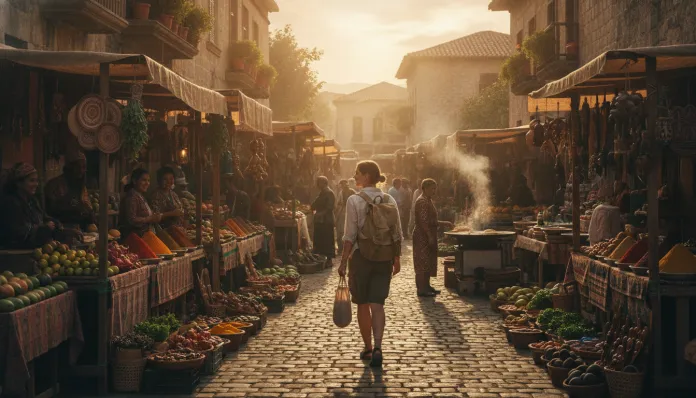
- Local markets and fairs are a gastronomic and cultural experience in themselves. Besides being cheap, they allow you to experience regional cuisine authentically.
- If the accommodation has a kitchen, prepare some simple meals — especially breakfasts. Buying ingredients at the local market is cheaper and can be an enjoyable activity in itself.
- Carry snacks and nibbles in your backpack to avoid impulse buys at airports, parks, and tourist spots, where prices are usually highly inflated.
Sightseeing and Attractions: Plenty to See Without Spending a Lot
Here’s one of the biggest myths in tourism: the idea that the best experiences are the most expensive. In practice, many of the most memorable moments of a trip cost nothing — or almost nothing.
What Costs Nothing (or Almost)
- Parks, squares, and public spaces in virtually any city in the world are free and often among the most beautiful places.
- Museums with free admission on specific days. Many museums around the world — including in Brazil — have days or hours of free access. It’s worth researching beforehand.
- Free walking tours. Present in hundreds of cities, these tours are run by local guides who work for tips. The quality is usually excellent, and the cost is determined by you at the end.
- Open cultural events: outdoor shows, neighborhood festivals, craft fairs — the free cultural program of any major city is often surprisingly rich.
For paid attractions, like theme parks, larger museums, or excursions, it’s worth looking for ticket combos that group several attractions with a discount, or buying in advance online, which is often cheaper than at the box office.
Miles and Points: The System That Works for You
Miles and points programs are not exclusive to business travelers. Anyone with a credit card that has a rewards program can accumulate points on everyday purchases and exchange them for airline tickets, hotel stays, and other travel benefits.
The secret is to use the card consciously — that is, concentrate on it the expenses you would already make anyway (groceries, bills, services) and pay the full bill every month to not lose the benefits to interest.
Moreover, many Brazilian and international airlines offer periodic promotions with double points or reduced redemption rates. Keeping track of these programs — without obsession — can lead to real savings on tickets over time.
Conscious Traveler Mindset
More than a set of techniques, traveling on a budget requires a change in perspective. The conscious traveler understands that the value of an experience is not in how much it costs, but in what it provides in terms of memories, connections, and learning.
Cultivating habits of planning, research, and flexibility — the same ones that make a difference in other areas of life, as discussed in What Differentiates Successful People in Daily Life — also transforms the way you travel.
Budget travel is not lesser travel. It is often richer: closer to local people, more connected to the real culture of the destination, more open to the unexpected. And it’s precisely the unexpected — that alley discovered by chance, that dish ordered without knowing what it was, that conversation with a stranger in a square — that turns a trip into a story to tell.
Conclusion
Traveling on a limited budget doesn’t mean depriving yourself. It means planning better, making more conscious choices, and enjoying the best each destination has to offer — which, most of the time, isn’t on the most expensive menu or in the most starred hotel.
The ideal itinerary starts with a realistic budget, goes through alternative accommodations and smart transport, feeds on local markets and restaurants, and completes with free or low-cost tours that reveal the true destination. With the tools available in 2026, anyone willing to research and plan can turn the next trip into a memorable experience — without compromising finances.
The next adventure is more accessible than you think. You just need to know where to start.
- Museums with free admission on specific days. Many museums around the world — including in Brazil — have days or hours of free access. It’s worth researching beforehand.
- Opt for lunch instead of dinner. In many destinations — especially in Brazil and Europe — the executive lunch menu offers almost the same quality as dinner for a third of the price.
- Walk more. Besides being free, walking is one of the richest ways to get to know a city — you discover streets, markets, and cafes that don’t appear in any itinerary.
- Vacation Rentals: Property rental platforms allow cost-sharing among a group of travelers, making it cheaper than hotels in many cases — especially for family or friend trips.
- Research the destination’s seasonality. High season means elevated prices for everything — flights, hotels, tickets. Traveling in the so-called “shoulder season” (the months between low and high season) usually offers an optimal balance between price and quality of experience.


